 flip
flipSbiten with Honey and Spices
Sbiten with Honey and Spices
Why this dish? Sbiten was THE hot drink of Alexander I's Russia, sold steaming by sbitenchtchiki in the icy streets of Saint Petersburg and drunk in bivouacs. During the terrible campaign of 1812, this brew of honey and spices warmed soldiers and officers facing 'General Winter.'
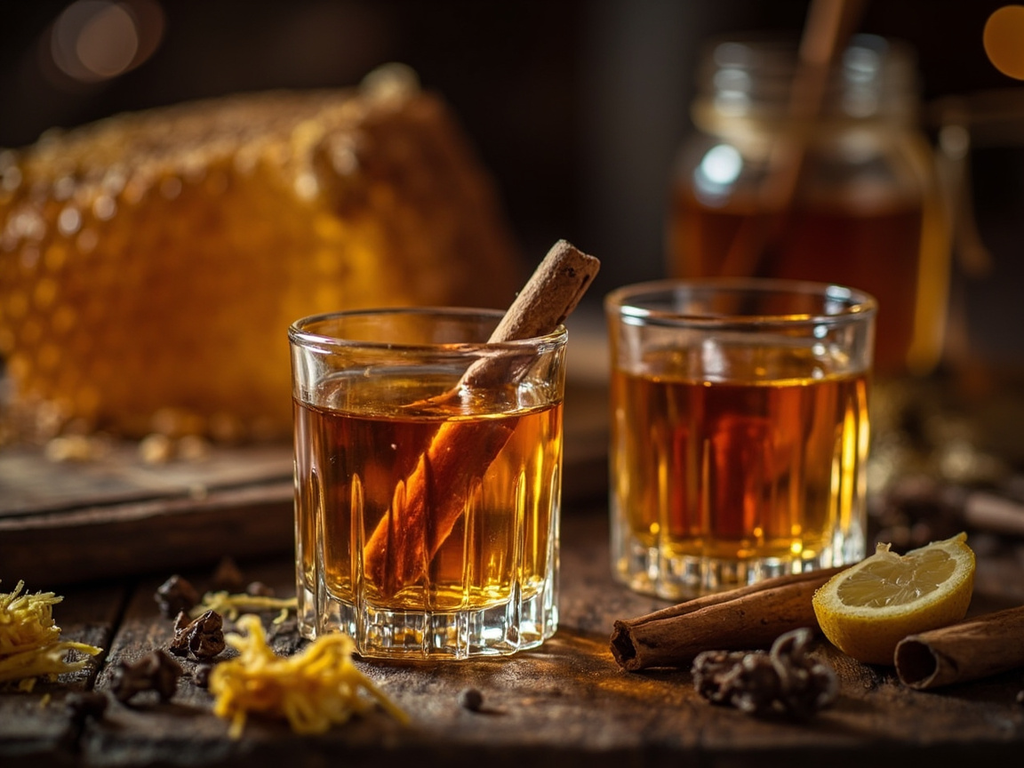
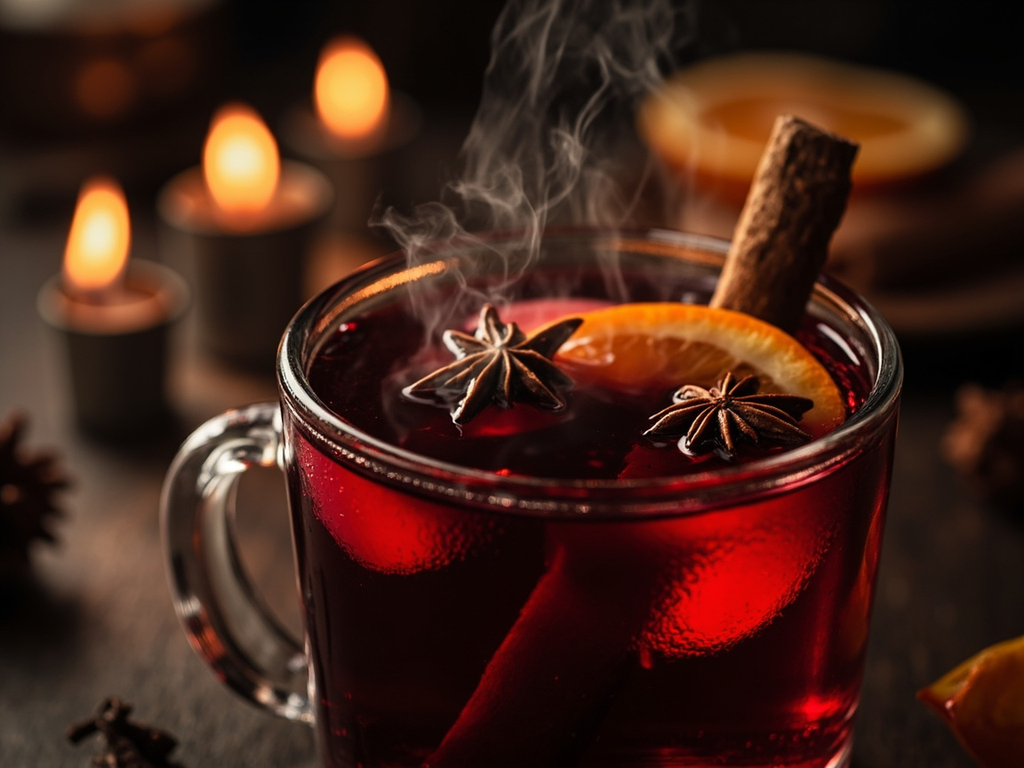
A scalding infusion of honey dissolved in water, scented with ginger, cinnamon, clove and mint. Sweet, spiced, invigorating — the Russian ancestor of mulled wine, but non-alcoholic in its most common version.
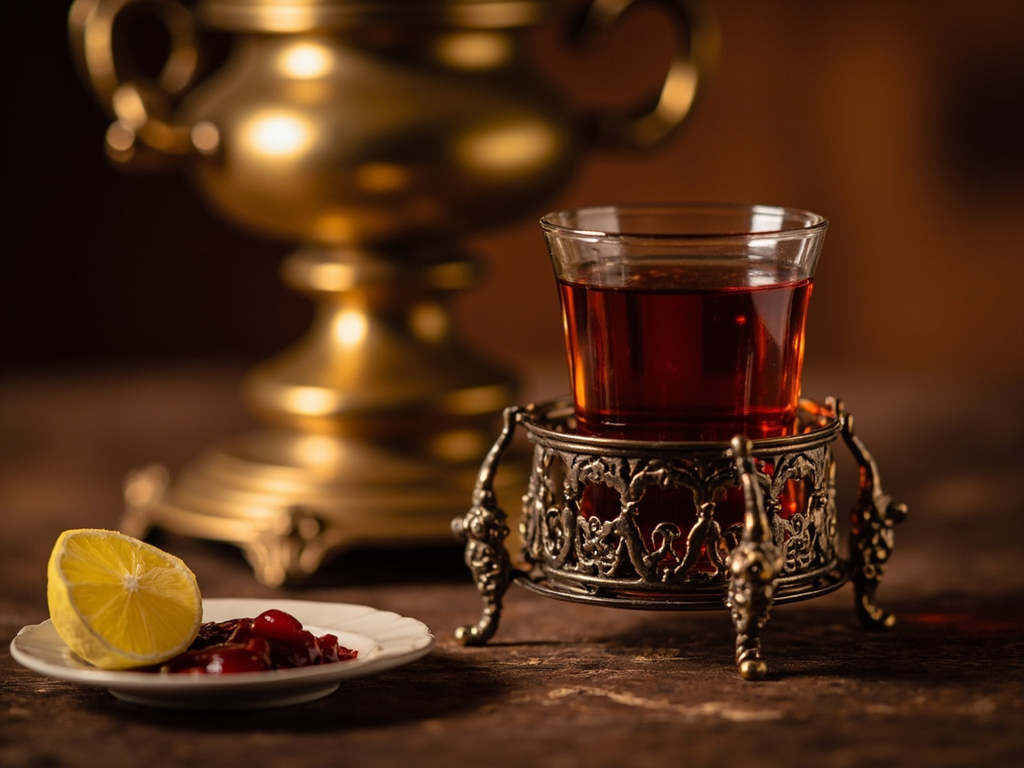
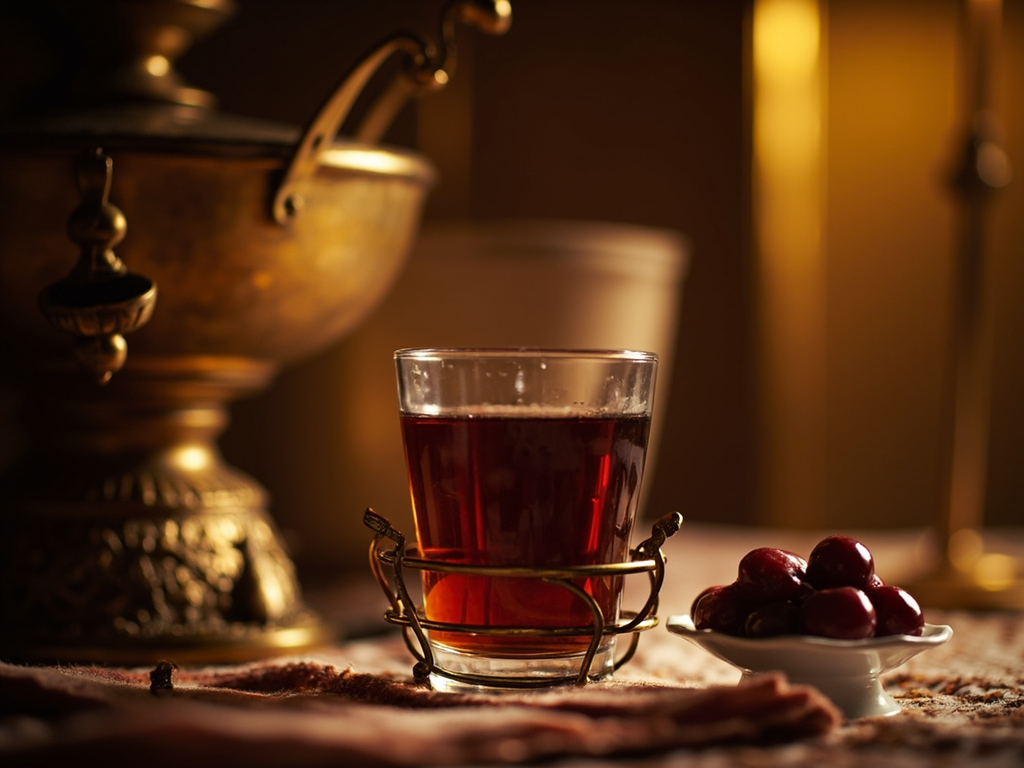
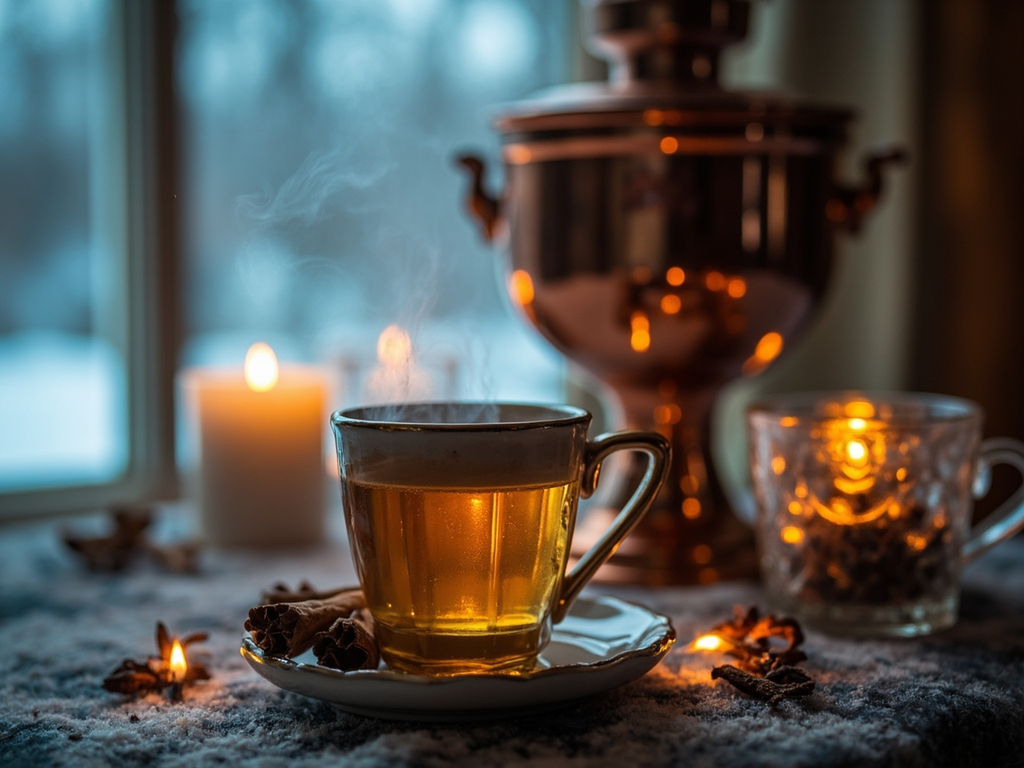
Ask my grenadiers what kept them standing when the cold of 1812 bit to the bone: it is not glory, it is sbiten. You dissolve good honey in boiling water, throw in ginger that pleasantly burns the throat, cinnamon, clove and a sprig of mint, and keep it warm without boiling. The street vendor carries it in his copper samovar and people crowd around as around a small fire. Drink it scalding: it warms the blood better than any speech.
- •Honey — a ladleful (sweetness and body)
- •Water — a large cauldron (base)
- •Dried ginger — a piece (warming spice)
- •Cinnamon and clove — a few (spices)
- •Mint and St. John's wort — a handful (aromatic herbs)
Sbiten with Honey and Spices
A scalding infusion of honey dissolved in water, scented with ginger, cinnamon, clove and mint. Sweet, spiced, invigorating — the Russian ancestor of mulled wine, but non-alcoholic in its most common version.
Why this dish? Sbiten was THE hot drink of Alexander I's Russia, sold steaming by sbitenchtchiki in the icy streets of Saint Petersburg and drunk in bivouacs. During the terrible campaign of 1812, this brew of honey and spices warmed soldiers and officers facing 'General Winter.'
Ask my grenadiers what kept them standing when the cold of 1812 bit to the bone: it is not glory, it is sbiten. You dissolve good honey in boiling water, throw in ginger that pleasantly burns the throat, cinnamon, clove and a sprig of mint, and keep it warm without boiling. The street vendor carries it in his copper samovar and people crowd around as around a small fire. Drink it scalding: it warms the blood better than any speech.
Ingredients (period version)
- Honey — a ladleful (sweetness and body)
- Water — a large cauldron (base)
- Dried ginger — a piece (warming spice)
- Cinnamon and clove — a few (spices)
- Mint and St. John's wort — a handful (aromatic herbs)
Ingredients
- Honey — 150 g (about 5 tbsp) (sweetness and body)
- Water — 1 liter (base)
- Fresh ginger — 2 cm, grated (warming spice)
- Cinnamon stick — 1 (spice)
- Cloves — 3 (spice)
- Dried mint leaves — 1 tsp (aromatic herb)
Method
- Bring water to a simmer with ginger, cinnamon and cloves; let infuse 10 minutes over low heat.
- Off heat (water must stop boiling), dissolve honey to avoid destroying its aromas.
- Add mint, cover and infuse 5 minutes.
- Strain and serve piping hot in cups or metal glasses.
How it was made : It was prepared in large quantities in special sbiten samovars and sold by street vendors. There were 'alcoholic' versions with added wine or mead. Sbiten dominated Russian streets until the mid-19th century, when tea gradually supplanted it.
The contemporary twist : Pour it over a thin slice of candied ginger at the bottom of the glass: it releases its fragrance as the drink cools.
Sources : William Pokhlyobkin, 'History of Russian Cuisine' · Darra Goldstein, 'Beyond the North Wind' (2020)
Alexander I · Charactorium