 flip
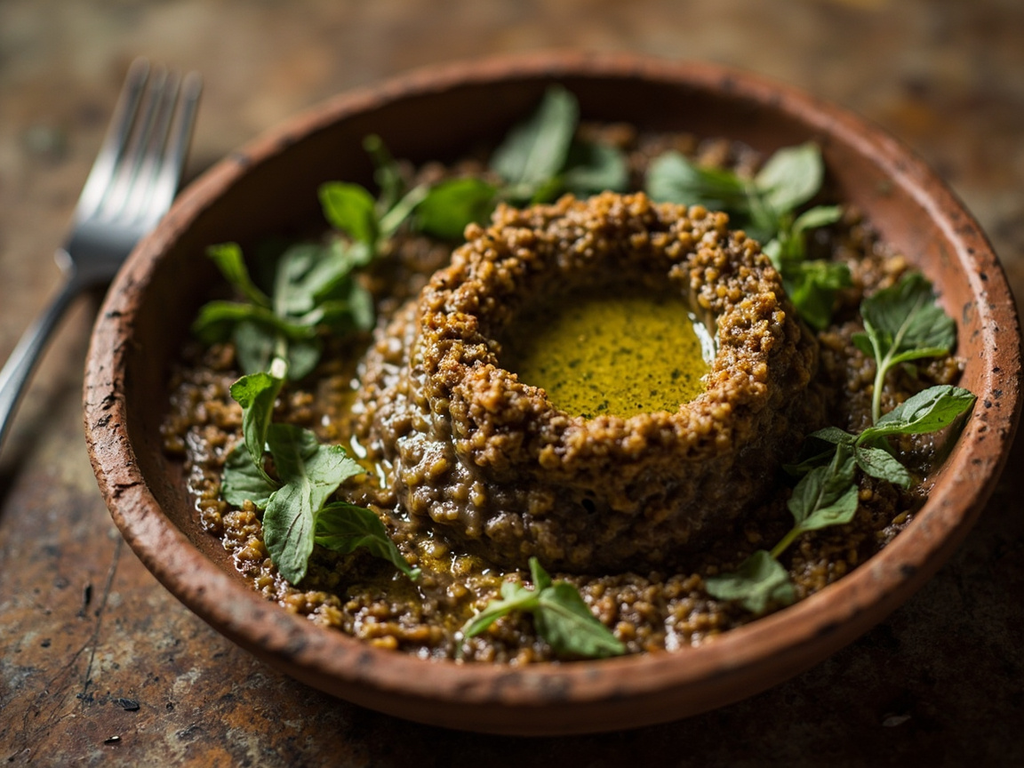
flipBarley Maza with Olives and Goat Cheese
Barley Maza with Olives and Goat Cheese
Why this dish? On campaign, Alexander shared his soldiers' rations to boost morale: bread or barley cake, olives, and goat cheese formed the frugal ration of a king who wanted to be first among his men.
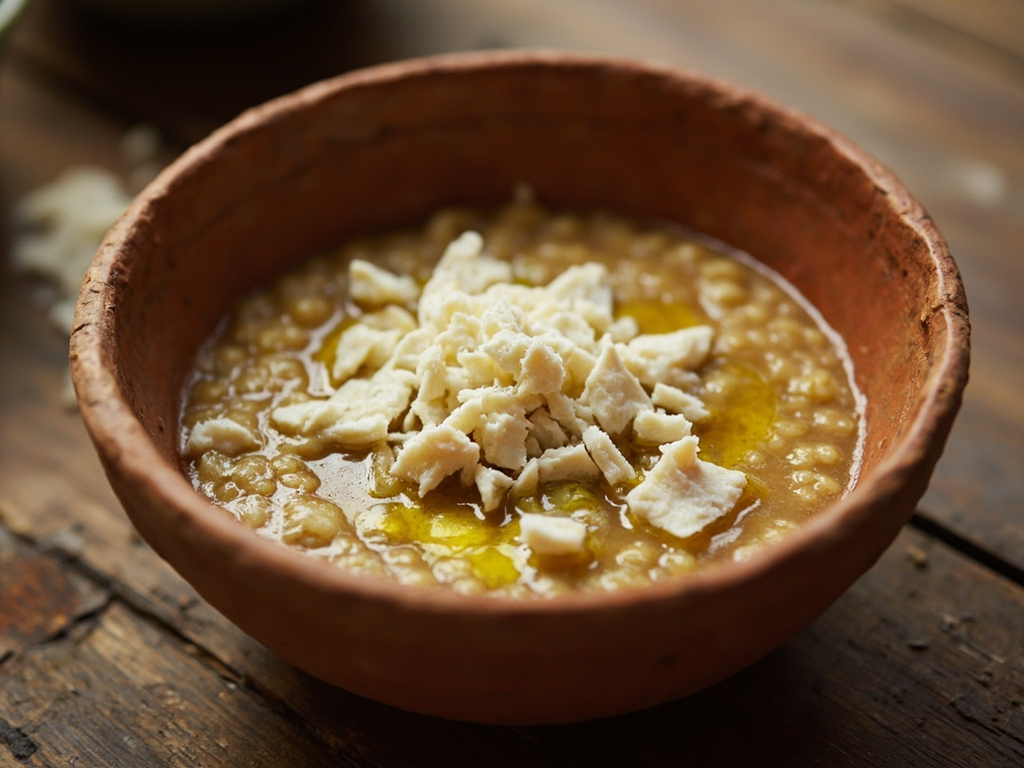
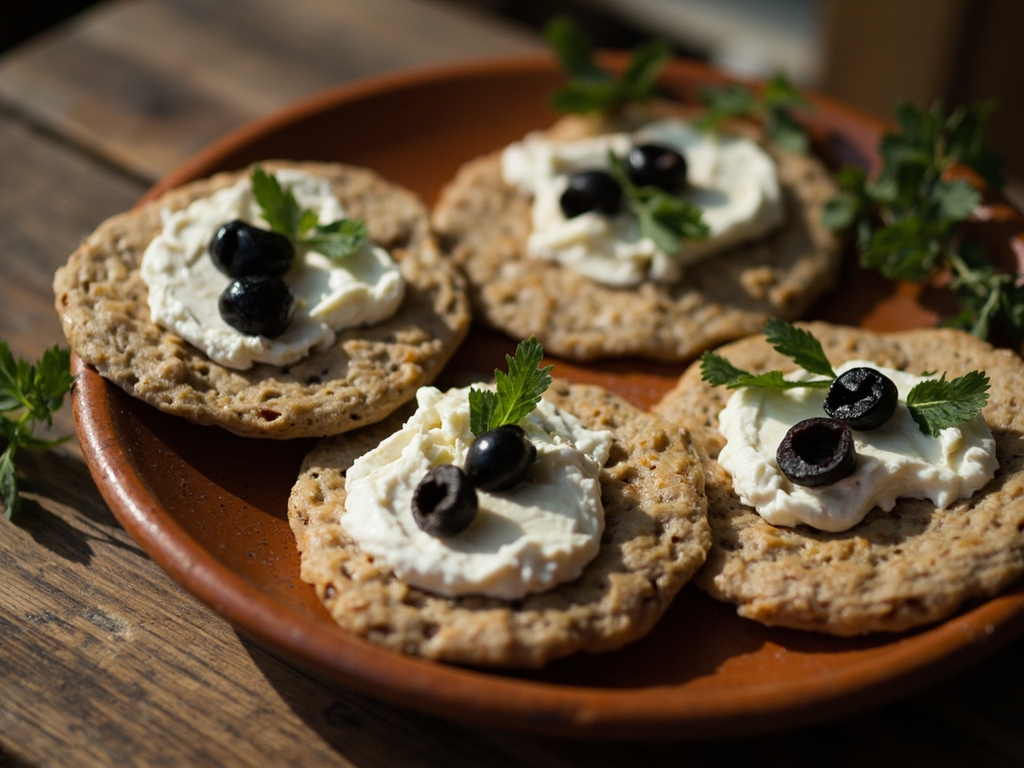
An unleavened barley cake, the staple of Greek diet, spread or accompanied by fresh goat cheese and olives. The meal of both the foot soldier and the king on the march.
Listen, you who come after. A king who wants to be followed to the ends of the earth eats what his soldiers eat. At dawn, before the battle of Issus, I broke the same barley maza as my pikemen: you moisten the flour, knead it barely, lay it on the hot stone. With a handful of olives and a bit of goat cheese, a man can walk all day. Luxury softens; barley makes conquerors.
- •Toasted barley flour (alphita) — two handfuls (cereal base)
- •Spring water — as needed (binder)
- •Brine-cured olives — a good handful (salty opson)
- •Fresh goat cheese — a piece (fatty opson)
- •Olive oil — a drizzle (binding)
Barley Maza with Olives and Goat Cheese
An unleavened barley cake, the staple of Greek diet, spread or accompanied by fresh goat cheese and olives. The meal of both the foot soldier and the king on the march.
Why this dish? On campaign, Alexander shared his soldiers' rations to boost morale: bread or barley cake, olives, and goat cheese formed the frugal ration of a king who wanted to be first among his men.
Listen, you who come after. A king who wants to be followed to the ends of the earth eats what his soldiers eat. At dawn, before the battle of Issus, I broke the same barley maza as my pikemen: you moisten the flour, knead it barely, lay it on the hot stone. With a handful of olives and a bit of goat cheese, a man can walk all day. Luxury softens; barley makes conquerors.
Ingredients (period version)
- Toasted barley flour (alphita) — two handfuls (cereal base)
- Spring water — as needed (binder)
- Brine-cured olives — a good handful (salty opson)
- Fresh goat cheese — a piece (fatty opson)
- Olive oil — a drizzle (binding)
Ingredients
- Barley flour — 200 g (cereal base)
- Warm water — about 120 ml (binder)
- Salt — 1 pinch (seasoning)
- Pitted black olives — 100 g (salty opson)
- Fresh goat cheese — 150 g (fatty opson)
- Olive oil — 2 tbsp (binding)
Method
- Mix the barley flour, salt, and warm water until you get a supple, non-sticky dough.
- Divide into balls and flatten into 1 cm thick flatbreads.
- Cook for 3 to 4 minutes per side in a very hot pan or on a stone, without fat, until golden spots appear.
- Mash the goat cheese with a fork and a drizzle of olive oil.
- Serve the warm flatbreads spread with cheese and accompanied by olives.
How it was made : Barley, more rustic than wheat, was the daily cereal of the Greeks. It was often consumed as *maza*: a paste of toasted barley (*alphita*) moistened, sometimes even uncooked. Wheat bread (*artos*) remained a more prestigious product. Olives and cheese were the most common *opson*.
The contemporary twist : Serve the flatbreads on a platter as an appetizer with a drizzle of quality olive oil and a twist of fresh thyme: a rustic and impressive "conqueror's meze."
Alexander the Great · Charactorium