 flip
flipCaneton à la Rouennaise
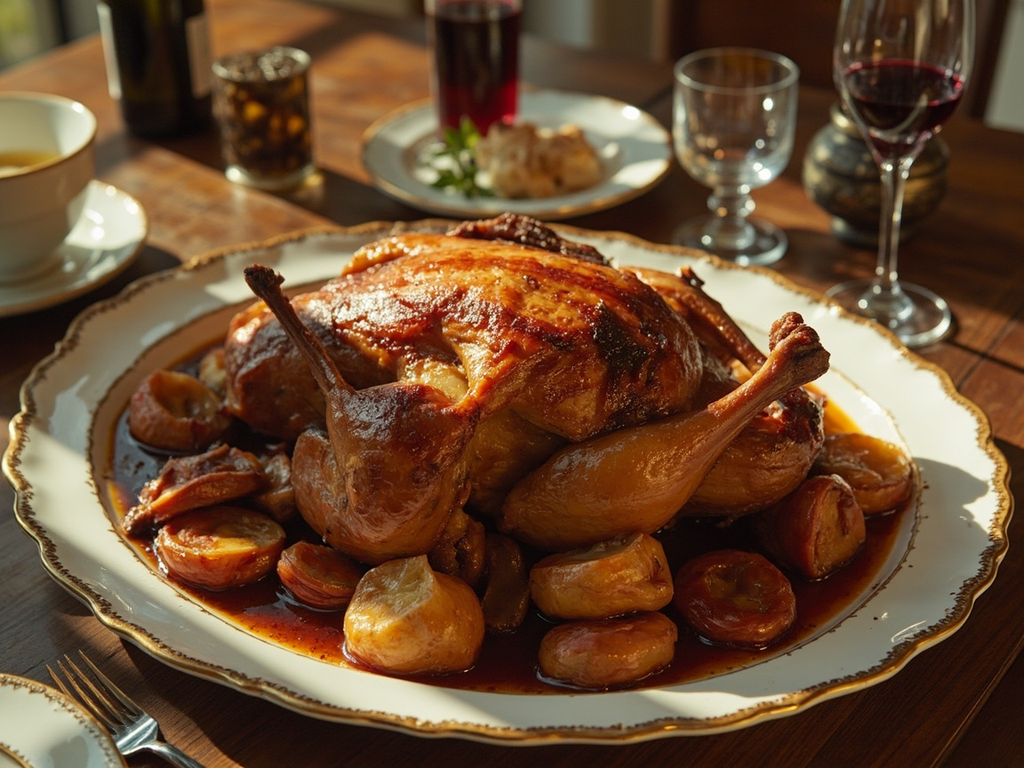
Caneton à la Rouennaise
Why this dish? Tocqueville, elected representative from Normandy and deeply attached to his province, could not ignore the great dish of Rouen, the Norman capital near his lands. The Rouen duckling, domesticated game from the Seine marshes, was the ceremonial dish served at dinners where the political alliances of the July Monarchy were forged.
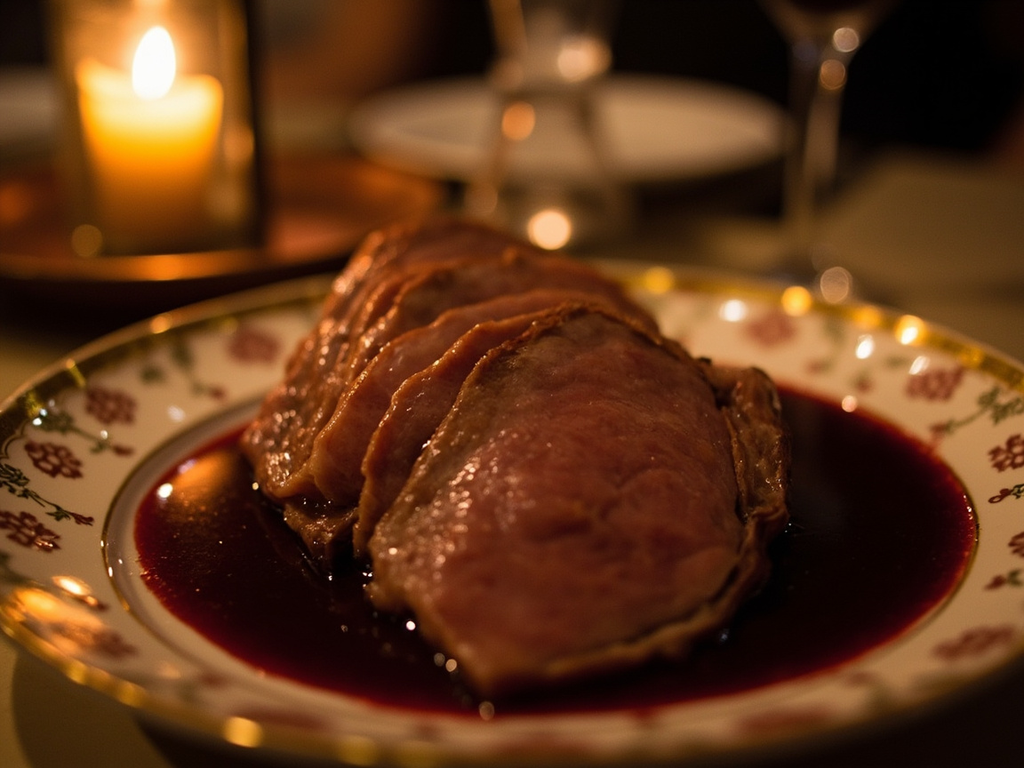
Roasted duckling, rare-cooked, carved, with the pressed carcass yielding a blood juice bound with red wine and butter, perfumed with shallot. A prestige dish of 19th-century Norman and Parisian tables.
Here is a dish of which our Normandy can be proud, and which I gladly served to my guests. The duckling is roasted on the spit, still rare, for it is from its very blood that the nobility of the sauce is drawn, heightened with a good wine and a garden shallot. It is carved at table, before the guest's eyes, and the master of the house takes some pride in conducting the operation himself. Believe me, nothing loosens tongues at a dinner like this dish, and I have heard many confidences about the state of our country over it.
- •Duclair or Rouen duckling — one, suffocated to keep its blood (main meat)
- •Full-bodied red wine — a large glass (sauce)
- •Grey shallots — a few, chopped (aromatic)
- •Duckling liver — that of the bird (sauce binder)
- •Butter — a lump (sauce mounting)
- •Salt, mill pepper — to taste (seasoning)
Caneton à la Rouennaise
Roasted duckling, rare-cooked, carved, with the pressed carcass yielding a blood juice bound with red wine and butter, perfumed with shallot. A prestige dish of 19th-century Norman and Parisian tables.
Why this dish? Tocqueville, elected representative from Normandy and deeply attached to his province, could not ignore the great dish of Rouen, the Norman capital near his lands. The Rouen duckling, domesticated game from the Seine marshes, was the ceremonial dish served at dinners where the political alliances of the July Monarchy were forged.
Here is a dish of which our Normandy can be proud, and which I gladly served to my guests. The duckling is roasted on the spit, still rare, for it is from its very blood that the nobility of the sauce is drawn, heightened with a good wine and a garden shallot. It is carved at table, before the guest's eyes, and the master of the house takes some pride in conducting the operation himself. Believe me, nothing loosens tongues at a dinner like this dish, and I have heard many confidences about the state of our country over it.
Ingredients (period version)
- Duclair or Rouen duckling — one, suffocated to keep its blood (main meat)
- Full-bodied red wine — a large glass (sauce)
- Grey shallots — a few, chopped (aromatic)
- Duckling liver — that of the bird (sauce binder)
- Butter — a lump (sauce mounting)
- Salt, mill pepper — to taste (seasoning)
Ingredients
- Duck breasts or legs (or a whole duck) — 1 duck, 1.8 kg (main meat)
- Full-bodied red wine — 250 ml (sauce)
- Shallots — 3, minced (aromatic)
- Chicken livers — 2, crushed (binder)
- Cold butter — 60 g (mounting)
- Cognac — 2 tablespoons (enhancement (optional))
- Salt, pepper — to taste (seasoning)
Method
- Roast the duck in a very hot oven for 18 to 20 minutes to keep it rosy; carve the breast fillets and keep warm.
- Sauté shallots in butter, deglaze with red wine, and reduce by half.
- Crush the chicken livers, stir into the sauce off high heat to bind without boiling.
- Strain the sauce, add cognac, mount with cold butter, season with salt and pepper.
- Thinly slice the duck fillets, nap with sauce, and serve immediately, very hot.
How it was made : The Rouen duck, raised suffocated to preserve its blood, once yielded a sauce bound with a duck press, a ceremonial instrument. Before the codification of the late 19th century, versions were already served in Norman houses: pressed carcass, blood, and liver binding a red wine jus.
The contemporary twist : Without a duck press, bind the sauce with pan-seared livers and serve over lacquered duck breast slices, with a purée of Cotentin apples roasted in butter.
Alexis de Tocqueville · Charactorium