 flip
flipJellied Eels from the East End
Jellied Eels from the East End
Why this dish? Hitchcock was born in 1899 in Leytonstone, east London, the son of a greengrocer and poulterer. Jellied eels, sold on every street corner of the working-class East End, were the popular snack of his childhood — the street food of the London he came from before Hollywood.
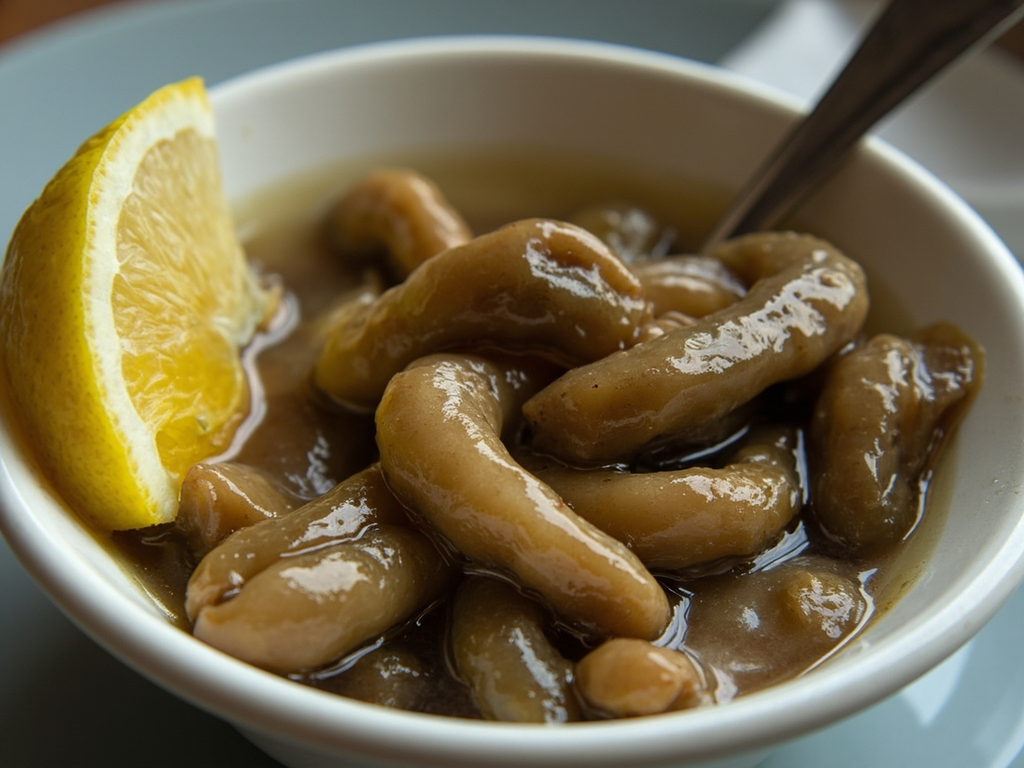
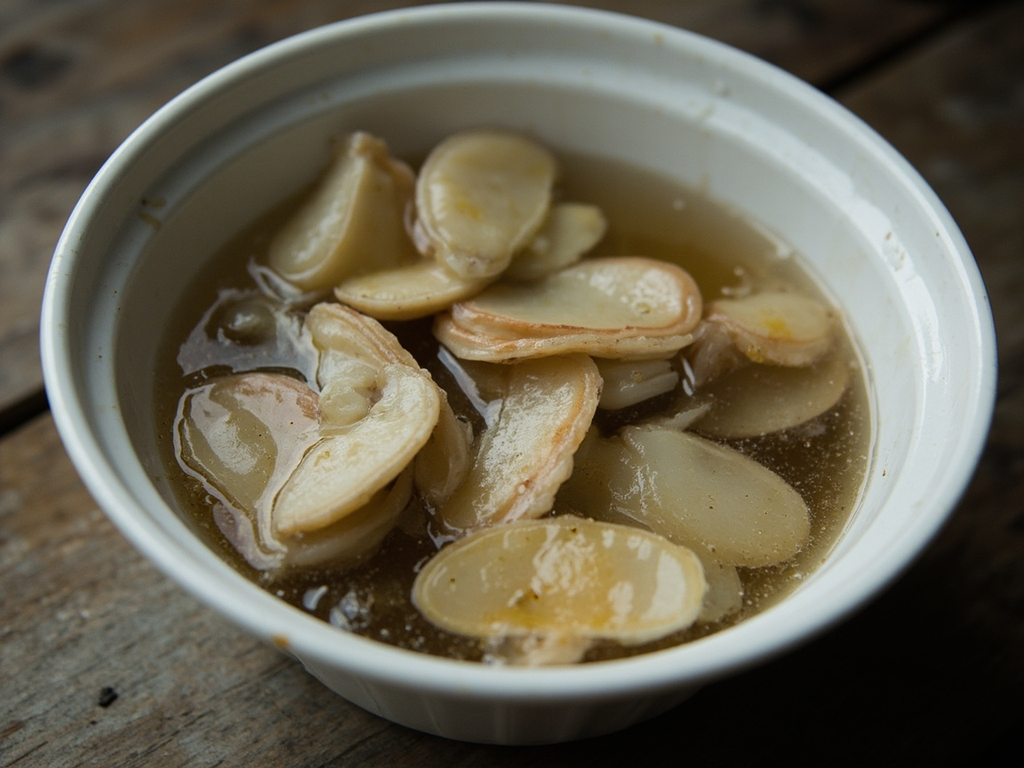
Pieces of eel poached in a vinegary court-bouillon that, upon cooling, sets into a trembling jelly. Eaten cold, with a small spoon, doused with peppered vinegar.
Before the palaces of Hollywood, there was Leytonstone, my father's shop, and the East End stalls where you ate eel standing up, from a cup, for a few pence. The jelly trembled like a suspect at the moment of interrogation — and that's precisely why I loved it. A good splash of peppered vinegar, and you forgot the London rain. Don't turn up your nose: this is the food that made me, and a man never forgets the taste of where he comes from.
- •Fresh eels — a few (fish)
- •Malt vinegar — a good dash (acidity and preservation)
- •Bay leaves, cloves — a few (aromatics)
- •Salt, pepper — generously (seasoning)
Jellied Eels from the East End
Pieces of eel poached in a vinegary court-bouillon that, upon cooling, sets into a trembling jelly. Eaten cold, with a small spoon, doused with peppered vinegar.
Why this dish? Hitchcock was born in 1899 in Leytonstone, east London, the son of a greengrocer and poulterer. Jellied eels, sold on every street corner of the working-class East End, were the popular snack of his childhood — the street food of the London he came from before Hollywood.
Before the palaces of Hollywood, there was Leytonstone, my father's shop, and the East End stalls where you ate eel standing up, from a cup, for a few pence. The jelly trembled like a suspect at the moment of interrogation — and that's precisely why I loved it. A good splash of peppered vinegar, and you forgot the London rain. Don't turn up your nose: this is the food that made me, and a man never forgets the taste of where he comes from.
Ingredients (period version)
- Fresh eels — a few (fish)
- Malt vinegar — a good dash (acidity and preservation)
- Bay leaves, cloves — a few (aromatics)
- Salt, pepper — generously (seasoning)
Ingredients
- Fresh eel, cut into pieces — 600 g (fish)
- Water — 750 ml (court-bouillon)
- Malt vinegar — 4 tbsp (acidity)
- Bay leaves — 2 (aromatic)
- Cloves — 3 (aromatic)
- Gelatin (depending on eels' natural gelatin content) — 2 leaves if needed (setting agent)
- Salt, black pepper — to taste (seasoning)
Method
- Ask the fishmonger to gut and cut the eels into pieces; rinse well.
- Bring water to a simmer with bay leaves, cloves, vinegar, salt, and pepper.
- Gently poach the eel pieces for 10-15 minutes, without boiling, until the flesh comes away from the bone.
- Remove the eels and divide among bowls or ramekins.
- Strain the broth; if it does not set on its own, dissolve the softened gelatin in it.
- Pour the broth over the eels and refrigerate several hours until firmly set.
- Serve very cold, with a dash of peppered vinegar.
How it was made : Eels, abundant and cheap in the Thames, had fed London's common people for centuries. Victorian eel, pie and mash shops made them a specialty; the jelly, from the fish's natural collagen, also helped preserve them for a few days.
The contemporary twist : Unmold the jelly as a transparent dome on a black slate: you see the pieces frozen like a crime scene under glass.
Sources : Jane Grigson, English Food, 1974 · Florence White, Good Things in England, 1932 · Patrick McGilligan, Alfred Hitchcock: A Life in Darkness and Light, 2003
Alfred Hitchcock · Charactorium