flip
Brown bread and fruits of the road to the Holy Land
Brown bread and fruits of the road to the Holy Land
Why this dish? In 1147, Eleanor left for the Second Crusade alongside Louis VII, all the way to Antioch. On the long roads to the Levant, princes and soldiers alike lived on provisions that kept: twice-baked bread, figs and dates, almonds and honey. This traveling satchel tells of the adventurous Eleanor, who crossed Europe and the Mediterranean.
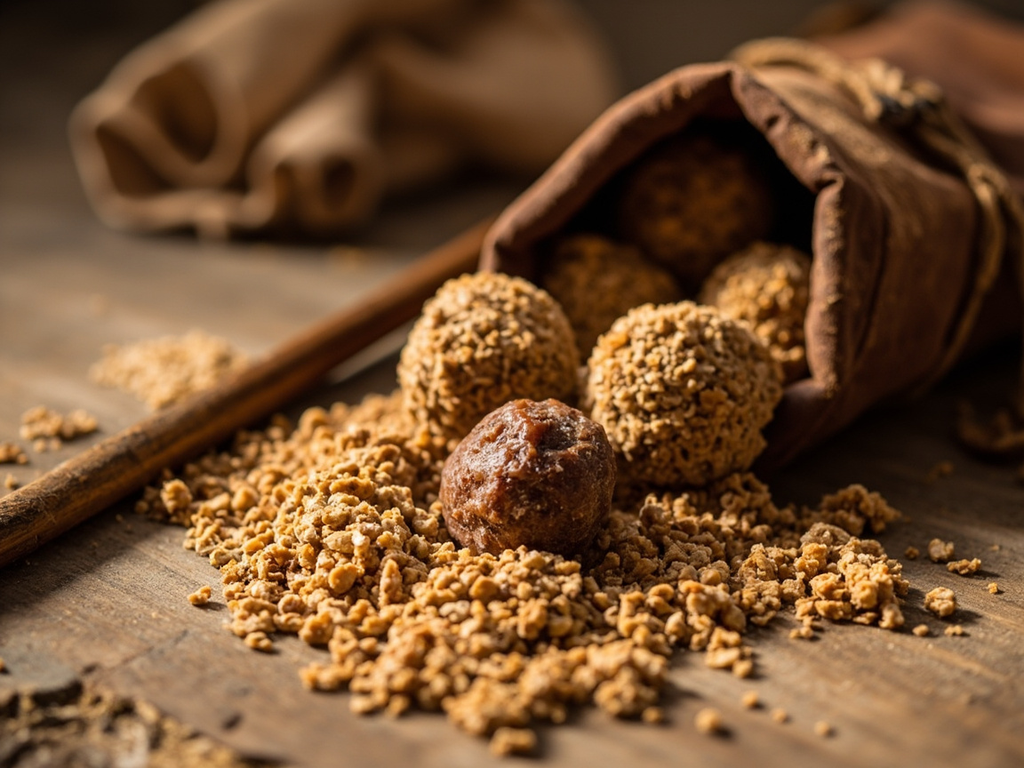
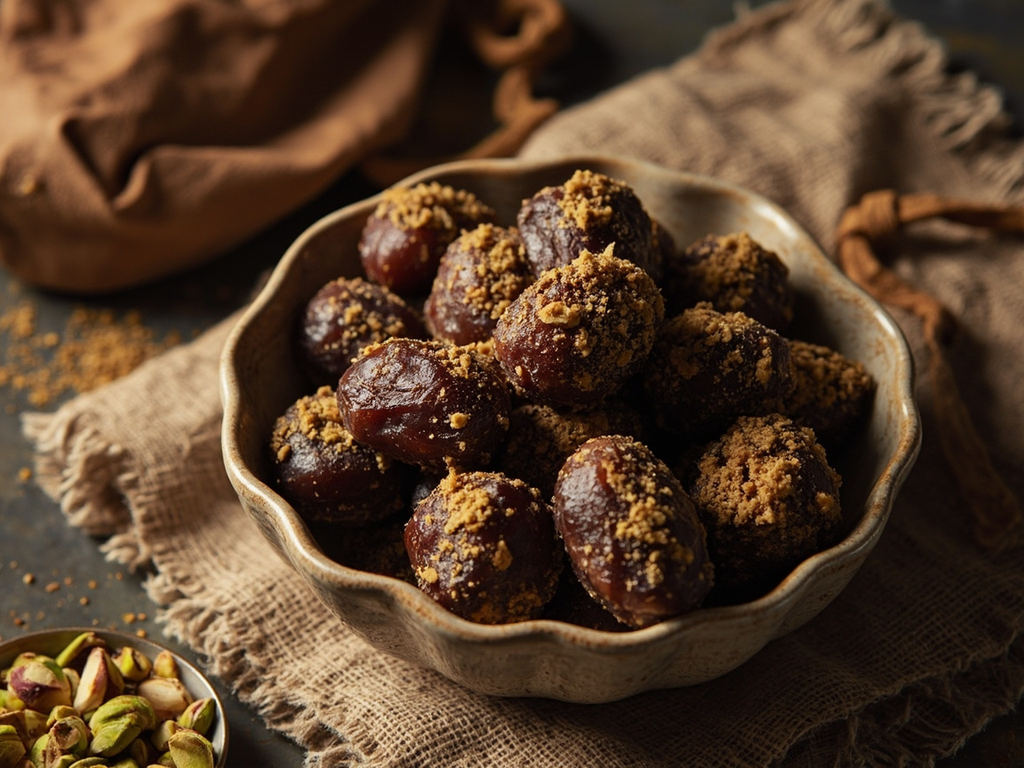
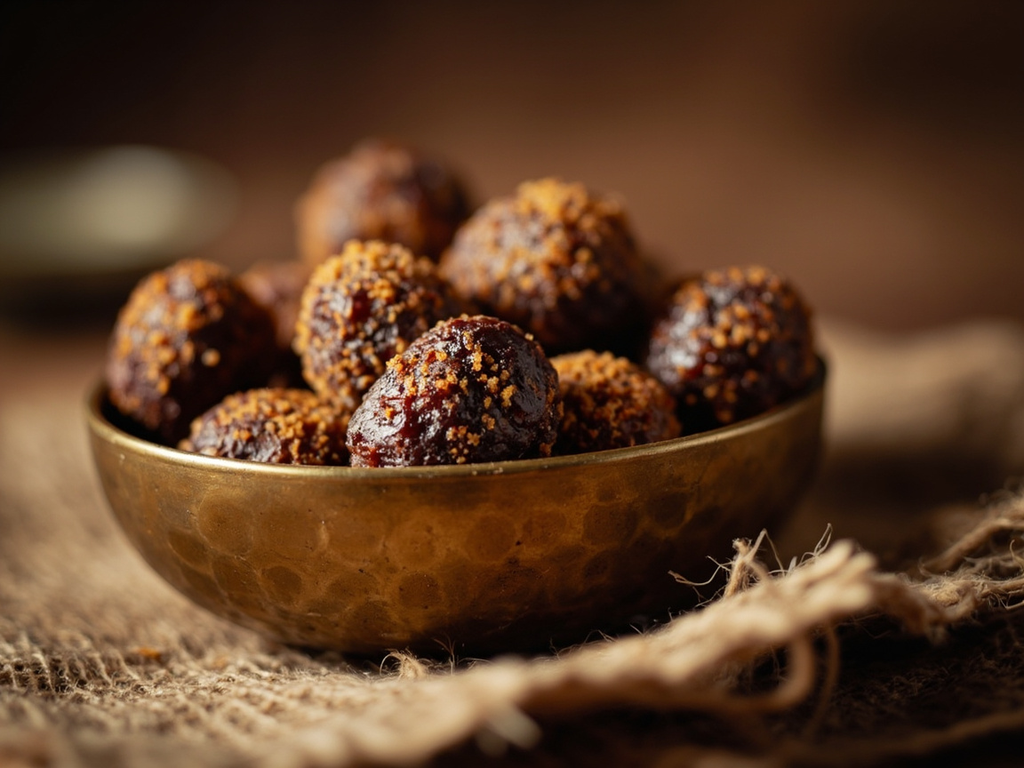
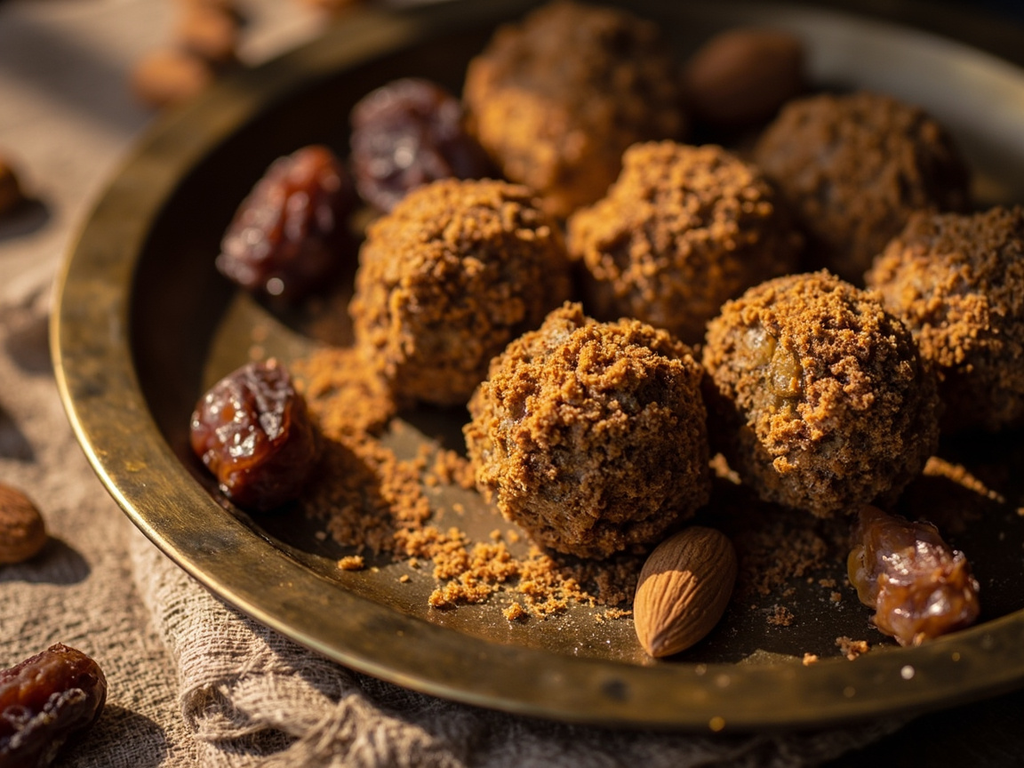
Marching provisions: slices of brown bread twice-baked until hard and durable, accompanied by dried figs and dates, almonds and walnuts bound with honey. Sweet, dense, energy-packed — made to last weeks in a saddlebag.
For the great road overseas, forget delicate dishes: you need what keeps. I had the bread baked twice, until it was hard as a board — soaked in water or wine, it becomes edible again even after many days. With that, figs and dates from the Levant, almonds and a little honey for the heart. Believe a woman who rode all the way to Antioch: a well-filled satchel is worth more than fine words when hunger strikes you on the road.
- •Brown bread (rye and wheat dough) — several slices (preserved base, biscuit)
- •Dried figs — a handful (travel sugar)
- •Dates — a handful (energy)
- •Almonds and walnuts — a measure (fat and protein)
- •Honey — a little (binder and sweetness)
Brown bread and fruits of the road to the Holy Land
Marching provisions: slices of brown bread twice-baked until hard and durable, accompanied by dried figs and dates, almonds and walnuts bound with honey. Sweet, dense, energy-packed — made to last weeks in a saddlebag.
Why this dish? In 1147, Eleanor left for the Second Crusade alongside Louis VII, all the way to Antioch. On the long roads to the Levant, princes and soldiers alike lived on provisions that kept: twice-baked bread, figs and dates, almonds and honey. This traveling satchel tells of the adventurous Eleanor, who crossed Europe and the Mediterranean.
For the great road overseas, forget delicate dishes: you need what keeps. I had the bread baked twice, until it was hard as a board — soaked in water or wine, it becomes edible again even after many days. With that, figs and dates from the Levant, almonds and a little honey for the heart. Believe a woman who rode all the way to Antioch: a well-filled satchel is worth more than fine words when hunger strikes you on the road.
Ingredients (period version)
- Brown bread (rye and wheat dough) — several slices (preserved base, biscuit)
- Dried figs — a handful (travel sugar)
- Dates — a handful (energy)
- Almonds and walnuts — a measure (fat and protein)
- Honey — a little (binder and sweetness)
Ingredients
- Rye bread (or whole wheat bread) — 6 slices (base to be biscuit-baked)
- Dried figs — 100 g (sugar)
- Pitted dates — 100 g (energy)
- Almonds + walnuts — 100 g (fat and protein)
- Honey — 2 tbsp (binder)
- Cinnamon — 1 pinch (fragrance (optional))
Method
- Slice the bread thinly and dry in a very low oven (100°C) for about an hour, until hard and crisp: this is 'biscuit' (twice-baked bread).
- Roughly chop the figs, dates, almonds and walnuts.
- Bind the dried fruit mixture with honey and a pinch of cinnamon; form small balls or a compact block.
- Store the biscuit and fruit balls separately in a cloth. When eating, dip the hard bread in a little water, milk or diluted wine to soften it.
How it was made : 'Biscuit' — literally *bis-cuit*, twice-cooked — was the quintessential travel food of crusaders and sailors: dehydrated, it lasted months. Dried fruits and honey, goods that the Crusades made better known in the West, provided a concentrated energy source easy to transport. Great lords traveled better provisioned than common soldiers, but the principle remained the same.
The contemporary twist : Rolled into compact energy bars pressed in a mold: the 'crusade cake' for today's hikers.
Eleanor of Aquitaine · Charactorium