 flip
flipHais — Date, Butter, and Barley Flour Balls (Provisions of the Hijra)
Hais — Date, Butter, and Barley Flour Balls (Provisions of the Hijra)
Why this dish? During the Hijra, the emigration from Mecca to Medina in 622, Abu Bakr accompanied the Prophet and hid with him for three days in the Cave of Thawr. His daughter Asma brought them provisions in secret. Hais — a paste of dates kneaded with butter and toasted flour — was precisely the kind of compact, durable, and nourishing provision carried in flight or caravan.
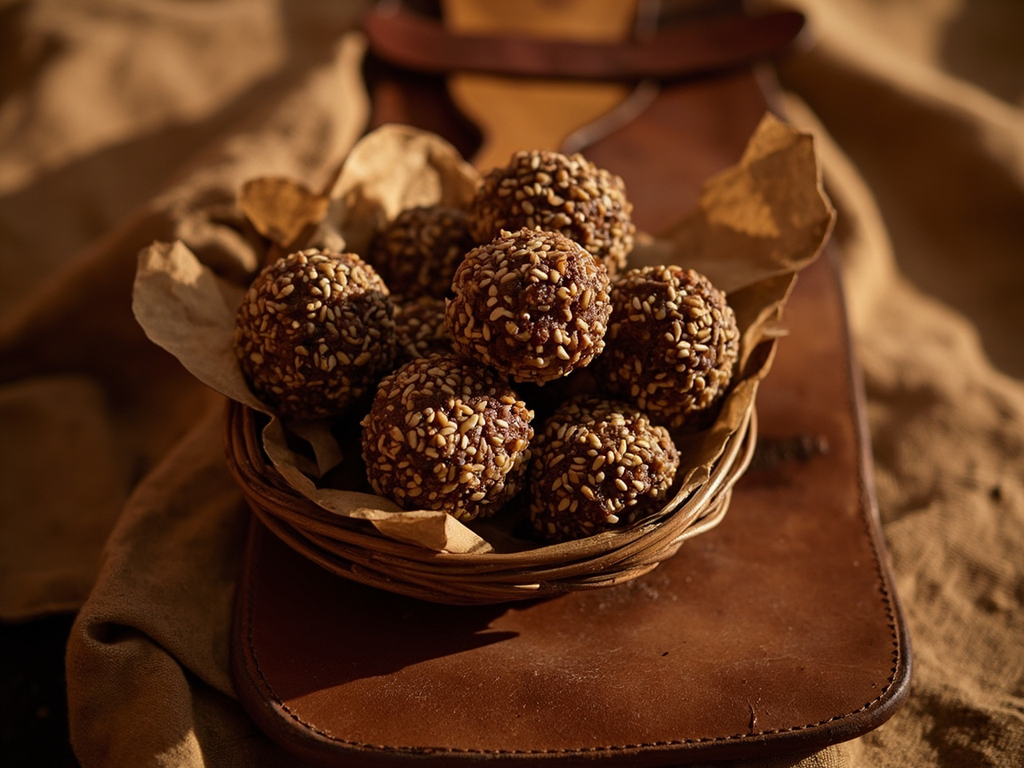
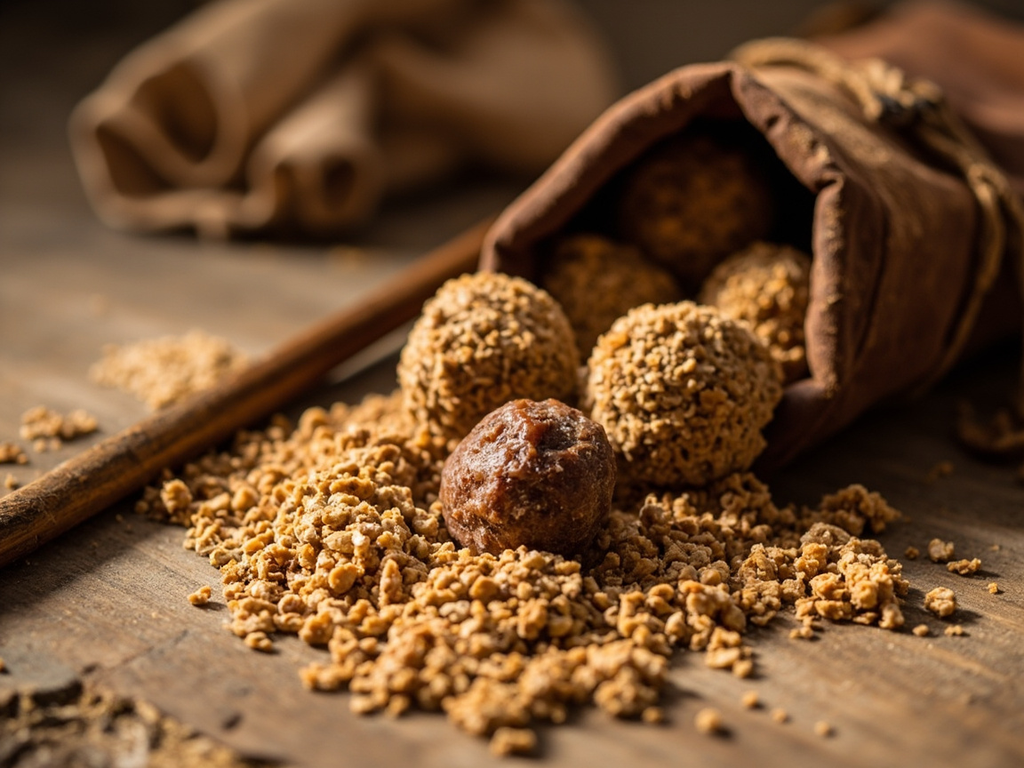
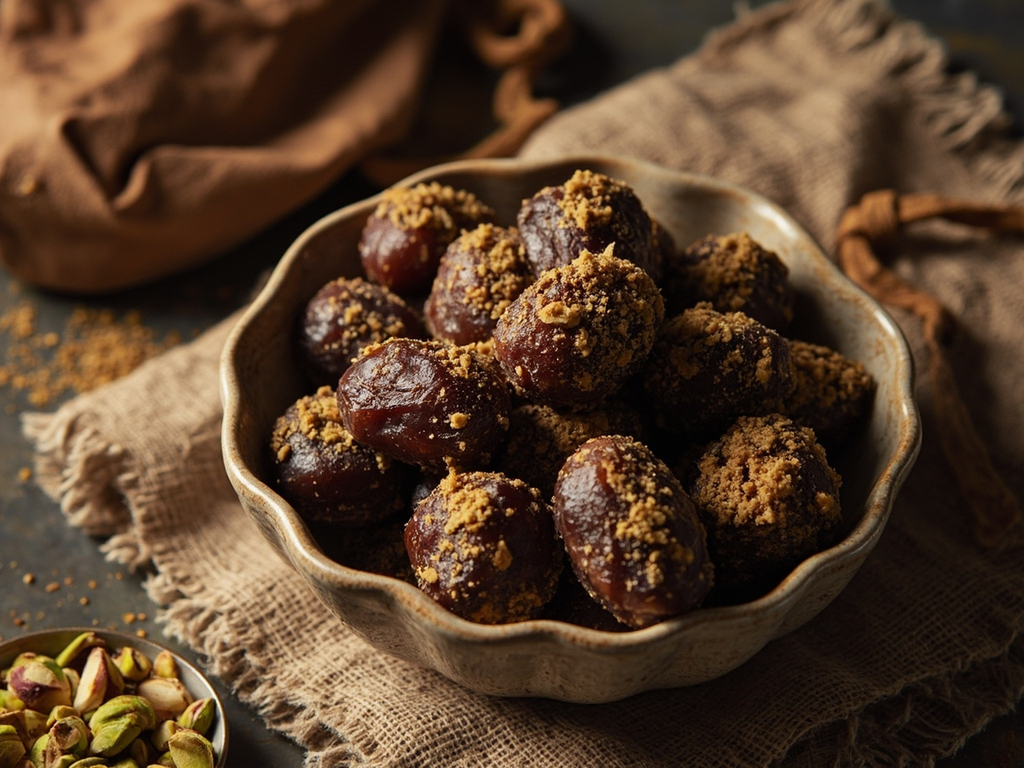
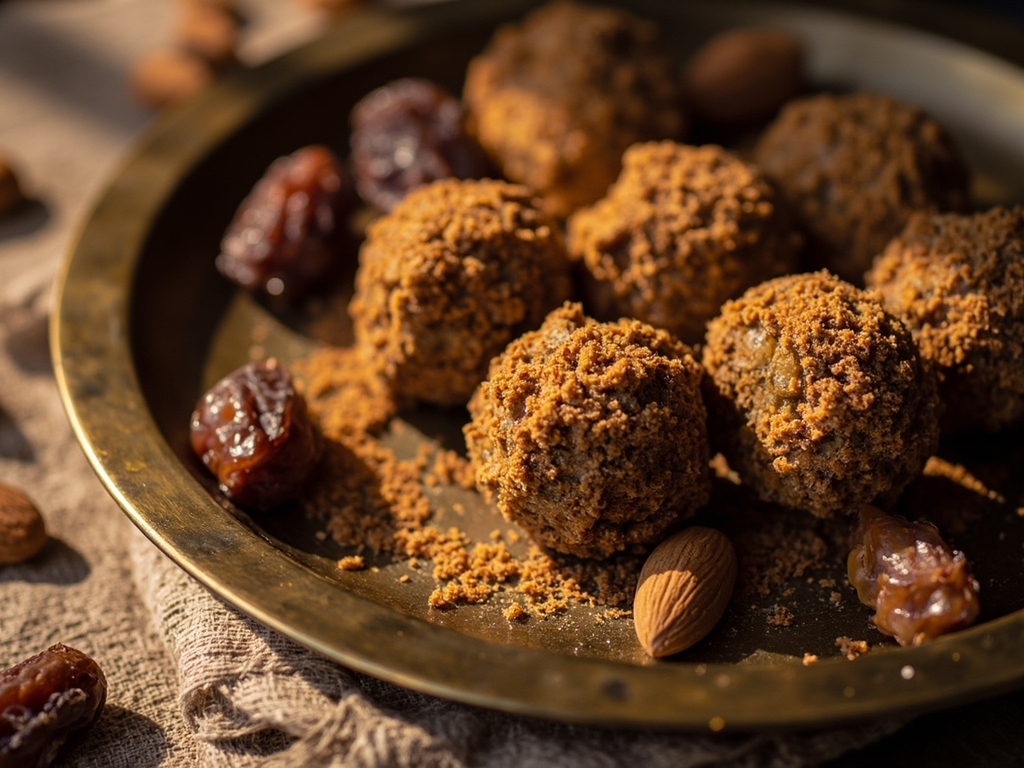
Dense balls of pitted dates, mashed with clarified butter and toasted barley flour. They don't spoil, fit in the hand, and give strength: the desert energy bar.
When we left Mecca to flee to Medina, we carried no feasts, but only what keeps and fits in the palm of the hand. Take these dates, pit them, crush them with melted butter and toasted flour until you have a firm paste — roll it into balls. My daughter Asma, may God be pleased with her, brought such provisions to us in the Cave of Thawr. A handful suffices a man to walk from morning to evening under the sun.
- •Ripe pitted dates (tamr) — two generous handfuls (sweet and binding base)
- •Clarified butter (samn) — a good spoonful (binder and energy)
- •Toasted barley flour — as needed for texture (body and structure)
Hais — Date, Butter, and Barley Flour Balls (Provisions of the Hijra)
Dense balls of pitted dates, mashed with clarified butter and toasted barley flour. They don't spoil, fit in the hand, and give strength: the desert energy bar.
Why this dish? During the Hijra, the emigration from Mecca to Medina in 622, Abu Bakr accompanied the Prophet and hid with him for three days in the Cave of Thawr. His daughter Asma brought them provisions in secret. Hais — a paste of dates kneaded with butter and toasted flour — was precisely the kind of compact, durable, and nourishing provision carried in flight or caravan.
When we left Mecca to flee to Medina, we carried no feasts, but only what keeps and fits in the palm of the hand. Take these dates, pit them, crush them with melted butter and toasted flour until you have a firm paste — roll it into balls. My daughter Asma, may God be pleased with her, brought such provisions to us in the Cave of Thawr. A handful suffices a man to walk from morning to evening under the sun.
Ingredients (period version)
- Ripe pitted dates (tamr) — two generous handfuls (sweet and binding base)
- Clarified butter (samn) — a good spoonful (binder and energy)
- Toasted barley flour — as needed for texture (body and structure)
Ingredients
- Pitted Medjool or Deglet Nour dates — 250 g (base)
- Clarified butter (ghee) or unsalted butter — 50 g (binder)
- Barley flour (or whole wheat flour), dry-toasted — 60 g (body)
- Pinch of cinnamon (optional) — 1 pinch (flavor)
Method
- Toast the barley flour in a dry pan for a few minutes until fragrant and golden, then let cool.
- Mash the pitted dates into a paste with a fork or mortar.
- Mix in the softened clarified butter and knead until homogeneous.
- Gradually add the toasted flour until the dough holds together without sticking.
- Roll into walnut-sized balls between your palms.
- Let firm up in a cool place; they keep for several days in a cloth or container.
How it was made : Hais (حيس) is mentioned in early sources as a mixture of dates, butter (samn), and sometimes aqit (dried cheese) or flour. It was a quintessential subsistence and travel food in 7th-century Arabia, where the date served as bread, sugar, and reserve provision all at once.
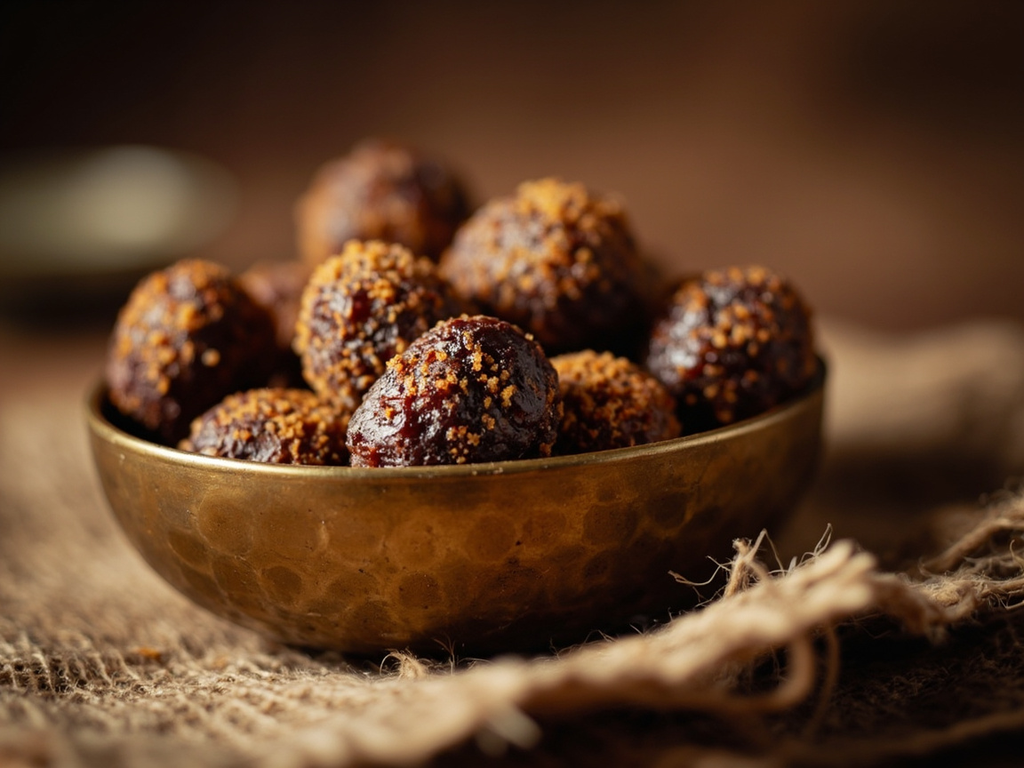
The contemporary twist : Roll the balls in toasted sesame seeds or shredded coconut and present them as 'Hijra energy balls' in a small copper bowl.
Sources : Lilia Zaouali, L'Islam de marché : une histoire de la cuisine arabe médiévale, 2007 · Charles Pellat, art. « Ghidhāʾ » (alimentation), Encyclopédie de l'Islam
Abu Bakr as-Siddiq · Charactorium