 flip
flipSharbat-e Anar va Gulab (Pomegranate Rosewater Sherbet)
Sharbat-e Anar va Gulab (Pomegranate Rosewater Sherbet)
Why this dish? Timurid chronicles mention sharbat served in the princely gardens of Herat, where Navoi held his poetic gatherings on hot summer days. The pomegranate, a sacred fruit in Persian culture and abundant in Khorasan, symbolizes knowledge and generosity — two virtues Navoi embodied as patron and poet.
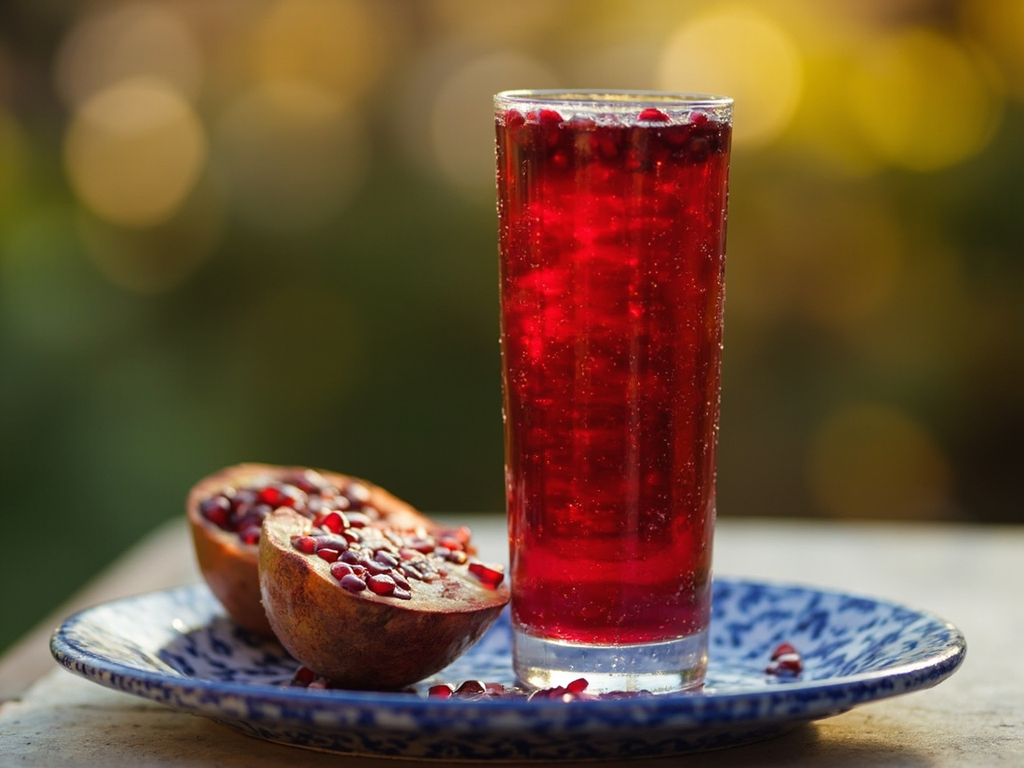
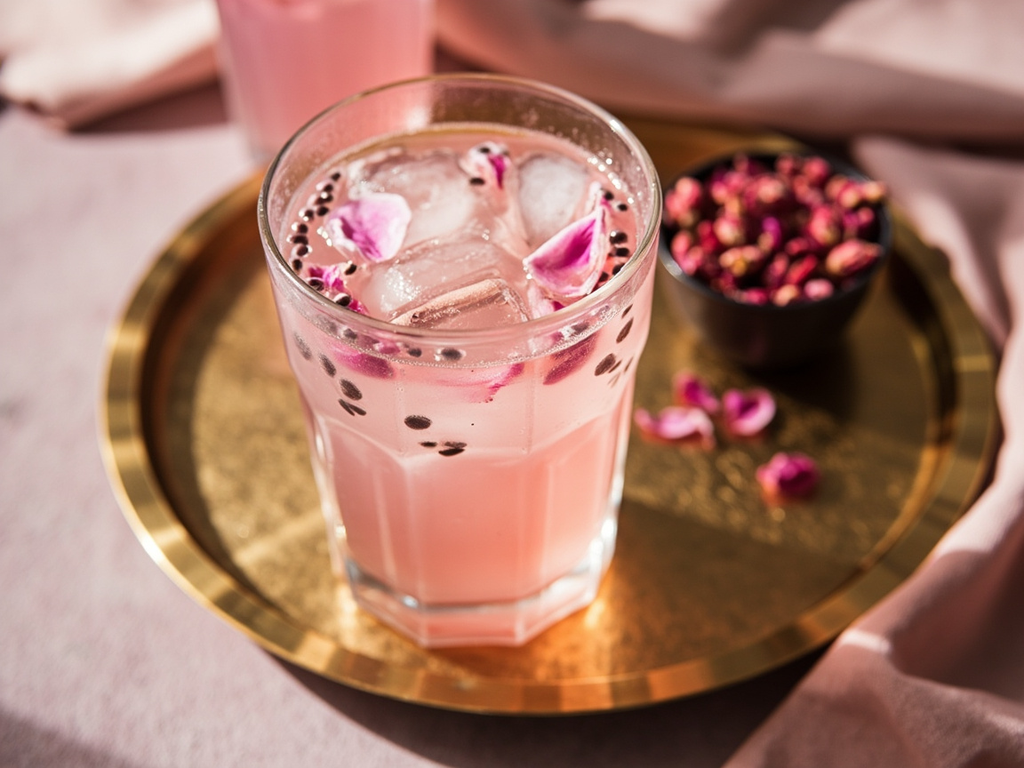
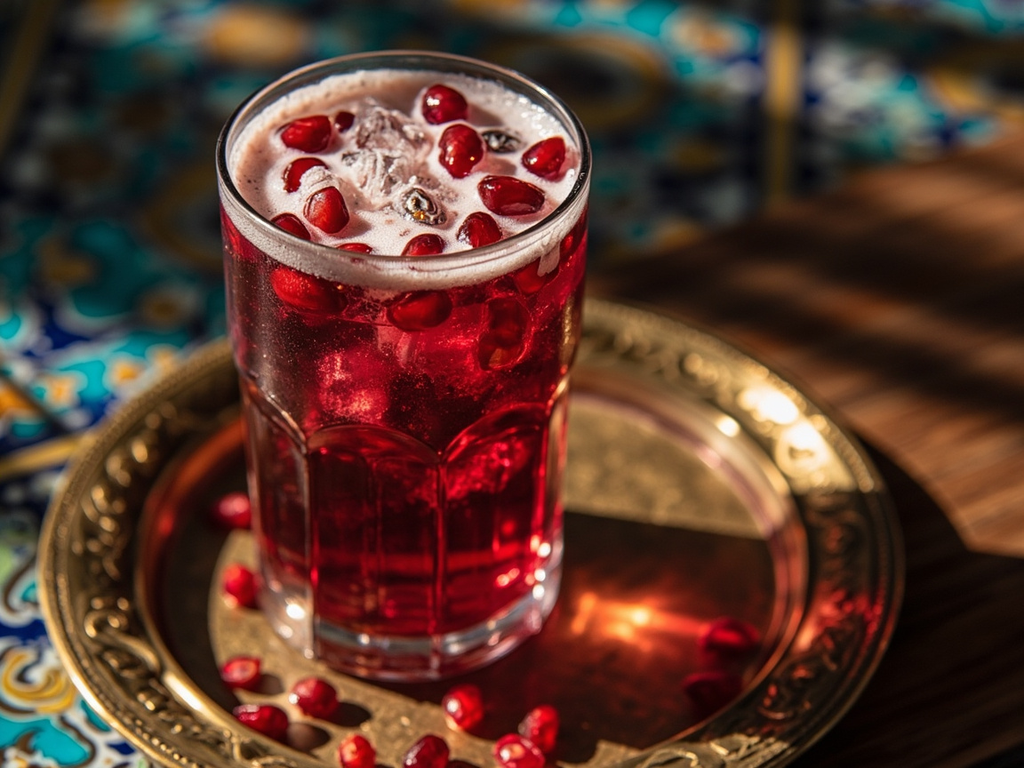
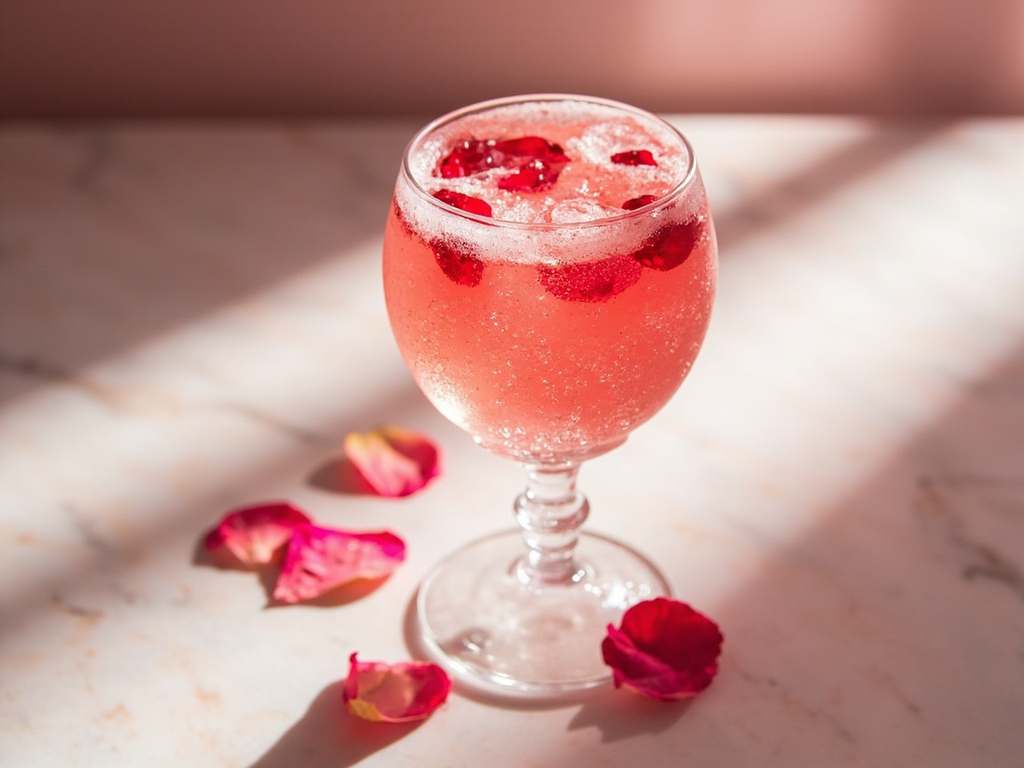
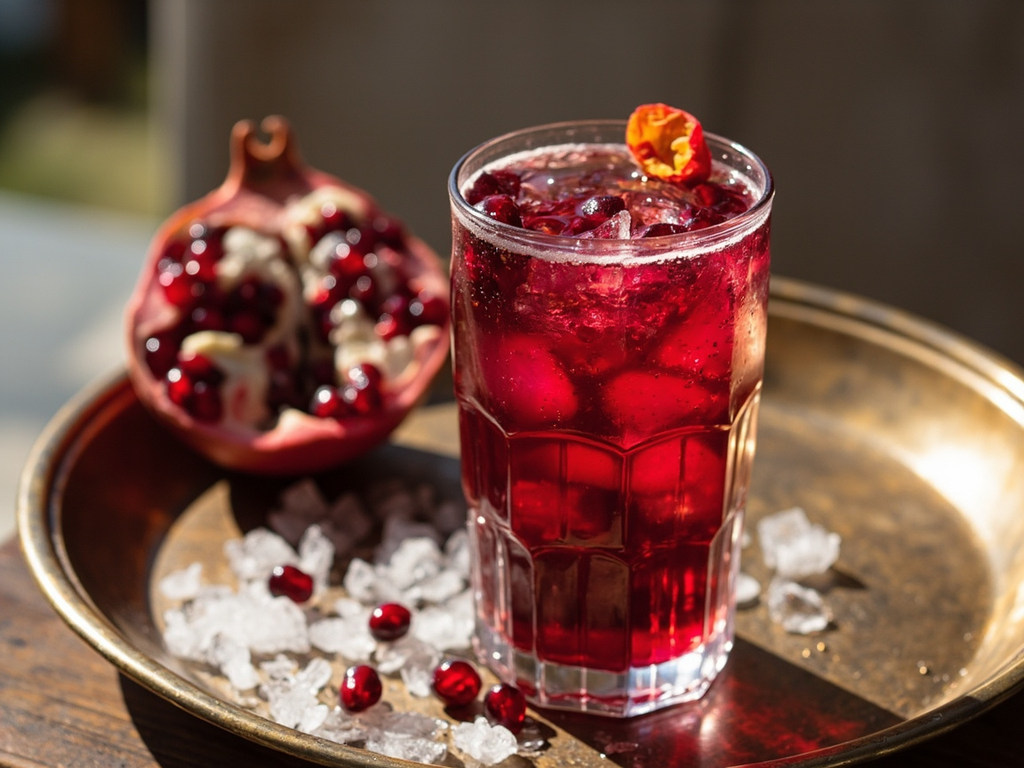
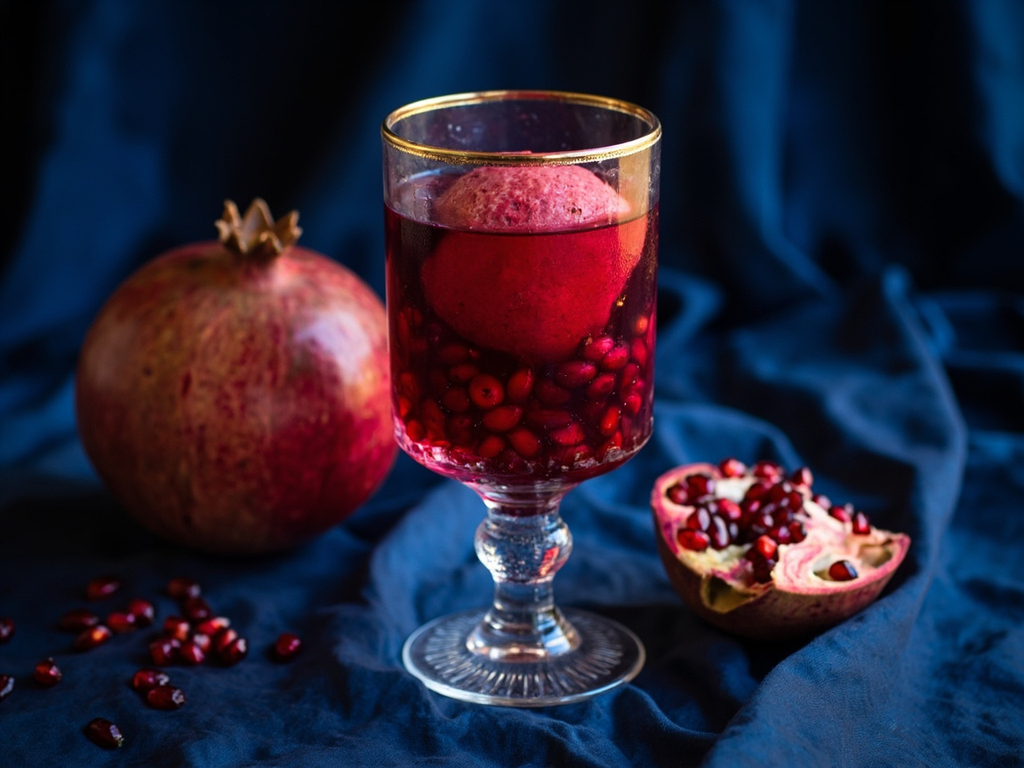
A refreshing drink of fresh pomegranate juice, sweetened with honey and scented with rosewater, served ice-cold with whole pomegranate seeds suspended within. A liquid ruby in a glass.
In the gardens of Herat, when the summer sun beats down without mercy and even the nightingales fall silent, it is pomegranate sharbat that revives the spirit. I have it prepared with pomegranates from our orchards, a few drops of that rosewater whose secret our perfumers hold, and honey from the mountains. Its color — that deep red like the ink of my love verses — delights the eye before the mouth even drinks of it. I serve it to my guests in glass cups, and there is no poet who, having drunk it, does not at once feel inspired.
- •Ripe pomegranates — four or five (Main juice)
- •Honey — to desired sweetness (Natural sweetener)
- •Rosewater — a few drops (Perfume)
- •Fresh spring water — to dilute (Dilution)
- •Crushed ice (preserved mountain snow) — if available (Chilling)
Sharbat-e Anar va Gulab (Pomegranate Rosewater Sherbet)
A refreshing drink of fresh pomegranate juice, sweetened with honey and scented with rosewater, served ice-cold with whole pomegranate seeds suspended within. A liquid ruby in a glass.
Why this dish? Timurid chronicles mention sharbat served in the princely gardens of Herat, where Navoi held his poetic gatherings on hot summer days. The pomegranate, a sacred fruit in Persian culture and abundant in Khorasan, symbolizes knowledge and generosity — two virtues Navoi embodied as patron and poet.
In the gardens of Herat, when the summer sun beats down without mercy and even the nightingales fall silent, it is pomegranate sharbat that revives the spirit. I have it prepared with pomegranates from our orchards, a few drops of that rosewater whose secret our perfumers hold, and honey from the mountains. Its color — that deep red like the ink of my love verses — delights the eye before the mouth even drinks of it. I serve it to my guests in glass cups, and there is no poet who, having drunk it, does not at once feel inspired.
Ingredients (period version)
- Ripe pomegranates — four or five (Main juice)
- Honey — to desired sweetness (Natural sweetener)
- Rosewater — a few drops (Perfume)
- Fresh spring water — to dilute (Dilution)
- Crushed ice (preserved mountain snow) — if available (Chilling)
Ingredients
- Pure pomegranate juice (100%) — 500 ml (Base)
- Liquid honey — 3 tbsp (adjust to acidity) (Sweetener)
- Rosewater — 1 tbsp (Perfume)
- Cold water — 200 ml (Dilution)
- Fresh pomegranate seeds — seeds from half a pomegranate (Garnish)
- Ice cubes — a few (Chilling)
Method
- If using fresh pomegranates, cut them open and extract the juice by pressing the seeds through a sieve (or in a citrus press). Strain.
- In a pitcher, combine the pomegranate juice with the cold water and honey. Stir until the honey is fully dissolved.
- Add the rosewater and stir. Taste and adjust sweetness if needed.
- Chill for at least 1 hour.
- Serve in glasses with ice cubes and a few fresh pomegranate seeds.
How it was made : The word 'sherbet' comes from the Persian sharbat (sweetened drink). The Timurids had snow brought down from the mountains of the Hindu Kush to chill their drinks in summer — a luxury Navoi could easily afford. The pomegranate is one of the oldest cultivated fruits in Iran and Afghanistan, mentioned in the Quran and omnipresent in Persian art and poetry.
The contemporary twist : Add a few fresh mint leaves and serve in gilded Persian tea glasses for a striking visual effect.
Sources : Najmieh Batmanglij, Food of Life: Ancient Persian and Modern Iranian Cooking, Mage Publishers, 2011 · Babur, Baburnama — mentions of the gardens and sharbat of Herat
Alisher Navoi · Charactorium