 flip
flipSharbat-e golab-o bid-meshk (Rosewater and Musk Willow Drink)
Sharbat-e golab-o bid-meshk (Rosewater and Musk Willow Drink)
Why this dish? The Persian tradition of hospitality demands that a fragrant sharbat be offered to every visitor. Jami, whose khanqah received poets, scholars, and travelers passing through Herat, welcomed his guests with these floral drinks. Bid-meshk (musk willow) and rose, two scents omnipresent in his poetry, were the favorite aromas of the Timurid court of Herat.
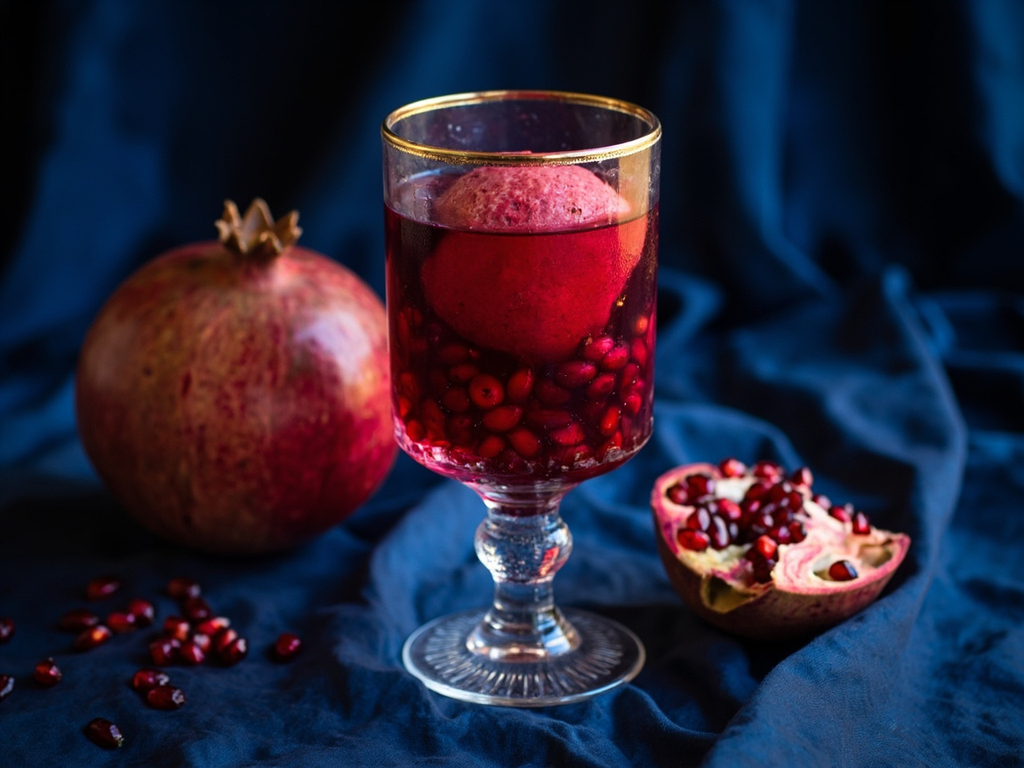
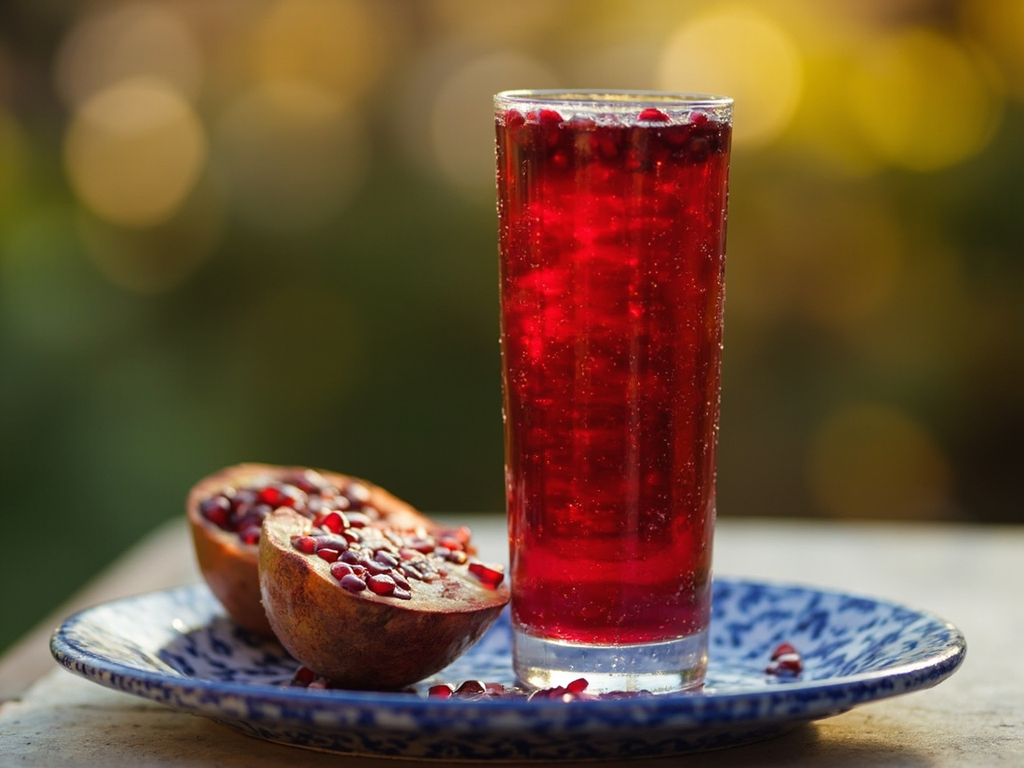
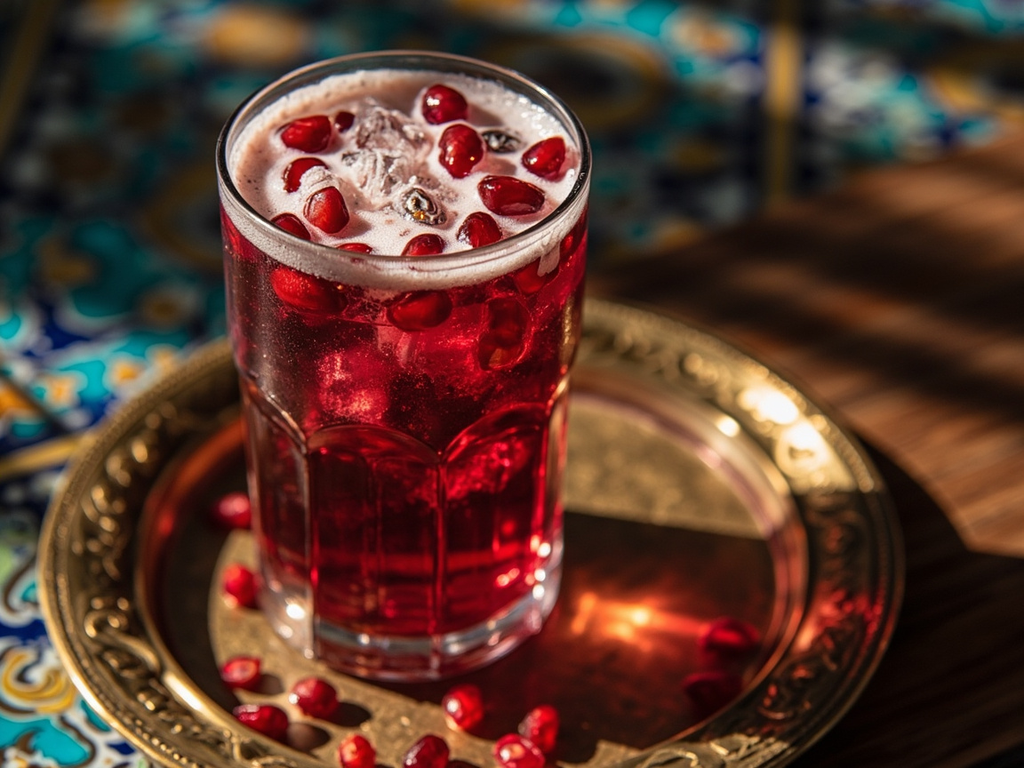
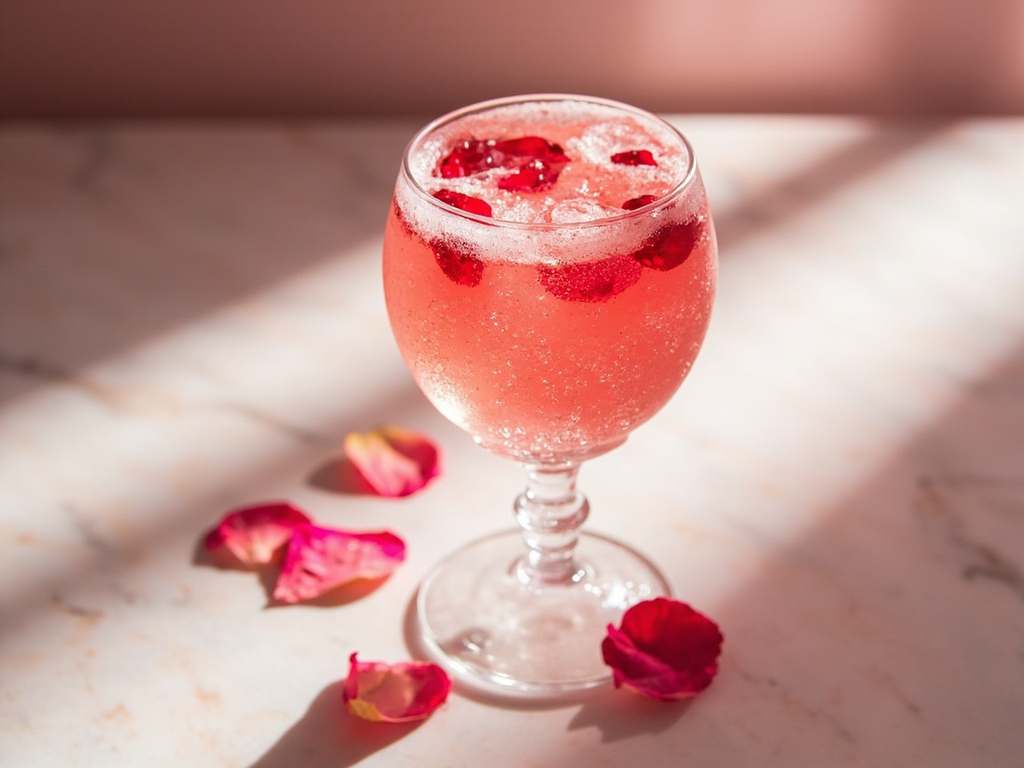
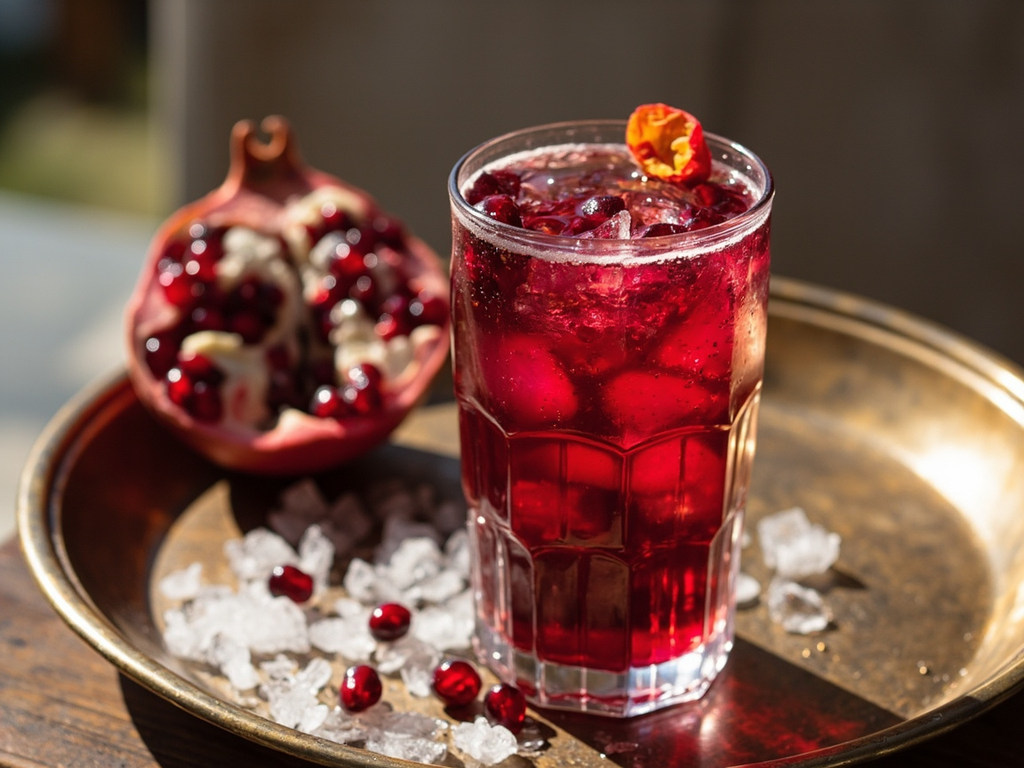
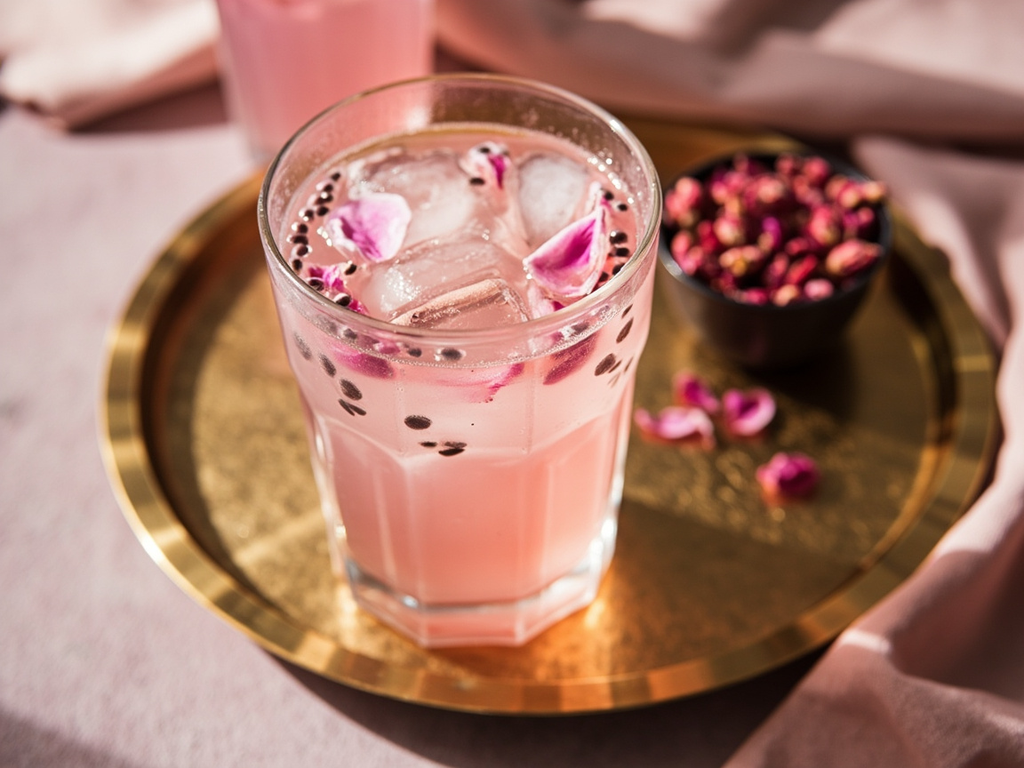
A cool, clear drink made from sugar syrup perfumed with rosewater, brightened with a splash of lemon juice and chia (or basil) seeds that form tiny gelatinous pearls suspended in the liquid. Served very cold in slender glasses, it is a drink of crystalline elegance, floral and refreshing.
The guest who crosses my threshold receives a glass of sharbat before I even ask his name—for the thirst of a traveler is more urgent than my curiosity. Rosewater floats in it like a verse of poetry in silence, and the lemon pricks like the master's question to the disciple. Drink, and you will understand why the poets of Herat never run dry: we are watered with rose.
- •Pure rosewater (golab) — A few spoonfuls (Main fragrance)
- •Sugar — To desired sweetness (Syrup)
- •Fresh spring water — As needed (Base)
- •Lemon or citron juice — A splash (Acidity)
- •Basil seeds (tokhm-e sharbati) — One spoonful (Suspended pearls)
- •A few rose petals — For decoration (Garnish)
Sharbat-e golab-o bid-meshk (Rosewater and Musk Willow Drink)
A cool, clear drink made from sugar syrup perfumed with rosewater, brightened with a splash of lemon juice and chia (or basil) seeds that form tiny gelatinous pearls suspended in the liquid. Served very cold in slender glasses, it is a drink of crystalline elegance, floral and refreshing.
Why this dish? The Persian tradition of hospitality demands that a fragrant sharbat be offered to every visitor. Jami, whose khanqah received poets, scholars, and travelers passing through Herat, welcomed his guests with these floral drinks. Bid-meshk (musk willow) and rose, two scents omnipresent in his poetry, were the favorite aromas of the Timurid court of Herat.
The guest who crosses my threshold receives a glass of sharbat before I even ask his name—for the thirst of a traveler is more urgent than my curiosity. Rosewater floats in it like a verse of poetry in silence, and the lemon pricks like the master's question to the disciple. Drink, and you will understand why the poets of Herat never run dry: we are watered with rose.
Ingredients (period version)
- Pure rosewater (golab) — A few spoonfuls (Main fragrance)
- Sugar — To desired sweetness (Syrup)
- Fresh spring water — As needed (Base)
- Lemon or citron juice — A splash (Acidity)
- Basil seeds (tokhm-e sharbati) — One spoonful (Suspended pearls)
- A few rose petals — For decoration (Garnish)
Ingredients
- Quality rosewater — 3 tbsp (Main fragrance)
- Powdered sugar — 100 g (Syrup)
- Water — 750 ml (Base)
- Fresh lemon juice — 2 tbsp (Acidity)
- Chia or basil seeds — 1 tbsp (Suspended pearls)
- Ice cubes — To taste (Chill)
- Untreated rose petals (optional) — A few (Decoration)
Method
- Soak the chia (or basil) seeds in a small bowl of warm water for 15 minutes. They will swell and form translucent gelatinous pearls.
- Prepare the syrup: in a saucepan, dissolve the sugar in 250 ml water over medium heat. Bring to a simmer, remove from heat, and let cool completely.
- In a pitcher, mix the cooled syrup with the remaining water (500 ml), rosewater, and lemon juice. Taste and adjust sweetness or acidity.
- Add the swollen seeds and stir.
- Refrigerate for at least 1 hour. Serve very cold in glasses with ice cubes and a few rose petals floating on top.
How it was made : Sharbat (from which the word “sorbet” derives) is attested in the Persian world since Sassanid times. Under the Timurids, it was served in metal ewers inlaid with stones, chilled with snow or ice brought from the Hindu Kush mountains and stored in yakhchāl (underground ice houses). Basil seeds (tokhm-e sharbati, literally “sharbat seeds”) are a classic ingredient in these Persian drinks—they swell in water and form mucilaginous pearls that cool the throat. Rosewater was distilled in large quantities in the Herat region and exported as far as India and China.
The contemporary twist : Freeze the sharbat in an ice cube tray and serve as rose granita—a sorbet with its etymological origins rediscovered.
Sources : Manoochehr Sadegh Zadeh, « Boissons et sorbets dans la tradition culinaire persane » in Iran Nameh · Claudia Roden, « The New Book of Middle Eastern Food » (2000), chapter on sharbat
Jami · Charactorium