 flip
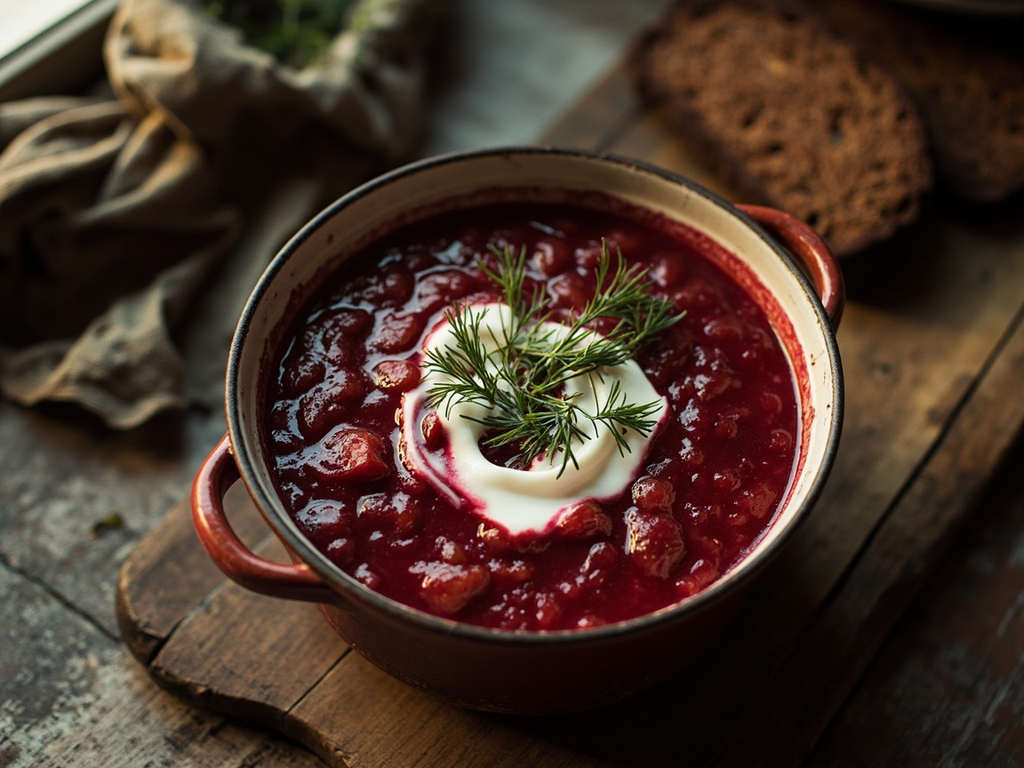
flipBeetroot borscht with a dollop of smetana
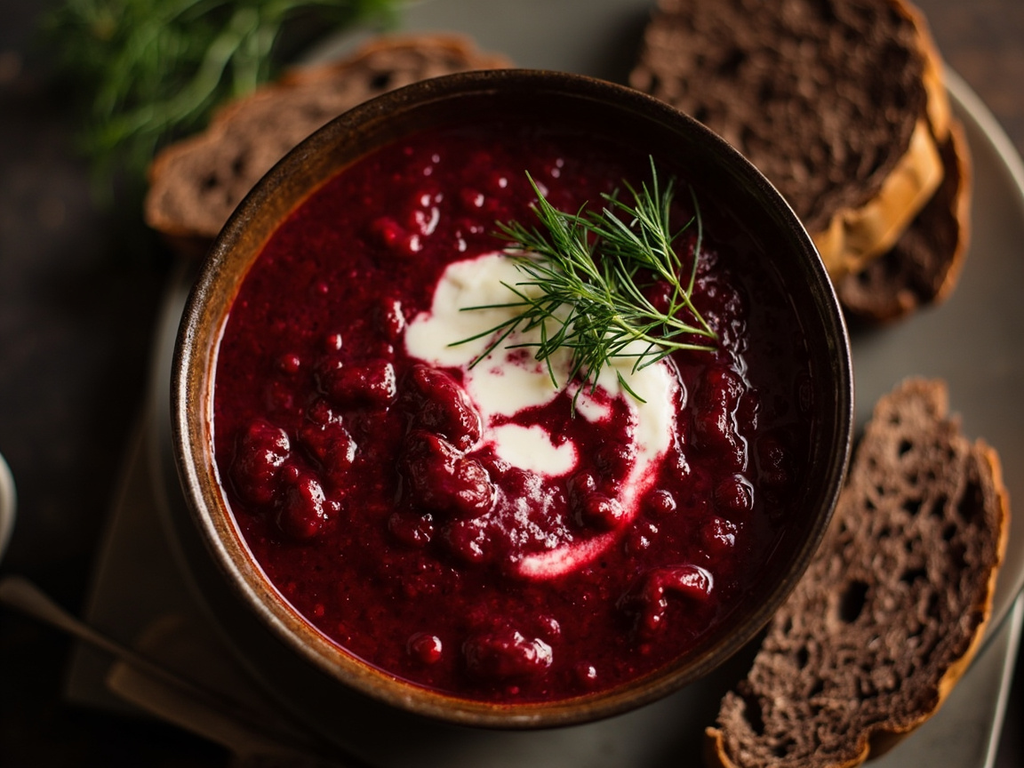
Beetroot borscht with a dollop of smetana
Why this dish? Borscht is the foundational everyday soup of Soviet life, economical and filling: in the era of shortages and rationing described in Pugacheva's file, beets, cabbage, and potatoes were among the few vegetables available year-round. It is the daily dish, from the communal kitchens of Moscow where she grew up.
A deep red soup with beetroot, cabbage, and meat, brightened with a tangy note and softened by sour cream. The ultimate comfort dish, which changes color as soon as you dip in a spoonful of smetana.
Ah, borscht! At home, we didn't ask what there was to eat, we only asked if the pot was big enough. You take your beet, your potato, your cabbage — whatever there is, my dear, whatever there is — and you let it simmer while life goes by. The secret, my mother kept saying: a drop of vinegar so the red holds, and above all, above all, never forget the spoonful of smetana at the last moment. We were poor in everything, but rich in dill, I swear to you.
- •Beets — a few (color and earthy sweetness)
- •White cabbage — a quarter head (volume and texture)
- •Potatoes — two or three (filling starch)
- •Beef for boiling (or marrow bones) — one piece (broth)
- •Onion and carrot — one each (aromatic base)
- •Vinegar — a splash (acidity, sets the color)
- •Fresh dill — one bunch (fresh finish)
- •Smetana (sour cream) — one bowl (binder, creaminess)
Beetroot borscht with a dollop of smetana
A deep red soup with beetroot, cabbage, and meat, brightened with a tangy note and softened by sour cream. The ultimate comfort dish, which changes color as soon as you dip in a spoonful of smetana.
Why this dish? Borscht is the foundational everyday soup of Soviet life, economical and filling: in the era of shortages and rationing described in Pugacheva's file, beets, cabbage, and potatoes were among the few vegetables available year-round. It is the daily dish, from the communal kitchens of Moscow where she grew up.
Ah, borscht! At home, we didn't ask what there was to eat, we only asked if the pot was big enough. You take your beet, your potato, your cabbage — whatever there is, my dear, whatever there is — and you let it simmer while life goes by. The secret, my mother kept saying: a drop of vinegar so the red holds, and above all, above all, never forget the spoonful of smetana at the last moment. We were poor in everything, but rich in dill, I swear to you.
Ingredients (period version)
- Beets — a few (color and earthy sweetness)
- White cabbage — a quarter head (volume and texture)
- Potatoes — two or three (filling starch)
- Beef for boiling (or marrow bones) — one piece (broth)
- Onion and carrot — one each (aromatic base)
- Vinegar — a splash (acidity, sets the color)
- Fresh dill — one bunch (fresh finish)
- Smetana (sour cream) — one bowl (binder, creaminess)
Ingredients
- Raw beets — 400 g (color and sweetness)
- White cabbage — 200 g shredded (texture)
- Potatoes — 2 medium (starch)
- Beef for stew — 400 g (broth and garnish)
- Onion — 1 (base)
- Carrot — 1 (base)
- Tomato paste — 1 tablespoon (tangy roundness (modern option))
- Wine vinegar — 1 tablespoon (acidity, sets the red)
- Fresh dill — ½ bunch (finish)
- Thick sour cream or smetana — 4 tablespoons (serving)
- Salt, pepper, bay leaf — to taste (seasoning)
Method
- Make broth: cover beef with cold water, add bay leaf and salt, skim, and let simmer for 1 hour 30 minutes. Reserve meat, keep broth.
- Grate beets and carrot, slice onion and cabbage. Sauté onion and carrot, add beet, vinegar (and tomato paste), cover, and stew for 15 minutes.
- Add diced potatoes and cabbage to broth, cook 15 minutes, then add beet mixture and shredded meat. Simmer another 10 minutes.
- Adjust salt, pepper, and sour balance. Let rest: borscht is always better reheated.
- Serve very hot with a big dollop of smetana and a sprinkle of chopped dill.
How it was made : In communal apartments (kommunalki) and state canteens, borscht simmered for hours on shared stoves. You put in what you had: marrow bones on good days, plain bones and vegetables on others. The beet, robust and storable in the cellar all winter, made it available even out of season.
The contemporary twist : For a 'Primadonna' twist, serve it in small cups as an appetizer with a quenelle of smetana whipped with dill, chic zakuska style.
Alla Pugacheva · Charactorium