 flip
flipBorscht with Sour Cream
Borscht with Sour Cream
Why this dish? Yeltsin's profile explicitly mentions borscht as one of the soups on his table. The hot "first course" was the daily pillar of every Russian table, from the worker's home in Sverdlovsk to Kremlin dinners.
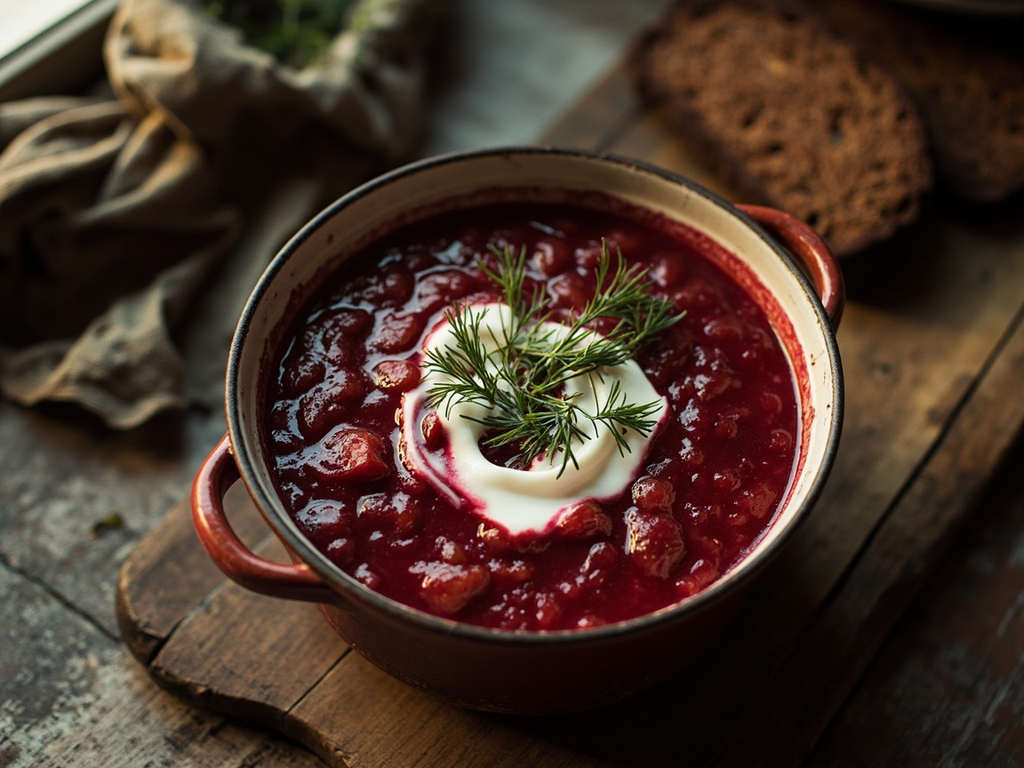
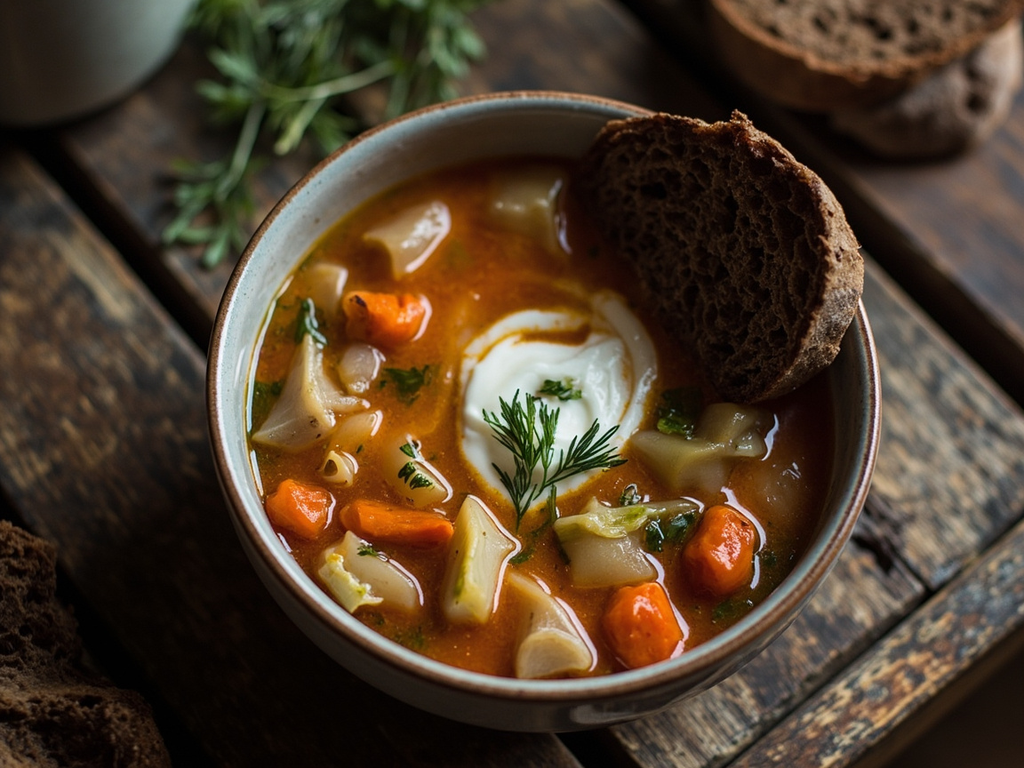
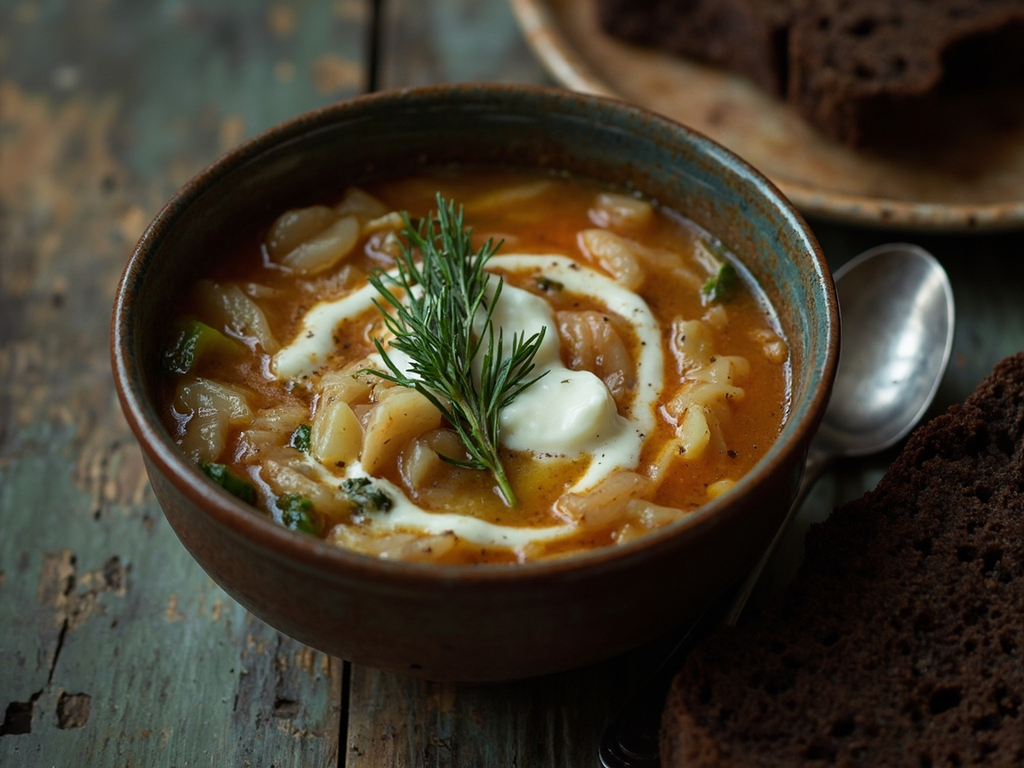
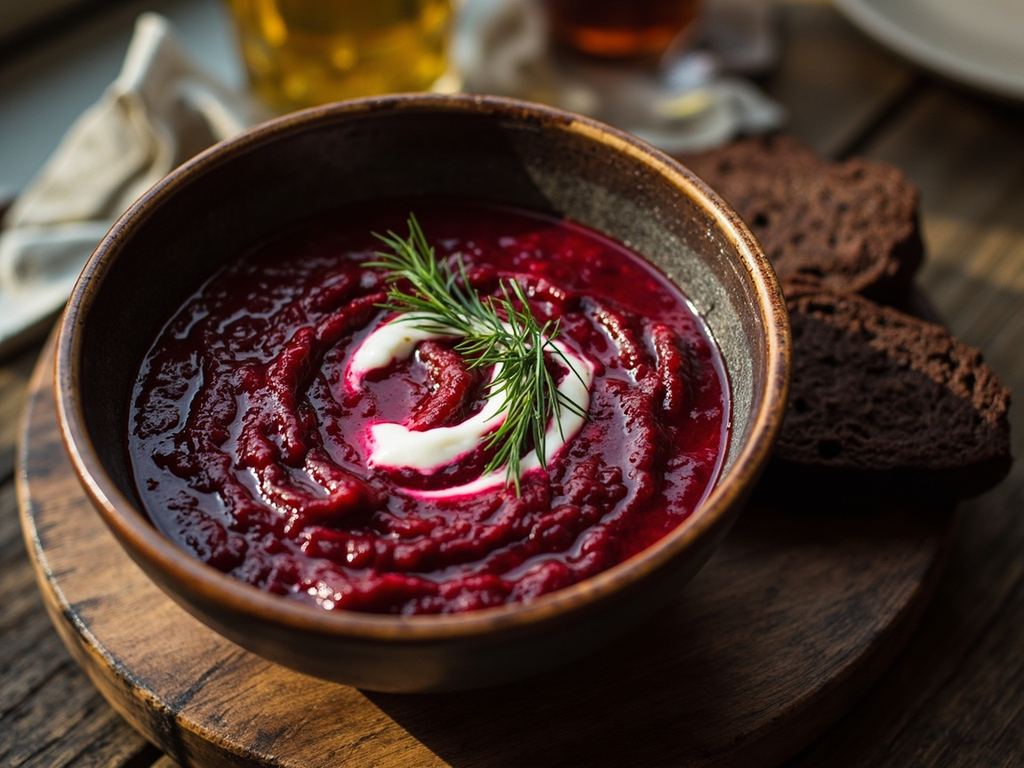
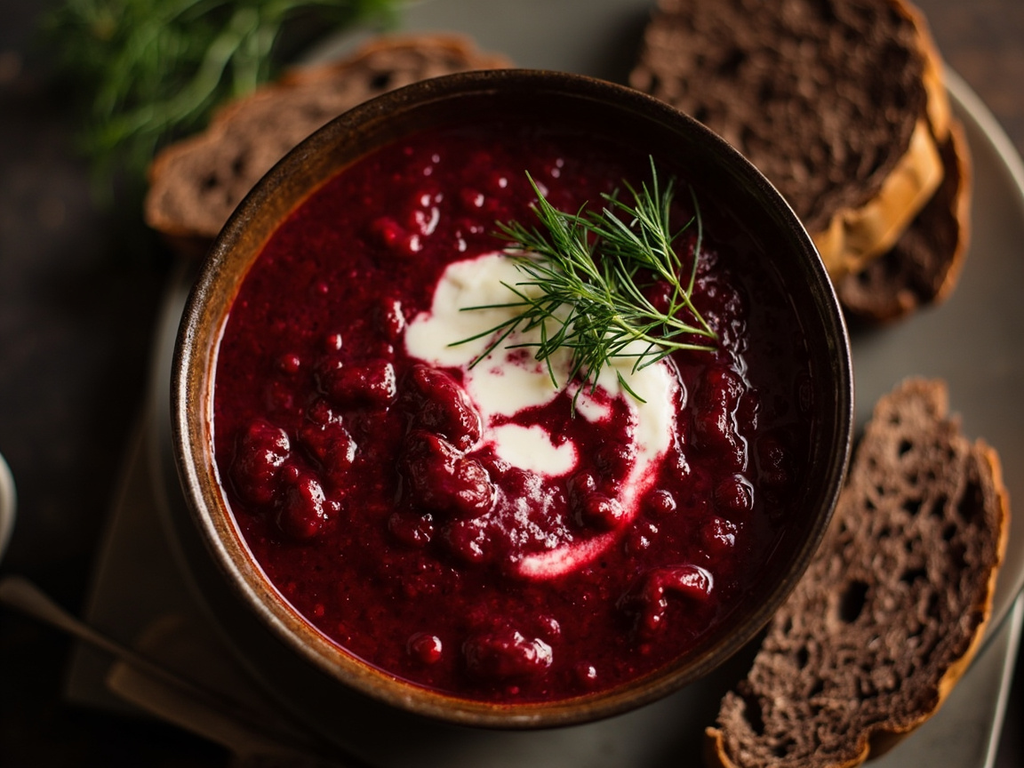
A scarlet soup with beetroot, cabbage, and meat, long-simmered, served with a splash of sour cream that marbled red with white. Tangy, comforting, it is the beating heart of Slavic cuisine.
Borscht, my friend, is the people's soup, and I am a man of the people. My mother would simmer it for hours on the stove, the beet would stain everything red, and the smell would fill the whole izba. Borscht is never served naked: you need the spoonful of smetana that melts into it, and black bread on the side. A bowl of that after a freezing day, and you forget the fatigue. That's what fed this country, not speeches.
- •Beetroot — several (color and sweet-sourness)
- •Cabbage — half a head (body of the soup)
- •Beef brisket — a nice piece (broth and meat)
- •Onion, carrot, parsley root — according to the garden (aromatic base)
- •Potatoes — a few (substance)
- •Vinegar or fermented beet juice — a splash (acidity)
- •Sour cream, dill — for serving (finishing)
Borscht with Sour Cream
A scarlet soup with beetroot, cabbage, and meat, long-simmered, served with a splash of sour cream that marbled red with white. Tangy, comforting, it is the beating heart of Slavic cuisine.
Why this dish? Yeltsin's profile explicitly mentions borscht as one of the soups on his table. The hot "first course" was the daily pillar of every Russian table, from the worker's home in Sverdlovsk to Kremlin dinners.
Borscht, my friend, is the people's soup, and I am a man of the people. My mother would simmer it for hours on the stove, the beet would stain everything red, and the smell would fill the whole izba. Borscht is never served naked: you need the spoonful of smetana that melts into it, and black bread on the side. A bowl of that after a freezing day, and you forget the fatigue. That's what fed this country, not speeches.
Ingredients (period version)
- Beetroot — several (color and sweet-sourness)
- Cabbage — half a head (body of the soup)
- Beef brisket — a nice piece (broth and meat)
- Onion, carrot, parsley root — according to the garden (aromatic base)
- Potatoes — a few (substance)
- Vinegar or fermented beet juice — a splash (acidity)
- Sour cream, dill — for serving (finishing)
Ingredients
- Beef brisket — 500 g (broth and meat)
- Raw beetroot — 3 medium (color and sweetness)
- Shredded white cabbage — ¼ head (body of the soup)
- Potatoes — 2 (substance)
- Onion — 1 (aromatic base)
- Carrot — 1 (aromatic base)
- Tomato concentrate or purée — 1 tbsp (color and acidity)
- Wine vinegar — 1 tbsp (fix the red and acidify)
- Heavy cream — for serving (finishing)
- Chopped dill, salt, pepper — to taste (finishing)
Method
- Cover the beef brisket with cold water, bring to a simmer, skim, then cook at a gentle boil for 1.5 hours. Remove the meat and cut into pieces.
- Grate the beetroot and gently sauté with onion, carrot, tomato concentrate, and a splash of vinegar (which preserves the bright red color).
- Add diced potatoes and shredded cabbage to the broth. Cook for 15 minutes.
- Add the sautéed beetroot and the meat. Simmer for another 10 minutes. Season with salt and pepper.
- Ideally, let the soup rest overnight: borscht is better reheated.
- Serve piping hot with a generous spoonful of sour cream and plenty of dill.
How it was made : Traditional borscht got its acidity not from tomatoes (which arrived late) but from homemade fermented beet kvass or simply vinegar. Each family had its own version, richer or leaner depending on means. It was made in a large pot to last several days.
The contemporary twist : A drizzle of chili oil and a quenelle of dill-infused cream for a contemporary bistro presentation.
Boris Yeltsin · Charactorium