 flip
flipThe grand Sunday aïoli
The grand Sunday aïoli
Why this dish? Aïoli is THE communal dish of Daudet's Midi: it was served on feast days in the village, around a large table, like the Provençal scenes he loved to paint. He, who remained attached to the olives, garlic, and fish of his childhood, found in it all the warmth of Provence that he celebrates in *Letters from My Windmill*.
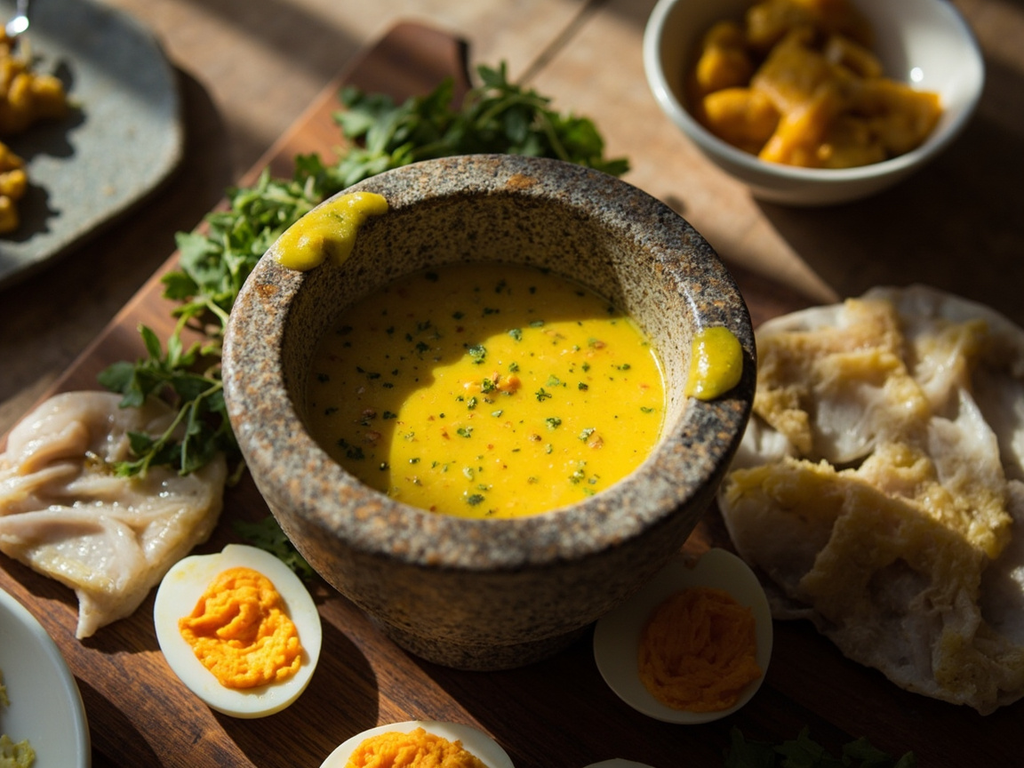
A generous golden sauce of garlic and olive oil, hand-emulsified in a mortar, served in the center of the table with poached salt cod, snails, hard-boiled eggs, and garden vegetables. Everyone helps themselves: it is a sharing meal that lasts all afternoon.
Ah, my friend, do sit down and take off your jacket, for aïoli is not eaten on the run! In my mill days, when noon struck, we would pound the garlic in the large boxwood mortar and pour the oil drop by drop, wrist steady, until the sauce took on the color of the sun. The whole village would come to dip their cod and fava beans, and we would talk and laugh, and my pipe would go out ten times without my noticing. Believe me, that is all of Provence in a spoonful: it takes time, garlic, and a joyful heart.
- •Pink garlic from the Midi — one fine head (aromatic base, pounded in mortar)
- •Olive oil from Provence — a good bowlful (body of the sauce, added drop by drop)
- •Fresh egg yolk — one or two (emulsifier)
- •Desalted salt cod — as much as you like (shared fish)
- •Garden vegetables (carrots, fava beans, green beans) — according to season (poached garnish)
- •Hard-boiled eggs and snails — according to guests (traditional accompaniments)
The grand Sunday aïoli
A generous golden sauce of garlic and olive oil, hand-emulsified in a mortar, served in the center of the table with poached salt cod, snails, hard-boiled eggs, and garden vegetables. Everyone helps themselves: it is a sharing meal that lasts all afternoon.
Why this dish? Aïoli is THE communal dish of Daudet's Midi: it was served on feast days in the village, around a large table, like the Provençal scenes he loved to paint. He, who remained attached to the olives, garlic, and fish of his childhood, found in it all the warmth of Provence that he celebrates in *Letters from My Windmill*.
Ah, my friend, do sit down and take off your jacket, for aïoli is not eaten on the run! In my mill days, when noon struck, we would pound the garlic in the large boxwood mortar and pour the oil drop by drop, wrist steady, until the sauce took on the color of the sun. The whole village would come to dip their cod and fava beans, and we would talk and laugh, and my pipe would go out ten times without my noticing. Believe me, that is all of Provence in a spoonful: it takes time, garlic, and a joyful heart.
Ingredients (period version)
- Pink garlic from the Midi — one fine head (aromatic base, pounded in mortar)
- Olive oil from Provence — a good bowlful (body of the sauce, added drop by drop)
- Fresh egg yolk — one or two (emulsifier)
- Desalted salt cod — as much as you like (shared fish)
- Garden vegetables (carrots, fava beans, green beans) — according to season (poached garnish)
- Hard-boiled eggs and snails — according to guests (traditional accompaniments)
Ingredients
- Garlic cloves — 4 to 6 (aromatic base)
- Extra virgin olive oil — 25 cl (body of the sauce)
- Egg yolk — 1, at room temperature (emulsifier)
- Fine salt — 1 pinch (seasoning and helps pounding)
- Cod fillet or desalted salt cod — 600 g (poached fish)
- Vegetables (carrots, potatoes, green beans) — 800 g total (steamed garnish)
- Eggs — 4, hard-boiled (accompaniment)
Method
- Peel the garlic, remove the germ, and pound it in a mortar with a pinch of salt until you get a smooth paste (or crush it very finely).
- Add the egg yolk and work for a few seconds.
- Pour the olive oil in a thin stream, stirring constantly in the same direction, until the sauce thickens and becomes firm and glossy.
- Poach the fish for 8–10 minutes in simmering water; steam the vegetables and hard-boil the eggs.
- Arrange everything around the bowl of aïoli in the center of the table, and let everyone help themselves.
How it was made : In the 19th century, aïoli was made exclusively by hand, in a mortar, and gave its name to the whole meal ("an aïoli"). It was the dish for village festivals and Sunday gatherings, a symbol of the Midi served at large tables.
The contemporary twist : Serve the aïoli in the mortar itself, placed on an olive wood board, with colorful bouquets of vegetables all around — a Provençal sun in the middle of the table.
Sources : J.-B. Reboul, La Cuisinière provençale (1897)
Alphonse Daudet · Charactorium