 flip
flipShukto — The Bitter Stew to Start the Meal
Shukto — The Bitter Stew to Start the Meal
Why this dish? Bengali tradition dictates opening the meal with a bitter dish to 'awaken' the palate and liver. This simple, onion- and garlic-free stew corresponds exactly to the sattvic cuisine of her circle in Dhaka and later Kankhal — a food of awakening and moderation, in the image of that body which ate so little.
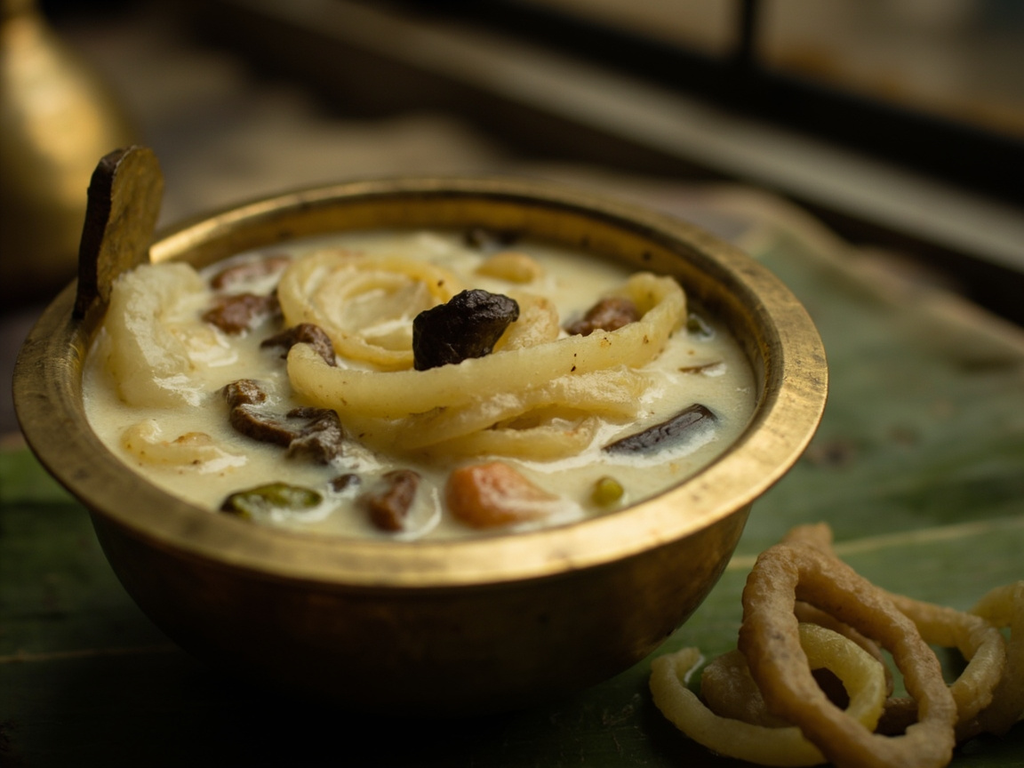
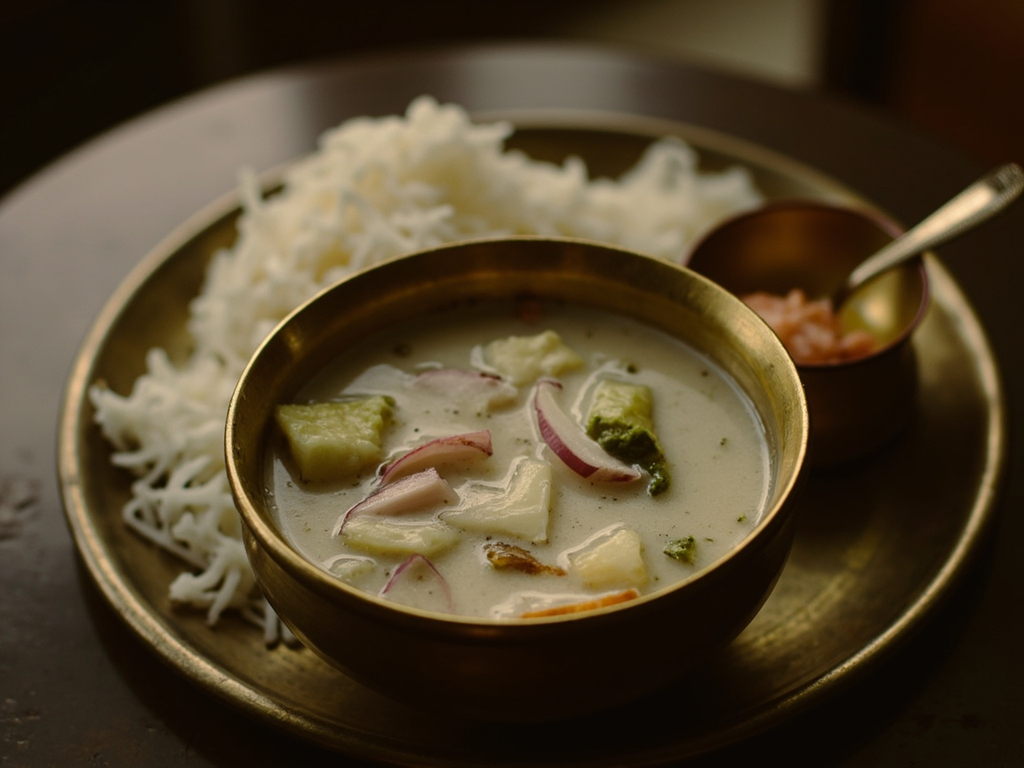
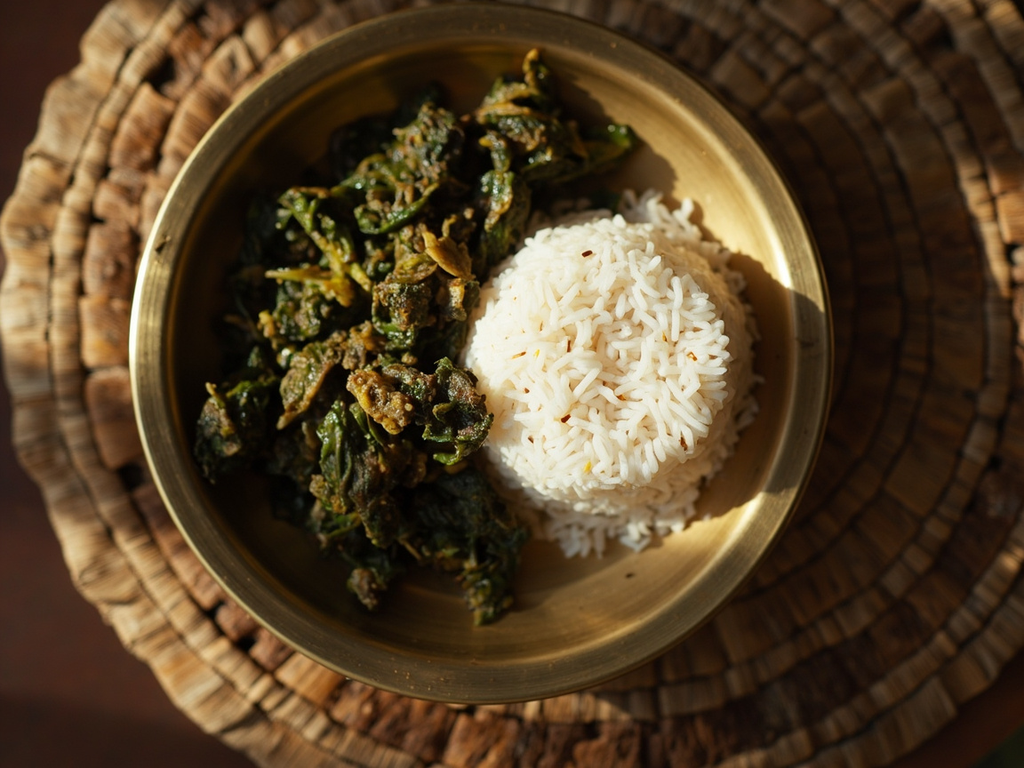
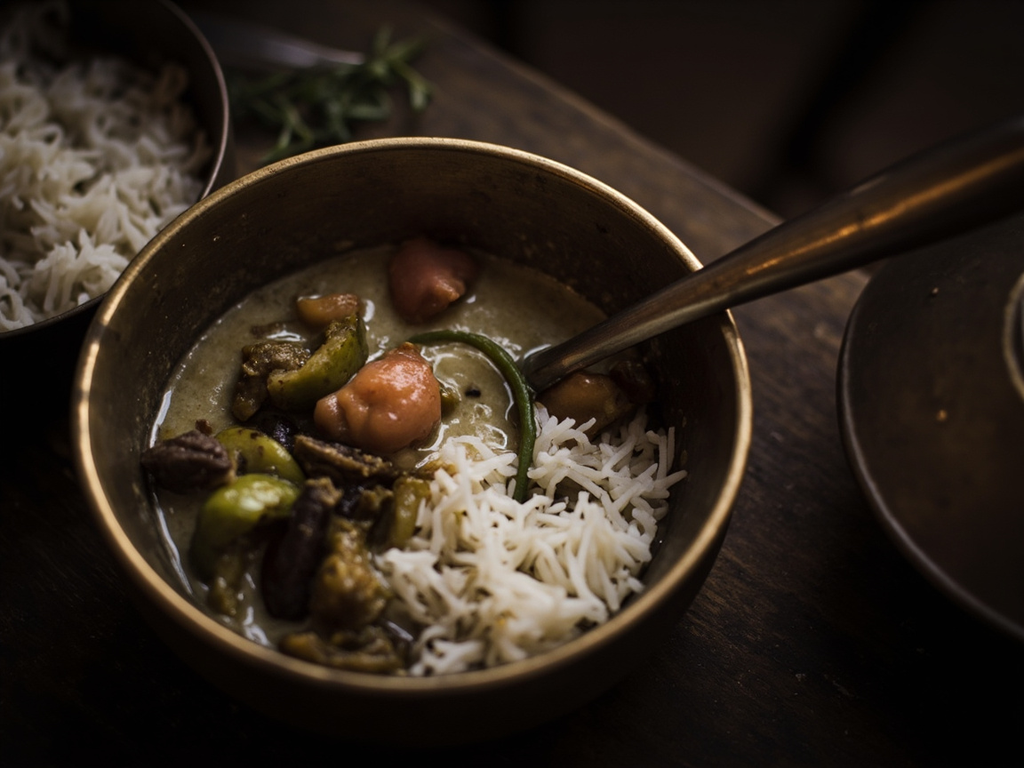
A bittersweet stew of vegetables poached in lightly spiced milk, dominated by bitter gourd (karela). It is eaten first, with a little white rice, to prepare the stomach for the rest of the meal.
Baba, don't make a face at the bitter! This body always asked for shukto to be served first, because bitterness cleanses the tongue and the heart. We would put in the uchhe, the bitter gourd, and fry it in ghee until golden, then drown the vegetables in a little milk so it stays soft. Eat it slowly, in silence, like a prayer — and you will see, the bitterness at the start makes everything else sweeter.
- •Bitter gourd (uchhe / korola) — a few, sliced into rounds (signature bitterness)
- •Green plantain and white radish — cut into sticks (sweet vegetables that balance)
- •Eggplant and sweet potato — in chunks (softness)
- •Fresh milk — a large bowl (smooth binder)
- •Ghee — a good spoonful (sacred fat)
- •Pounded ginger, radhuni and mustard seeds, mustard paste — to taste (sattvic fragrance)
- •Indian bay leaf (tej patta), salt — a little (seasoning)
Shukto — The Bitter Stew to Start the Meal
A bittersweet stew of vegetables poached in lightly spiced milk, dominated by bitter gourd (karela). It is eaten first, with a little white rice, to prepare the stomach for the rest of the meal.
Why this dish? Bengali tradition dictates opening the meal with a bitter dish to 'awaken' the palate and liver. This simple, onion- and garlic-free stew corresponds exactly to the sattvic cuisine of her circle in Dhaka and later Kankhal — a food of awakening and moderation, in the image of that body which ate so little.
Baba, don't make a face at the bitter! This body always asked for shukto to be served first, because bitterness cleanses the tongue and the heart. We would put in the uchhe, the bitter gourd, and fry it in ghee until golden, then drown the vegetables in a little milk so it stays soft. Eat it slowly, in silence, like a prayer — and you will see, the bitterness at the start makes everything else sweeter.
Ingredients (period version)
- Bitter gourd (uchhe / korola) — a few, sliced into rounds (signature bitterness)
- Green plantain and white radish — cut into sticks (sweet vegetables that balance)
- Eggplant and sweet potato — in chunks (softness)
- Fresh milk — a large bowl (smooth binder)
- Ghee — a good spoonful (sacred fat)
- Pounded ginger, radhuni and mustard seeds, mustard paste — to taste (sattvic fragrance)
- Indian bay leaf (tej patta), salt — a little (seasoning)
Ingredients
- Bitter gourd (karela) — 1 medium, thinly sliced
- Green plantain — 1, cut into sticks
- White radish (daikon) — 1/2, cut into sticks
- Eggplant — 1 small, cubed
- Sweet potato — 1 small, in chunks
- Whole milk — 200 ml
- Ghee — 2 tbsp
- Mustard seeds + cumin (if radhuni unavailable) — 1 tsp each
- Mustard seed paste — 1 tbsp
- Grated ginger — 1 tsp
- Bay leaf, salt, pinch of sugar — to taste
Method
- Fry the bitter gourd slices in a little ghee until lightly golden, then set aside.
- In the same ghee, add the bay leaf, mustard seeds, and cumin; let them sputter.
- Add the sweet vegetables (plantain, radish, sweet potato, eggplant), salt, cover, and cook on low heat with a splash of water.
- Dissolve the mustard paste and ginger in the milk, pour over the vegetables, add the fried bitter gourd.
- Simmer without boiling vigorously (or the milk will curdle) until the sauce coats the vegetables. Finish with a drizzle of raw ghee and a pinch of sugar to round off the bitterness.
How it was made : In traditional Bengali kitchens, shukto was made with milk (yogurt or cream were avoided to prevent curdling) and radhuni, a celery-flavored seed now rare outside India. Bitter gourd was sometimes sun-dried and stored for the dry season.
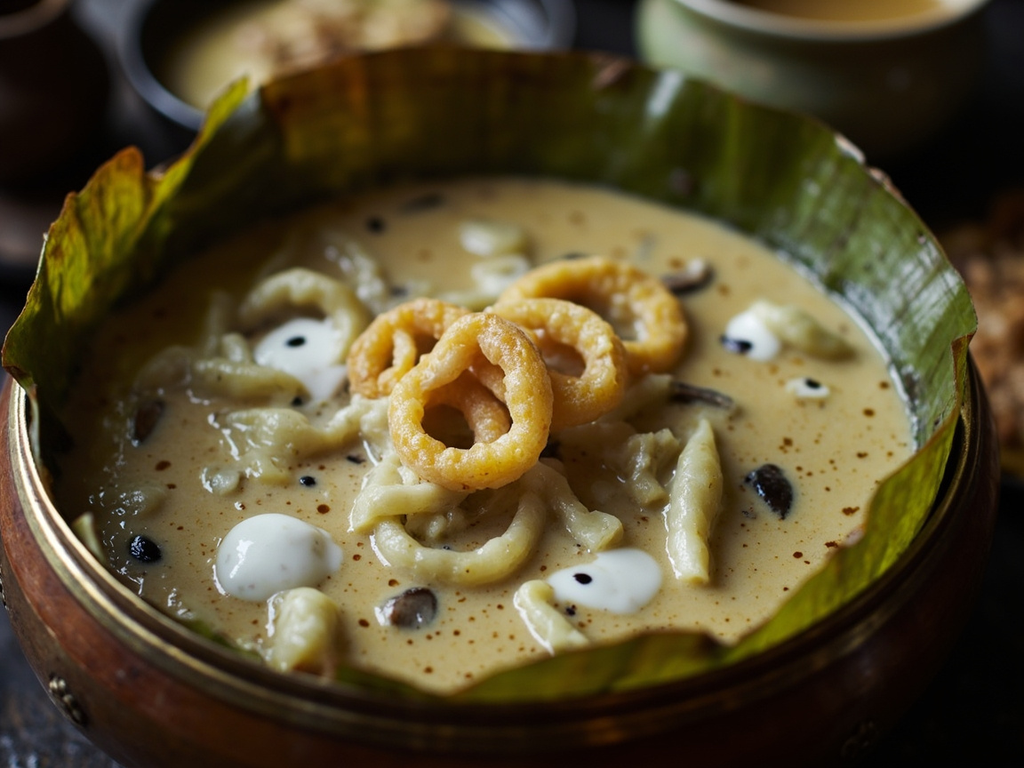
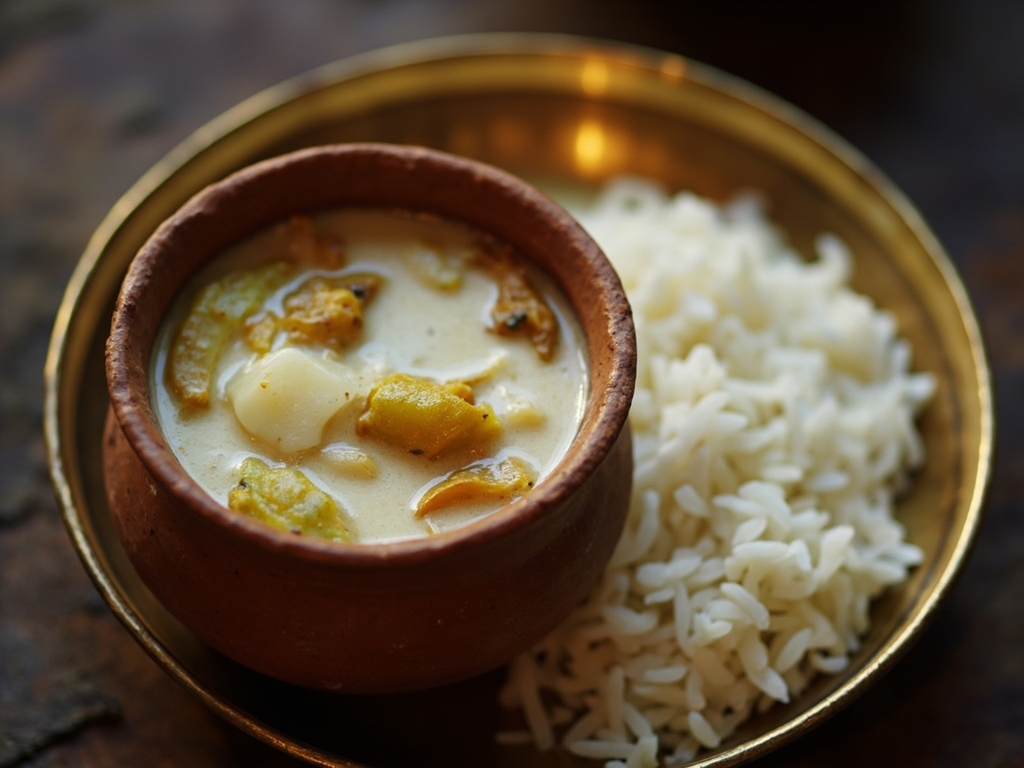
The contemporary twist : Serve the shukto warm in a small glazed earthenware bowl, placed as an opening for a vegetarian menu — the sharp bitterness surprises and 'resets' the palate like a Japanese amuse-bouche.
Sources : Chitrita Banerji, Life and Food in Bengal · Chitrita Banerji, Bengali Cooking: Seasons and Festivals
Anandamayi Ma · Charactorium