 flip
flipSaktu — roasted barley flour for the traveler
Saktu — roasted barley flour for the traveler
Why this dish? When destiny leads Ambika from Kashi to Hastinapura, and later on the path of vanaprastha — the forest retirement at the foot of the Himalayas — she needs food that can be carried and prepared without fire. Saktu, roasted and ground barley, is the viaticum of the roads of ancient India.
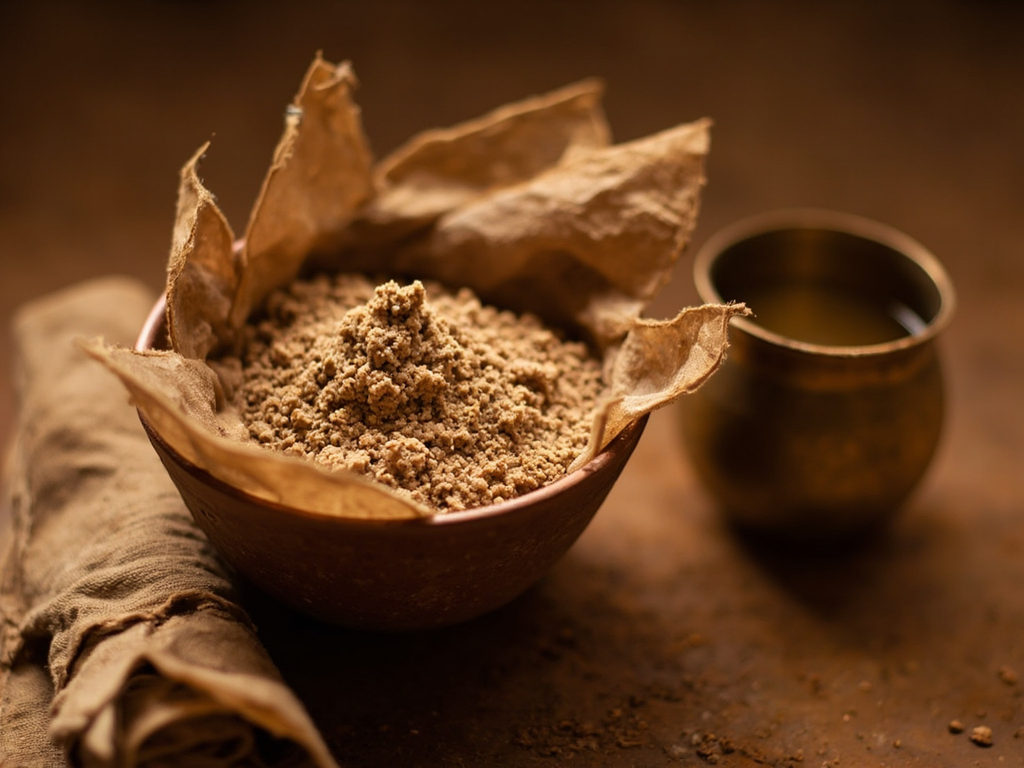
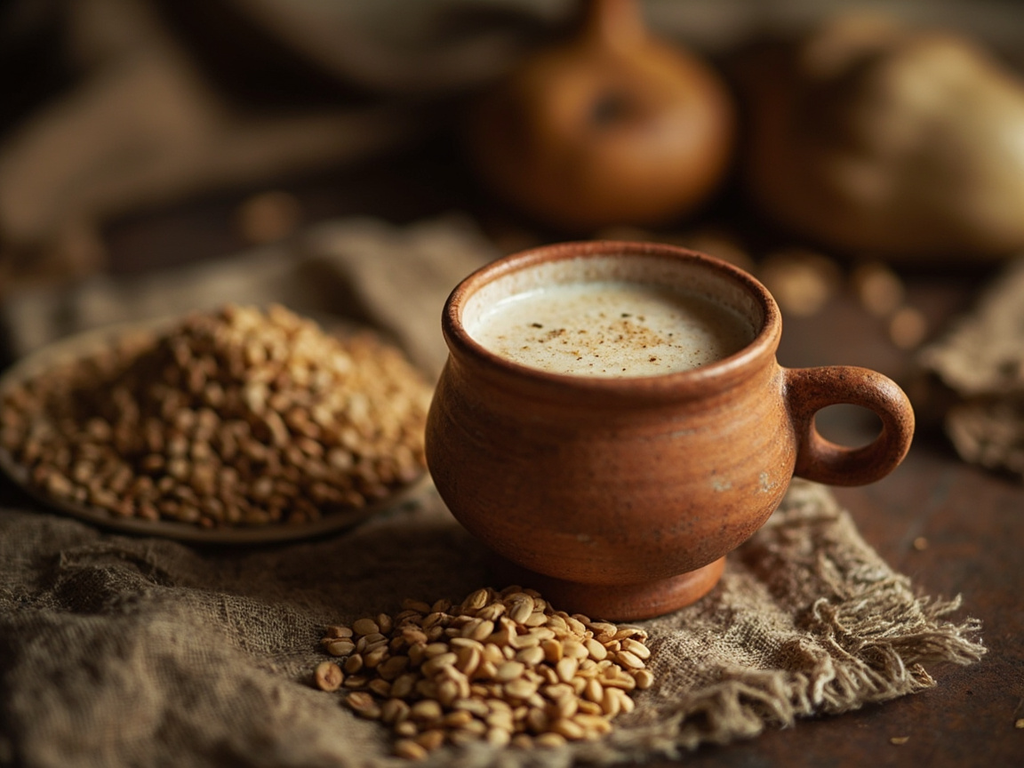
Barley roasted then ground into flour, simply mixed with water or buttermilk, a little salt, and ginger to make an instant meal. Light to carry, nourishing, it is the traveler's and hermit's snack.
The road is long from Kashi to the gates of the Kurus, and longer still the path that leads to the forest, when the time comes to leave the world. I then carry saktu: barley that is roasted then ground, which does not spoil and weighs nothing. By a river, I mix it with water or whey, a pinch of salt, a little ginger — and there is a meal, without fire or pot. It is the food of souls on the move.
- •Barley — according to the journey (base cereal)
- •Water or buttermilk (takra) — at time of eating (mixing liquid)
- •Rock salt — a pinch (seasoning)
- •Dried ginger — a little (preservative aromatic)
- •Ghee — optional (enrichment)
Saktu — roasted barley flour for the traveler
Barley roasted then ground into flour, simply mixed with water or buttermilk, a little salt, and ginger to make an instant meal. Light to carry, nourishing, it is the traveler's and hermit's snack.
Why this dish? When destiny leads Ambika from Kashi to Hastinapura, and later on the path of vanaprastha — the forest retirement at the foot of the Himalayas — she needs food that can be carried and prepared without fire. Saktu, roasted and ground barley, is the viaticum of the roads of ancient India.
The road is long from Kashi to the gates of the Kurus, and longer still the path that leads to the forest, when the time comes to leave the world. I then carry saktu: barley that is roasted then ground, which does not spoil and weighs nothing. By a river, I mix it with water or whey, a pinch of salt, a little ginger — and there is a meal, without fire or pot. It is the food of souls on the move.
Ingredients (period version)
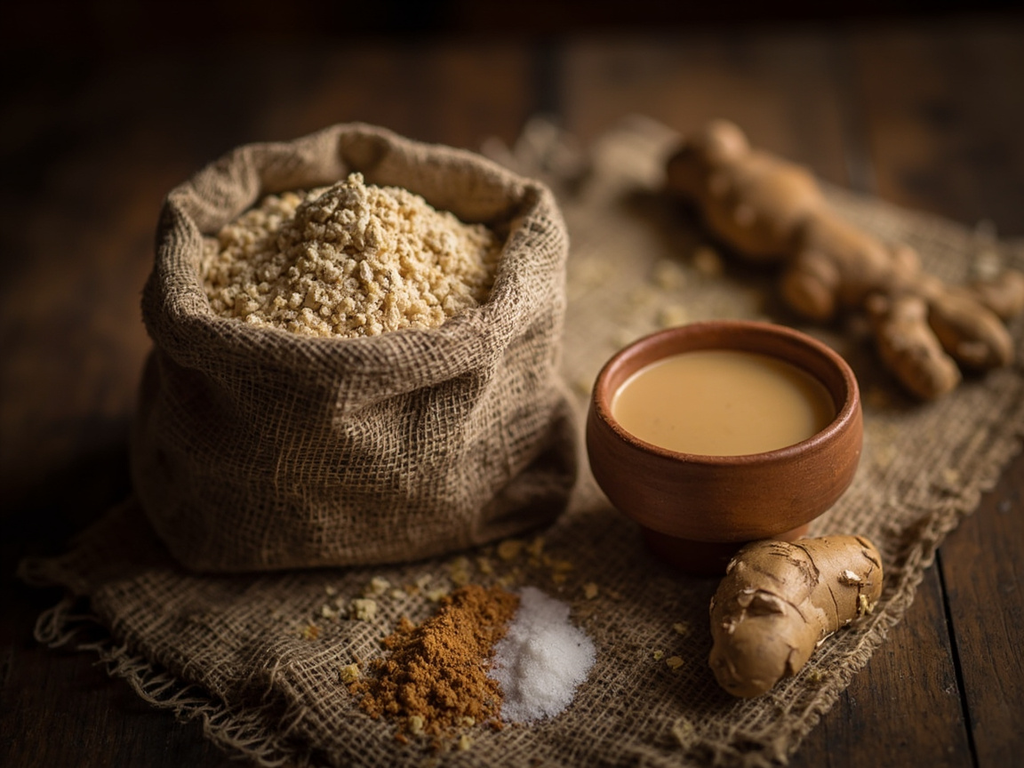
- Barley — according to the journey (base cereal)
- Water or buttermilk (takra) — at time of eating (mixing liquid)
- Rock salt — a pinch (seasoning)
- Dried ginger — a little (preservative aromatic)
- Ghee — optional (enrichment)
Ingredients
- Barley grains (or ready-made roasted barley flour) — 200 g (base cereal)
- Buttermilk or water — 200 ml per serving (mixing liquid)
- Salt — a pinch (seasoning)
- Ginger powder — a pinch (aromatic)
- Ghee — 1 tsp (optional) (enrichment)
Method
- Dry-roast the barley grains in a pan over medium heat, stirring, until golden and fragrant (8–10 minutes).
- Let cool, then grind finely (mill or blender). Store the flour in an airtight container.
- At mealtime, mix 3–4 tbsp of flour with buttermilk or water.
- Add salt, ginger, and a little ghee if desired; stir until smooth, like a porridge or thick drink.
- Consume immediately — no fire needed at this stage.
How it was made : Saktu (roasted cereal flour, often barley) is mentioned as early as Vedic texts as travel food, offering, and sustenance: roasted, ground, and simply mixed, it keeps well and requires no fire, making it the viaticum of pilgrims, ascetics, and marching armies.
The contemporary twist : It is the ancestor of modern Indian sattu: a sweet version with jaggery and cardamom for an energy drink in summer, or a savory post-workout protein smoothie.
Sources : K. T. Achaya, Indian Food: A Historical Companion, Oxford University Press, 1994 · Om Prakash, Food and Drinks in Ancient India, Munshi Ram Manohar Lal, 1961
Ambika · Charactorium