 flip
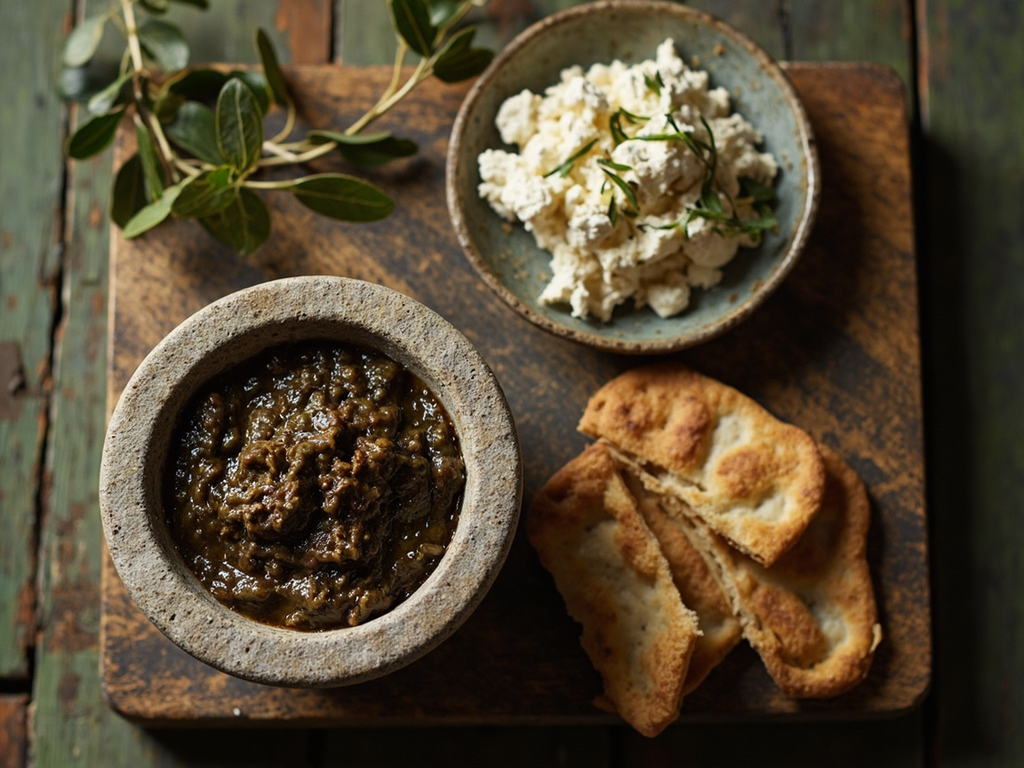
flipCrushed olives and fresh goat cheese from the shepherd
Crushed olives and fresh goat cheese from the shepherd
Why this dish? Alcaeus was often exiled, banished from Mytilene for his struggles against tyrants, cast onto the roads and paths of Lesbos, from Sigeum to Egypt. Brine-cured olives and goat cheese kept and traveled well: this is the food of the warrior and the outlaw, the opson slipped into a pouch with a bit of barley flatbread.
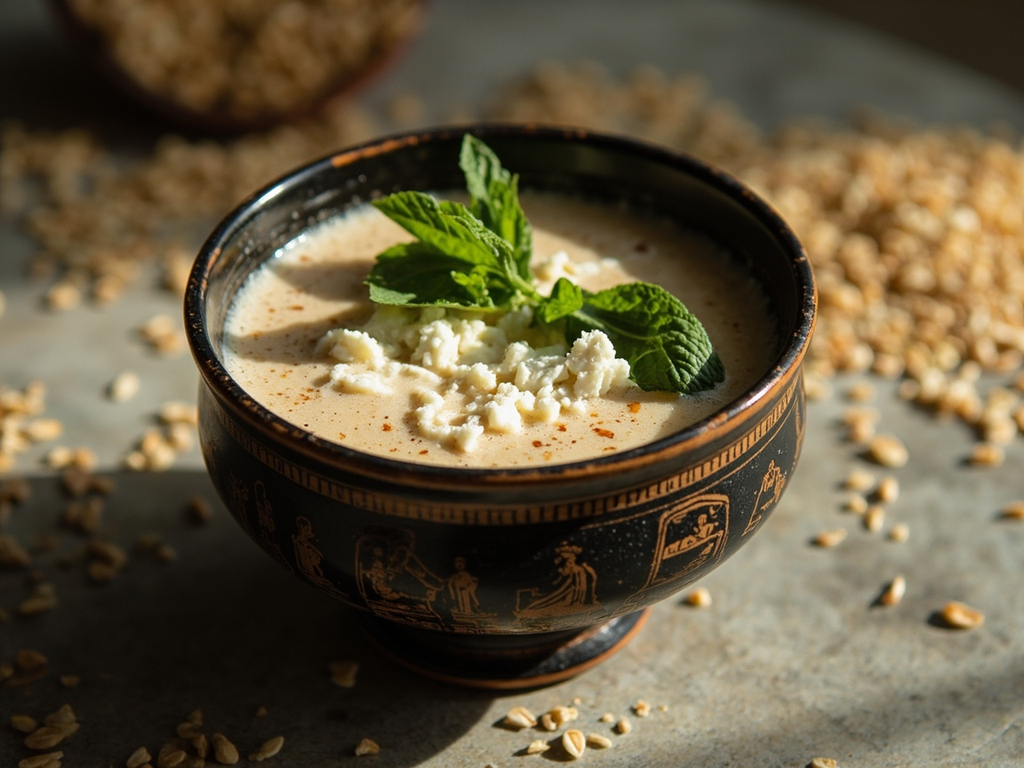
A rustic tapenade of olives crushed in a mortar with oil and herbs, served alongside fresh goat cheese. Salty, meaty, slightly bitter: enough to sustain you on the road, to spread on maza or eat as is under the shade of an olive tree.
Exile taught me what a man must know to carry: a little barley, olives in salt, a lump of cheese from our goats. Such is the pouch of the banished man as of the soldier! Crush the olives in the mortar with oil and thyme, wrap the cheese in a leaf — and even far from Mytilene, far from my table and my friends, you will still eat like a free man.
- •Brine-cured black olives — two handfuls (base)
- •Olive oil — a drizzle (binder)
- •Thyme, oregano, coriander seeds — by hand (scent)
- •Fresh goat cheese — a lump (accompaniment)
- •Wine vinegar (optional) — a few drops (brightness)
Crushed olives and fresh goat cheese from the shepherd
A rustic tapenade of olives crushed in a mortar with oil and herbs, served alongside fresh goat cheese. Salty, meaty, slightly bitter: enough to sustain you on the road, to spread on maza or eat as is under the shade of an olive tree.
Why this dish? Alcaeus was often exiled, banished from Mytilene for his struggles against tyrants, cast onto the roads and paths of Lesbos, from Sigeum to Egypt. Brine-cured olives and goat cheese kept and traveled well: this is the food of the warrior and the outlaw, the opson slipped into a pouch with a bit of barley flatbread.
Exile taught me what a man must know to carry: a little barley, olives in salt, a lump of cheese from our goats. Such is the pouch of the banished man as of the soldier! Crush the olives in the mortar with oil and thyme, wrap the cheese in a leaf — and even far from Mytilene, far from my table and my friends, you will still eat like a free man.
Ingredients (period version)
- Brine-cured black olives — two handfuls (base)
- Olive oil — a drizzle (binder)
- Thyme, oregano, coriander seeds — by hand (scent)
- Fresh goat cheese — a lump (accompaniment)
- Wine vinegar (optional) — a few drops (brightness)
Ingredients
- Pitted black olives — 150 g (base)
- Extra virgin olive oil — 3 tbsp (binder)
- Dried oregano — 1 tsp (scent)
- Crushed coriander seeds — ½ tsp (scent)
- Fresh goat cheese — 150 g (accompaniment)
- Red wine vinegar — 1 tsp (brightness)
Method
- Crush the olives in a mortar (or chop coarsely) without reducing to a fine puree.
- Add the oil, oregano, coriander, and vinegar, mix into a coarse paste.
- Taste before salting: the olives already provide plenty of salt.
- Arrange the olive paste next to the fresh goat cheese.
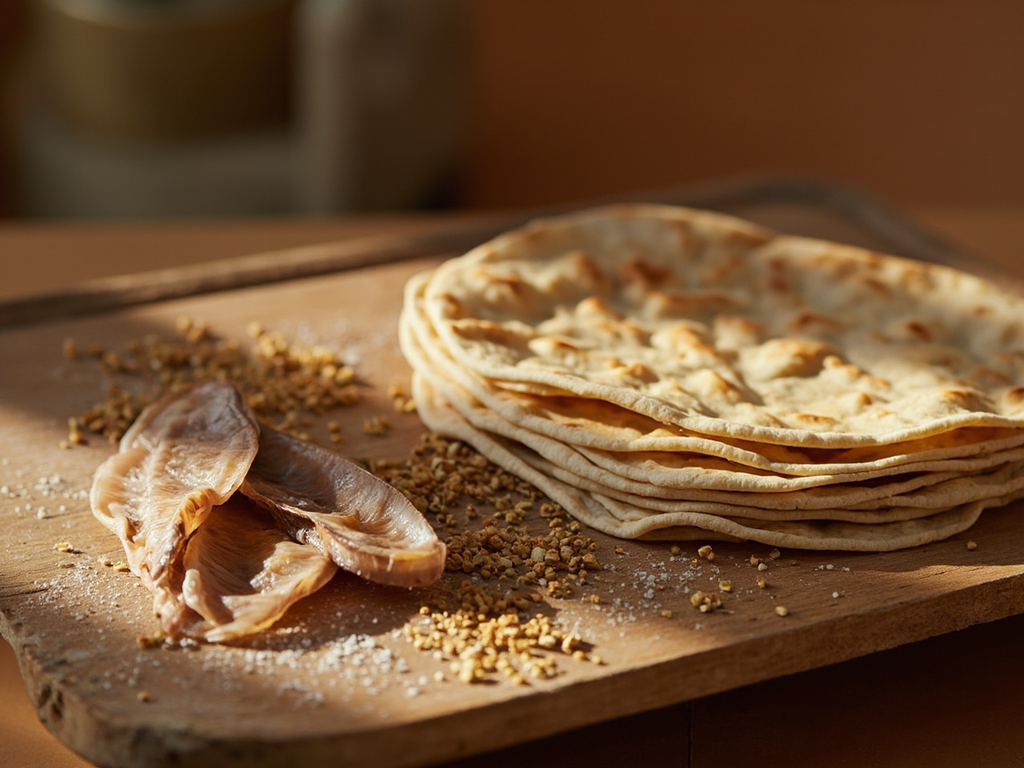
- Serve with barley flatbreads (recipe r1) to spread, or wrap everything for a road meal.
How it was made : The olive tree and the goat are pillars of Greek diet. Brine-cured olives and cheeses kept well and traveled easily: this was the most democratic opson, present both in the peasant's pouch and on the aristocrat's table. They were ground in a mortar with local herbs.
The contemporary twist : Roll the goat cheese into small balls in herbs and arrange them around the tapenade: an 'exile's platter' to share, sober and noble like the character.
Sources : Athenaeus of Naucratis, The Deipnosophists, books II-III (olives, cheeses) · Andrew Dalby, Siren Feasts: A History of Food and Gastronomy in Greece (1996)
Alcaeus · Charactorium