 flip
flipBhog Khichuri — Rice-Lentil Festive One-Pot
Bhog Khichuri — Rice-Lentil Festive One-Pot
Why this dish? During great pujas and gatherings around Ananda Moyi, in Kankhal as in Dhaka, huge cauldrons of khichuri were cooked, offered to the goddess, and then distributed to all devotees. This is THE communal dish of devotional Bengal: no one goes hungry when bhog is shared.
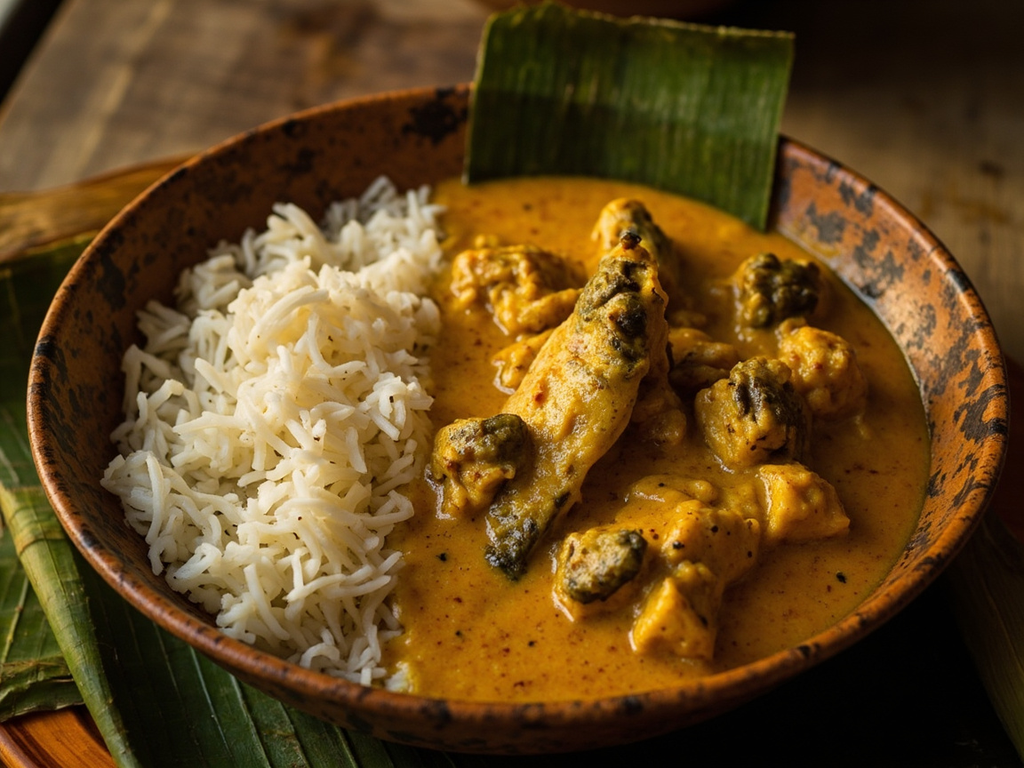
A comforting mix of fragrant rice and roasted mung lentils, simmered with ginger, turmeric, and whole garam masala, enriched with ghee and vegetables. Creamy, golden, deeply satisfying — the dish of collective giving.
Come, come sit down, there's room for everyone! On feast days, this body would watch the khichuri cauldrons as big as drums, and first we would dry-roast the mung dal until its fragrance filled the whole courtyard. We cook it with gobindobhog rice, ginger, a little ghee — never any onion, baba, this is food for the Lord. And when it is first offered to the Divine Mother, that same rice becomes prasad: so eat it as a grace, not as a meal.
- •Gobindobhog rice (fragrant small grain) — two measures (base)
- •Dry-roasted mung lentils (moong dal) — one measure (protein, toasted flavor)
- •Ghee — generous (richness and fragrance)
- •Pounded ginger, turmeric — to taste (color and warmth)
- •Whole garam masala (cardamom, cinnamon, clove), bay leaf, cumin — a few seeds (noble spices)
- •Cauliflower, peas, potato — according to season (vegetables (20th-century cuisine))
- •Green chili, asafoetida, salt, sugar — a little (sattvic seasoning)
Bhog Khichuri — Rice-Lentil Festive One-Pot
A comforting mix of fragrant rice and roasted mung lentils, simmered with ginger, turmeric, and whole garam masala, enriched with ghee and vegetables. Creamy, golden, deeply satisfying — the dish of collective giving.
Why this dish? During great pujas and gatherings around Ananda Moyi, in Kankhal as in Dhaka, huge cauldrons of khichuri were cooked, offered to the goddess, and then distributed to all devotees. This is THE communal dish of devotional Bengal: no one goes hungry when bhog is shared.
Come, come sit down, there's room for everyone! On feast days, this body would watch the khichuri cauldrons as big as drums, and first we would dry-roast the mung dal until its fragrance filled the whole courtyard. We cook it with gobindobhog rice, ginger, a little ghee — never any onion, baba, this is food for the Lord. And when it is first offered to the Divine Mother, that same rice becomes prasad: so eat it as a grace, not as a meal.
Ingredients (period version)
- Gobindobhog rice (fragrant small grain) — two measures (base)
- Dry-roasted mung lentils (moong dal) — one measure (protein, toasted flavor)
- Ghee — generous (richness and fragrance)
- Pounded ginger, turmeric — to taste (color and warmth)
- Whole garam masala (cardamom, cinnamon, clove), bay leaf, cumin — a few seeds (noble spices)
- Cauliflower, peas, potato — according to season (vegetables (20th-century cuisine))
- Green chili, asafoetida, salt, sugar — a little (sattvic seasoning)
Ingredients
- Basmati or gobindobhog rice — 200 g
- Moong dal (split mung lentils) — 100 g
- Ghee — 3 tbsp
- Grated ginger — 1 tbsp
- Turmeric — 1 tsp
- Cumin seeds, 2 bay leaves, 3 cardamom pods, 1 cinnamon stick, 3 cloves — 1 set
- Cauliflower + potato + peas — 300 g total
- Green chili (optional), asafoetida — 1 chili + 1 pinch
- Hot water — about 1 liter
- Salt, 1 tsp sugar — to taste
Method
- Dry-roast the moong dal in a pan until nutty and fragrant, then rinse.
- Melt the ghee, add cumin, bay leaf, cardamom, cinnamon, cloves, and asafoetida; let them sputter.
- Add ginger and turmeric, then briefly sauté the cauliflower and potato.
- Pour in the drained rice and dal, mix, cover with hot water, add salt and a little sugar.
- Cook covered on low heat until everything is tender and the mixture is thick; add peas near the end and finish with a spoonful of raw ghee.
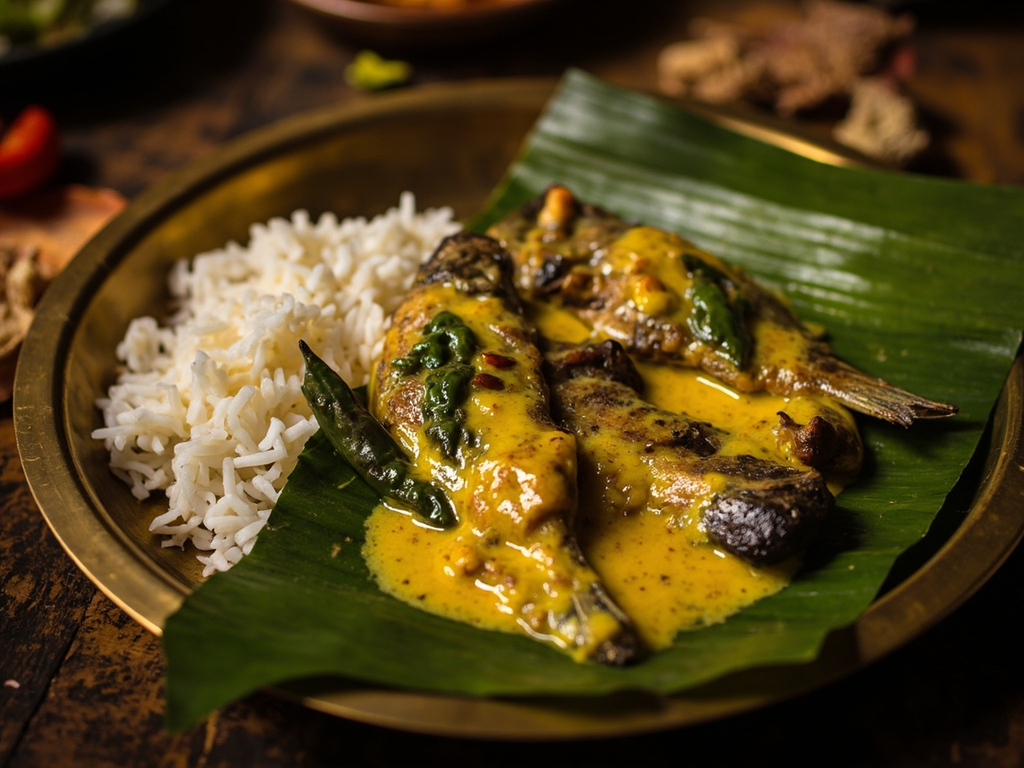
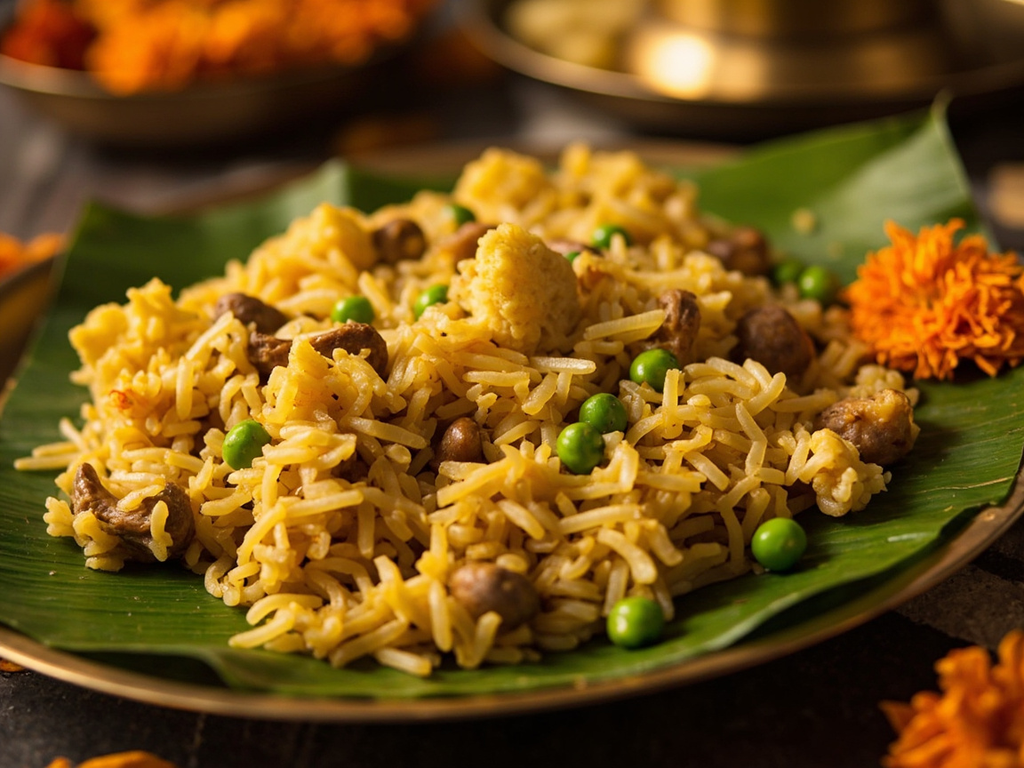
How it was made : Bhog khichuri was cooked in enormous iron cauldrons, stirred with long wooden paddles; gobindobhog rice (reserved for offerings) gave it its distinctive fragrance. It was first offered to the deity, then served on banana leaves or stitched leaf plates (shal pata) to hundreds of devotees.
The contemporary twist : A ladle of khichuri crowned with a drizzle of smoking ghee and a roasted cauliflower chip: the comfort of prasad, Sunday-plate style.
Sources : Chitrita Banerji, Bengali Cooking: Seasons and Festivals · Pranab Kumar Sen (Bhaiji), Mother as Revealed to Me
Anandamayi Ma · Charactorium