 flip
flipQuince Jelly from the Pantry
Quince Jelly from the Pantry
Why this dish? In autumn, in country houses like La Béchellerie at Saint-Cyr-sur-Loire where France spent his last years, the quinces from the orchard were transformed into translucent jellies to last through winter. An amber sweetness that speaks of the writer's attachment to the gentle Touraine region of France.
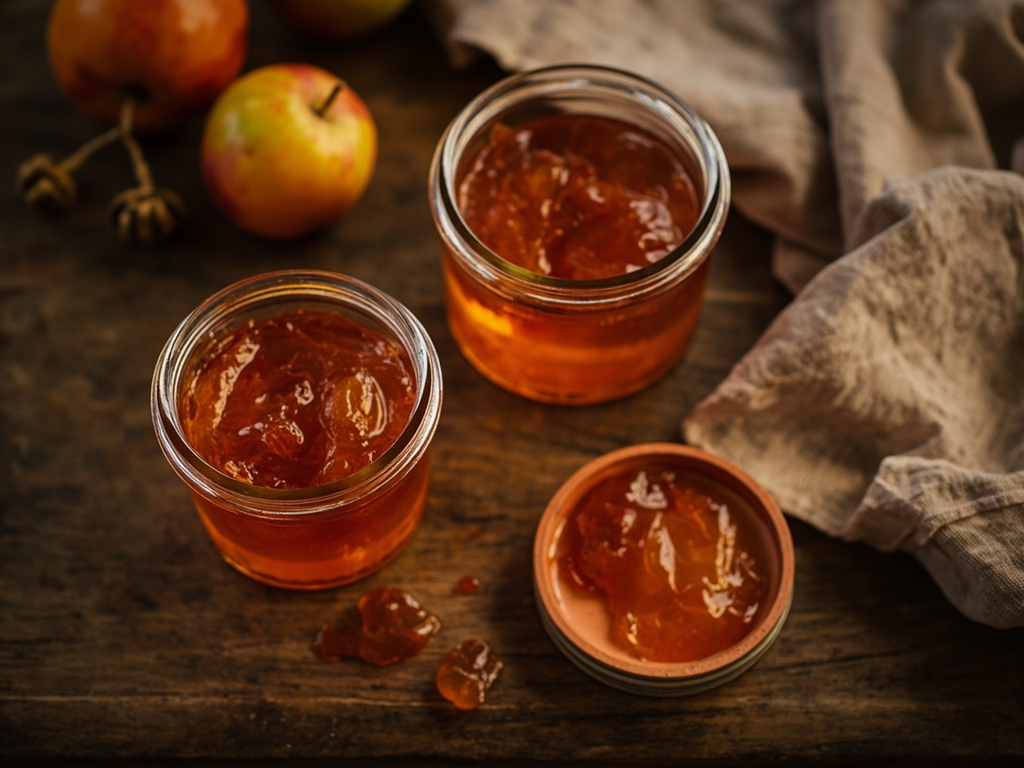
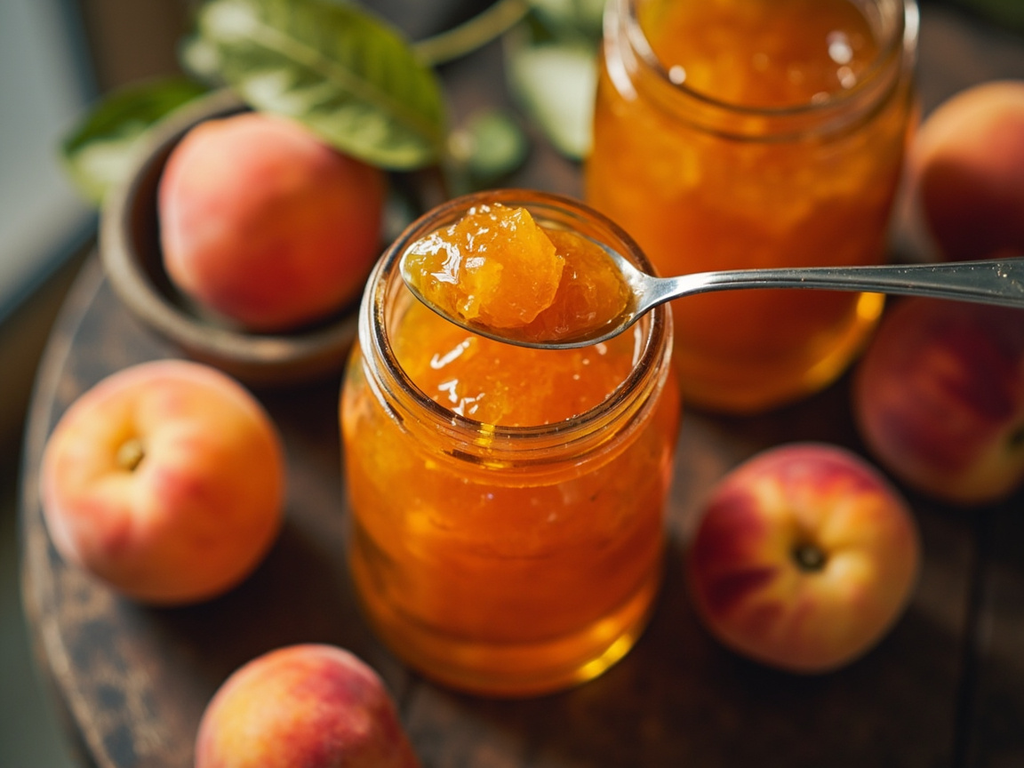
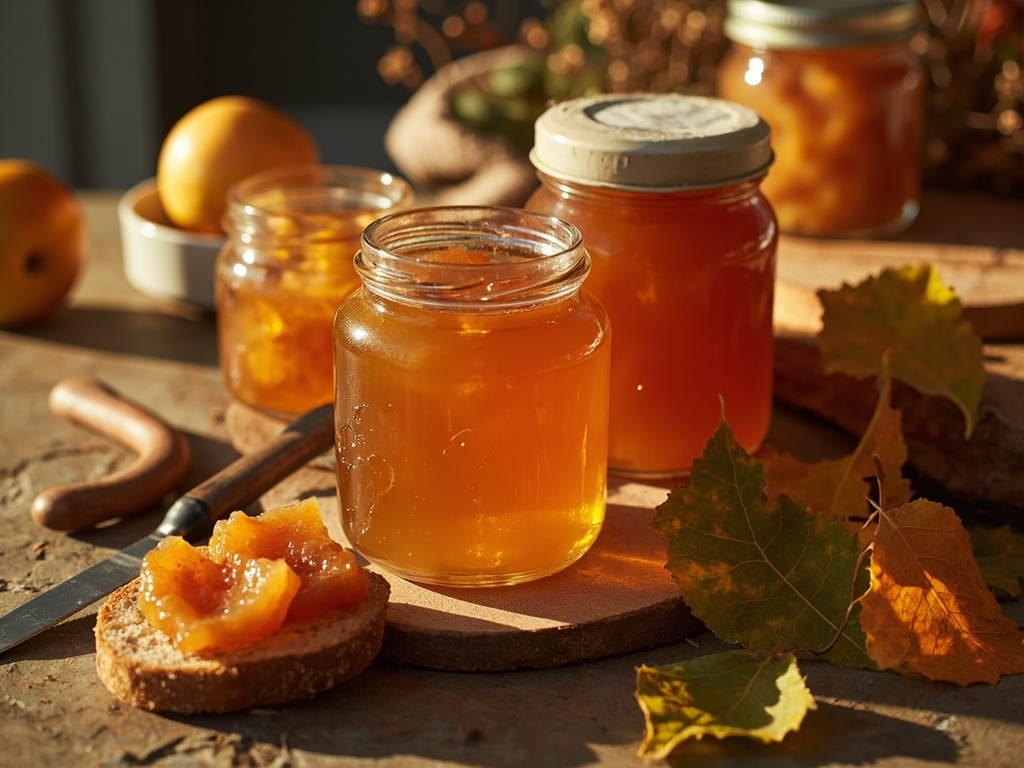
A trembling amber jelly, fragrant and tart, set by the sole virtue of sugar and the natural pectin of the quince. Spread on bread, glaze a chicken, savor it by the spoonful.
The quince is a fruit after my own heart: harsh and hard when picked, it yields its sweetness only to those who know how to wait and cook it long — a fair image of many friendships. In the country, I watched the pantry fill with these amber pots in which an autumn light trembled. The cooking water from the peels and seeds, rich in gum, was kept to help the jelly set; and the pots were sealed with wax. It was putting summer in reserve against the rigors of winter.
- •Ripe quinces — a full basket (pectin-rich fruit)
- •Sugar — equal weight to juice (preservation and setting)
- •Lemon — one (acidity, helps setting)
- •Water — to cover (extraction of juice)
Quince Jelly from the Pantry
A trembling amber jelly, fragrant and tart, set by the sole virtue of sugar and the natural pectin of the quince. Spread on bread, glaze a chicken, savor it by the spoonful.
Why this dish? In autumn, in country houses like La Béchellerie at Saint-Cyr-sur-Loire where France spent his last years, the quinces from the orchard were transformed into translucent jellies to last through winter. An amber sweetness that speaks of the writer's attachment to the gentle Touraine region of France.
The quince is a fruit after my own heart: harsh and hard when picked, it yields its sweetness only to those who know how to wait and cook it long — a fair image of many friendships. In the country, I watched the pantry fill with these amber pots in which an autumn light trembled. The cooking water from the peels and seeds, rich in gum, was kept to help the jelly set; and the pots were sealed with wax. It was putting summer in reserve against the rigors of winter.
Ingredients (period version)
- Ripe quinces — a full basket (pectin-rich fruit)
- Sugar — equal weight to juice (preservation and setting)
- Lemon — one (acidity, helps setting)
- Water — to cover (extraction of juice)
Ingredients
- Quinces — 1.5 kg (fruit)
- Granulated sugar — = weight of juice obtained (approx. 700–800 g) (setting and preservation)
- Lemon juice — 1 lemon (acidity)
- Water — 1.5 L (cooking)
Method
- Wash and rub the quinces to remove the fuzz; cut into pieces WITHOUT peeling or coring (skin and seeds are rich in pectin).
- Cover with water and cook for 40 minutes until the pieces are tender.
- Pour the mixture into a clean cloth suspended and let the juice drip for several hours without pressing (for a clear jelly).
- Weigh the juice, add the same weight of sugar and the lemon juice.
- Boil rapidly for 20–30 minutes until setting point is reached (a drop gels on a cold plate).
- Skim, pour boiling into sterilized jars, seal immediately, and turn the jars upside down to sterilize the lid.
How it was made : Quince jelly (cotignac, a specialty of Orléans) is one of the oldest French preserves. Before cheap refined sugar, quinces were cooked with honey; in the 19th century, affordable beet sugar democratized jams and jellies in all households. The natural pectin of the quince sets the jelly without any additives.
The contemporary twist : Recover the pulp left in the cloth, blend it with a little sugar, and dry it in the oven: you get quince paste (cotignac) to cut into cubes.
Sources : Jules Gouffé, Le Livre de cuisine (1867) · Tante Marie, La Véritable Cuisine de famille (circa 1900)
Anatole France · Charactorium