 flip
flipImperial Yakhni Pulao
Imperial Yakhni Pulao
Why this dish? The Ain-i-Akbari describes the great fragrant rices of Akbar's kitchen, cooked with meat, ghee, and noble spices. Served at banquets in Agra and Fatehpur Sikri, this pulao embodies the Persian-Indian fusion that the emperor, son of a father from Central Asia and born on Indian soil, carried even onto his plate.
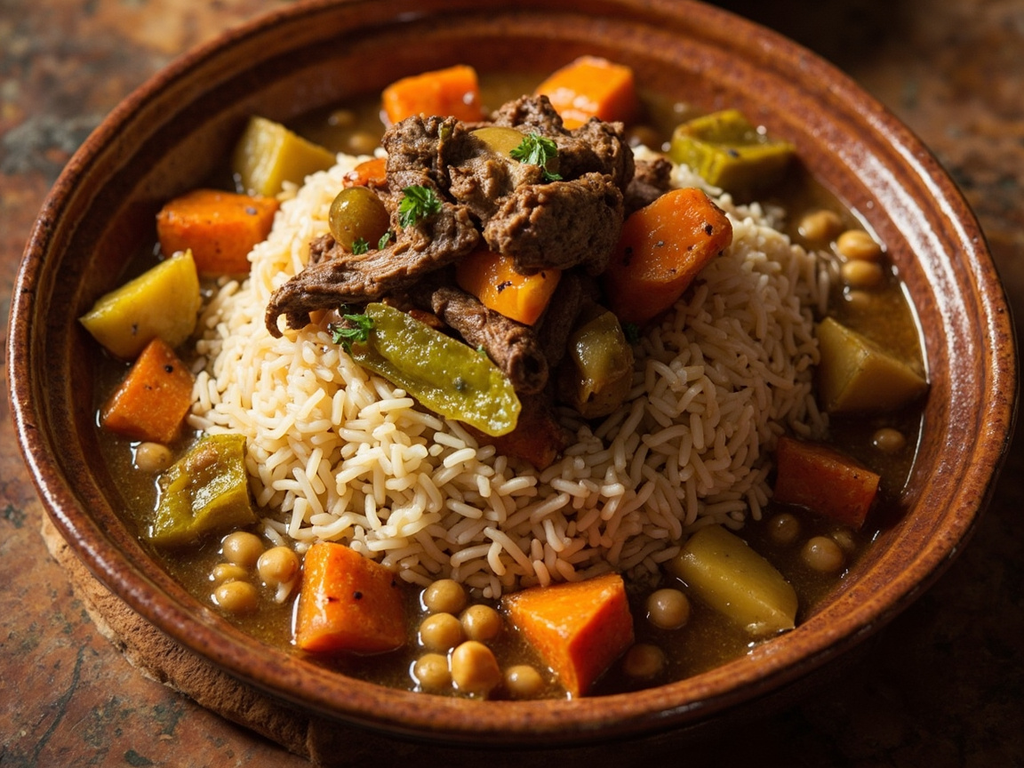
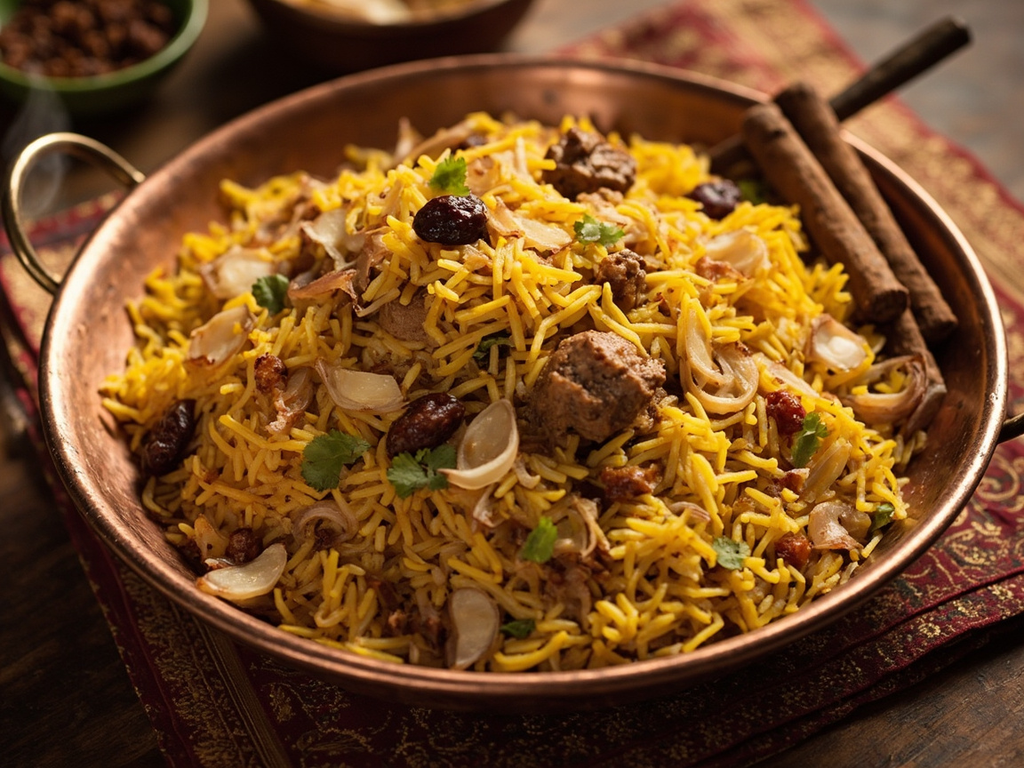
Long-grain rice cooked in a mutton broth (yakhni) perfumed with saffron, cardamom, and cinnamon, sprinkled with almonds and raisins. A prestigious, golden, and fragrant dish that perfumed the palace halls.
Approach and see what my imperial kitchen prepares for you. This rice, I want it light as gold dust, each grain separate from the next — my master chef answers with his head if they stick! It is laid on a mutton broth long skimmed, the Kashmiri saffron soaked in milk is thrown in, and the pot is sealed with dough so no perfume escapes before the hour. I, who learned to reduce meat on my throne, only touch this feast on auspicious days — but then, see how it honors my guests, Hindu and Muslim side by side on the same spread.
- •Fragrant long-grain rice — one full measure (base of the dish)
- •Mutton shoulder — in proportion to desired meat (flavor and broth (yakhni))
- •Ghee (clarified butter) — generous (noble fat)
- •Kashmiri saffron — a pinch of filaments (color and perfume (signature))
- •Cardamom, cloves, cinnamon — a few grains of each (warm spices)
- •Onions — several (melted in ghee)
- •Almonds and raisins — a handful (garnish)
- •Black pepper and salt — to hand (seasoning)
Imperial Yakhni Pulao
Long-grain rice cooked in a mutton broth (yakhni) perfumed with saffron, cardamom, and cinnamon, sprinkled with almonds and raisins. A prestigious, golden, and fragrant dish that perfumed the palace halls.
Why this dish? The Ain-i-Akbari describes the great fragrant rices of Akbar's kitchen, cooked with meat, ghee, and noble spices. Served at banquets in Agra and Fatehpur Sikri, this pulao embodies the Persian-Indian fusion that the emperor, son of a father from Central Asia and born on Indian soil, carried even onto his plate.
Approach and see what my imperial kitchen prepares for you. This rice, I want it light as gold dust, each grain separate from the next — my master chef answers with his head if they stick! It is laid on a mutton broth long skimmed, the Kashmiri saffron soaked in milk is thrown in, and the pot is sealed with dough so no perfume escapes before the hour. I, who learned to reduce meat on my throne, only touch this feast on auspicious days — but then, see how it honors my guests, Hindu and Muslim side by side on the same spread.
Ingredients (period version)
- Fragrant long-grain rice — one full measure (base of the dish)
- Mutton shoulder — in proportion to desired meat (flavor and broth (yakhni))
- Ghee (clarified butter) — generous (noble fat)
- Kashmiri saffron — a pinch of filaments (color and perfume (signature))
- Cardamom, cloves, cinnamon — a few grains of each (warm spices)
- Onions — several (melted in ghee)
- Almonds and raisins — a handful (garnish)
- Black pepper and salt — to hand (seasoning)
Ingredients
- Basmati rice — 300 g (base of the dish)
- Lamb shoulder, cubed — 500 g (meat and broth)
- Ghee — 4 tbsp (cooking)
- Saffron — 1 good pinch, infused in 3 tbsp warm milk (color and perfume)
- Green cardamom pods — 5 (spice)
- Cloves — 4 (spice)
- Cinnamon stick — 1 (spice)
- Sliced onions — 2 large (aromatic base)
- Plain yogurt — 3 tbsp (tenderize meat)
- Slivered almonds and raisins — 50 g total (garnish)
- Black pepper, salt — to taste (seasoning)
Method
- Brown the sliced onions in ghee until a beautiful amber color; reserve half for garnish.
- Add lamb, cardamom, cloves, cinnamon, and pepper; sauté, then add water, salt, and simmer until meat is tender. Strain to obtain a clear broth (yakhni).
- Rinse rice, soak 20 min, then drain.
- Combine rice, meat, and broth (liquid should cover rice by a finger's depth), add yogurt, bring to a simmer.
- Drizzle with saffron milk, cover tightly, and cook on very low heat for 12–15 min (dum cooking), without lifting the lid.
- Let rest 10 min, fluff with a fork, scatter with browned onions, almonds, and raisins.
How it was made : Akbar's imperial kitchen (matbakh) was a true administration: Abu'l-Fazl recounts that ingredients were weighed, pots sealed, and food tasted before the emperor. The "dum" cooking method, with the pot sealed with dough over gentle coals, allowed the rice to absorb all aromas without ever drying out.
The contemporary twist : For serving, mound the pulao in a dome on a large copper platter and brush a few saffron streaks on the sides — a nod to the gold of Mughal miniatures.
Sources : Abu'l-Fazl, Ain-i-Akbari (trad. H. Blochmann), section on imperial cuisine · K.T. Achaya, Indian Food: A Historical Companion
Akbar the Great · Charactorium