 flip
flipCappone arrosto all'agresto
Cappone arrosto all'agresto
Why this dish? In his days of glory, Machiavelli frequented the palaces and tables of Florentine diplomacy, in Rome and in Cesare Borgia's Romagna. Roast capon, a noble and expensive meat, was the centerpiece of Renaissance banquets: a dish that speaks of rank, the exact opposite of his exile soup.
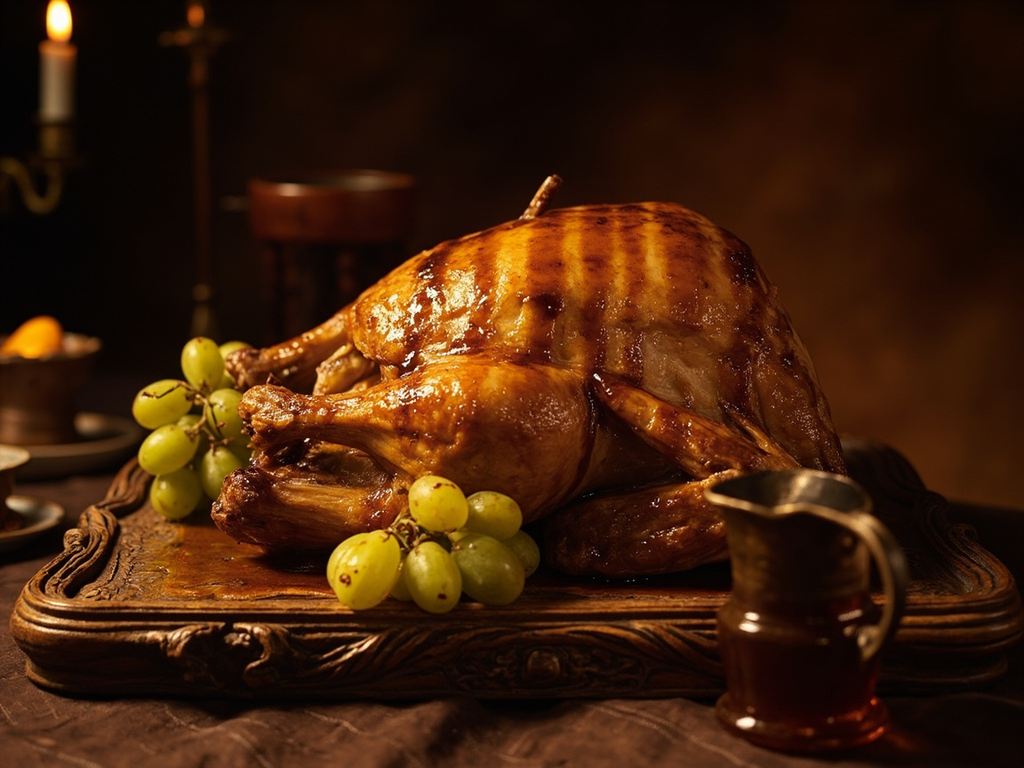
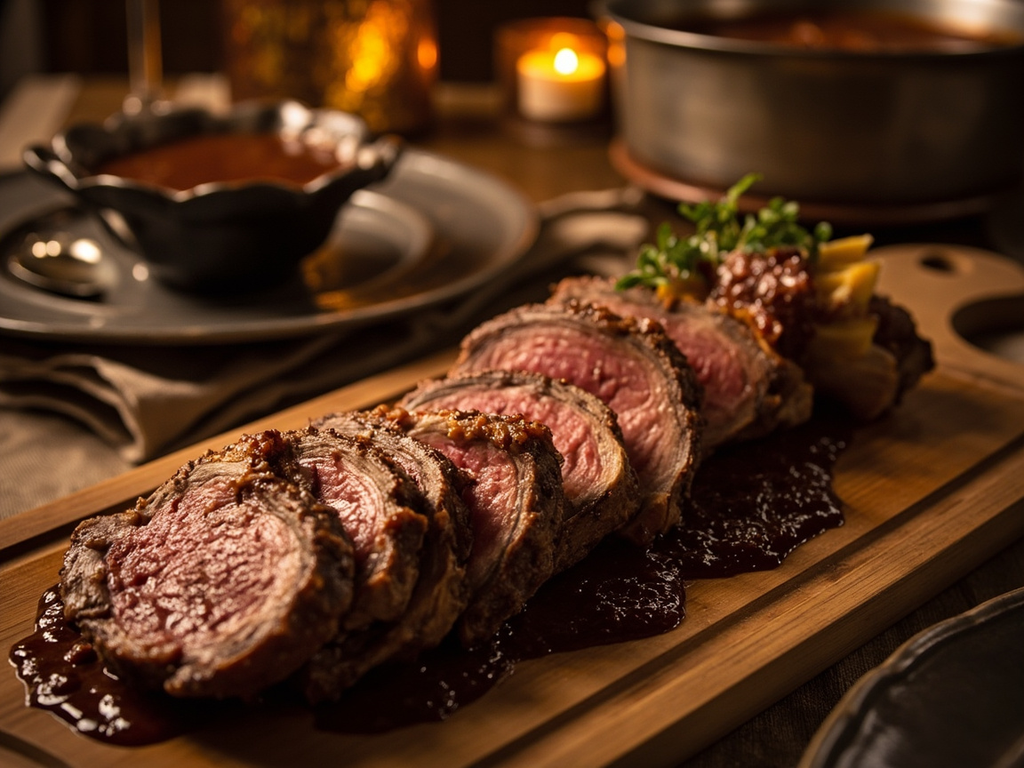
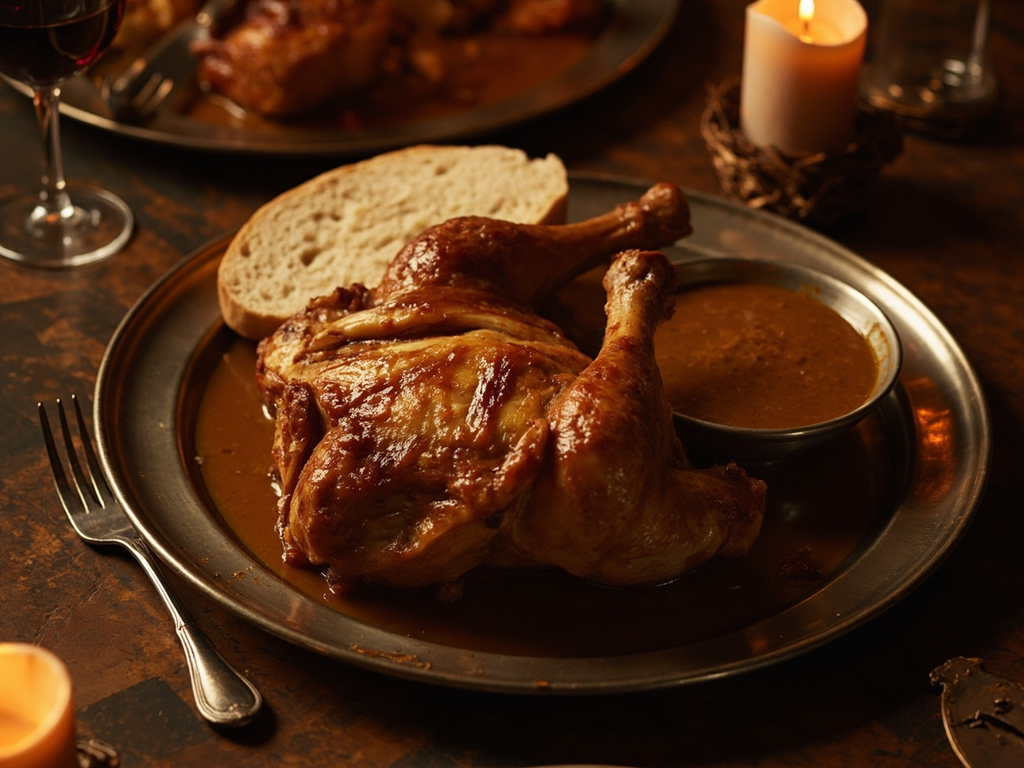
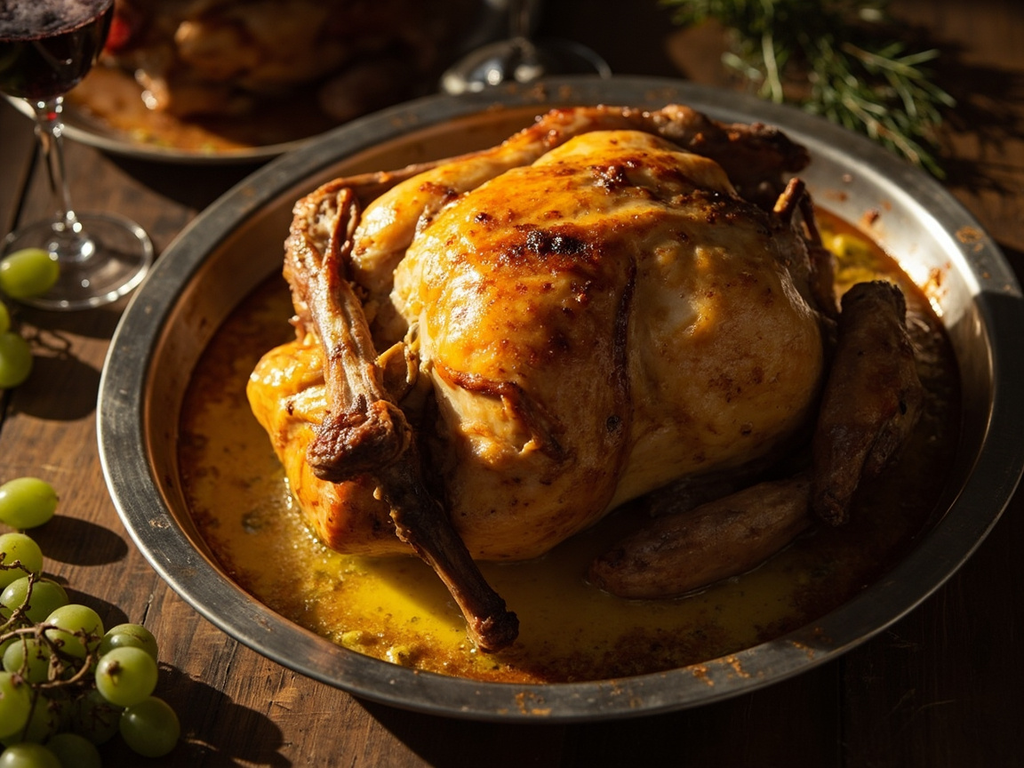
A capon (fattened fowl) roasted and glazed, coated with agresto — the tangy juice of green grapes — spiced with cinnamon, ginger, and a pinch of saffron. The spicy sweet-and-sour typical of great Italian tables of the 15th century, where acidity enlivens the fatty, golden flesh.
When I served the Republic and needed to make an appearance, we turned a fat capon on the spit before the flame. Remember this, as in politics: fatty matter requires its opposite, otherwise it cloys. So I had green grapes pressed to extract agresto, and over it we threw cinnamon, ginger, and a little saffron that colors like Medici gold. Baste your fowl often with its own juices, for a prince like a roast is quickly spoiled if neglected. The secret is the sour that pricks beneath the sweet: one remembers it long.
- •Capon (or good farm chicken) — one, whole (main piece)
- •Agresto (pressed green grape juice) — one bowl (acidity, sauce)
- •Cinnamon — a good pinch (sweet spice)
- •Ginger — a pinch (warm spice)
- •Saffron — a few threads (color and aroma)
- •Lard or olive oil — as needed (cooking fat)
- •Salt — to taste (seasoning)
Cappone arrosto all'agresto
A capon (fattened fowl) roasted and glazed, coated with agresto — the tangy juice of green grapes — spiced with cinnamon, ginger, and a pinch of saffron. The spicy sweet-and-sour typical of great Italian tables of the 15th century, where acidity enlivens the fatty, golden flesh.
Why this dish? In his days of glory, Machiavelli frequented the palaces and tables of Florentine diplomacy, in Rome and in Cesare Borgia's Romagna. Roast capon, a noble and expensive meat, was the centerpiece of Renaissance banquets: a dish that speaks of rank, the exact opposite of his exile soup.
When I served the Republic and needed to make an appearance, we turned a fat capon on the spit before the flame. Remember this, as in politics: fatty matter requires its opposite, otherwise it cloys. So I had green grapes pressed to extract agresto, and over it we threw cinnamon, ginger, and a little saffron that colors like Medici gold. Baste your fowl often with its own juices, for a prince like a roast is quickly spoiled if neglected. The secret is the sour that pricks beneath the sweet: one remembers it long.
Ingredients (period version)
- Capon (or good farm chicken) — one, whole (main piece)
- Agresto (pressed green grape juice) — one bowl (acidity, sauce)
- Cinnamon — a good pinch (sweet spice)
- Ginger — a pinch (warm spice)
- Saffron — a few threads (color and aroma)
- Lard or olive oil — as needed (cooking fat)
- Salt — to taste (seasoning)
Ingredients
- Whole free-range chicken (or capon) — 1 about 1.8 kg (main piece)
- Verjus (green grape juice) — 150 ml (acidity, sauce)
- Ground cinnamon — 1 tsp (sweet spice)
- Ground ginger — 1/2 tsp (warm spice)
- Saffron — 1 dose (about 0.1 g) (color and aroma)
- Olive oil or butter — 3 tbsp (cooking fat)
- Honey — 1 tsp (optional) (round out acidity)
- Salt and pepper — to taste (seasoning)
Method
- Bring the poultry to room temperature, season generously inside and out with salt.
- Infuse the saffron in 2 tbsp warm water, mix with cinnamon, ginger, and olive oil to form a paste.
- Brush the chicken with the spiced paste and roast at 200°C.
- Roast for about 1 hour 15 minutes, basting regularly with the cooking juices to keep the flesh moist and skin golden.
- Meanwhile, gently reduce the verjus with honey and a ladle of cooking juices until syrupy.
- Rest the bird for 10 minutes, carve, then drizzle with the spiced agresto sauce.
How it was made : Agresto (or verjus) was the reigning acidulant of medieval and Renaissance cuisine, long before lemon became common: unripe grapes were pressed. The 15th-century collections of Maestro Martino and Platina are full of these spiced sweet-and-sour sauces, where saffron served both to color and flavor, a sign of wealth at the table.
The contemporary twist : Present the whole lacquered capon on a board, with the agresto-saffron sauce served separately in a small pitcher, a few just-warmed green grapes as garnish to recall the source of acidity.
Sources : Maestro Martino, Libro de arte coquinaria (c. 1465) · Bartolomeo Platina, De honesta voluptate et valetudine (1474)
Machiavelli · Charactorium