 flip
flipSkreið — Wind-dried fish from the North
Skreið — Wind-dried fish from the North
Why this dish? The anchor mentions the 'fish from icy rivers' on Angrboða's table. In the Norse world, fish was dried in the cold wind to last through winter — a survival food, hard as wood, that does not rot. In Jötunheimr, the realm of frost, this is the reserve that holds through the long nights.
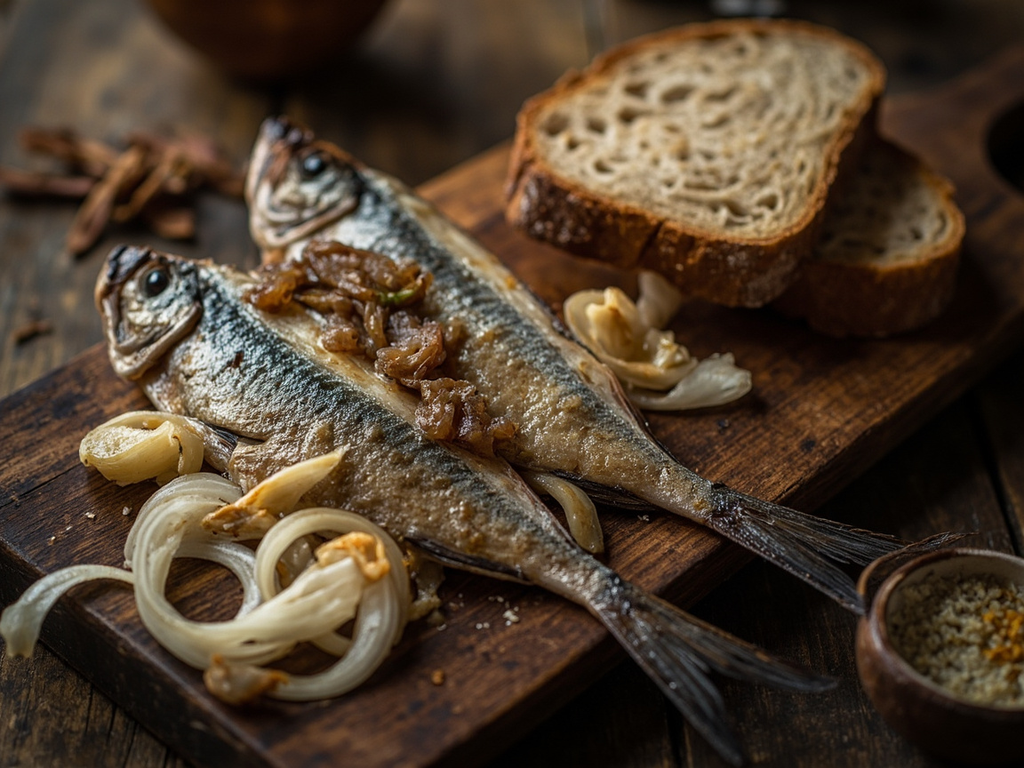
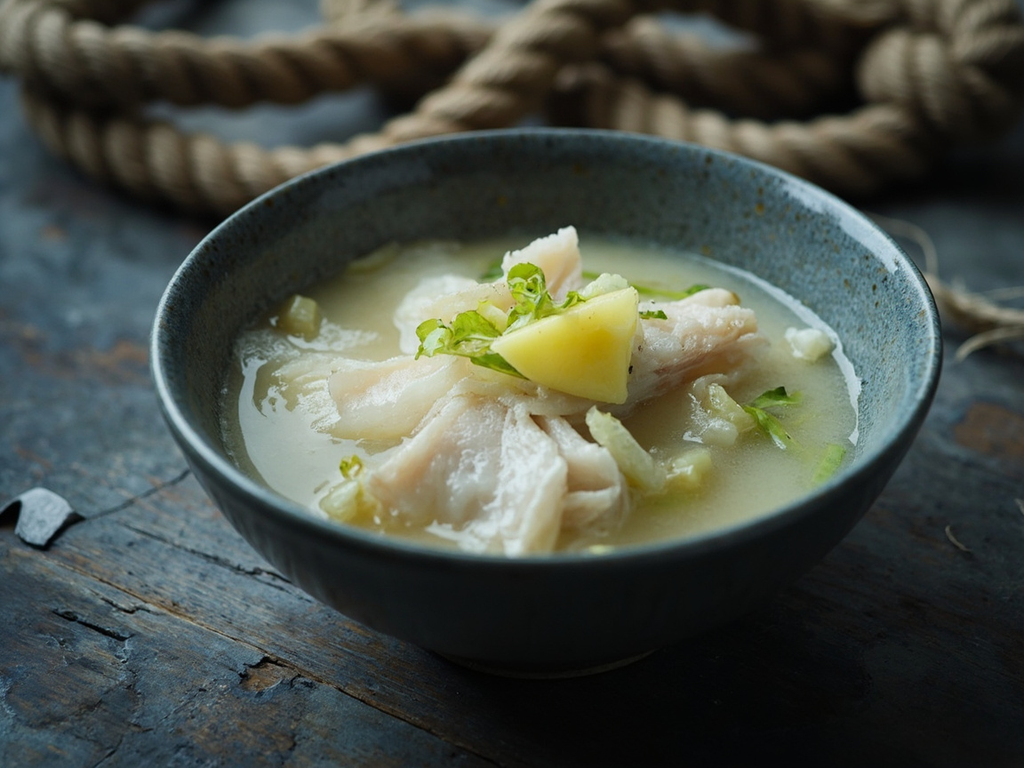
Lean fish split and hung in the freezing wind until hard as a plank. To eat it, you break it, soak it, then poach it in milk with butter. Salty, deeply marine, almost smoked by the wind.
Look at these fish hanging on the poles, stiffened by the biting wind. The frost is my ally: it takes the fish and keeps it, without salt or fire, all winter long. When hunger grips you, break one as you break a dead branch, soak it until it softens, then warm it gently in milk with butter. This is no feast dish — it is what keeps you alive when the night never ends.
- •Lean fish (cod, pollock, haddock) — according to the catch (to be dried)
- •Cold dry wind — several weeks (preserving agent)
- •Milk — enough to cover (poaching)
- •Butter — a knob (richness)
Skreið — Wind-dried fish from the North
Lean fish split and hung in the freezing wind until hard as a plank. To eat it, you break it, soak it, then poach it in milk with butter. Salty, deeply marine, almost smoked by the wind.
Why this dish? The anchor mentions the 'fish from icy rivers' on Angrboða's table. In the Norse world, fish was dried in the cold wind to last through winter — a survival food, hard as wood, that does not rot. In Jötunheimr, the realm of frost, this is the reserve that holds through the long nights.
Look at these fish hanging on the poles, stiffened by the biting wind. The frost is my ally: it takes the fish and keeps it, without salt or fire, all winter long. When hunger grips you, break one as you break a dead branch, soak it until it softens, then warm it gently in milk with butter. This is no feast dish — it is what keeps you alive when the night never ends.
Ingredients (period version)
- Lean fish (cod, pollock, haddock) — according to the catch (to be dried)
- Cold dry wind — several weeks (preserving agent)
- Milk — enough to cover (poaching)
- Butter — a knob (richness)
Ingredients
- Unsalted dried cod (stockfish) or desalted salted cod — 400 g (preserved fish)
- Milk — 500 ml (poaching)
- Butter — 30 g (richness)
- Sliced leek — 1 small (Nordic vegetable)
- Coarsely ground pepper — 1 pinch (spice (period option for the wealthy))
Method
- Soak the dried cod in cold water 24 to 48 hours, changing the water several times (skip if already rehydrated).
- Flake or cut the fish into large pieces.
- Sweat the leek in butter in a saucepan.
- Pour in the milk, bring to a simmer (do not boil).
- Poach the fish 10 to 15 minutes until it flakes.
- Adjust seasoning (the fish is already salty), add a little pepper, and serve hot.
How it was made : Wind-drying (skreið / stockfish) is one of the best-documented preservation techniques in the North: hung on racks from early spring, the lean fish loses its water without rotting thanks to the dry cold, and keeps for years. It was a pillar of the diet and later a major export trade from Norway.
The contemporary twist : Serve a 'Nordic brandade' version: flaked fish mixed with parsnip purée and butter, shaped into quenelles with a little dill.
Sources : Daniel Serra & Hanna Tunberg, An Early Meal: A Viking Age Cookbook (ChronoCopia, 2013) · Alison Locker, The Role of Stored Fish in England and Scandinavia (archaeo-ichthyological research)
Angrboða · Charactorium