 flip
flipSpelt and Rye Brown Bread
Spelt and Rye Brown Bread
Why this dish? Albert was nicknamed the 'Universal Doctor' but also a great walker: the Dominicans traveled on foot between convents. Between Lauingen, Paris, Cologne, and Regensburg, a dense rye and spelt bread — the reigning cereals of medieval Germany — kept for days in the satchel.
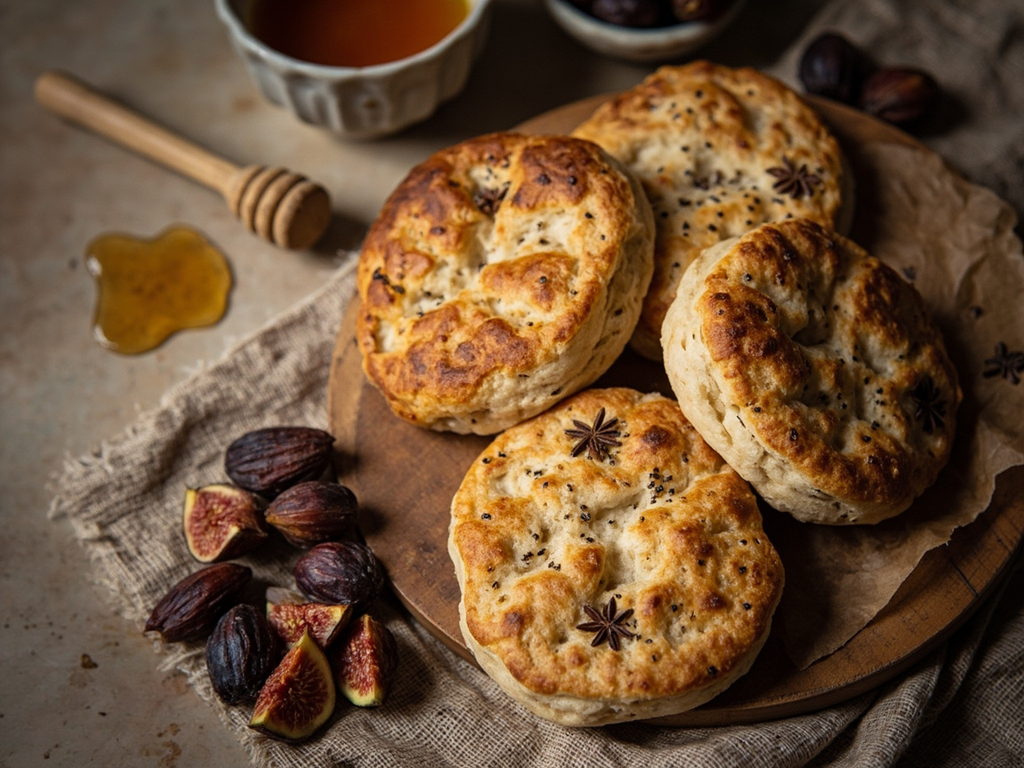
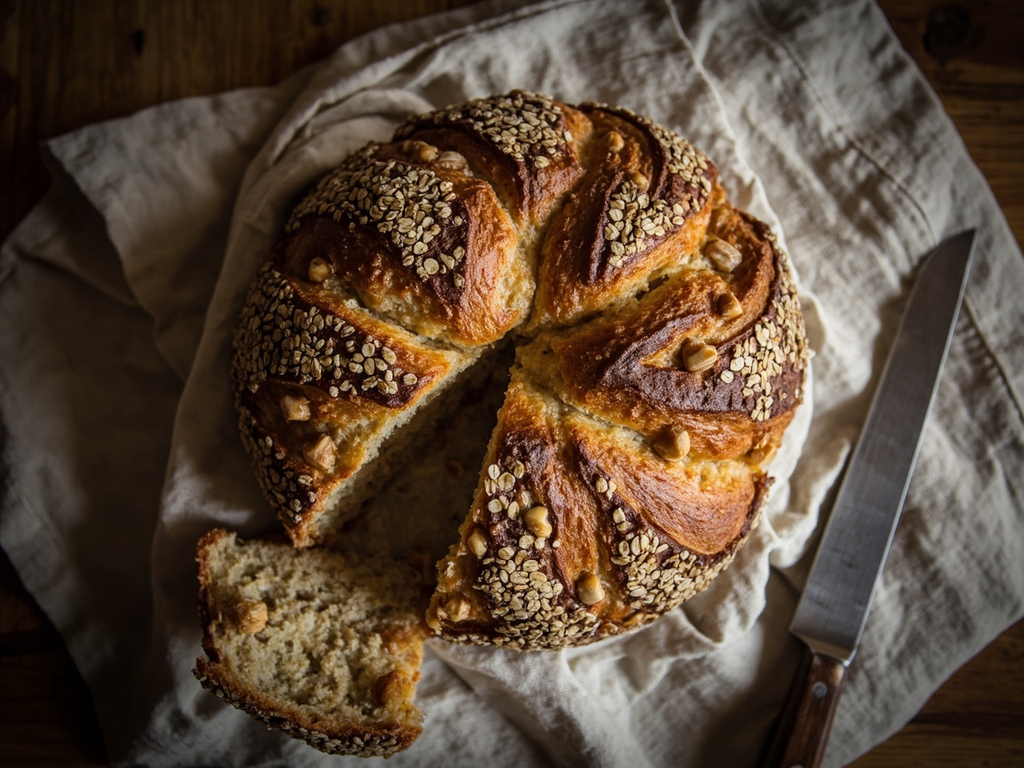
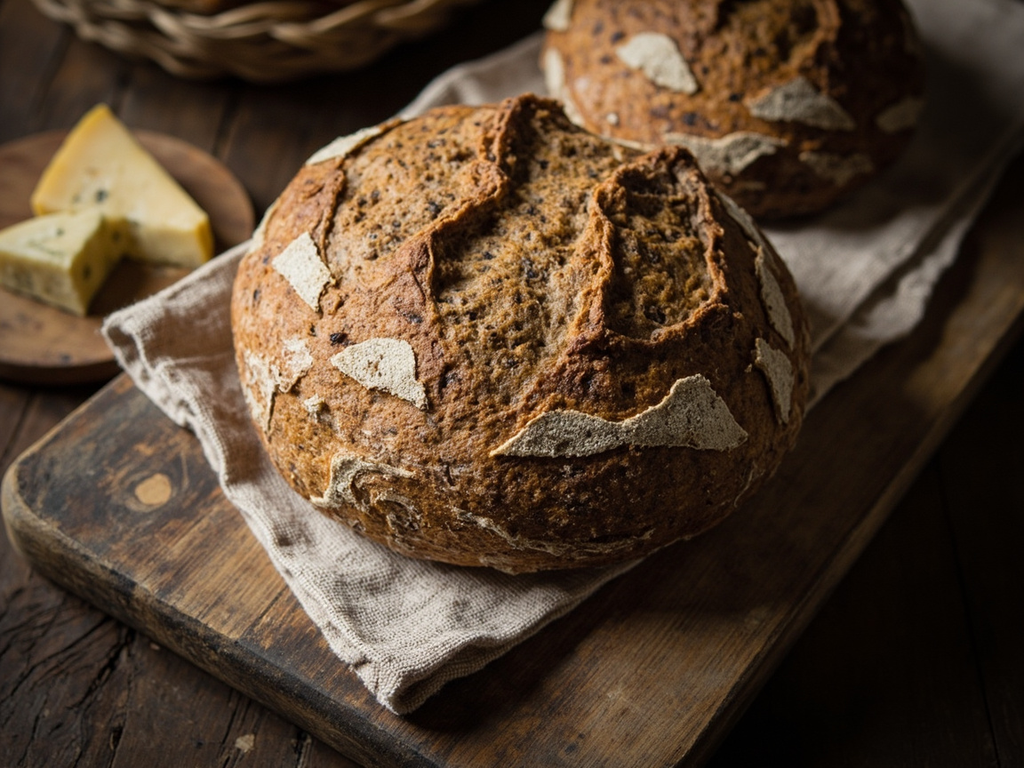
A compact, rustic loaf combining spelt and rye, with a thick crust and dense crumb. It keeps for a long time, provides lasting nourishment, and accompanies everything: this is the bread of the brother on the road.
The traveler of God must carry little and endure much; this bread is made for that. Rye and spelt, which grow boldly in our Swabian lands where wheat balks, give a brown, heavy, and wise loaf that does not spoil in three or four days of walking. I have broken it more than once at the edge of a path between Cologne and Regensburg, with a little cheese and spring water. Chew it slowly, my friend: what digests without haste sustains a man farther than the delicate dishes of the rich.
- •Spelt flour — two parts (base)
- •Rye flour — one part (structure and flavor)
- •Sourdough starter — a piece from the previous batch (fermentation)
- •Salt — a pinch (seasoning and preservation)
- •Water — as needed (hydration)
Spelt and Rye Brown Bread
A compact, rustic loaf combining spelt and rye, with a thick crust and dense crumb. It keeps for a long time, provides lasting nourishment, and accompanies everything: this is the bread of the brother on the road.
Why this dish? Albert was nicknamed the 'Universal Doctor' but also a great walker: the Dominicans traveled on foot between convents. Between Lauingen, Paris, Cologne, and Regensburg, a dense rye and spelt bread — the reigning cereals of medieval Germany — kept for days in the satchel.
The traveler of God must carry little and endure much; this bread is made for that. Rye and spelt, which grow boldly in our Swabian lands where wheat balks, give a brown, heavy, and wise loaf that does not spoil in three or four days of walking. I have broken it more than once at the edge of a path between Cologne and Regensburg, with a little cheese and spring water. Chew it slowly, my friend: what digests without haste sustains a man farther than the delicate dishes of the rich.
Ingredients (period version)
- Spelt flour — two parts (base)
- Rye flour — one part (structure and flavor)
- Sourdough starter — a piece from the previous batch (fermentation)
- Salt — a pinch (seasoning and preservation)
- Water — as needed (hydration)
Ingredients
- Spelt flour (T110 or wholemeal) — 400 g (base)
- Rye flour — 200 g (structure and flavor)
- Active sourdough starter — 150 g (fermentation)
- Salt — 10 g (seasoning and preservation)
- Warm water — approx. 380 ml (hydration)
- Honey (optional) — 1 tsp (feeds the starter, slight sweetness)
Method
- Mix the flours, salt, starter (and honey) with the warm water until a sticky but homogeneous dough forms.
- Knead briefly — ancient flours do not like long kneading. Cover.
- Let rise for 3–4 h at room temperature, until visibly puffed.
- Shape into a tight ball, place on a floured baking sheet, and let rest for another 1 h.
- Score the loaf, bake at 230 °C with a water pan for steam, then at 220 °C for 40–45 min.
- Let cool completely before slicing: the spelt-rye crumb holds better after resting and keeps for several days.
How it was made : White wheat was a luxury; commoners and monks mostly ate 'brown bread,' mixed with rye, spelt, or barley. It was baked in the communal oven, and fermentation relied on a starter maintained from batch to batch. The denser the crumb, the better the bread traveled.
The contemporary twist : Add a handful of caraway seeds to the dough: this typically Germanic aroma shifts the medieval loaf toward today's Central European rye bread.
Sources : Hildegarde de Bingen, Physica, on spelt ('spelta') (12th c.) · Bernard Guénée, on the travels of clerics in the Middle Ages (modern study)
Albert the Great · Charactorium