 flip
flipQurut-e musafir
Qurut-e musafir
Why this dish? Al-Zamakhshari spent his life on the road — from Khwarezm to Mecca (where he stayed so long he was called Jār Allāh), passing through Bukhara and Baghdad. With his wooden leg, these journeys were all the more arduous. Qurut (dried fermented cheese) is the quintessential travel provision of Central Asian nomads and travelers: light, imperishable, protein-rich, it dissolves in hot water to make an instant soup.
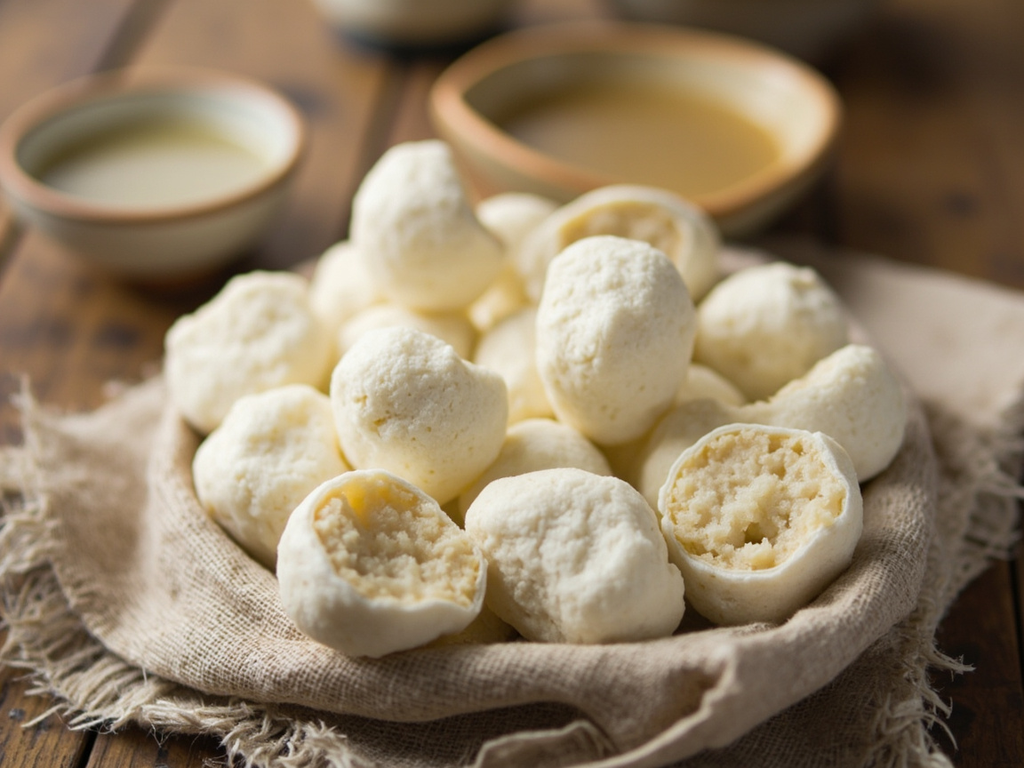
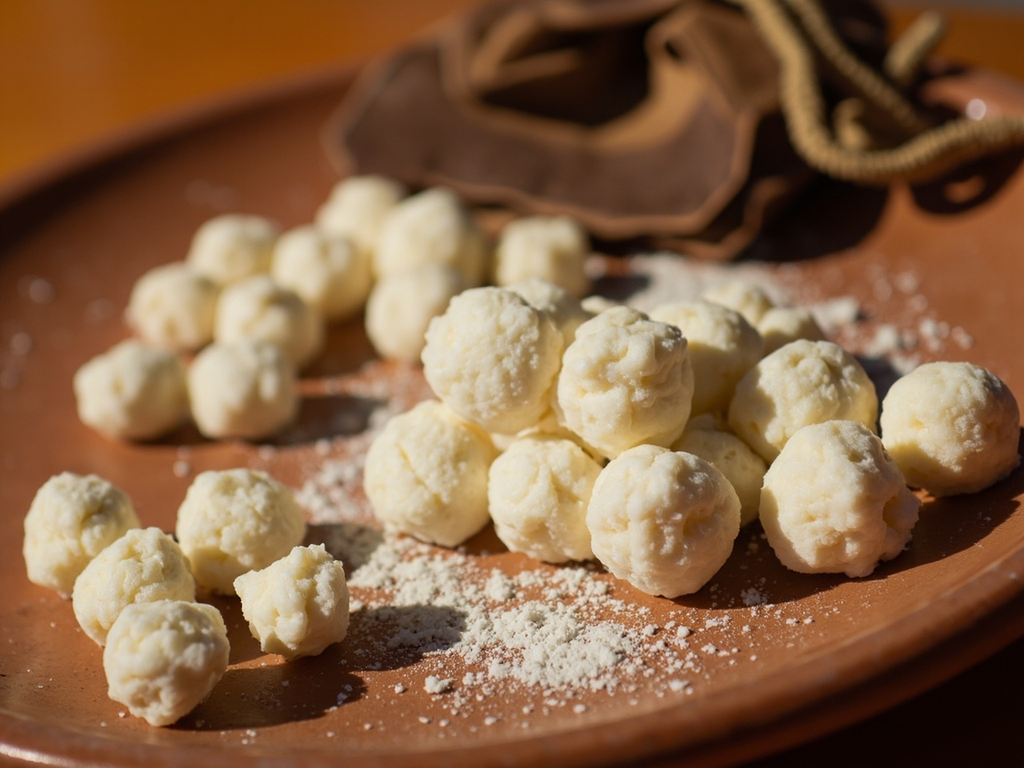
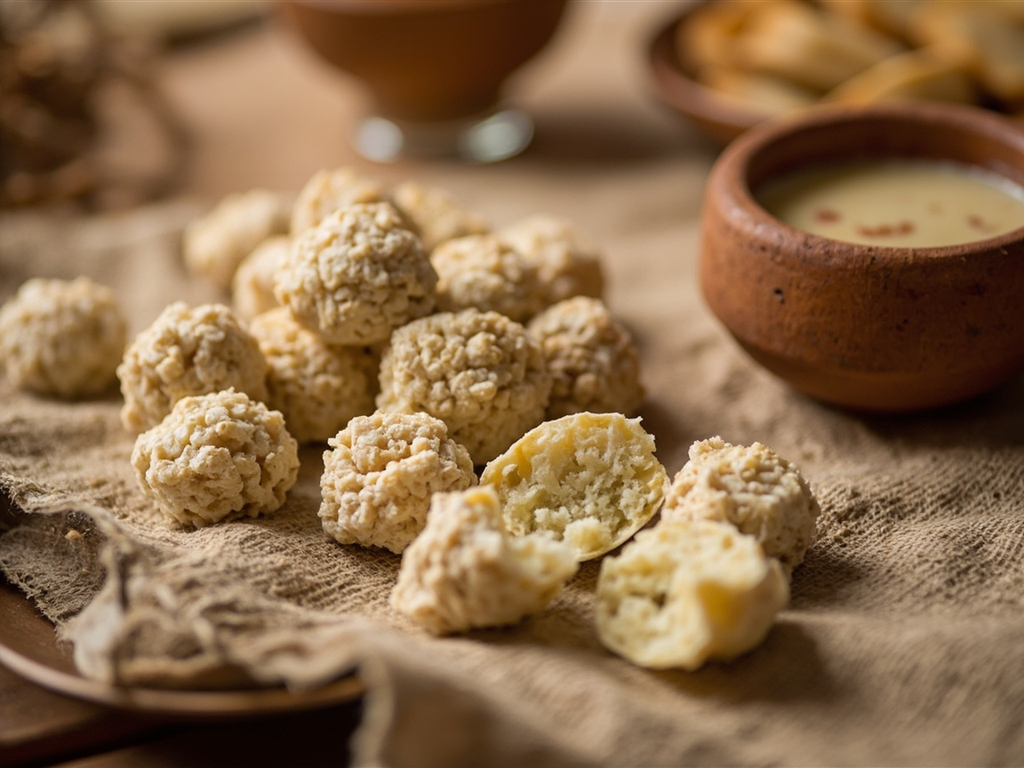
Balls of salted fermented milk, sun-dried until rock-hard. On the road, they are dissolved in hot water with a bit of stale bread to obtain a sour, nourishing broth in minutes — the traveler's meal of Central Asia for centuries.
I walked from Zamakhshar to Mecca — with this wooden leg that makes me hobble like a lame verse in a hemistich — and I tell you that qurut is the best traveling companion after the Qur'an. You put it in your sack, it weighs nothing, it does not spoil, and when hunger bites you at the evening stage, you crumble two balls into boiling water with a crust of dry bread. In five breaths, you have your soup. The caravaners of Khwarezm carry nothing else, and they are right: the traveler who overloads his mount never arrives.
- •Fermented ewe's or goat's milk (thick ayran) — one pot (base)
- •Salt — a good handful (preservation)
Qurut-e musafir
Balls of salted fermented milk, sun-dried until rock-hard. On the road, they are dissolved in hot water with a bit of stale bread to obtain a sour, nourishing broth in minutes — the traveler's meal of Central Asia for centuries.
Why this dish? Al-Zamakhshari spent his life on the road — from Khwarezm to Mecca (where he stayed so long he was called Jār Allāh), passing through Bukhara and Baghdad. With his wooden leg, these journeys were all the more arduous. Qurut (dried fermented cheese) is the quintessential travel provision of Central Asian nomads and travelers: light, imperishable, protein-rich, it dissolves in hot water to make an instant soup.
I walked from Zamakhshar to Mecca — with this wooden leg that makes me hobble like a lame verse in a hemistich — and I tell you that qurut is the best traveling companion after the Qur'an. You put it in your sack, it weighs nothing, it does not spoil, and when hunger bites you at the evening stage, you crumble two balls into boiling water with a crust of dry bread. In five breaths, you have your soup. The caravaners of Khwarezm carry nothing else, and they are right: the traveler who overloads his mount never arrives.
Ingredients (period version)
- Fermented ewe's or goat's milk (thick ayran) — one pot (base)
- Salt — a good handful (preservation)
Ingredients
- Plain full-fat yogurt (preferably sheep's milk) — 1 kg (base)
- Fine salt — 2 tbsp (preservation)
Method
- Mix the yogurt and salt in a large bowl.
- Pour into a cheesecloth or clean cloth, tie, and suspend over a container. Let drain for 24 to 48 hours in a cool place until a firm paste forms (the whey drips out).
- Form walnut-sized balls with slightly wet hands.
- Place the balls on a rack or tray lined with a clean cloth. Let dry in a well-ventilated, dry place for 5 to 7 days, turning them daily.
- The balls are ready when they are rock-hard and clink when knocked together.
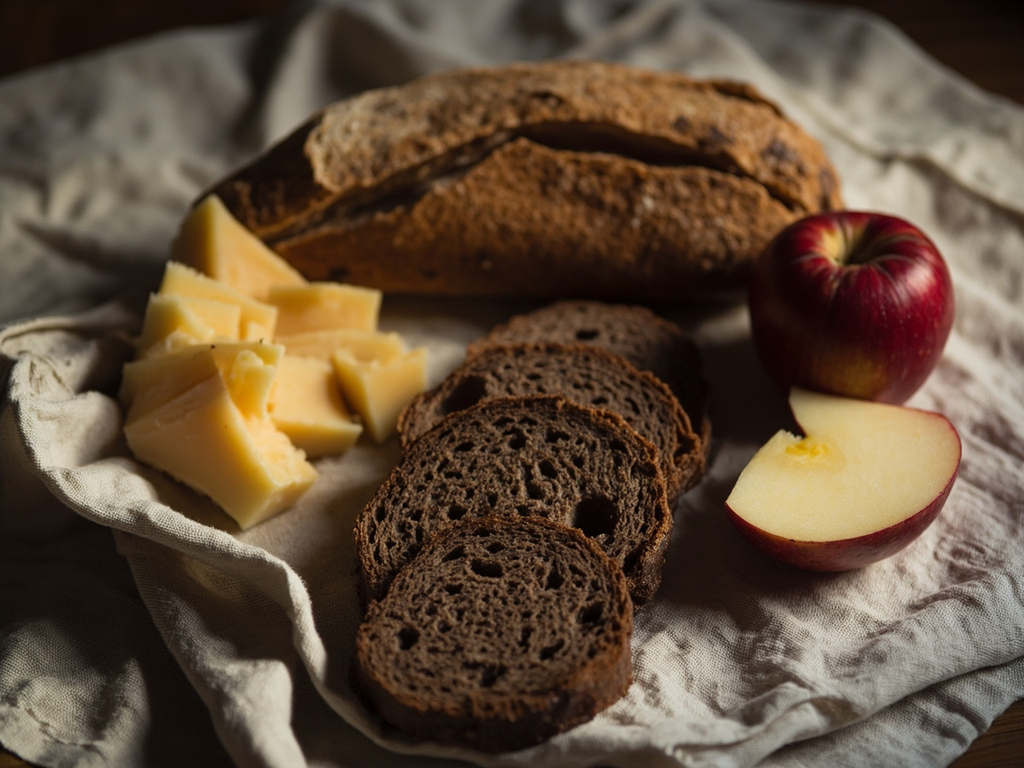
- To consume: crumble 2 balls into 250 ml boiling water, stir until dissolved. Add crumbled dry bread and a pinch of cumin if desired.
How it was made : Qurut is one of the oldest forms of milk preservation, attested among Turco-Mongol and Iranian peoples well before Islam. Ibn Battuta (14th c.) describes Central Asian nomads dissolving their dried milk balls in water. The process has been identical for centuries: lactic fermentation combined with salt and drying makes the product nearly imperishable — examples have been found in tombs dating back millennia in Mongolia.
The contemporary twist : Present the balls in a small tied fabric pouch, like a medieval survival kit, with a calligraphed instruction card.
Sources : Buell, Paul D. & Anderson, Eugene N., A Soup for the Qan: Chinese Dietary Medicine of the Mongol Era, 2010 · Ibn Battuta, Rihla (Travels), 14th century — description of nomad provisions · Harmatta, János (ed.), History of Civilizations of Central Asia, vol. IV, UNESCO, 1998
Al-Zamakhshari · Charactorium