 flip
flipRisi e bisi — Rice and Peas from the Lagoon
Risi e bisi — Rice and Peas from the Lagoon
Why this dish? Emblematic dish of Venice, once served to the Doge on St. Mark's Day. For a Venetian soprano living by the seasons of the lagoon, it is the ordinary comfort of spring, between two rehearsals at the Teatro Sant'Angelo.
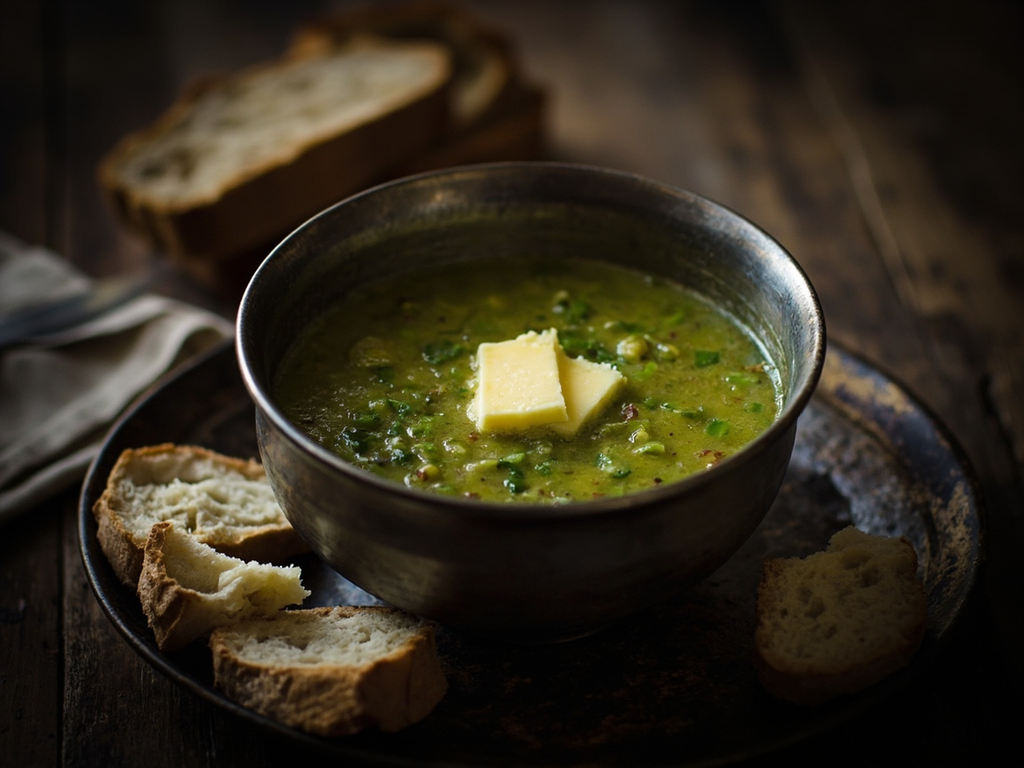
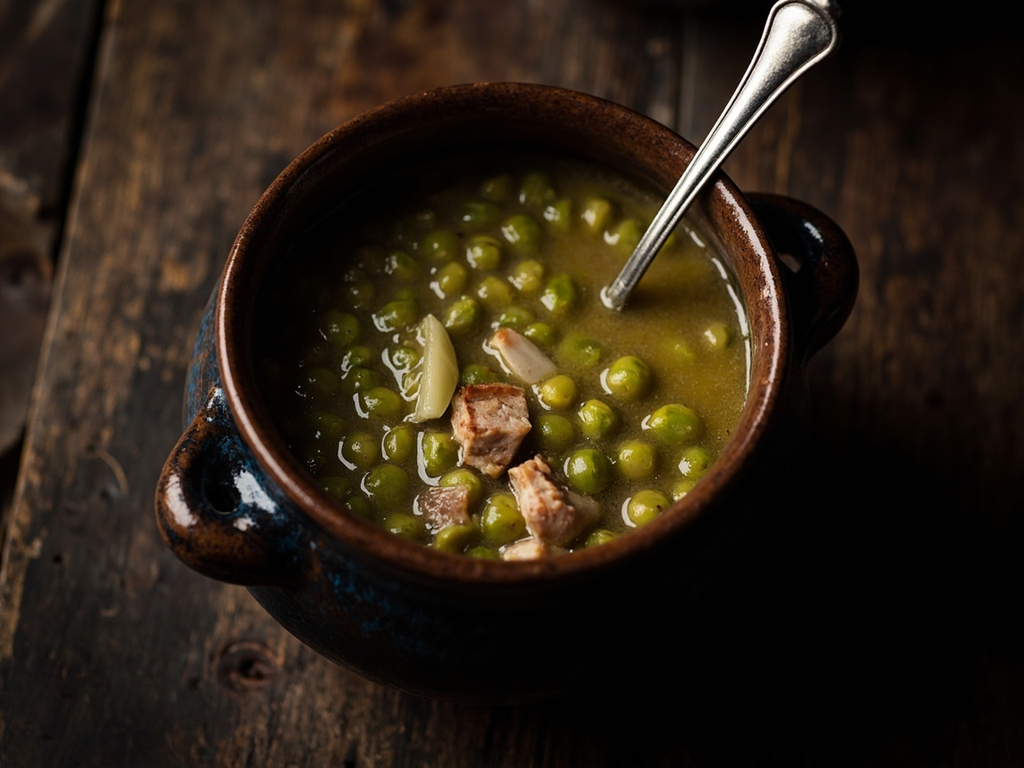
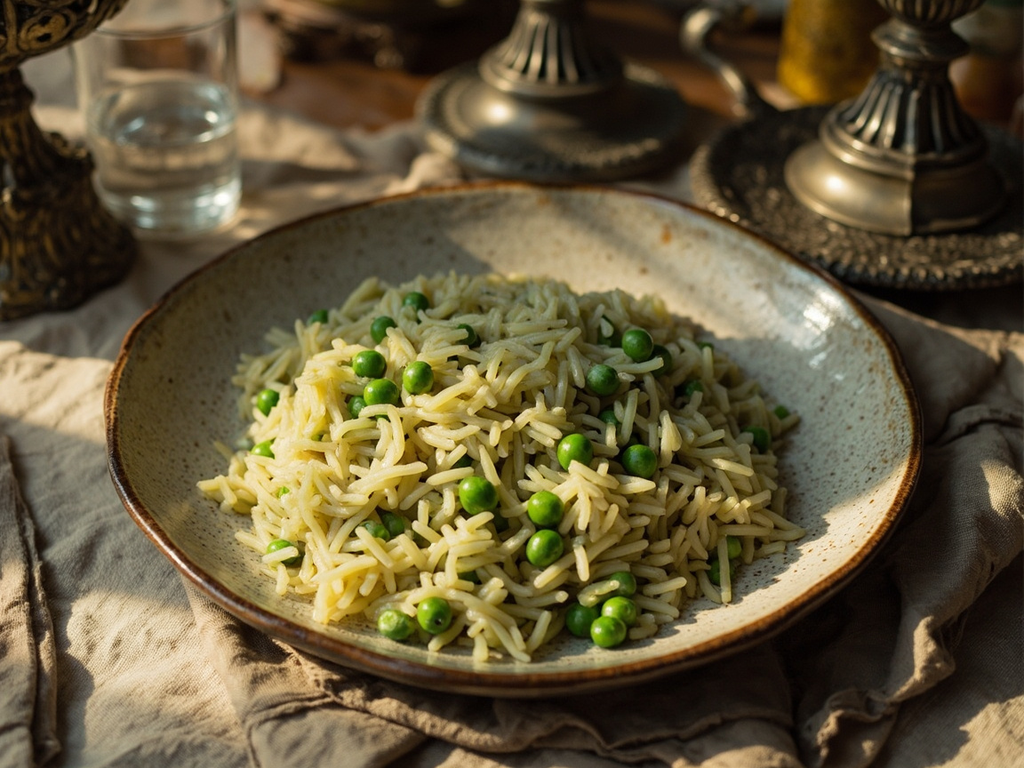
A creamy in-between, neither soup nor risotto, where rice and fresh peas cook together in a broth perfumed with the pods. Lard and cheese give it depth; mint or parsley, its freshness.
Come closer, I pray, and taste. In spring, when the bisi arrive from the vegetable gardens of the terraferma, we Venetians cannot do without them: it is even said that a plate is brought to the Doge on the day of our Saint Mark. I want it not too thick, you see — it must flow gently from the spoon, all'onda, like a wave of the lagoon. A little lard, a handful of grated cheese, and I eat it while thinking of the aria I must sustain that very evening.
- •Rice (from the Po Valley) — two handfuls per person (base)
- •Fresh peas with their pods — abundantly (signature vegetable)
- •Lard — one piece (fat and umami)
- •Onion — one small (aromatic)
- •Broth (made from the pods) — to cover generously (flavored liquid)
- •Grated hard cheese — a good handful (salty binder)
- •Parsley or mint — a few sprigs (freshness)
Risi e bisi — Rice and Peas from the Lagoon
A creamy in-between, neither soup nor risotto, where rice and fresh peas cook together in a broth perfumed with the pods. Lard and cheese give it depth; mint or parsley, its freshness.
Why this dish? Emblematic dish of Venice, once served to the Doge on St. Mark's Day. For a Venetian soprano living by the seasons of the lagoon, it is the ordinary comfort of spring, between two rehearsals at the Teatro Sant'Angelo.
Come closer, I pray, and taste. In spring, when the bisi arrive from the vegetable gardens of the terraferma, we Venetians cannot do without them: it is even said that a plate is brought to the Doge on the day of our Saint Mark. I want it not too thick, you see — it must flow gently from the spoon, all'onda, like a wave of the lagoon. A little lard, a handful of grated cheese, and I eat it while thinking of the aria I must sustain that very evening.
Ingredients (period version)
- Rice (from the Po Valley) — two handfuls per person (base)
- Fresh peas with their pods — abundantly (signature vegetable)
- Lard — one piece (fat and umami)
- Onion — one small (aromatic)
- Broth (made from the pods) — to cover generously (flavored liquid)
- Grated hard cheese — a good handful (salty binder)
- Parsley or mint — a few sprigs (freshness)
Ingredients
- Vialone Nano or Arborio rice — 200 g (base)
- Fresh peas in pods — 500 g (about 250 g shelled) (signature vegetable)
- Pancetta or smoked lard — 60 g, diced (fat and umami)
- Onion — 1 small, sliced (aromatic)
- Vegetable broth (ideally made from the pods) — 1 liter (flavored liquid)
- Grated Parmesan or Grana — 50 g (salty binder)
- Butter — 30 g (final binder)
- Flat-leaf parsley — 1 small bunch (freshness)
Method
- Shell the peas. Boil the pods in salted water for 20 minutes, blend and strain to obtain a fragrant green broth (or use vegetable broth).
- In a pot, melt the pancetta with the onion in a little butter, without browning.
- Add the peas, then the rice; stir for 2 minutes to coat.
- Pour in the hot broth ladle by ladle, stirring, for about 16-18 minutes: the result should remain fluid, all'onda (between soup and risotto).
- Off the heat, stir in the butter and Parmesan, sprinkle with parsley. Serve immediately, very hot.
How it was made : In the 18th century, this dish marked the return of spring and the end of Lenten restrictions. Rice, grown in the Po Valley and traded by Venice, and the first peas from the terraferma made it a dish both popular and honored up to the Doge's table.
The contemporary twist : Served in a shallow bowl with a drizzle of olive oil and a few pea shoots, it is a 'Venetian risotto revisited' that surprises with its flowing texture.
Anna Girò · Charactorium