 flip
flipChickpea Minestra with Rosemary
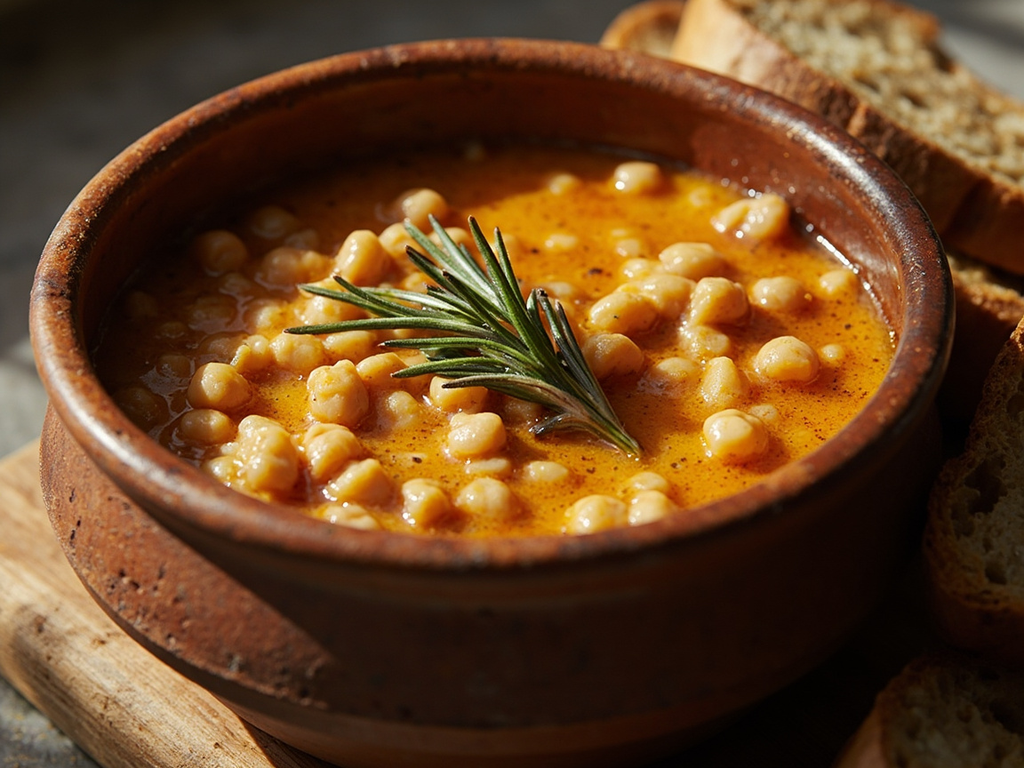
Chickpea Minestra with Rosemary
Why this dish? In a Roman bottega, one eats what nourishes for long with little money: chickpeas, soaked the night before and simmered with rosemary and a drizzle of oil, satisfied the painter and his apprentices between two days of fresco work at the Quirinal.
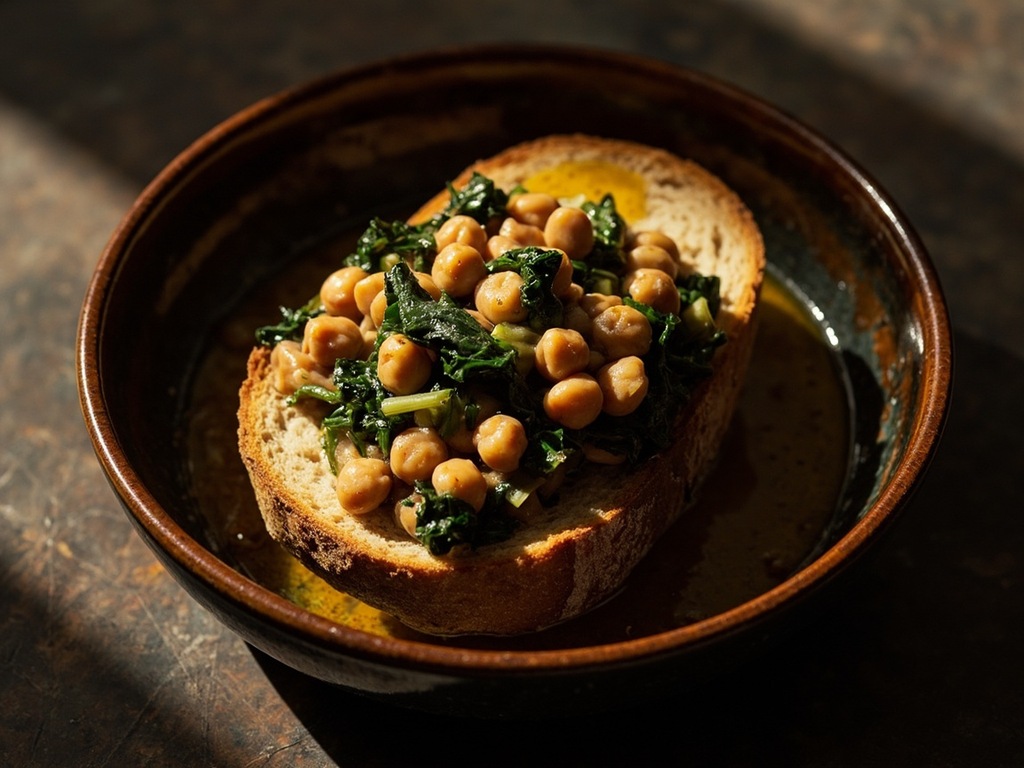
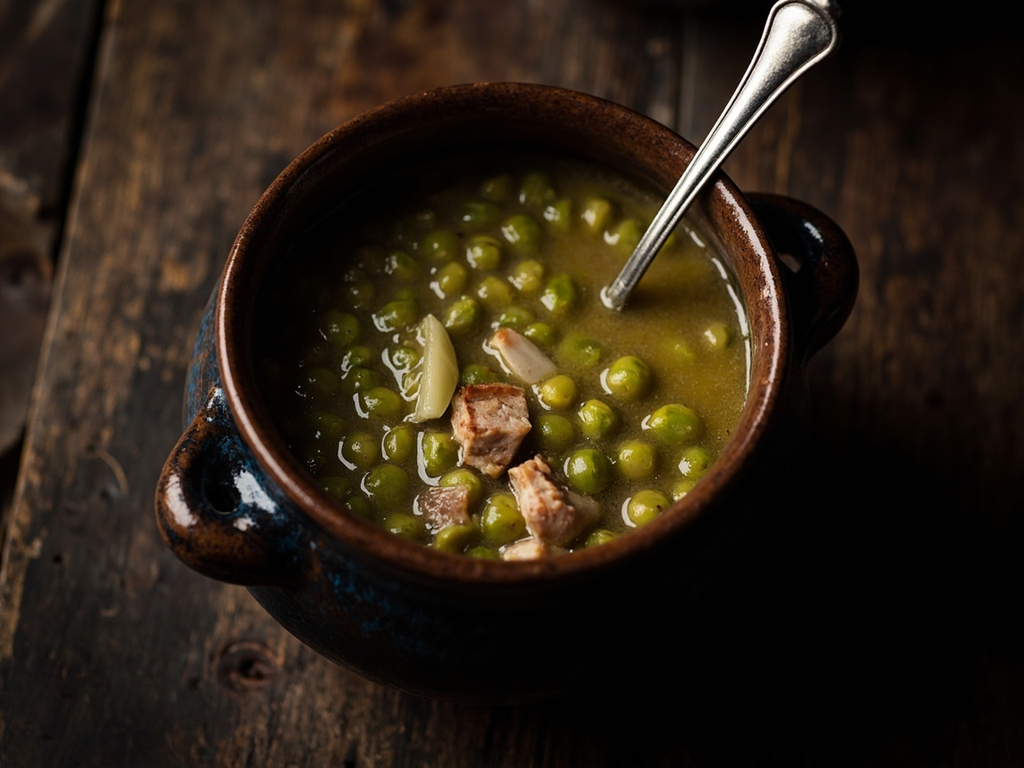
A thick, comforting chickpea soup, scented with garlic and rosemary, bound by its own purée and drizzled with olive oil. The quintessential everyday dish, which keeps an artisan standing on his scaffolding strong.
Listen to me, my friend: a painter who climbs the scaffolding at dawn doesn't stay on his feet with wind in his belly. My boys soaked the chickpeas the night before, and in the morning I let them sing in the pot with a sprig of rosemary stolen from the neighbor's garden. A dash of oil, a crust of stale bread thrown in, and you're good to daub an entire vault without flinching. Let the cardinals keep their pheasants; this soup has painted more seascapes than all their sauces.
- •Dried chickpeas — two handfuls per person (nourishing base)
- •Fresh rosemary — one sprig (resinous aroma)
- •Garlic — a few cloves (aromatic)
- •Olive oil — a good drizzle (binder and richness)
- •Stale bread — a few crusts (thickener)
- •Salt — to taste (seasoning)
Chickpea Minestra with Rosemary
A thick, comforting chickpea soup, scented with garlic and rosemary, bound by its own purée and drizzled with olive oil. The quintessential everyday dish, which keeps an artisan standing on his scaffolding strong.
Why this dish? In a Roman bottega, one eats what nourishes for long with little money: chickpeas, soaked the night before and simmered with rosemary and a drizzle of oil, satisfied the painter and his apprentices between two days of fresco work at the Quirinal.
Listen to me, my friend: a painter who climbs the scaffolding at dawn doesn't stay on his feet with wind in his belly. My boys soaked the chickpeas the night before, and in the morning I let them sing in the pot with a sprig of rosemary stolen from the neighbor's garden. A dash of oil, a crust of stale bread thrown in, and you're good to daub an entire vault without flinching. Let the cardinals keep their pheasants; this soup has painted more seascapes than all their sauces.
Ingredients (period version)
- Dried chickpeas — two handfuls per person (nourishing base)
- Fresh rosemary — one sprig (resinous aroma)
- Garlic — a few cloves (aromatic)
- Olive oil — a good drizzle (binder and richness)
- Stale bread — a few crusts (thickener)
- Salt — to taste (seasoning)
Ingredients
- Dried chickpeas — 250 g (soaked 12 h) (nourishing base)
- Fresh rosemary — 1 nice sprig (resinous aroma)
- Garlic — 3 cloves (aromatic)
- Extra virgin olive oil — 5 tablespoons (binder and richness)
- Stale country bread — 4 slices (thickener / croutons)
- Salt — 1 teaspoon (seasoning)
- Water — 1.5 liters (cooking)
Method
- The night before, soak the chickpeas in a large volume of cold water.
- Drain, cover with fresh water and cook over low heat for 1.5 to 2 hours with 2 whole cloves of garlic, until very tender. Salt at the end of cooking.
- Remove a ladleful of chickpeas, mash them into a purée, and return to the pot to thicken.
- In a small pan, gently brown the remaining sliced garlic in olive oil with the rosemary, then pour this flavored oil into the soup.
- Serve hot over stale bread crusts rubbed with garlic, with a final drizzle of raw oil.
How it was made : Legumes (chickpeas, lentils, fava beans) were the main source of protein for the Roman people, much more accessible than meat. They were cooked for a long time in earthenware pots placed by the fire, and the sprig of rosemary — an herb ubiquitous in Latium — served both as flavor and, it was believed, an aid to digestion.
The contemporary twist : A spoonful of grated pecorino and a twist of the pepper mill at serving time awaken the soup; it can be served in an earthenware bowl for a workshop look.
Agostino Tassi · Charactorium