 flip
flipSarde in saor — Venetian Sweet-and-Sour Sardines
Sarde in saor — Venetian Sweet-and-Sour Sardines
Why this dish? Saor was the technique of Venetian fishermen and sailors to keep fish for several days. In the Carnival Venice that Anna Girò roamed, these preserved sardines were eaten standing, on the go, between two performances.
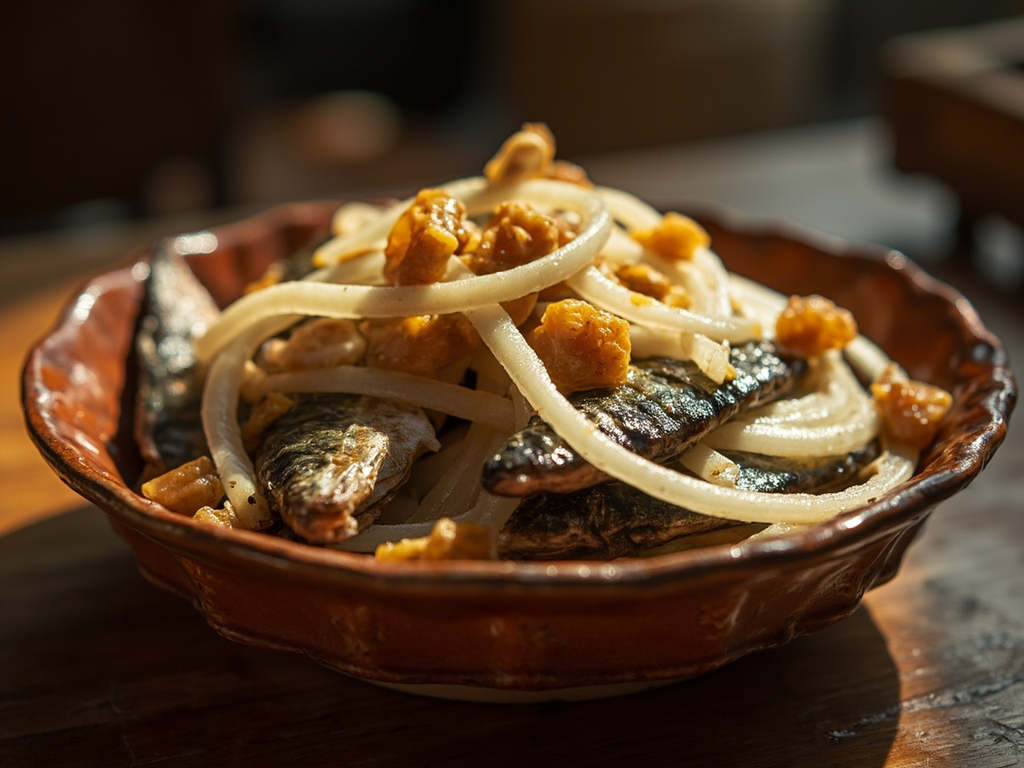
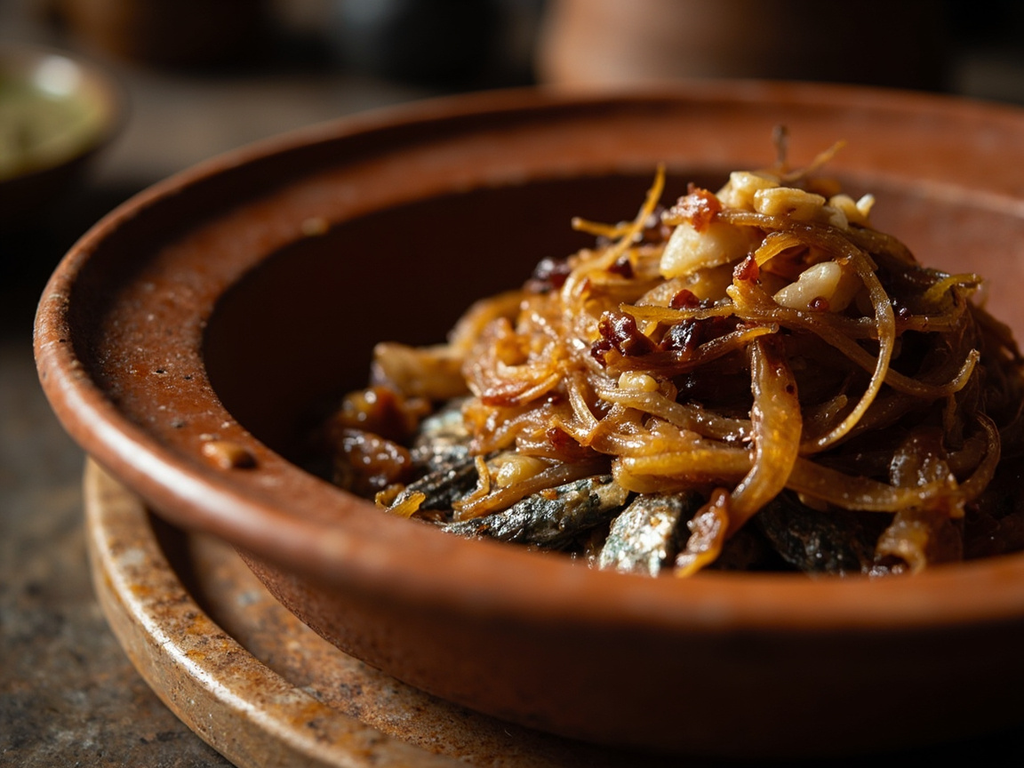
Fried sardines then buried under a mountain of onions melted in vinegar, accented with raisins and pine nuts. They are left to marinate for one to three days: time does all the work and marries sour with sweet.
Here is a dish that the barcaroli know better than anyone, for it keeps for several days without fear of heat. You fry the sardines, then bury them under onions long melted in vinegar, with those raisins from Corinth and those pine nuts that our galleys bring back from the Levant. Wait a day or two before tasting, I implore you — it is in the waiting that the sour sweetens. I gladly take some in a pot when I travel to Mantua or Ferrara to sing.
- •Fresh sardines — as many as caught (fish)
- •Flour — for dusting (frying coating)
- •Oil (olive or frying) — for frying (cooking)
- •White onions — in large quantity (twice the fish) (base of saor)
- •Wine vinegar — generously (acidity and preservation)
- •Raisins — a handful (sweetness)
- •Pine nuts — a handful (crunch)
Sarde in saor — Venetian Sweet-and-Sour Sardines
Fried sardines then buried under a mountain of onions melted in vinegar, accented with raisins and pine nuts. They are left to marinate for one to three days: time does all the work and marries sour with sweet.
Why this dish? Saor was the technique of Venetian fishermen and sailors to keep fish for several days. In the Carnival Venice that Anna Girò roamed, these preserved sardines were eaten standing, on the go, between two performances.
Here is a dish that the barcaroli know better than anyone, for it keeps for several days without fear of heat. You fry the sardines, then bury them under onions long melted in vinegar, with those raisins from Corinth and those pine nuts that our galleys bring back from the Levant. Wait a day or two before tasting, I implore you — it is in the waiting that the sour sweetens. I gladly take some in a pot when I travel to Mantua or Ferrara to sing.
Ingredients (period version)
- Fresh sardines — as many as caught (fish)
- Flour — for dusting (frying coating)
- Oil (olive or frying) — for frying (cooking)
- White onions — in large quantity (twice the fish) (base of saor)
- Wine vinegar — generously (acidity and preservation)
- Raisins — a handful (sweetness)
- Pine nuts — a handful (crunch)
Ingredients
- Fresh cleaned sardines — 600 g (fish)
- Flour — 100 g (frying coating)
- Frying oil — for frying (cooking)
- White onions — 800 g, thinly sliced (base of saor)
- Olive oil — 4 tbsp (melt the onions)
- White wine vinegar — 150 ml (acidity and preservation)
- Raisins — 50 g (rehydrated) (sweetness)
- Pine nuts — 40 g (crunch)
- Salt — to taste (seasoning)
Method
- Dust the sardines with flour and fry in hot oil until golden. Drain on a cloth, salt.
- In a large pan, melt the onions in olive oil over low heat for 20-25 minutes, without browning, until translucent and soft.
- Pour in the vinegar, let reduce for 3-4 minutes, add raisins and pine nuts.
- In a shallow dish or jar, alternate layers of sardines and saor onions, finishing with onions.
- Cover and marinate in the cool for 24 to 72 hours before serving, at room temperature, on bread or polenta.
How it was made : Saor (from sapor, 'flavor') is attested in Venice since the Middle Ages as a preservation method used on ships. Raisins and pine nuts, later additions, testify to the spice wealth of the Serenissima; they also adorned Carnival tables.
The contemporary twist : Served in a verrine, one sardine standing on its bed of golden onions with a few toasted pine nuts on top: a chic cicheto for aperitivo.
Anna Girò · Charactorium