 flip
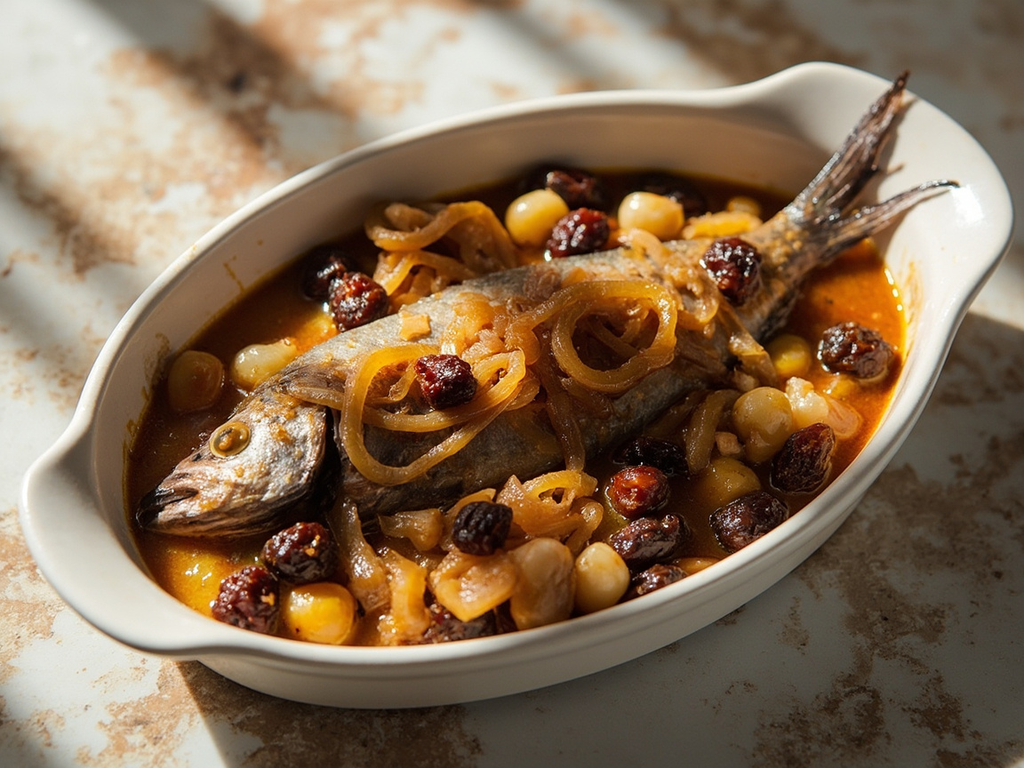
flipSarde in saor (sweet-and-sour sardines with pine nuts)
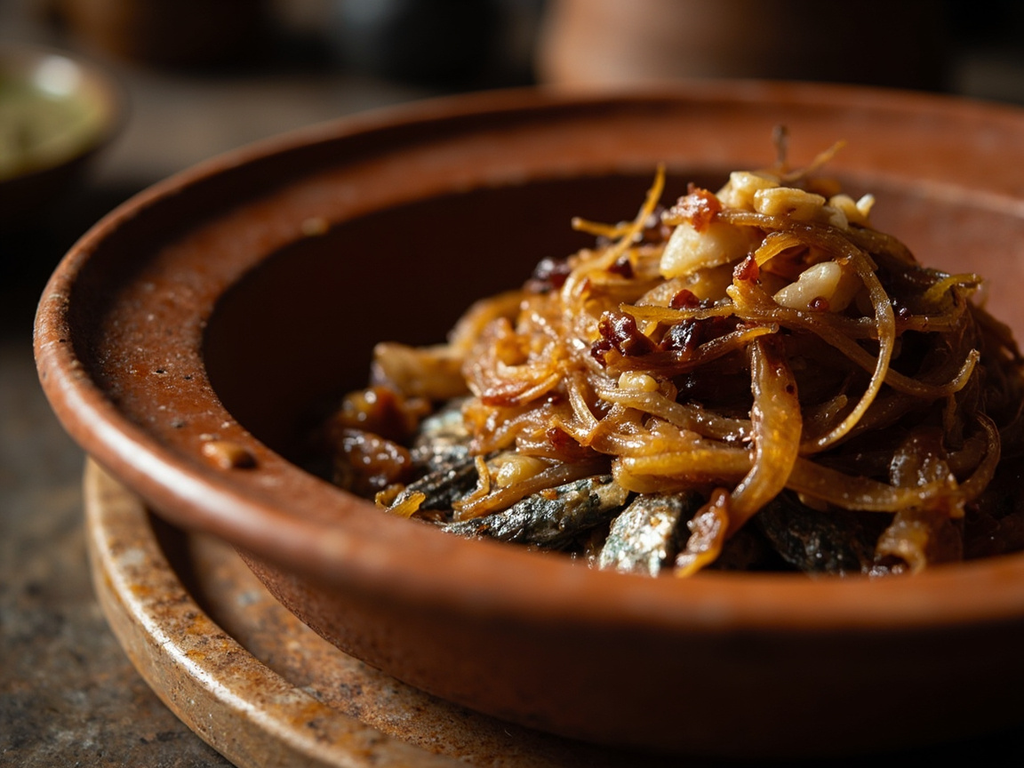
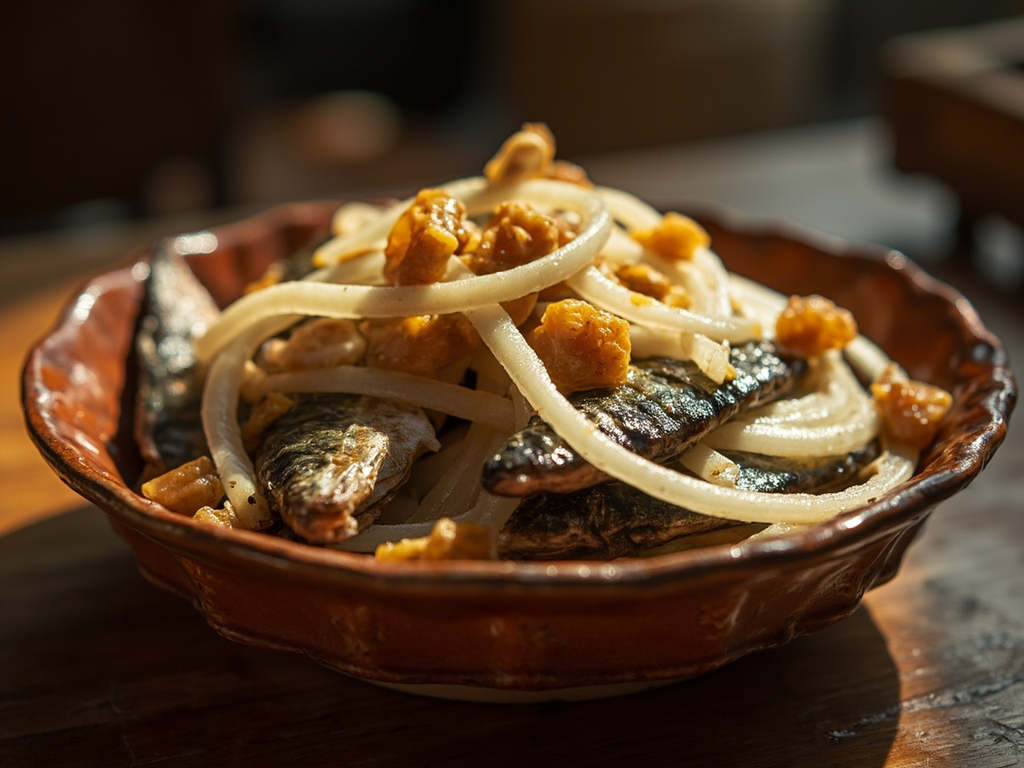
Sarde in saor (sweet-and-sour sardines with pine nuts)
Why this dish? A dish of the fishermen and sailors of the lagoon that Vivaldi encountered daily in Venice: without ice, *saor* allowed the day's catch to be preserved. A maestro always traveling, between Mantua and Vienna, knew the value of a dish that keeps and travels.
Fried sardines then nestled under a layer of onions melted in vinegar, accented with raisins and pine nuts — the Venetian sweet-and-sour in its purest expression, best after two days of rest.
Listen to the advice of a Venetian: this dish is not eaten hot; it takes patience. I first fry my sardines, then cover them with onions long melted in vinegar, and I slip in Corinth raisins and pine nuts brought back by our galleys from the Levant. You will let it rest for two full days in a cool place — for *saor*, like a well-set theme, reveals its true flavor only over time and repetition.
- •Fresh lagoon sardines — as many as caught (fish)
- •White onions — in large quantity (melting marinade)
- •Wine vinegar — as needed (preserving acidity)
- •Levantine raisins — a handful (sweetness)
- •Pine nuts — a handful (crunch)
- •Flour — for dusting (frying)
- •Olive oil — for frying (cooking)
Sarde in saor (sweet-and-sour sardines with pine nuts)
Fried sardines then nestled under a layer of onions melted in vinegar, accented with raisins and pine nuts — the Venetian sweet-and-sour in its purest expression, best after two days of rest.
Why this dish? A dish of the fishermen and sailors of the lagoon that Vivaldi encountered daily in Venice: without ice, *saor* allowed the day's catch to be preserved. A maestro always traveling, between Mantua and Vienna, knew the value of a dish that keeps and travels.
Listen to the advice of a Venetian: this dish is not eaten hot; it takes patience. I first fry my sardines, then cover them with onions long melted in vinegar, and I slip in Corinth raisins and pine nuts brought back by our galleys from the Levant. You will let it rest for two full days in a cool place — for *saor*, like a well-set theme, reveals its true flavor only over time and repetition.
Ingredients (period version)
- Fresh lagoon sardines — as many as caught (fish)
- White onions — in large quantity (melting marinade)
- Wine vinegar — as needed (preserving acidity)
- Levantine raisins — a handful (sweetness)
- Pine nuts — a handful (crunch)
- Flour — for dusting (frying)
- Olive oil — for frying (cooking)
Ingredients
- Fresh sardines — 800 g (12-16 pieces) (fish)
- White onions — 1 kg (marinade)
- White wine vinegar — 200 ml (acidity)
- Raisins (rehydrated) — 60 g (sweetness)
- Pine nuts — 40 g (crunch)
- Flour — 100 g (frying coating)
- Olive oil — for frying + 4 tbsp (cooking)
- Salt — to taste (seasoning)
Method
- Remove heads and guts from sardines, pat dry, dust with flour, and fry in hot oil until golden. Drain, salt.
- Slice onions thinly and cook gently in oil for 25-30 min until melted without browning.
- Pour vinegar over onions, reduce by half, add rehydrated raisins and pine nuts.
- In a dish, alternate layers of sardines and layers of *saor* onions.
- Cover and marinate in a cool place for at least 24 h (ideally 48 h) before serving cold.
How it was made : *Saor* ('flavor' in Venetian) is attested from the Middle Ages as a sailors' preservation method: vinegar and onions protected fish during long voyages. In the 18th century, raisins and pine nuts — luxury goods from Levantine trade — enriched the urban, festive version.
The contemporary twist : Served on a thin slice of grilled polenta as a *cicheto*, in the style of a contemporary *bacaro* counter.
Antonio Vivaldi · Charactorium