 flip
flipQuince Marmalade Perfumed with Rose Water
Quince Marmalade Perfumed with Rose Water
Why this dish? Pope's garden at Twickenham yielded abundant fruit; surpluses were preserved as fruit pastes and sweet marmalades, keepable treats served at the final 'banquet' (the after-dinner sweets). A way to prolong the poet-gardener's orchard all year round.
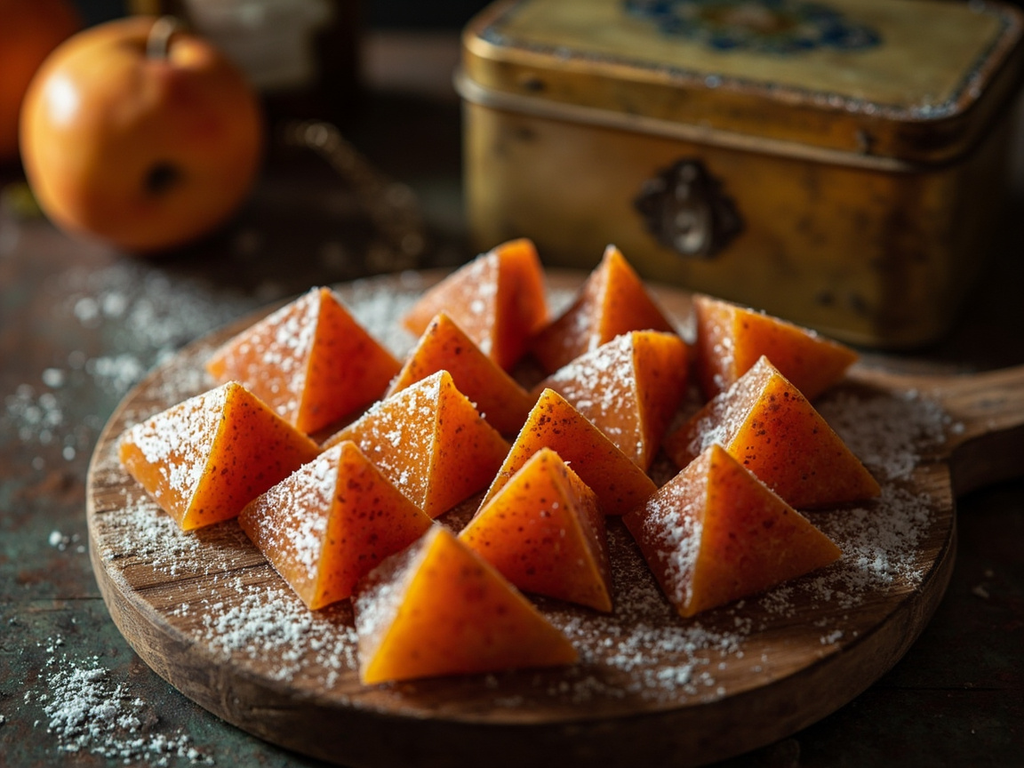
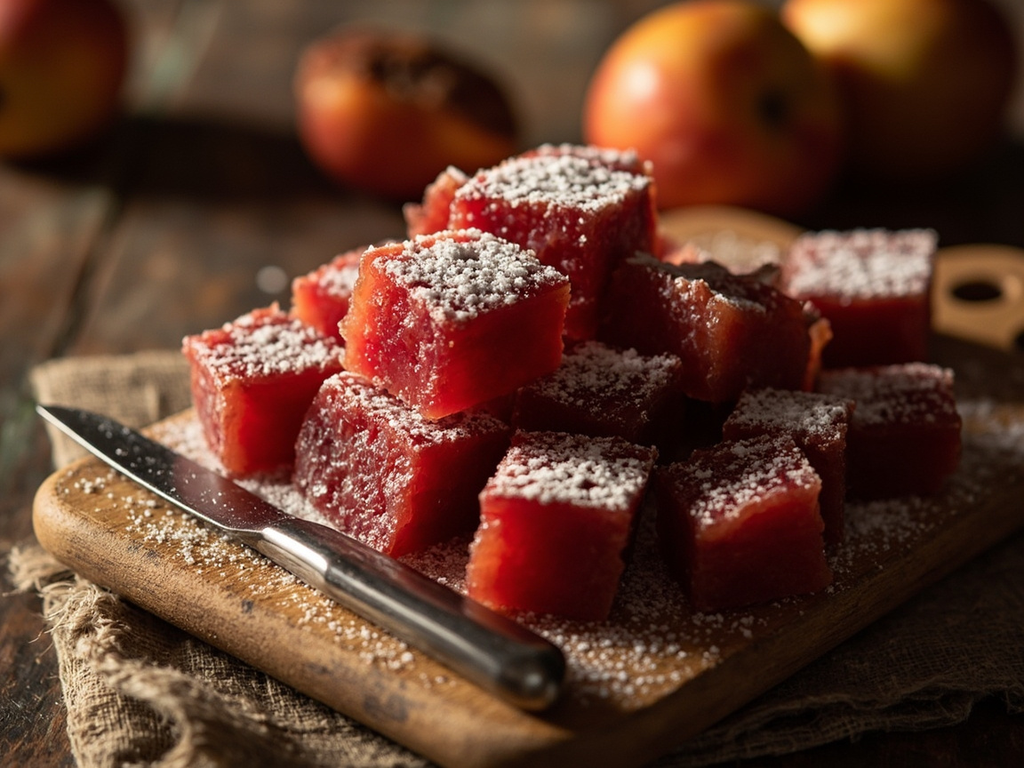
A dense, amber, translucent quince paste, cooked long with sugar until it can be cut with a knife, perfumed with rose water. A keepable confection sliced to close the meal.
My orchard gives me more fruit than my weak health can consume, Sir — so I lay them up. One peels the quinces, cooks them long with their weight of sugar, stirring without cease, until the paste grows thick and red like a sunset over the Thames. A hint of rose water, and one pours it into boxes to slice all winter. This is my way of making summer last: what the poet does with hours, the confectioner does with fruits.
- •Ripe quinces — a basket (fruit)
- •Sugar — equal weight of cooked quinces (preservation and sweetening)
- •Rose water — a few spoonfuls (signature perfume)
- •Water — as needed (cooking)
Quince Marmalade Perfumed with Rose Water
A dense, amber, translucent quince paste, cooked long with sugar until it can be cut with a knife, perfumed with rose water. A keepable confection sliced to close the meal.
Why this dish? Pope's garden at Twickenham yielded abundant fruit; surpluses were preserved as fruit pastes and sweet marmalades, keepable treats served at the final 'banquet' (the after-dinner sweets). A way to prolong the poet-gardener's orchard all year round.
My orchard gives me more fruit than my weak health can consume, Sir — so I lay them up. One peels the quinces, cooks them long with their weight of sugar, stirring without cease, until the paste grows thick and red like a sunset over the Thames. A hint of rose water, and one pours it into boxes to slice all winter. This is my way of making summer last: what the poet does with hours, the confectioner does with fruits.
Ingredients (period version)
- Ripe quinces — a basket (fruit)
- Sugar — equal weight of cooked quinces (preservation and sweetening)
- Rose water — a few spoonfuls (signature perfume)
- Water — as needed (cooking)
Ingredients
- Quinces — 1 kg (fruit)
- Sugar — approx. 600 g (weight of cooked pulp) (sweetener and gelling)
- Rose water — 2 tbsp (perfume)
- Lemon juice — 1 tbsp (acidity (optional))
Method
- Peel, core, and chop the quinces; cook in water until very tender.
- Drain and puree finely (through a sieve in the old days, blender today); weigh the pulp.
- Return the pulp to a pan with its weight of sugar and the lemon juice; cook over low heat, stirring constantly, for 30–45 minutes.
- The paste is ready when a spoon drawn across the bottom leaves a trail; stir in the rose water at the end.
- Pour into a mould or flat boxes, let dry for 1–2 days, then slice into squares or diamonds to serve.
How it was made : The word 'marmalade' originally meant a firm quince paste (from Portuguese 'marmelo', quince), long before it meant orange jam. These 'banqueting stuffs' kept for months and were part of the final sweet course, often moulded into decorative shapes and dusted with sugar.
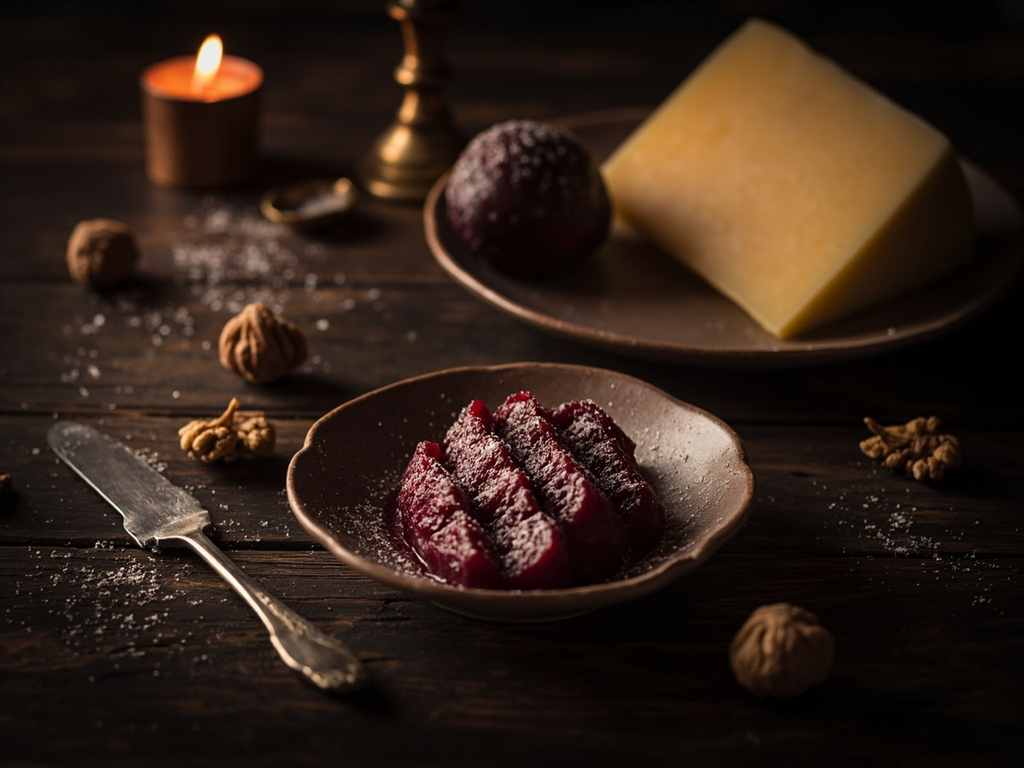
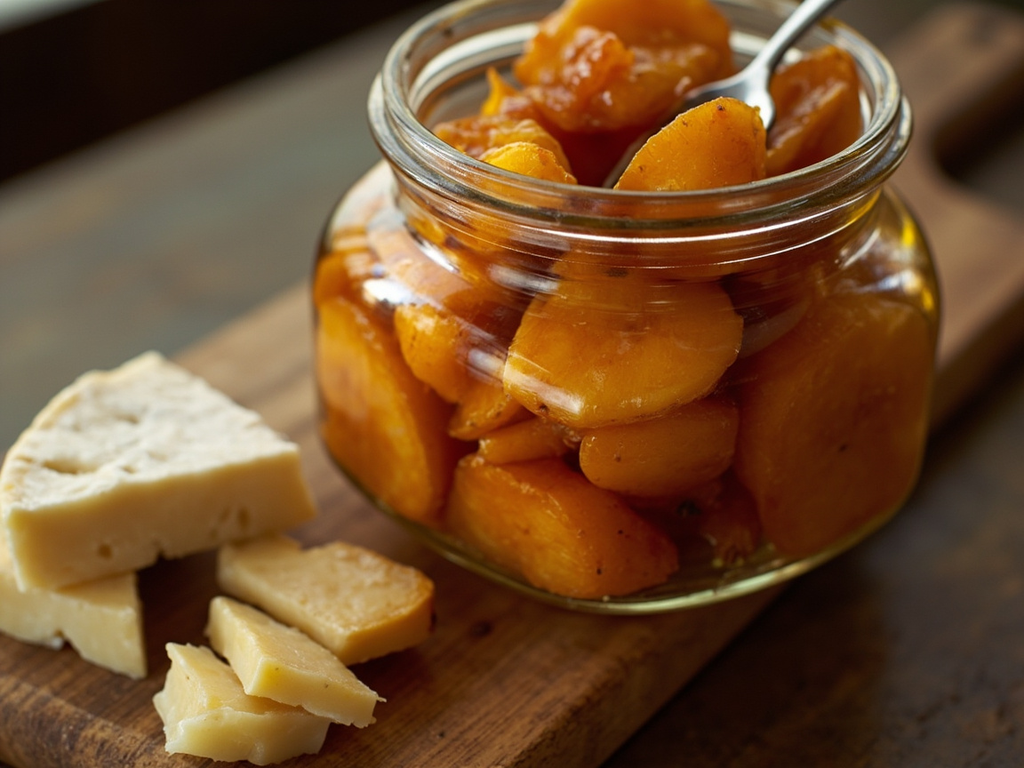
The contemporary twist : Cut into small cubes rolled in sugar, like fruit jellies, to serve with a mature English cheese — a very contemporary sweet-savoury pairing.
Sources : Eliza Smith, *The Compleat Housewife* (1727) · Hannah Glasse, *The Art of Cookery Made Plain and Easy* (1747)
Alexander Pope · Charactorium