 flip
flipSursild — pickled herring on rye bread
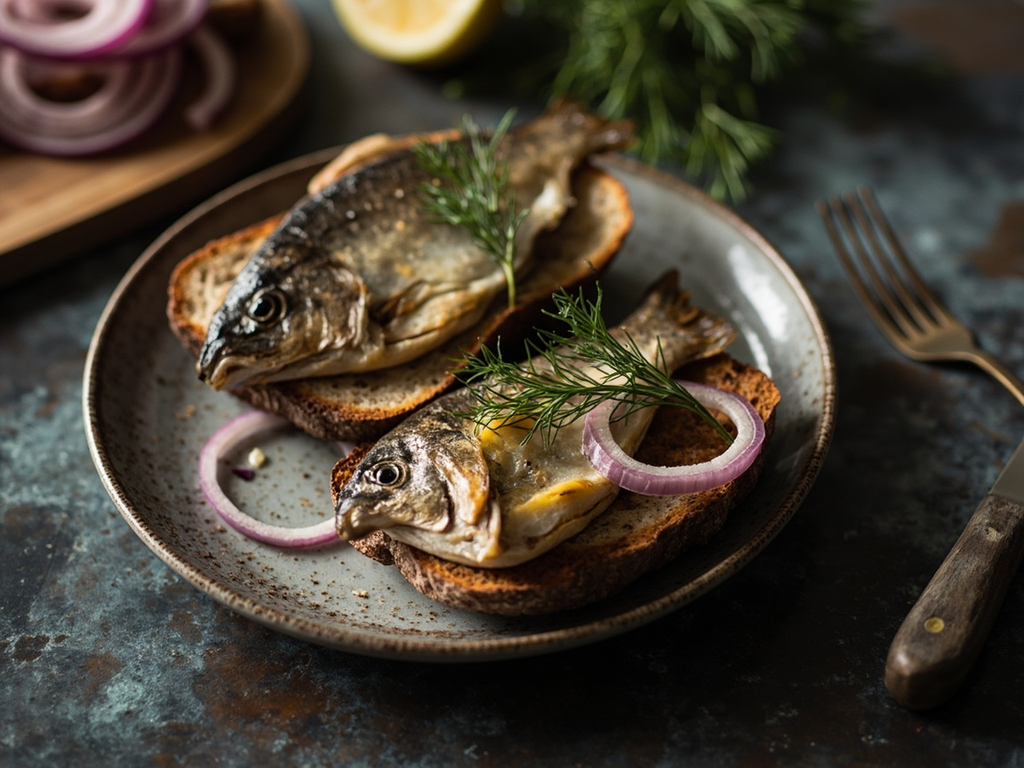
Sursild — pickled herring on rye bread
Why this dish? Herring is specifically attested in Ibsen's diet: a staple of the Scandinavian bourgeois table, eaten salted then pickled, served on rye bread at breakfast and supper. It was the everyday taste of his mornings, from Skien to Kristiania.
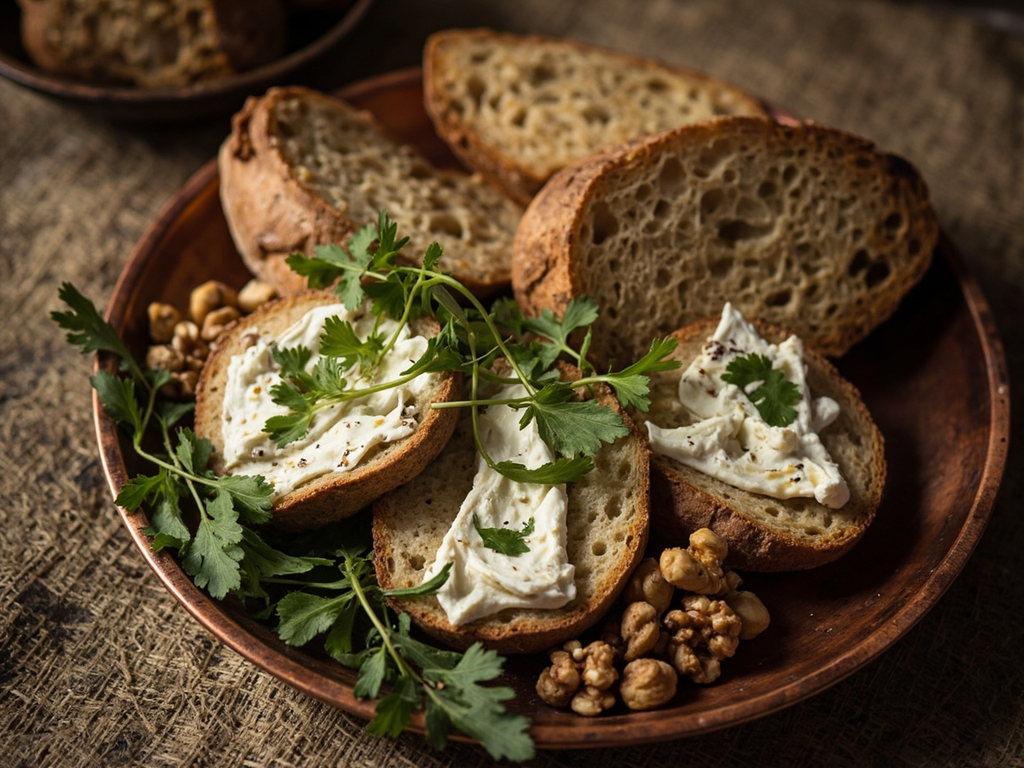
Desalted herring fillets marinated in a mild vinegar with onions and bay leaf, served on a thick slice of buttered rye bread. Bright, briny, lightly tart—the bite that opened and closed the Norwegian day.
You see, in this land of rocks and fjords, herring is not a dish: it is a discipline. First you salt it to survive the winter, then you soften it in vinegar and onion, because the palate craves a little sweetness under the salt. I ate it in the morning, on black rye, before sitting down to my writing desk—a man cannot write the human soul on an empty stomach. Eat it simply, and never forget that here we first had to learn to preserve in order to live.
- •Barrel-salted herring — a few fillets (base fish, preserved by salting)
- •Cider or grain vinegar — enough to cover (acidic marinade)
- •Onions — 1 to 2 (aromatic and sweetness)
- •Sugar — a pinch (balances acidity)
- •Bay leaves and peppercorns — a few (flavor)
- •Rye bread — thick slices (base)
- •Butter — to taste (fat binder for the sandwich)
Sursild — pickled herring on rye bread
Desalted herring fillets marinated in a mild vinegar with onions and bay leaf, served on a thick slice of buttered rye bread. Bright, briny, lightly tart—the bite that opened and closed the Norwegian day.
Why this dish? Herring is specifically attested in Ibsen's diet: a staple of the Scandinavian bourgeois table, eaten salted then pickled, served on rye bread at breakfast and supper. It was the everyday taste of his mornings, from Skien to Kristiania.
You see, in this land of rocks and fjords, herring is not a dish: it is a discipline. First you salt it to survive the winter, then you soften it in vinegar and onion, because the palate craves a little sweetness under the salt. I ate it in the morning, on black rye, before sitting down to my writing desk—a man cannot write the human soul on an empty stomach. Eat it simply, and never forget that here we first had to learn to preserve in order to live.
Ingredients (period version)
- Barrel-salted herring — a few fillets (base fish, preserved by salting)
- Cider or grain vinegar — enough to cover (acidic marinade)
- Onions — 1 to 2 (aromatic and sweetness)
- Sugar — a pinch (balances acidity)
- Bay leaves and peppercorns — a few (flavor)
- Rye bread — thick slices (base)
- Butter — to taste (fat binder for the sandwich)
Ingredients
- Salted herring fillets (matjes or mild) — 300 g (base fish)
- White or cider vinegar — 150 ml (marinade)
- Water — 100 ml (softens the marinade)
- Sugar — 3 tbsp (balance)
- Red onion — 1 (aromatic)
- Bay leaves + peppercorns — 2 leaves + 8 grains (flavor)
- Dense rye bread — 4 slices (base)
- Butter — 30 g (spread)
Method
- If the herring is very salty, desalt it in cold water for 1–2 hours, then drain.
- Bring vinegar, water, and sugar to a simmer, then let cool completely.
- Slice the onion into thin rings; cut fillets into 3 cm pieces.
- Layer herring, onion, bay leaves, and peppercorns in a jar; cover with cold marinade.
- Refrigerate for at least 24 hours (up to several days).
- Butter the rye bread, top with drained fillets and a few onion rings.
How it was made : Before artificial refrigeration, mass-caught herring was immediately salted in wooden barrels: it was the winter protein across Scandinavia. The vinegar marinade, later and more bourgeois, made this preserved fish pleasant for everyday table.
The contemporary twist : A dollop of sour cream and fresh dill on the open sandwich, modern Oslo smørbrød style.
Henrik Ibsen · Charactorium