 flip
flipTa'meya, the market fava-bean fritters
Ta'meya, the market fava-bean fritters
Why this dish? Before the marshal's uniforms and the Camp David summits, Sadat was a young, penniless military man walking the streets of Cairo. Ta'meya, the fava-bean fritter sold on every street corner, was the cheap snack that fed the modest Egyptian he claimed to be.
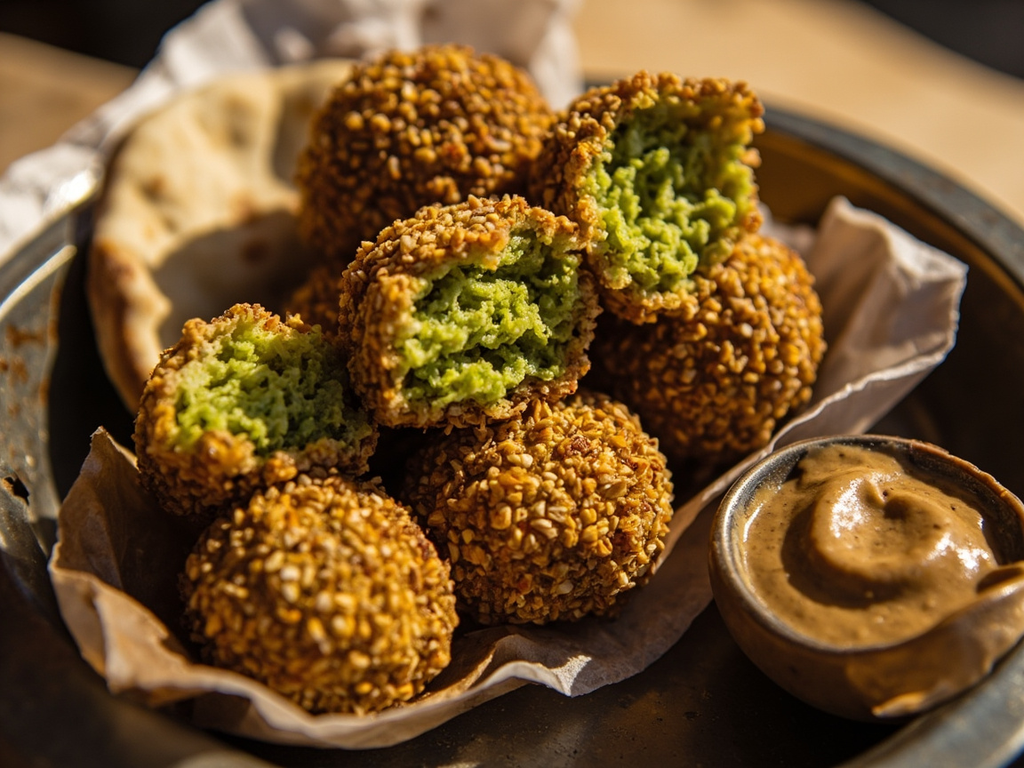
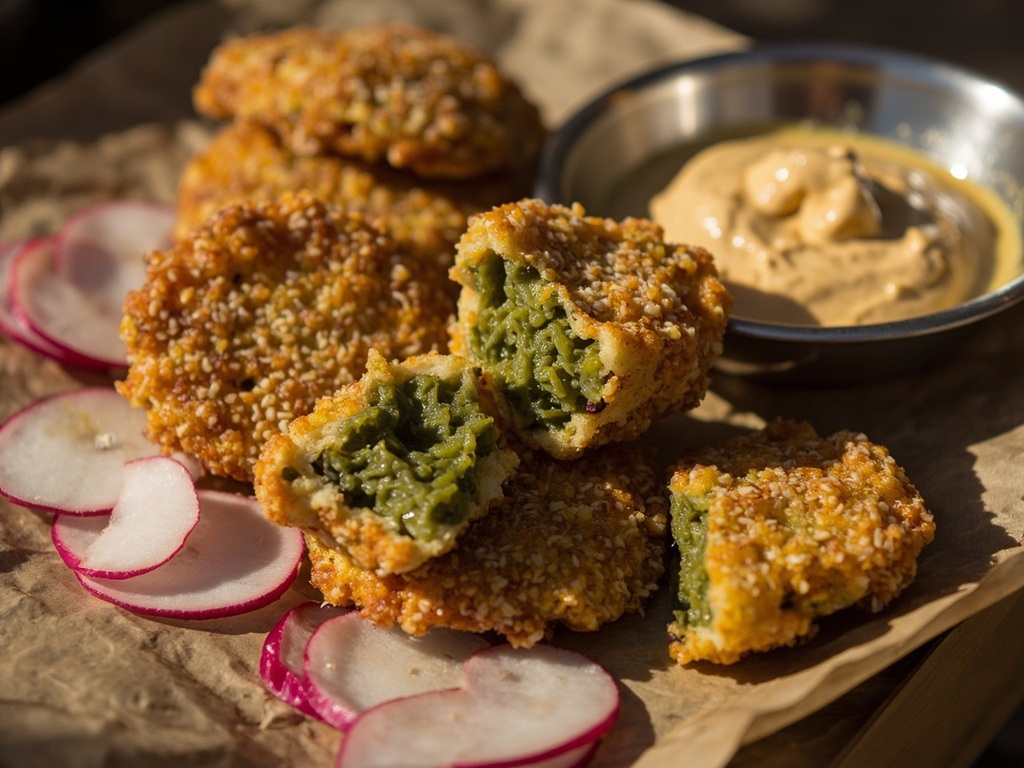
The Egyptian falafel, made with fava beans (not chickpeas), flavored with herbs and spices, fried into crispy patties. Bought by the cone, slipped into bread with fresh vegetables.
Back when my young officer's pay ran out before the end of the month, it was ta'meya that kept me going. You take the bean—always the bean, not the chickpea like our neighbors—you grind it with coriander, parsley, a little onion and those seeds you sprinkle on top, and you drop it into the boiling oil. Crispy outside, green and tender inside. You eat it standing up, in bread, with a slice of radish, and you go back to work with a full belly for a few piastres. That's Egypt going to work.
- •Dried peeled fava beans — two handfuls (base, soaked)
- •Fresh coriander and parsley — a good bunch (flavor, color)
- •Onion and garlic — a little of each (aromatic)
- •Cumin and coriander seeds — a pinch (spices)
- •Sesame seeds — for coating (crust)
- •Frying oil — plenty (cooking)
Ta'meya, the market fava-bean fritters
The Egyptian falafel, made with fava beans (not chickpeas), flavored with herbs and spices, fried into crispy patties. Bought by the cone, slipped into bread with fresh vegetables.
Why this dish? Before the marshal's uniforms and the Camp David summits, Sadat was a young, penniless military man walking the streets of Cairo. Ta'meya, the fava-bean fritter sold on every street corner, was the cheap snack that fed the modest Egyptian he claimed to be.
Back when my young officer's pay ran out before the end of the month, it was ta'meya that kept me going. You take the bean—always the bean, not the chickpea like our neighbors—you grind it with coriander, parsley, a little onion and those seeds you sprinkle on top, and you drop it into the boiling oil. Crispy outside, green and tender inside. You eat it standing up, in bread, with a slice of radish, and you go back to work with a full belly for a few piastres. That's Egypt going to work.
Ingredients (period version)
- Dried peeled fava beans — two handfuls (base, soaked)
- Fresh coriander and parsley — a good bunch (flavor, color)
- Onion and garlic — a little of each (aromatic)
- Cumin and coriander seeds — a pinch (spices)
- Sesame seeds — for coating (crust)
- Frying oil — plenty (cooking)
Ingredients
- Dried peeled fava beans — 250 g (base, soaked 12 h)
- Fresh coriander — 1 bunch (flavor)
- Flat-leaf parsley — 1/2 bunch (flavor)
- Onion — 1 small (aromatic)
- Garlic — 3 cloves (aromatic)
- Ground cumin — 1 tsp (spice)
- Ground coriander — 1 tsp (spice)
- Baking soda — 1/2 tsp (lightness)
- Sesame seeds — 3 tbsp (coating)
- Frying oil — 1 L (cooking)
- Salt — 1 tsp (seasoning)
Method
- Soak the peeled fava beans for 12 hours, then drain very thoroughly (residual water will make the fritters burst).
- Blend the raw beans with herbs, onion, garlic, spices, and salt until you get a green, grainy paste. Refrigerate for 30 minutes.
- Just before frying, mix in the baking soda. Shape into patties and roll in sesame seeds.
- Heat oil to 170°C and fry the patties in batches until golden and crispy, about 3-4 minutes.
- Drain on paper and serve immediately, stuffed in flatbread with fresh vegetables and tahini.
How it was made : Ta'meya is the Egyptian version of falafel, and Egypt is often considered its birthplace. Its distinctive feature is the use of fava beans instead of the chickpeas used in the Levant. Sold by street vendors for generations, fried to order in large vats of oil, it feeds Egypt's working people at breakfast and between meals.
The contemporary twist : Shape them into mini flat bites topped with a coriander sprig: a street-food cocktail to serve with a bowl of tahini-lemon dip.
Anwar Sadat · Charactorium