 flip
flipSabzi polo (Nowruz herb rice)
Sabzi polo (Nowruz herb rice)
Why this dish? Sabzi polo is the rice of the Persian New Year (Nowruz), a festival of renewal and spring. For Anousheh Ansari, born in Mashhad and deeply attached to her Iranian roots, this dish embodies the home and family she left as a child for the United States — exactly the kind of flavor you dream of finding far from home, even in orbit.
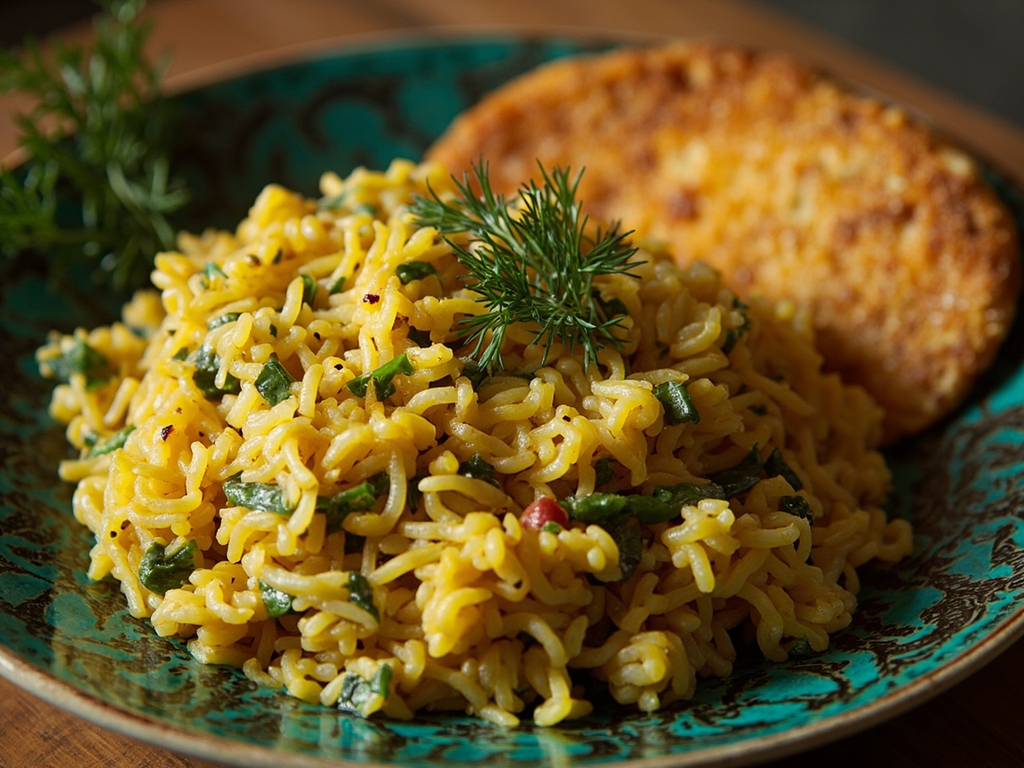
A basmati rice cooked as a pilaf, packed with chopped herbs (parsley, cilantro, dill, chives) and colored with saffron, with its golden crispy crust at the bottom of the pot, the famous "tahdig." Traditionally served at New Year with fish.
You know, you can fund prizes to conquer space, run telecom companies, cross the atmosphere in a Soyuz capsule — and still, deep down, be a little girl from Mashhad waiting for Nowruz. At home, on the first day of spring, my grandmother would make her sabzi polo: herbs chopped so fine they looked like green silk, and that golden tahdig at the bottom of the pot that everyone fought over. I'll tell you frankly: the day you leave the planet, it's not glory you carry in your heart — it's that smell of saffron and dill. Taste it, and think of the roots that keep us standing, even in weightlessness.
- •Basmati rice — a large bowl (base)
- •Fresh parsley, cilantro, dill, chives — a large bunch of each (herbs)
- •Saffron — a pinch of pistils (flavor and color)
- •Clarified butter or oil — as needed (fat for tahdig)
- •Salt — to taste (seasoning)
Sabzi polo (Nowruz herb rice)
A basmati rice cooked as a pilaf, packed with chopped herbs (parsley, cilantro, dill, chives) and colored with saffron, with its golden crispy crust at the bottom of the pot, the famous "tahdig." Traditionally served at New Year with fish.
Why this dish? Sabzi polo is the rice of the Persian New Year (Nowruz), a festival of renewal and spring. For Anousheh Ansari, born in Mashhad and deeply attached to her Iranian roots, this dish embodies the home and family she left as a child for the United States — exactly the kind of flavor you dream of finding far from home, even in orbit.
You know, you can fund prizes to conquer space, run telecom companies, cross the atmosphere in a Soyuz capsule — and still, deep down, be a little girl from Mashhad waiting for Nowruz. At home, on the first day of spring, my grandmother would make her sabzi polo: herbs chopped so fine they looked like green silk, and that golden tahdig at the bottom of the pot that everyone fought over. I'll tell you frankly: the day you leave the planet, it's not glory you carry in your heart — it's that smell of saffron and dill. Taste it, and think of the roots that keep us standing, even in weightlessness.
Ingredients (period version)
- Basmati rice — a large bowl (base)
- Fresh parsley, cilantro, dill, chives — a large bunch of each (herbs)
- Saffron — a pinch of pistils (flavor and color)
- Clarified butter or oil — as needed (fat for tahdig)
- Salt — to taste (seasoning)
Ingredients
- Basmati rice — 300 g (base)
- Flat-leaf parsley — 1 bunch (herbs)
- Fresh cilantro — 1 bunch (herbs)
- Fresh dill — 1/2 bunch (herbs)
- Chives — 1/2 bunch (herbs)
- Saffron — 1 good pinch of pistils steeped in 3 tbsp hot water (flavor and color)
- Butter — 50 g (tahdig)
- Neutral oil — 3 tbsp (tahdig)
- Salt — 1 heaping tbsp for cooking water (seasoning)
Method
- Rinse the rice in cold water until it runs clear, then soak for 1 hour in salted water.
- Finely chop all the herbs and pat them dry.
- Parboil the rice for 6-8 minutes in a large pot of salted boiling water: it should remain firm in the center. Drain.
- Gently mix the drained rice with the chopped herbs.
- In the pot, heat oil and butter, pour in a little saffron water, then add the herb rice, mounding it into a dome. Poke a few steam holes with the handle of a spoon.
- Cover with a cloth under the lid, cook over high heat for 10 minutes, then over very low heat for 35 minutes to form the tahdig.
- Drizzle the top with saffron water, serve by inverting the pot to reveal the golden crust.
How it was made : Polo (prepared rice) has been at the heart of Persian cuisine since the Safavid era (16th-18th centuries), when court cuisine codified fragrant rice dishes. Tahdig, born from the art of not wasting anything, became the most coveted part of the dish. At Nowruz, green herbs symbolize rebirth and the new year.
The contemporary twist : For a 'space edition,' serve small portions of sabzi polo pressed into neat cubes like space station rations — a nod to Anousheh Ansari's 2006 flight.
Sources : Najmieh Batmanglij, "Food of Life: Ancient Persian and Modern Iranian Cooking"
Anousheh Ansari · Charactorium