 flip
flipEmpanadas de pino
Empanadas de pino
Why this dish? The empanada de pino is THE dish of Chilean identity, inseparable from the Fiestas Patrias of September 18. For Isabel Allende, exiled after the 1973 coup that overthrew her uncle Salvador Allende, these empanadas are a madeleine of identity: they appear in her family memories and in her praise of sensual pleasures, Afrodita.
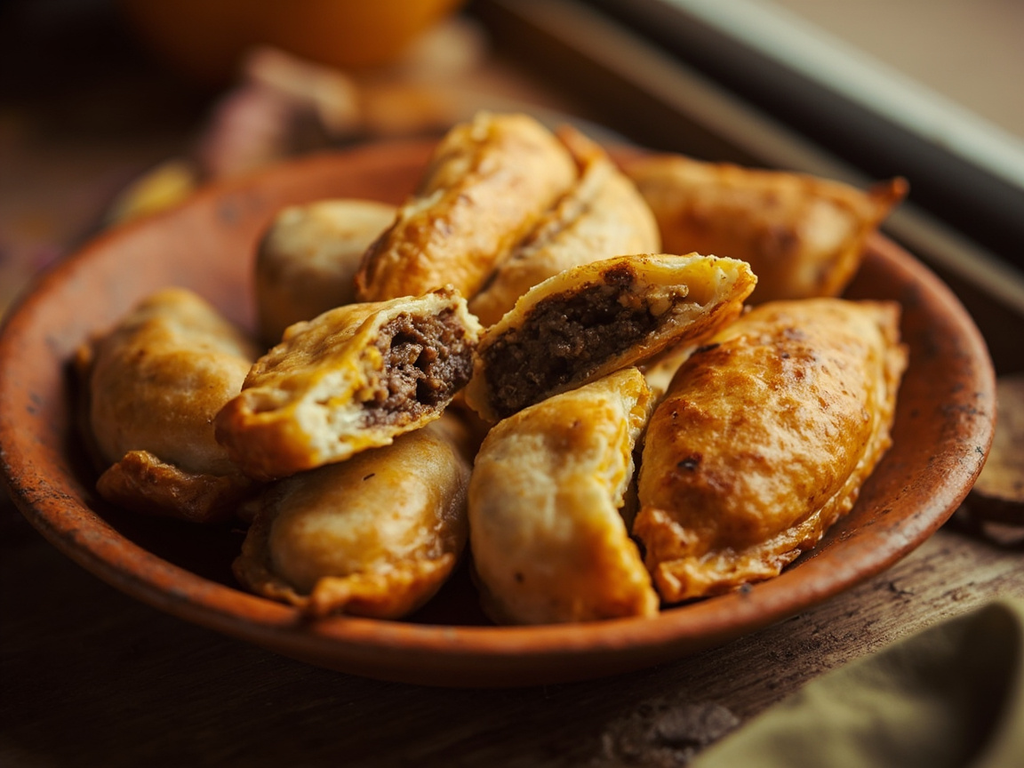
Golden baked pastries filled with a melting hash of meat, onion, hard-boiled egg, olive, and a raisin that provides the sweet-savory magic.
Let me tell you. In our home, the empanada is not a recipe, it's a declaration of homeland. My grandmother kneaded the dough with her sleeves rolled up, and the secret — she confided it to me like a password — is to cook the onion until it becomes almost transparent, almost tender like a confession. Cumin perfumes, the black olive surprises, and that little raisin hidden at the heart is the sweetness stolen from the bitterness of exile. Bite into it on September 18 and you will know, without a word, what it means to be Chilean.
- •Wheat flour — a lot (dough)
- •Lard — a good spoonful (dough fat)
- •Beef chopped with a knife — according to the table (filling (pino))
- •Onions — twice the meat (pino base)
- •Comino (cumin) and ají de color (paprika) — generous (seasoning)
- •Hard-boiled eggs, black olives, raisins — one of each per empanada (ritual filling)
Empanadas de pino
Golden baked pastries filled with a melting hash of meat, onion, hard-boiled egg, olive, and a raisin that provides the sweet-savory magic.
Why this dish? The empanada de pino is THE dish of Chilean identity, inseparable from the Fiestas Patrias of September 18. For Isabel Allende, exiled after the 1973 coup that overthrew her uncle Salvador Allende, these empanadas are a madeleine of identity: they appear in her family memories and in her praise of sensual pleasures, Afrodita.
Let me tell you. In our home, the empanada is not a recipe, it's a declaration of homeland. My grandmother kneaded the dough with her sleeves rolled up, and the secret — she confided it to me like a password — is to cook the onion until it becomes almost transparent, almost tender like a confession. Cumin perfumes, the black olive surprises, and that little raisin hidden at the heart is the sweetness stolen from the bitterness of exile. Bite into it on September 18 and you will know, without a word, what it means to be Chilean.
Ingredients (period version)
- Wheat flour — a lot (dough)
- Lard — a good spoonful (dough fat)
- Beef chopped with a knife — according to the table (filling (pino))
- Onions — twice the meat (pino base)
- Comino (cumin) and ají de color (paprika) — generous (seasoning)
- Hard-boiled eggs, black olives, raisins — one of each per empanada (ritual filling)
Ingredients
- Flour — 500 g (dough)
- Lard or melted butter — 120 g (fat)
- Salt water — about 200 ml (dough binder)
- Ground beef — 400 g (filling)
- Onions — 600 g (about 4) (pino base)
- Ground cumin — 1 tsp (signature spice)
- Sweet paprika (ají de color) — 1 tbsp (color and flavor)
- Hard-boiled eggs — 3 (filling)
- Black olives — 12 (filling)
- Raisins — 2 tbsp (sweet note)
Method
- Prepare the pino the day before: cook sliced onions over low heat for 20 min until melted, add beef, cumin, and paprika, salt, cook another 10 min. Cool overnight in the fridge (cold concentrates flavors).
- Knead flour, melted fat, and salted warm water into a soft dough; rest 30 min.
- Roll out, cut 15 cm disks. Fill with a spoonful of pino, a quarter of hard-boiled egg, an olive, and a few raisins.
- Fold into a half-moon, seal edges with water forming the typical pleat (el doblez), brush with beaten egg.
- Bake at 200 °C for 25-30 min until golden brown.
How it was made : Before the domestic oven, empanadas were baked in the horno de barro, a wood-fired clay oven in the Chilean countryside. The pino was always prepared the day before, because women knew the onion needed to rest to release all its sweetness.
The contemporary twist : Serve with a small glass of pebre (fresh cilantro, onion, and chili salsa) to awaken the heat without overwhelming it.
Sources : Isabel Allende, Afrodita, 1997 · Cuisine traditionnelle chilienne, plat des Fiestas Patrias
Isabel Allende · Charactorium