 flip
flipThiéboudienne (ceebu jën)
Thiéboudienne (ceebu jën)
Why this dish? National dish of Senegal, thiéboudienne is THE dish Akon finds when he returns to Dakar. Born in Saint-Louis (Senegal), it shares its name with his American hometown, Saint-Louis, Missouri — a wink between his two homelands. It is the dish of the extended family and of returning home.
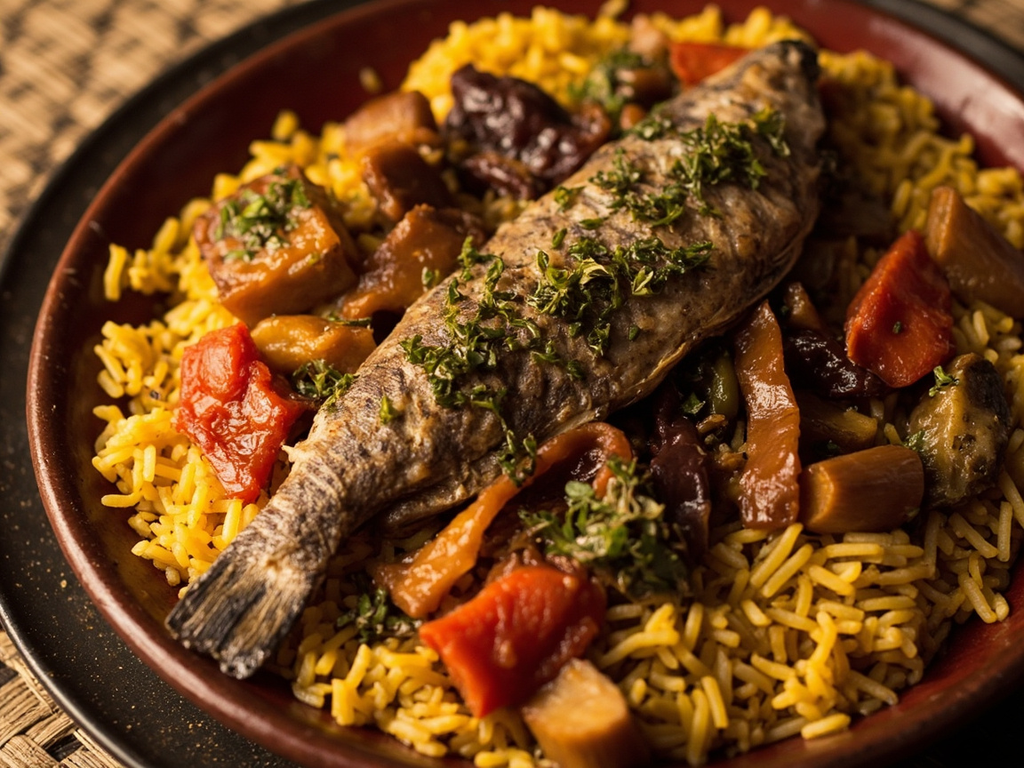
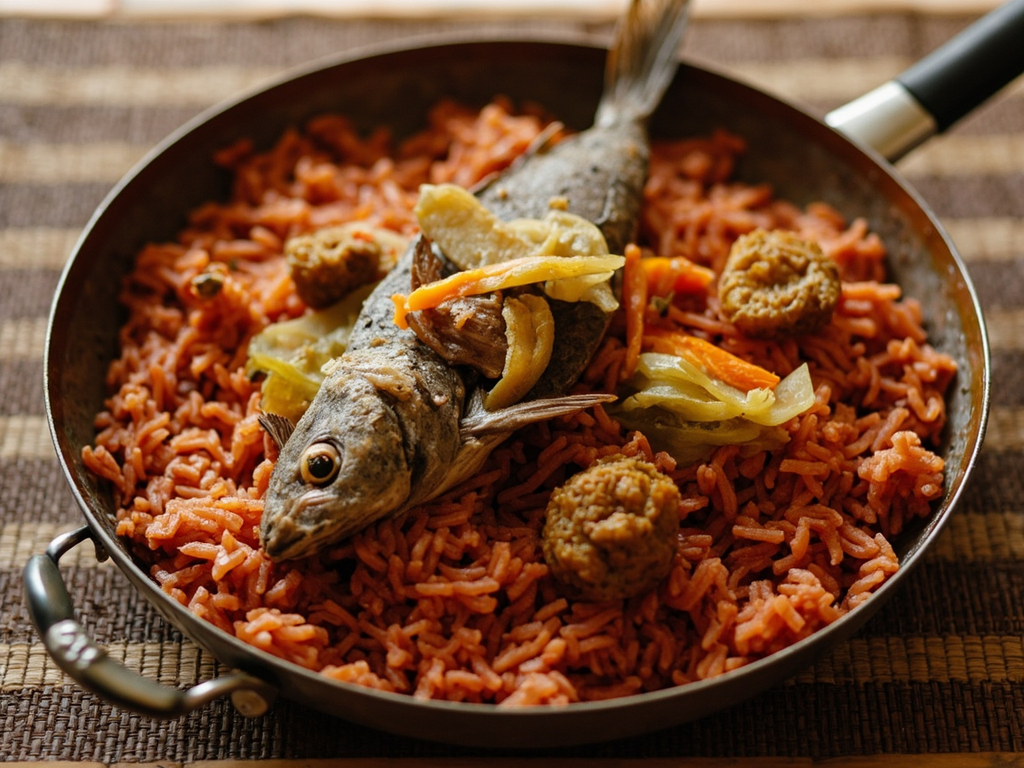
A broken rice tinted red by tomato and nététou, simmered with fish stuffed with parsley and garlic, and a host of vegetables (cassava, cabbage, carrot, bitter eggplant). Everything cooks in the same pot, the rice absorbing the fragrant broth. It is served in a single large dish where everyone helps themselves.
Listen, when I come back to Dakar after a tour, the first thing I want is real ceebu jën, not some airport stuff. My family, we sit around the bowl, eat with our hands, and pass the fish pieces — the one with the crispy rice at the bottom, the xoon, that's the best, we fight over it laughing. The secret is nététou, that little black ball that smells strong: you put just a little and the whole dish gets that taste of home. Believe me, no studio in Atlanta can replace that moment.
- •Broken rice — a large bowl for the table (base)
- •Fresh fish (grouper, thiof) — a few thick slices (protein)
- •Nététou (fermented néré) — one small ball (signature condiment)
- •Tomato paste — generous (color and base)
- •Cassava, cabbage, carrot, bitter eggplant (jaxatu) — according to the market (vegetables)
- •Parsley, garlic, chili — one bunch, pounded (roff stuffing)
- •Oil, onion, tamarind — to taste (base and acidity)
Thiéboudienne (ceebu jën)
A broken rice tinted red by tomato and nététou, simmered with fish stuffed with parsley and garlic, and a host of vegetables (cassava, cabbage, carrot, bitter eggplant). Everything cooks in the same pot, the rice absorbing the fragrant broth. It is served in a single large dish where everyone helps themselves.
Why this dish? National dish of Senegal, thiéboudienne is THE dish Akon finds when he returns to Dakar. Born in Saint-Louis (Senegal), it shares its name with his American hometown, Saint-Louis, Missouri — a wink between his two homelands. It is the dish of the extended family and of returning home.
Listen, when I come back to Dakar after a tour, the first thing I want is real ceebu jën, not some airport stuff. My family, we sit around the bowl, eat with our hands, and pass the fish pieces — the one with the crispy rice at the bottom, the xoon, that's the best, we fight over it laughing. The secret is nététou, that little black ball that smells strong: you put just a little and the whole dish gets that taste of home. Believe me, no studio in Atlanta can replace that moment.
Ingredients (period version)
- Broken rice — a large bowl for the table (base)
- Fresh fish (grouper, thiof) — a few thick slices (protein)
- Nététou (fermented néré) — one small ball (signature condiment)
- Tomato paste — generous (color and base)
- Cassava, cabbage, carrot, bitter eggplant (jaxatu) — according to the market (vegetables)
- Parsley, garlic, chili — one bunch, pounded (roff stuffing)
- Oil, onion, tamarind — to taste (base and acidity)
Ingredients
- Basmati or broken rice — 400 g (base)
- Firm fish fillets or steaks (cod, grouper) — 600 g (protein)
- Nététou — 1 tsp (or a little shrimp paste as substitute) (signature condiment)
- Tomato paste — 3 tbsp (red base)
- Cassava, cabbage, carrot, eggplant — 300 g total (vegetables)
- Flat-leaf parsley + 4 garlic cloves + 1 chili — 1 bunch (roff stuffing)
- Onions, oil, 2 tbsp tamarind — 2 onions (base and acidity)
Method
- Pound parsley, garlic, and chili; slash the fish and stuff it with this mixture (the roff).
- Sauté onions and tomato paste in oil, add crushed nététou and a large volume of water.
- Add the fish, then the vegetables from longest to shortest cooking time; reserve once tender.
- Pour rinsed rice into the red broth and let it absorb over low heat until a crust forms at the bottom.
- Mound the rice on a large platter, arrange fish and vegetables on top, drizzle with diluted tamarind.
How it was made : Ceebu jën was born in the 19th century in Saint-Louis, then the capital, attributed to cook Penda Mbaye. Broken rice, imported through colonial trade, replaced local grains and became the heart of the meal. Originally, everything was cooked in a cast-iron pot over a wood fire, the rice absorbing the concentrated cooking broth.
The contemporary twist : Served in individual circles with a crispy rice tuile (the xoon) placed like a crown — a plate tribute to the city of Saint-Louis that links Senegal and Missouri.
Akon · Charactorium