 flip
flipMaza, the everyday barley cake
Maza, the everyday barley cake
Why this dish? Daughter of a king but fed like all Theban commoners, Antigone eats maza every day: it is the daily bread of the Greeks, from palace to hovel. Barley grows better than wheat in the plain of Thebes, and the barley cake is the invisible foundation of her whole life, from ordinary mornings to the last meal before the tomb.
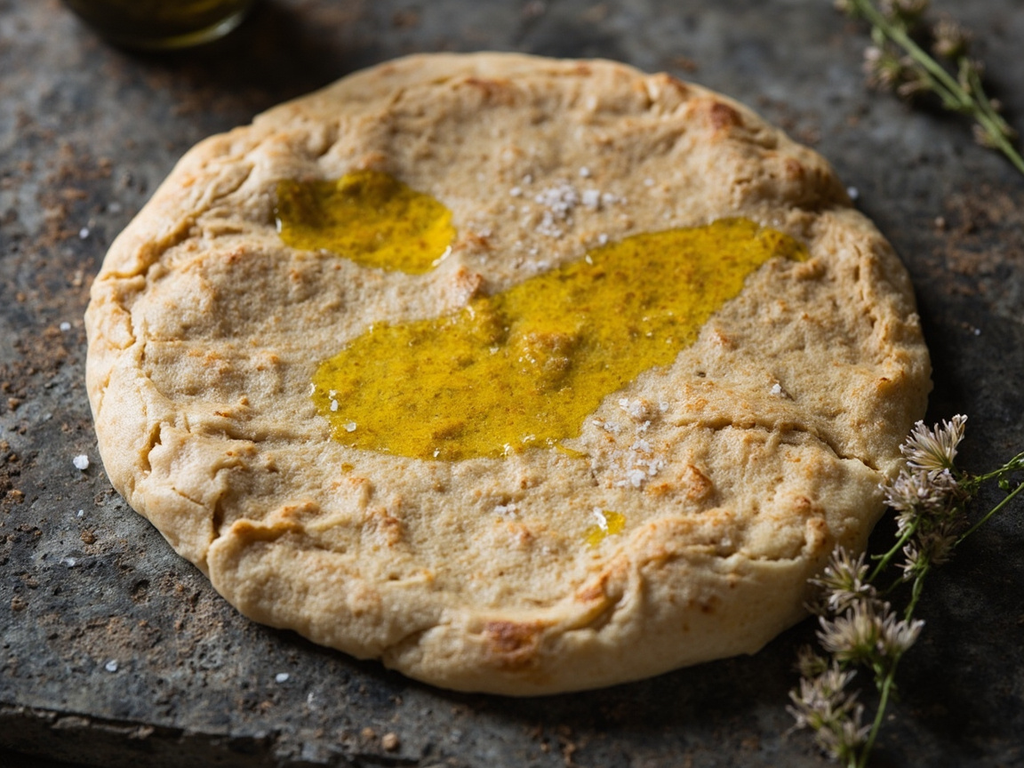
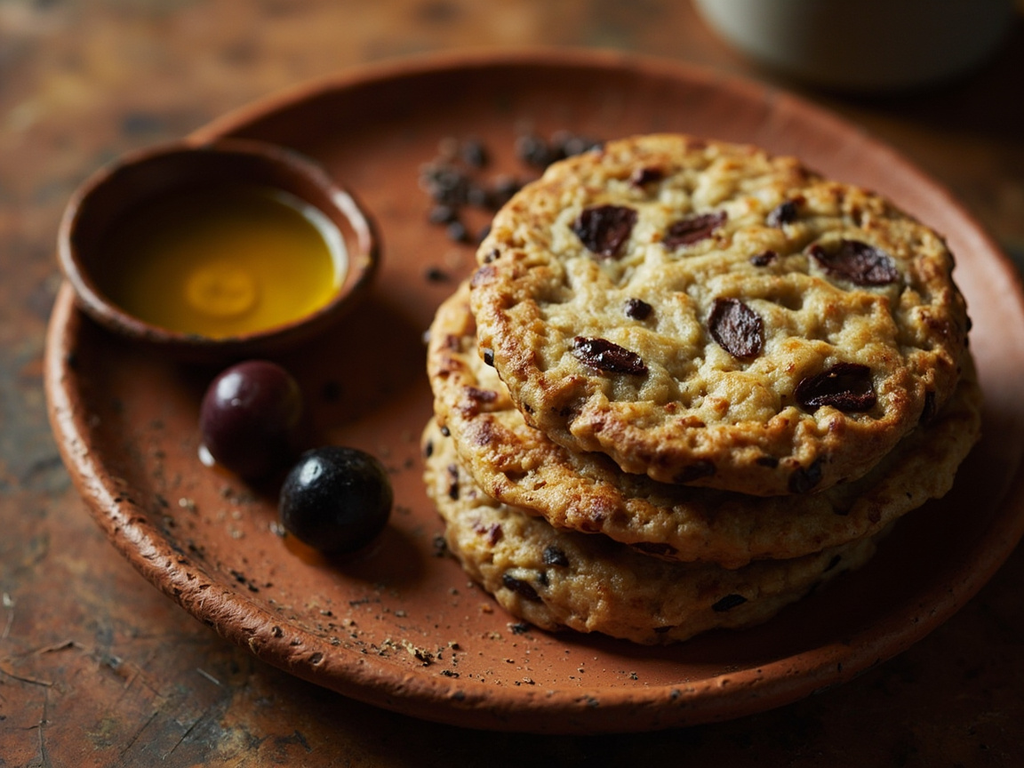
A flat, rustic cake of toasted and ground barley, kneaded with water, olive oil, and a little salt. Dense, slightly bitter and earthy, it is dipped in oil or eaten with cheese and olives. The everyday bread, simple and nourishing.
Approach, stranger, and do not turn away from this humble cake. In my father Oedipus's house, we knew the table of kings; yet it was barley that I broke each morning, like the lowliest of servants. My hand knows this gesture: toast the grain, grind it on the stone, knead it with water and a stream of oil. Eat it dipped in oil, and remember that before being queen for a day, I was a girl of Thebes nourished by this very earth.
- •Toasted and ground barley (alphita) — two handfuls (cereal base)
- •Spring water — as needed (binder)
- •Olive oil — a drizzle (fat, flavor)
- •Sea salt — a pinch (seasoning)
Maza, the everyday barley cake
A flat, rustic cake of toasted and ground barley, kneaded with water, olive oil, and a little salt. Dense, slightly bitter and earthy, it is dipped in oil or eaten with cheese and olives. The everyday bread, simple and nourishing.
Why this dish? Daughter of a king but fed like all Theban commoners, Antigone eats maza every day: it is the daily bread of the Greeks, from palace to hovel. Barley grows better than wheat in the plain of Thebes, and the barley cake is the invisible foundation of her whole life, from ordinary mornings to the last meal before the tomb.
Approach, stranger, and do not turn away from this humble cake. In my father Oedipus's house, we knew the table of kings; yet it was barley that I broke each morning, like the lowliest of servants. My hand knows this gesture: toast the grain, grind it on the stone, knead it with water and a stream of oil. Eat it dipped in oil, and remember that before being queen for a day, I was a girl of Thebes nourished by this very earth.
Ingredients (period version)
- Toasted and ground barley (alphita) — two handfuls (cereal base)
- Spring water — as needed (binder)
- Olive oil — a drizzle (fat, flavor)
- Sea salt — a pinch (seasoning)
Ingredients
- Barley flour — 200 g (cereal base)
- Warm water — about 120 ml (binder)
- Olive oil — 2 tbsp + extra for cooking (fat)
- Salt — 1/2 tsp (seasoning)
Method
- If starting from grain: lightly toast the barley in a dry pan until nutty-smelling, then grind it (otherwise use barley flour directly).
- Mix the flour and salt, then gradually incorporate the warm water and oil until a supple, non-sticky dough forms.
- Knead for a few minutes, let rest 15 minutes under a cloth.
- Shape flat cakes about half a centimeter thick.
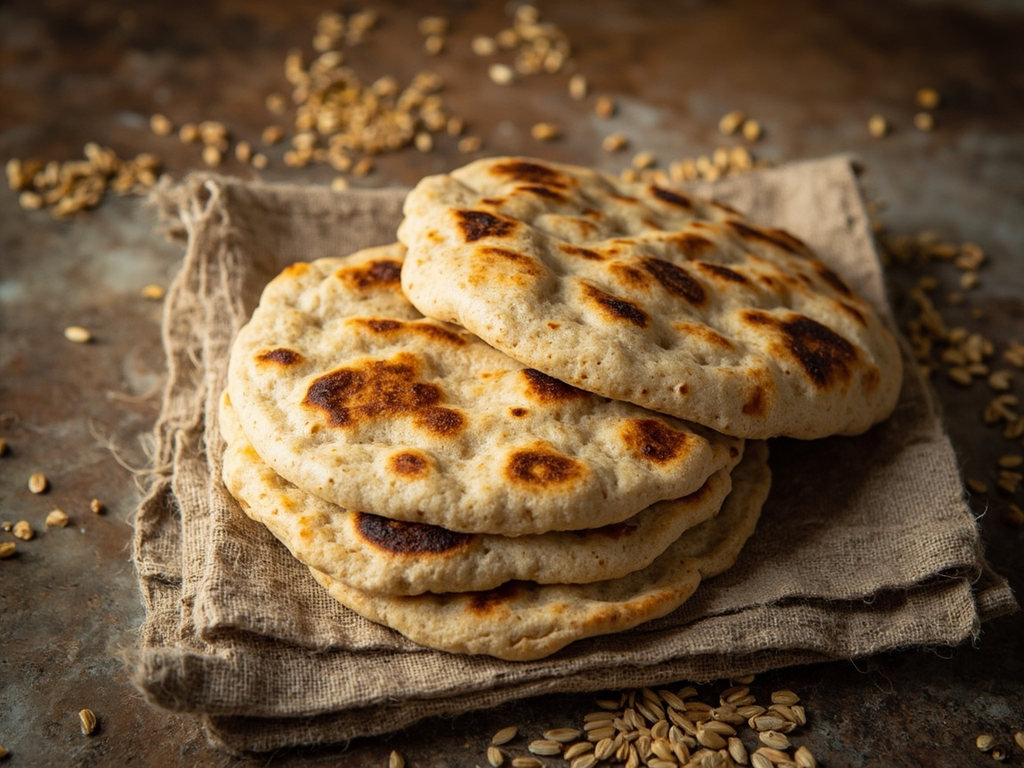
- Cook on a lightly oiled hot griddle or pan, 3 to 4 minutes per side, until golden and marked.
- Serve warm, to dip in olive oil, with olives and fresh cheese.
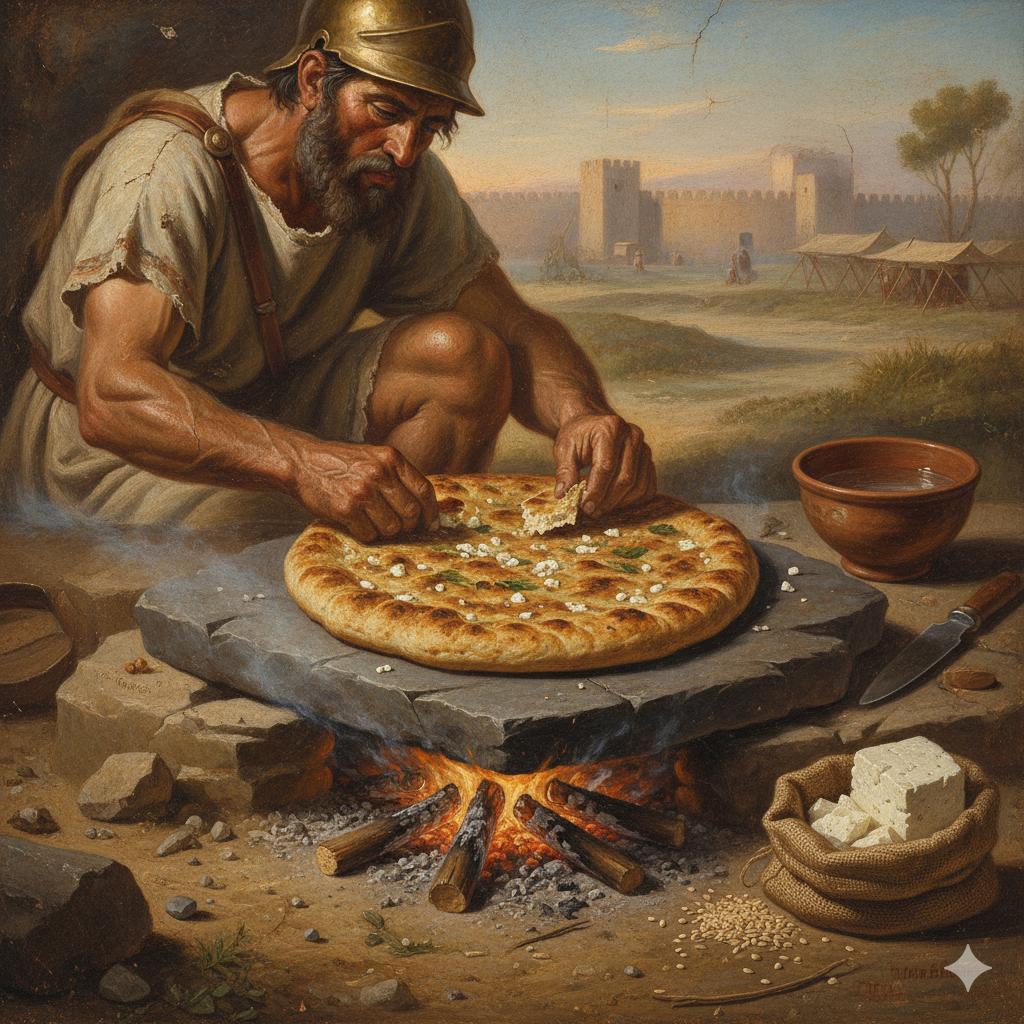
How it was made : Maza was the basic Greek food, often considered more everyday than wheat bread (artos). The barley was consumed toasted then ground (alphita), sometimes simply moistened and kneaded without cooking, sometimes cooked on embers or a griddle. Wheat, more demanding in soil and more expensive, remained a more festive or urban product.
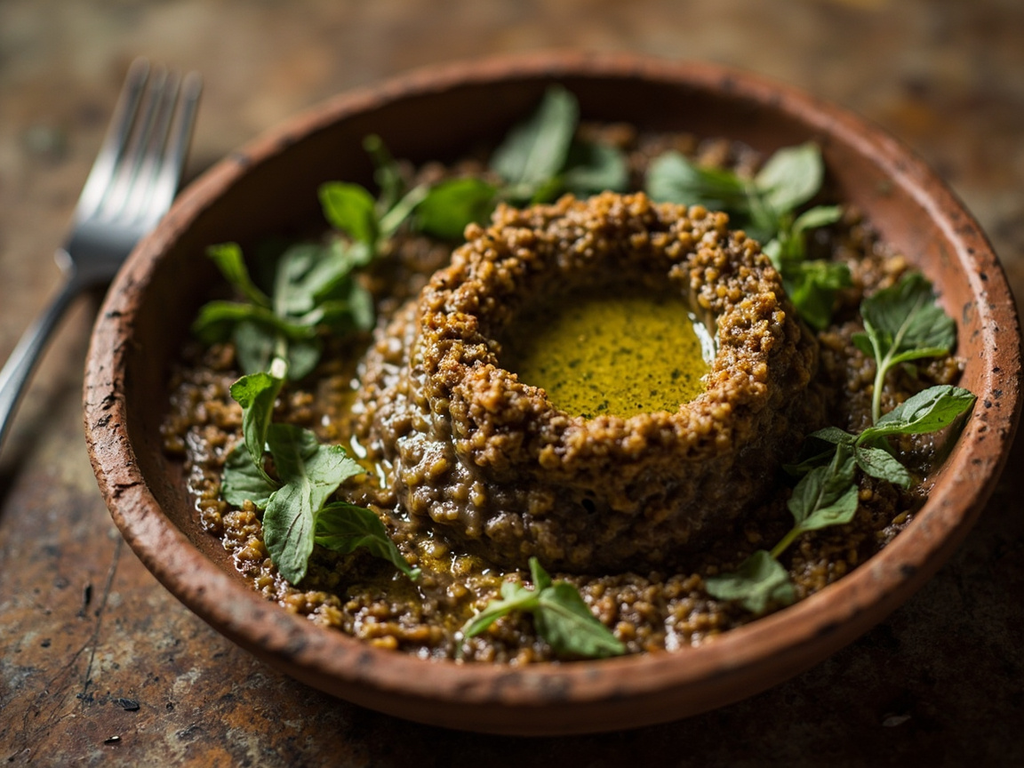
The contemporary twist : Served as mini appetizer cakes with an olive oil and fresh oregano dip, "bread of the gods" style to share.
Antigone · Charactorium