 flip
flipPike Quenelles, Nantua Sauce
Pike Quenelles, Nantua Sauce
Why this dish? Saint-Exupéry was born in Lyon in 1900 and spent his childhood at the Château de Saint-Maurice-de-Rémens in the Ain — country of crayfish and Nantua sauce. He who "appreciated good French cuisine and dinners with friends" could not ignore this king of Lyonnais tables.
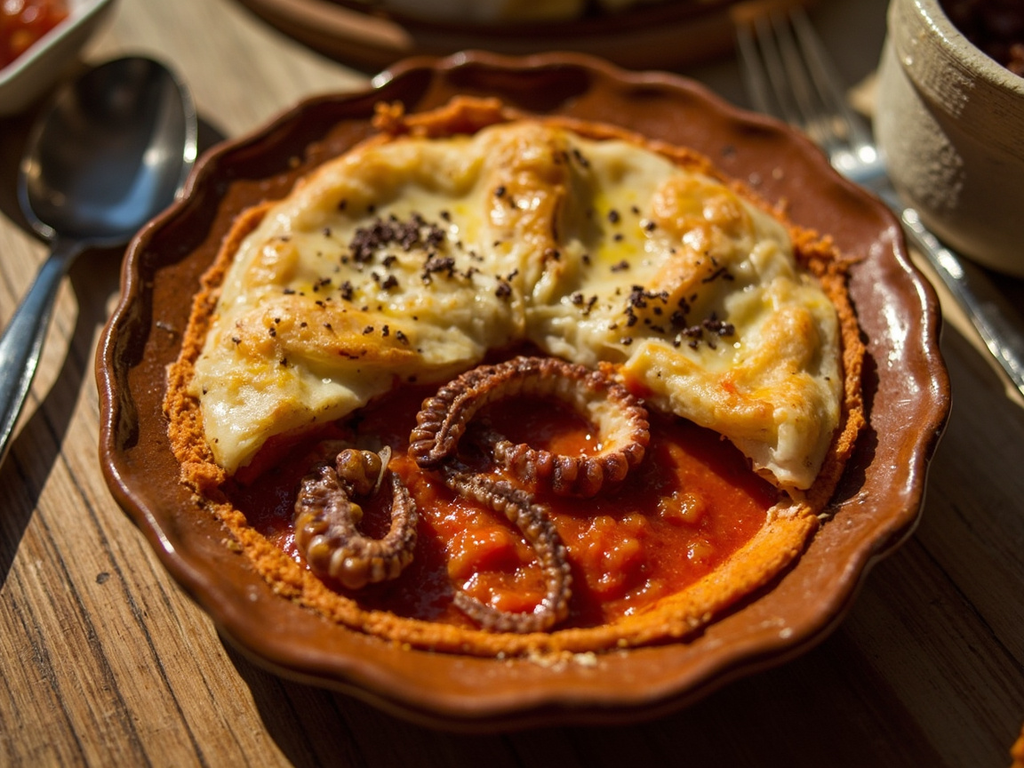
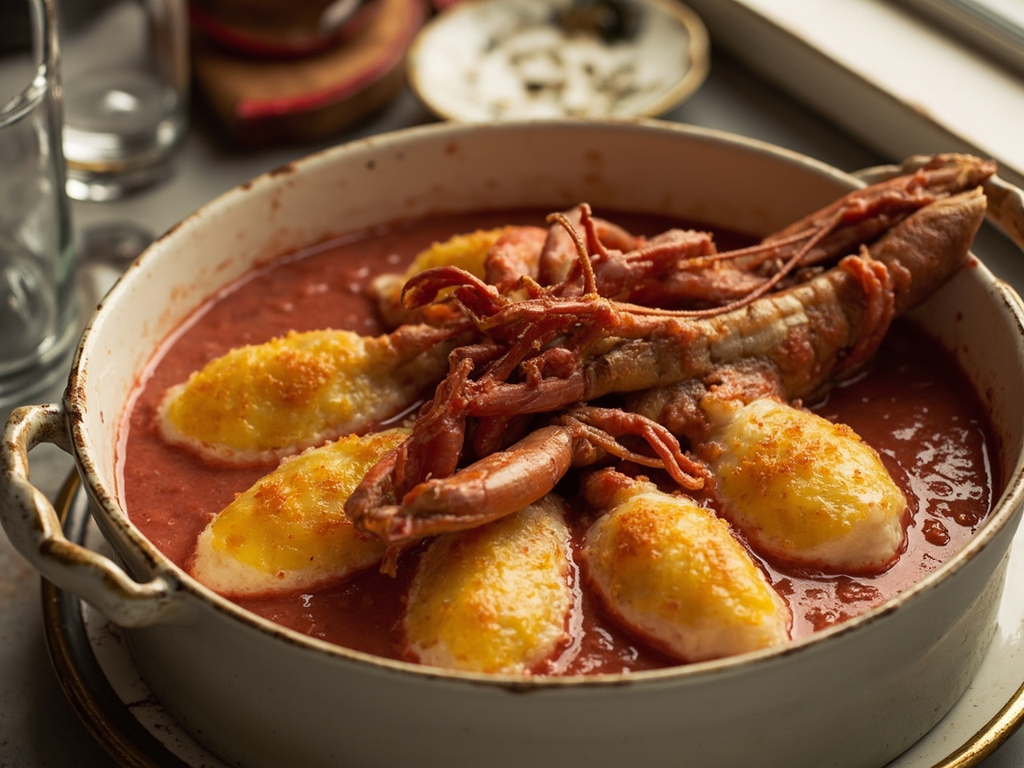
Pike quenelles as light as a cloud, poached then gratinéed under a deep pink crayfish sauce, Nantua. The festive dish of his hometown, rich in umami, requiring patience and bringing the table together.
I was born in Lyon, and at home, receiving friends never went without quenelles. We poached these clouds of pike in barely simmering water, then napped them with a sauce reddened by crayfish — Nantua, named after the nearby lake. It is a patient dish, requiring you to beat the batter long and never take your eyes off the fire. But when the gratin came out of the oven, golden and trembling, the whole table fell silent at last. Believe me: there are silences worth all compliments.
- •Pike flesh — according to the catch (heart of the quenelle)
- •Panade (milk, butter, flour) — — (airy binder)
- •Eggs — several (structure)
- •River crayfish — a basketful (base of Nantua sauce)
- •Butter, cream — — (creaminess)
Pike Quenelles, Nantua Sauce
Pike quenelles as light as a cloud, poached then gratinéed under a deep pink crayfish sauce, Nantua. The festive dish of his hometown, rich in umami, requiring patience and bringing the table together.
Why this dish? Saint-Exupéry was born in Lyon in 1900 and spent his childhood at the Château de Saint-Maurice-de-Rémens in the Ain — country of crayfish and Nantua sauce. He who "appreciated good French cuisine and dinners with friends" could not ignore this king of Lyonnais tables.
I was born in Lyon, and at home, receiving friends never went without quenelles. We poached these clouds of pike in barely simmering water, then napped them with a sauce reddened by crayfish — Nantua, named after the nearby lake. It is a patient dish, requiring you to beat the batter long and never take your eyes off the fire. But when the gratin came out of the oven, golden and trembling, the whole table fell silent at last. Believe me: there are silences worth all compliments.
Ingredients (period version)
- Pike flesh — according to the catch (heart of the quenelle)
- Panade (milk, butter, flour) — — (airy binder)
- Eggs — several (structure)
- River crayfish — a basketful (base of Nantua sauce)
- Butter, cream — — (creaminess)
Ingredients
- Pike fillet (or zander) — 300 g (quenelle)
- Milk — 25 cl (panade)
- Butter — 80 g + 50 g for sauce (panade and binder)
- Flour — 125 g (panade)
- Eggs — 3 whole + 1 yolk (structure)
- Crayfish (or peeled tails) — 300 g (Nantua sauce)
- Thick crème fraîche — 20 cl (sauce)
- Tomato paste — 1 tsp (colour (modern convenience))
- Cognac — 1 tbsp (flambé the shells)
Method
- Prepare the panade: bring the milk and butter to a boil, add the flour all at once, dry the dough with a spatula over low heat, then let cool.
- Blend the pike flesh, incorporate into the cold panade with the eggs one by one, work well until a smooth, homogeneous paste. Season with salt, pepper, nutmeg.
- Shape the quenelles with a spoon and poach in simmering water (never boiling) for 10 to 12 minutes: they swell and rise.
- For Nantua: sauté the crayfish (or shells) in butter, flambé with cognac, add a little tomato paste, moisten, reduce, strain, then mount with cream and butter. Shell the tails and keep them for plating.
- Arrange the quenelles in a gratin dish, cover with Nantua sauce, sprinkle with crayfish tails.
- Bake for 15 to 20 minutes at 200°C: the quenelles double and brown. Serve immediately, very hot.
How it was made : In Lyon and the Ain, quenelles were made by hand, with a piping bag or a spoon, and the "red-claw" crayfish were caught in the rivers of the Bugey before they became scarce. The Nantua sauce then got its colour solely from crayfish butter, without tomato — the addition of paste is a modern convenience for colour.
The contemporary twist : Serve an individual quenelle in a shallow bowl, a mirror of Nantua sauce, a crayfish tail placed on top and a few tarragon leaves: a "bistronomic" version of a classic.
Sources : Lyonnais and Bresse culinary tradition · Curnonsky, La France gastronomique (Lyon-Bresse region, 1920s)
Antoine de Saint-Exupéry · Charactorium