 flip
flipMaza, the Everyday Barley Cake
Maza, the Everyday Barley Cake
Why this dish? Even in a wealthy household in Tralles, barley remains the daily foundation of the Greek table. Before fish and sweets, Antonia breaks the *maza* kneaded from barley flour, oil from the Meander valley, and a little water — the oldest and humblest gesture in her kitchen.
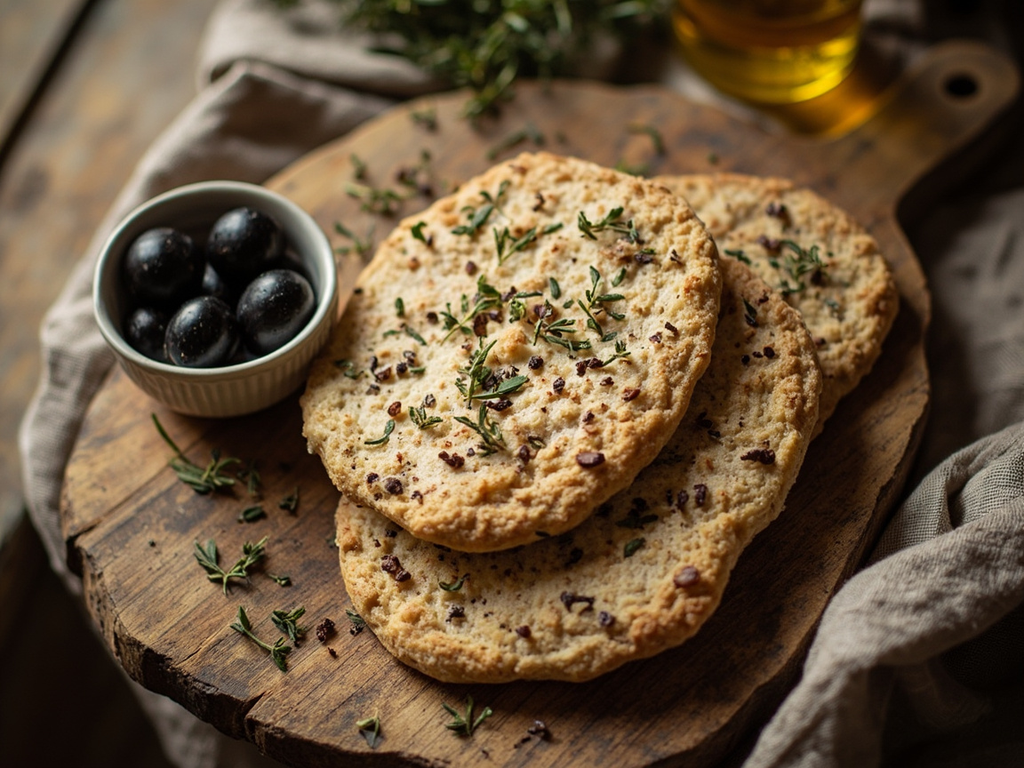
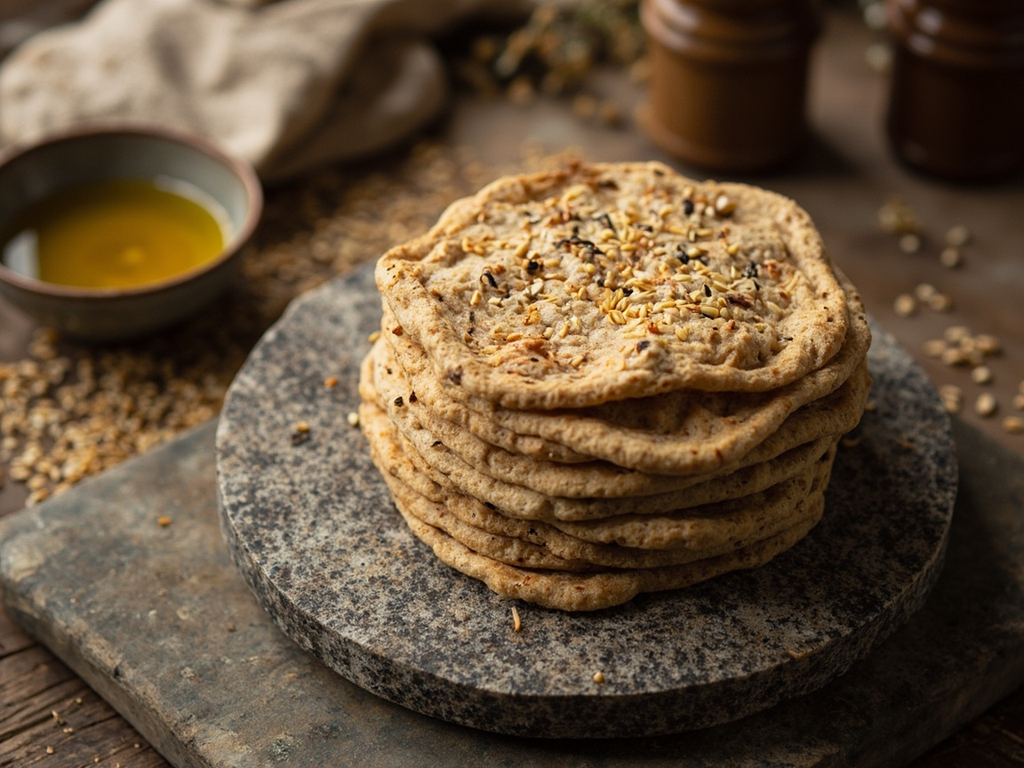
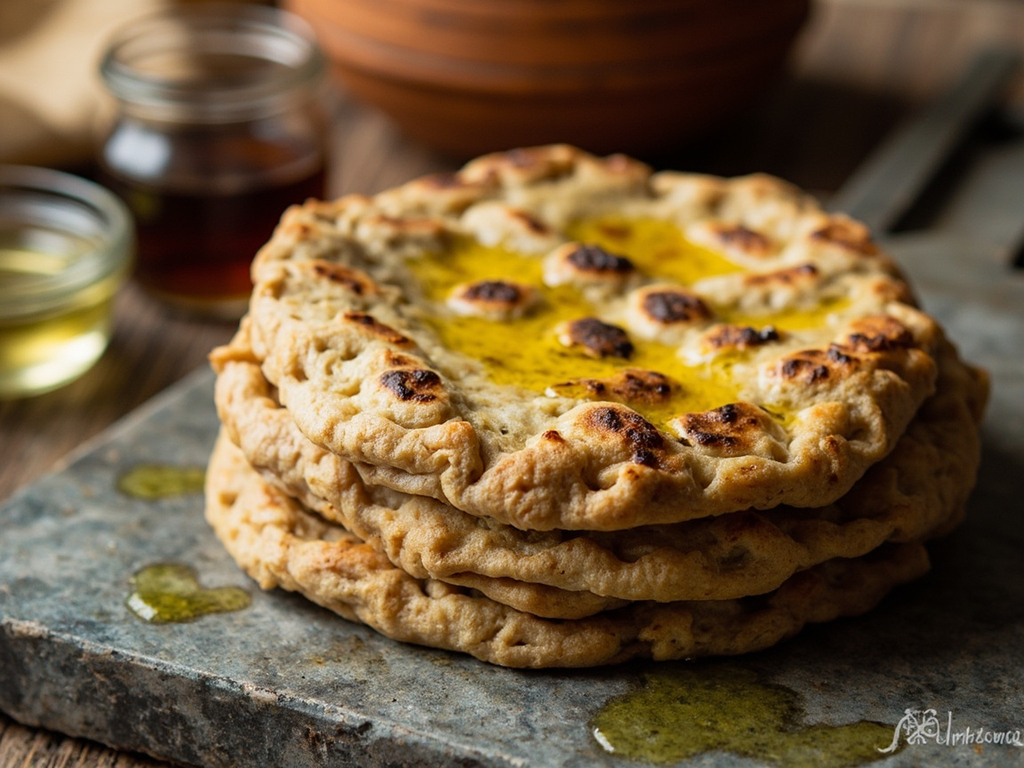
A dense and nourishing cake of toasted barley, barely cooked, perfumed with olive oil. The daily bread of the Greeks before wheat bread was reserved for special occasions.
Believe me, stranger: before the silverware and the perfumed wine, there is the *maza*. I toast my barley before grinding it, for that is how it releases all its aroma — a secret from our maidservants of the Meander. I knead the flour with warm water and a drizzle of oil from our hills, without pressing, then I let it barely set on the hot stone. A rich table is known by its fish, but a just house is known by its *maza*, shared from master to lowest slave.
- •Toasted barley flour — two generous handfuls (base)
- •Olive oil from the Meander — a drizzle (binder and flavor)
- •Warm spring water — as needed (hydration)
- •Sea salt — a pinch (seasoning)
Maza, the Everyday Barley Cake
A dense and nourishing cake of toasted barley, barely cooked, perfumed with olive oil. The daily bread of the Greeks before wheat bread was reserved for special occasions.
Why this dish? Even in a wealthy household in Tralles, barley remains the daily foundation of the Greek table. Before fish and sweets, Antonia breaks the *maza* kneaded from barley flour, oil from the Meander valley, and a little water — the oldest and humblest gesture in her kitchen.
Believe me, stranger: before the silverware and the perfumed wine, there is the *maza*. I toast my barley before grinding it, for that is how it releases all its aroma — a secret from our maidservants of the Meander. I knead the flour with warm water and a drizzle of oil from our hills, without pressing, then I let it barely set on the hot stone. A rich table is known by its fish, but a just house is known by its *maza*, shared from master to lowest slave.
Ingredients (period version)
- Toasted barley flour — two generous handfuls (base)
- Olive oil from the Meander — a drizzle (binder and flavor)
- Warm spring water — as needed (hydration)
- Sea salt — a pinch (seasoning)
Ingredients
- Barley flour — 200 g (base)
- Extra virgin olive oil — 2 tbsp (binder and flavor)
- Warm water — 100-120 ml (hydration)
- Salt — 1 tsp (seasoning)
Method
- Briefly toast the barley flour in a dry pan until it smells nutty, then let cool.
- Mix the flour, salt, and oil, then add water little by little to form a soft, non-sticky dough.
- Shape into flat cakes about 1 cm thick.
- Cook on a hot stone or pan for 4-5 minutes per side, until golden.
- Serve warm, drizzled with olive oil.
How it was made : Barley preceded wheat in the Greek diet. Grains were often toasted (*alphita*) before grinding, allowing a quick flatbread without long rising. *Maza* accompanied every meal, from peasant to aristocrat.
The contemporary twist : Serve as small appetizer flatbreads with a monovarietal olive oil and a few garden herbs, meze-style.
Antonia · Charactorium