 flip
flipRisi e bisi (rice and spring peas)
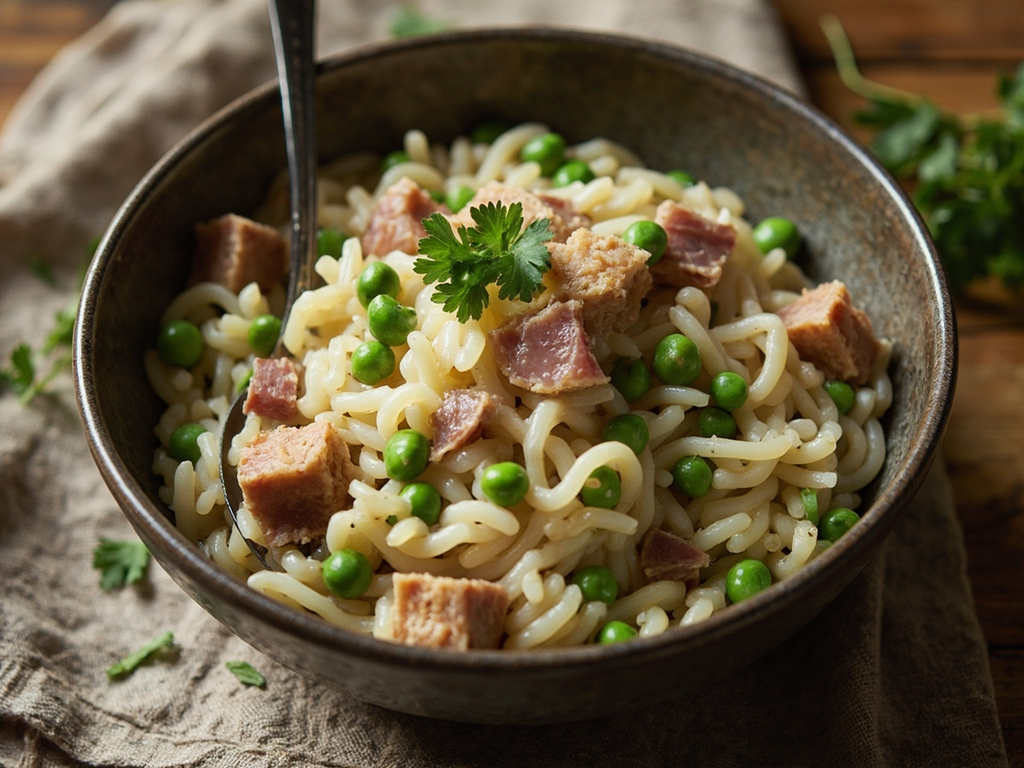
Risi e bisi (rice and spring peas)
Why this dish? Vivaldi lived to the rhythm of the Pietà and the Venetian seasons; this spring dish, once served to the doge on Saint Mark's Day (April 25), is the everyday rice of the lagoon, nourishing and simple like the meals of a priest-maestro between rehearsals.
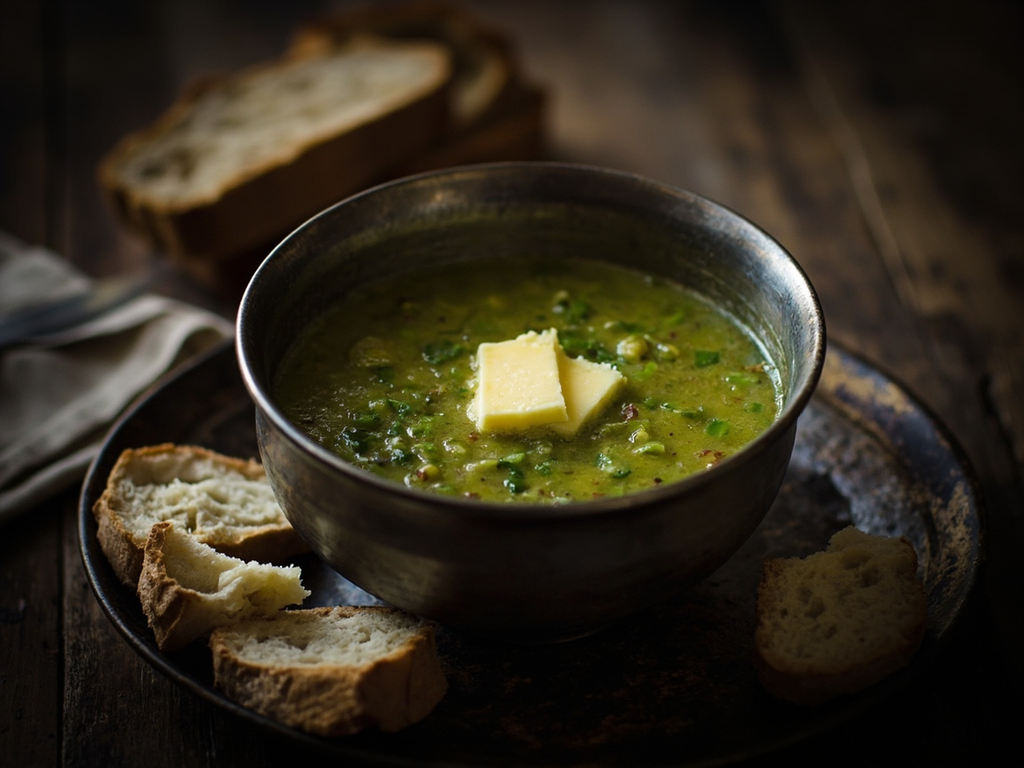
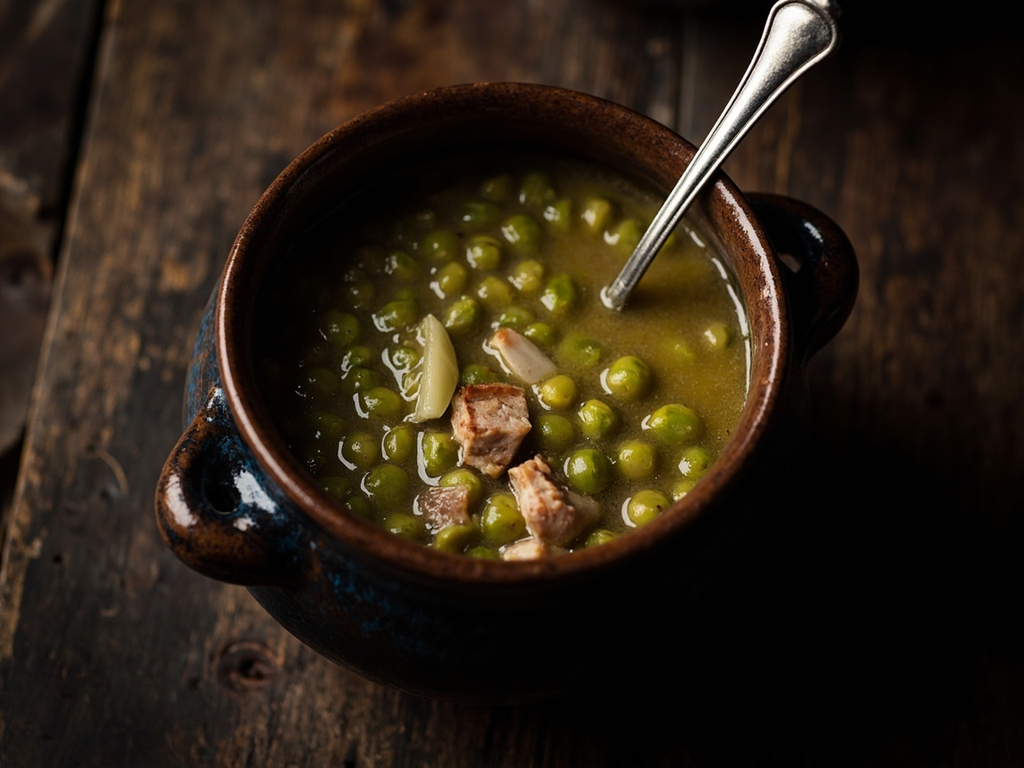
A rice that is neither quite soup nor quite risotto, bound and flowing, where the first spring peas sing with the rice of the Venetian plain and a broth perfumed with the pods.
Permit a humble priest to serve you this rice as it was served in the Serenissima on Saint Mark's Day. See: I first make the pea pods sing in water, for nothing is wasted in Venice, then I drown the rice in it, which must remain flowing, *all'onda*, moving like a wave of our lagoon. A hint of lard, a handful of grated cheese, and the whole must keep that tender moistness — neither soup nor risotto, but the in-between, like an adagio holding its breath before the allegro.
- •Rice from the Venetian plain — two handfuls per guest (starchy base)
- •Fresh peas and their pods — in abundance in spring (seasonal vegetable + broth)
- •Lard / pancetta — one piece (fat and umami)
- •Onion — one (aromatic base)
- •Pod broth — as needed (cooking liquid)
- •Grated hard cheese — a good handful (salty binder)
- •Parsley — a bunch (freshness)
Risi e bisi (rice and spring peas)
A rice that is neither quite soup nor quite risotto, bound and flowing, where the first spring peas sing with the rice of the Venetian plain and a broth perfumed with the pods.
Why this dish? Vivaldi lived to the rhythm of the Pietà and the Venetian seasons; this spring dish, once served to the doge on Saint Mark's Day (April 25), is the everyday rice of the lagoon, nourishing and simple like the meals of a priest-maestro between rehearsals.
Permit a humble priest to serve you this rice as it was served in the Serenissima on Saint Mark's Day. See: I first make the pea pods sing in water, for nothing is wasted in Venice, then I drown the rice in it, which must remain flowing, *all'onda*, moving like a wave of our lagoon. A hint of lard, a handful of grated cheese, and the whole must keep that tender moistness — neither soup nor risotto, but the in-between, like an adagio holding its breath before the allegro.
Ingredients (period version)
- Rice from the Venetian plain — two handfuls per guest (starchy base)
- Fresh peas and their pods — in abundance in spring (seasonal vegetable + broth)
- Lard / pancetta — one piece (fat and umami)
- Onion — one (aromatic base)
- Pod broth — as needed (cooking liquid)
- Grated hard cheese — a good handful (salty binder)
- Parsley — a bunch (freshness)
Ingredients
- Risotto rice (Vialone Nano or Arborio) — 300 g (starchy base)
- Fresh (or frozen) peas with pods if possible — 500 g in pods (vegetable + broth)
- Pancetta or smoked belly — 80 g (fat and umami)
- Onion — 1 small (aromatic base)
- Vegetable broth (ideally made with pods) — 1.2 L (liquid)
- Grated Parmesan — 60 g (binder)
- Butter — 30 g (final binder)
- Flat-leaf parsley — 1 handful (freshness)
Method
- Shell the peas; boil the pods in the broth for 20 min, then blend and strain for a fragrant green broth; keep warm.
- Sauté the chopped onion with pancetta in butter, without browning.
- Add the rice, toast for 2 min, then gradually add the hot pod broth.
- Halfway through cooking, add the peas. Cook for 16-18 min, keeping the rice very flowing (*all'onda*).
- Off the heat, stir in Parmesan and butter, sprinkle with parsley. Serve immediately, with a spoon.
How it was made : Risi e bisi was cooked when the first peas arrived, over a wood fire, using the pod cooking water as broth — the idea of creamy modern risotto did not exist; the dish remained deliberately fluid. It was a prestigious dish offered to the doge, but also a popular springtime meal.
The contemporary twist : A few lemon zests and a parsley oil for plating in a shallow bowl, and the name inscribed like a score title: 'Risi e bisi — primavera'.
Antonio Vivaldi · Charactorium