 flip
flipSesame and Honey Itria (Wedding Cakes)
Sesame and Honey Itria (Wedding Cakes)
Why this dish? At Greek weddings, sesame and honey cakes were distributed as a pledge of fertility — placed under the protection of Aphrodite, goddess of union and desire. Offering these *itria* is to summon the goddess to the threshold of the bridal chamber.
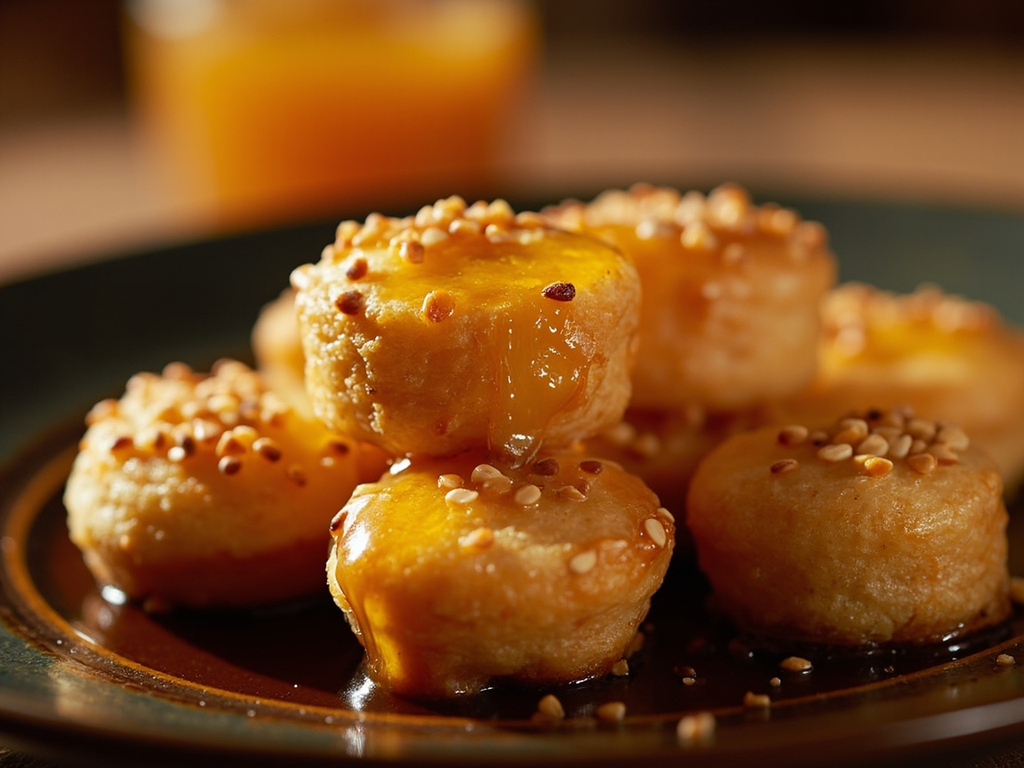
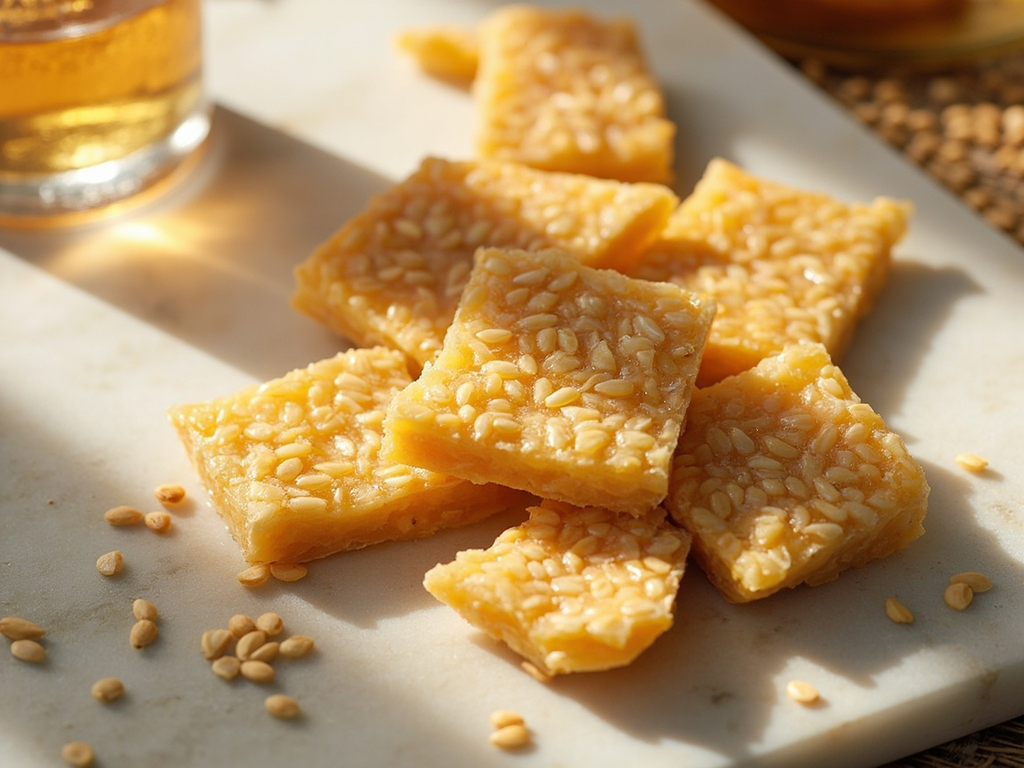
Small croquettes of toasted sesame seeds, bound by hot honey reduced until crunchy. Golden, fragrant, they melt then crack — the direct ancestor of the Greek *pasteli* still sold today.
Approach, mortal, and fear nothing from my hand. My priestesses kneaded these sesame cakes for young brides, for sesame teems with a thousand seeds like the fertile bed of lovers. Toast the seed on the hot stone until it sings, then drown it in the golden honey of the hills, and press quickly before the breath of air hardens it. Taste: what crunches under your tooth is the very promise that I watch over the loves of men.
- •Sesame seeds — two full handfuls (crunchy toasted base)
- •Greek honey (Hymettus type) — about a ladleful (sacred binder and sweetener)
- •Spring water — a splash (to thin the honey)
Sesame and Honey Itria (Wedding Cakes)
Small croquettes of toasted sesame seeds, bound by hot honey reduced until crunchy. Golden, fragrant, they melt then crack — the direct ancestor of the Greek *pasteli* still sold today.
Why this dish? At Greek weddings, sesame and honey cakes were distributed as a pledge of fertility — placed under the protection of Aphrodite, goddess of union and desire. Offering these *itria* is to summon the goddess to the threshold of the bridal chamber.
Approach, mortal, and fear nothing from my hand. My priestesses kneaded these sesame cakes for young brides, for sesame teems with a thousand seeds like the fertile bed of lovers. Toast the seed on the hot stone until it sings, then drown it in the golden honey of the hills, and press quickly before the breath of air hardens it. Taste: what crunches under your tooth is the very promise that I watch over the loves of men.
Ingredients (period version)
- Sesame seeds — two full handfuls (crunchy toasted base)
- Greek honey (Hymettus type) — about a ladleful (sacred binder and sweetener)
- Spring water — a splash (to thin the honey)
Ingredients
- Golden sesame seeds — 200 g (crunchy base)
- Fragrant honey (thyme or flower) — 150 g (binder and sweetener)
- Water — 1 tbsp (to thin the honey)
- Pinch of salt — 1 pinch (to enhance the honey)
Method
- Toast the sesame seeds dry in a pan over medium heat, stirring until golden and fragrant (3-4 min).
- In a saucepan, heat the honey with water and salt until simmering, stirring constantly, about 5 min (the honey darkens slightly).
- Pour the hot sesame into the honey, mix vigorously to coat well.
- Spread the mixture on an oiled sheet or marble slab, press to 5 mm thickness with a wet spatula.
- Pre-cut into diamonds while still warm, then let cool and harden before separating the pieces.
How it was made : The Greeks did not know sugar: honey was the only sweetener, worked hot to achieve a brittle texture. Sesame, imported from the Levant, was precious enough to be reserved for festive occasions. The paste was pressed by hand onto oiled wooden boards.
The contemporary twist : A pinch of fleur de sel and a few dried edible rose petals on top — a nod to the rose, said to have been born at the same time as the goddess.
Aphrodite · Charactorium