 flip
flipPlakous with Honey and Fresh Cheese
Plakous with Honey and Fresh Cheese
Why this dish? At the symposion, when cups circulate and recitations begin, the *tragemata* arrive. For a poet who directs the greatest library in the world, the *plakous* — a cake of pastry leaves, cheese, and honey — is the dish of learned evenings where Alexandrian scholars debate verses.
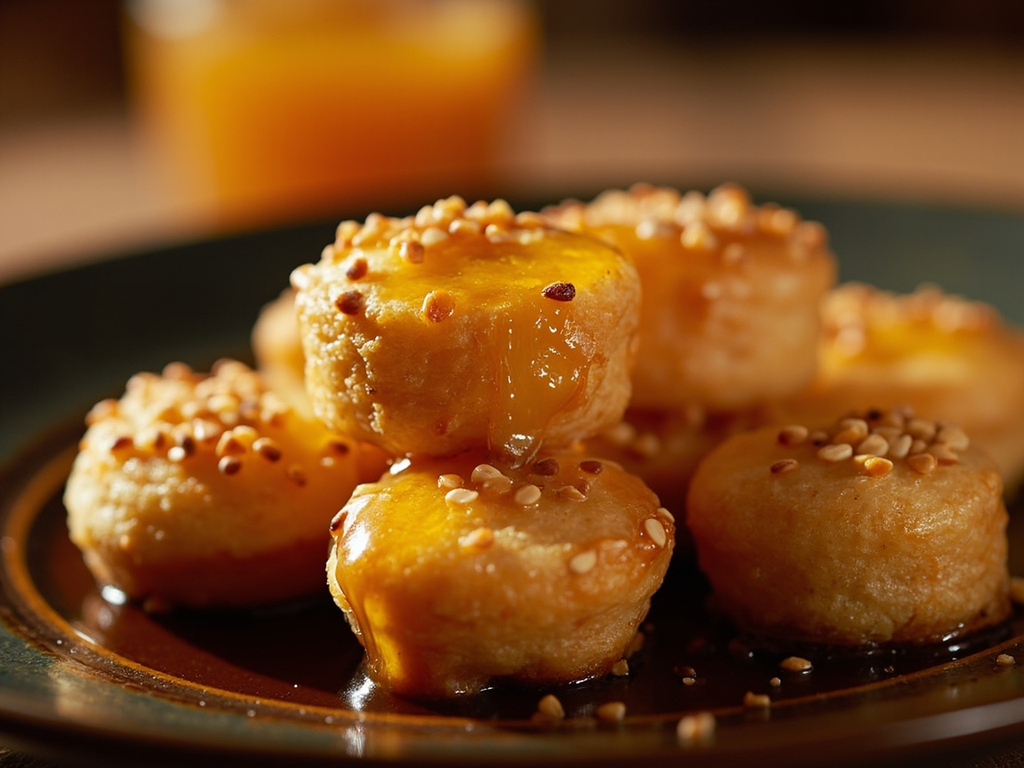
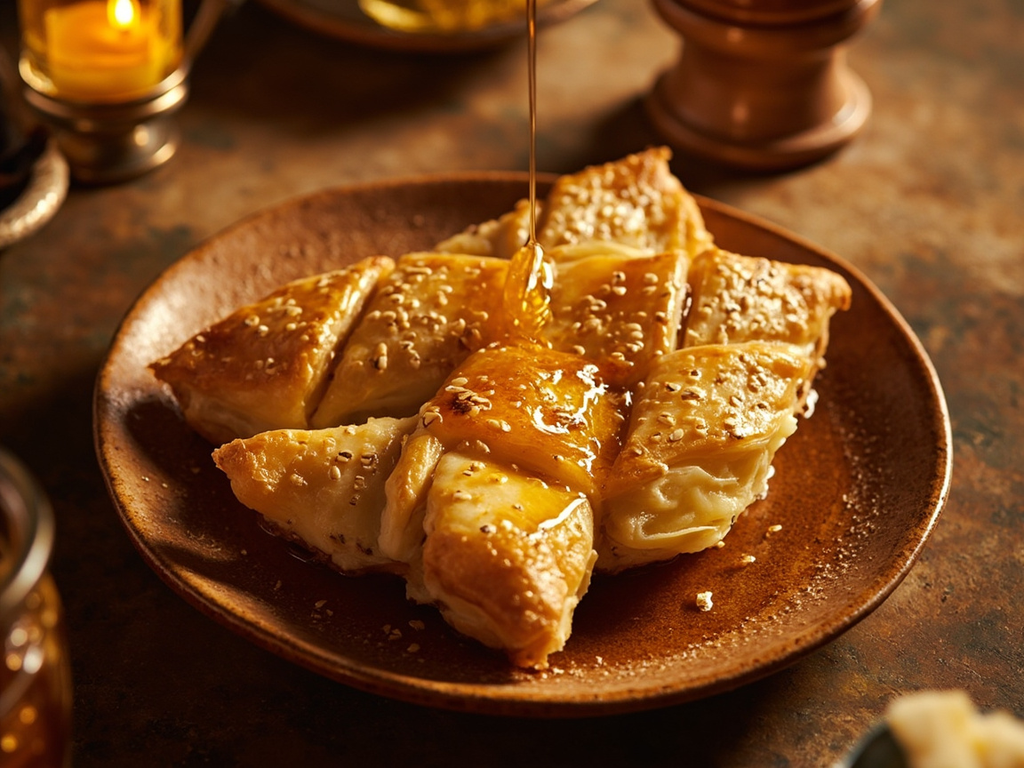
A cake of thin pastry leaves filled with beaten fresh cheese and honey, baked slowly until golden. An ancestor of Mediterranean honey cakes, it was shared at the end of the banquet, when the table turned from savory to sweet and wine loosened tongues.
When the dishes are cleared and the cups are crowned, I have the *plakous* brought in. I roll out pastry leaves as thin as I can, I grease them with oil, I fill them with beaten fresh cheese and thyme honey, then I let the oven do its work, slowly. Eat it warm, my guest, while another recites: a beautiful verse and a honey cake — that is what makes an Alexandrian night last.
- •Thin pastry leaves (wheat flour) — several (base)
- •Fresh goat's/ewe's milk cheese — a good portion (filling)
- •Honey (thyme) — generously (signature sweetness)
- •Olive oil — for greasing (binder)
Plakous with Honey and Fresh Cheese
A cake of thin pastry leaves filled with beaten fresh cheese and honey, baked slowly until golden. An ancestor of Mediterranean honey cakes, it was shared at the end of the banquet, when the table turned from savory to sweet and wine loosened tongues.
Why this dish? At the symposion, when cups circulate and recitations begin, the *tragemata* arrive. For a poet who directs the greatest library in the world, the *plakous* — a cake of pastry leaves, cheese, and honey — is the dish of learned evenings where Alexandrian scholars debate verses.
When the dishes are cleared and the cups are crowned, I have the *plakous* brought in. I roll out pastry leaves as thin as I can, I grease them with oil, I fill them with beaten fresh cheese and thyme honey, then I let the oven do its work, slowly. Eat it warm, my guest, while another recites: a beautiful verse and a honey cake — that is what makes an Alexandrian night last.
Ingredients (period version)
- Thin pastry leaves (wheat flour) — several (base)
- Fresh goat's/ewe's milk cheese — a good portion (filling)
- Honey (thyme) — generously (signature sweetness)
- Olive oil — for greasing (binder)
Ingredients
- Phyllo dough — 6 sheets (base)
- Ricotta or fresh ewe's milk cheese — 250 g (filling)
- Thyme honey — 5 tbsp (signature sweetness)
- Mild olive oil — 3 tbsp (binder)
- Sesame seeds — 1 tbsp (finish)
Method
- Preheat the oven to 180°C. Beat the fresh cheese with 2 tbsp honey.
- Brush a baking dish with olive oil. Layer 3 phyllo sheets, brushing each with oil.
- Spread the cheese-honey mixture, then cover with the remaining 3 sheets, brushing each with oil.
- Sprinkle with sesame seeds and bake for 25 to 30 minutes until golden.
- Remove from oven, drizzle with the remaining warm honey, let cool slightly, and share.
How it was made : The *plakous* (*placenta* among the Romans, who borrowed it from the Greeks) is described in antiquity as a stack of pastry leaves, cheese, and honey. It was THE festive Mediterranean cake, distant ancestor of baklava and galaktoboureko.
The contemporary twist : Cut into small diamonds drizzled with warm honey and a touch of sesame, like an 'original baklava' served in bite-sized pieces.
Sources : Cato the Elder, *De agri cultura* (recipe for *placenta*) · A. Dalby, *Siren Feasts: A History of Food and Gastronomy in Greece* (1996)
Apollonius of Rhodes · Charactorium