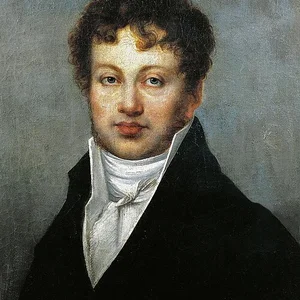

Greek astronomer and mathematician of Antiquity, born on the island of Samos. He was the first to propose a heliocentric model placing the Sun, rather than the Earth, at the center of the known world.
Aristarchus
Aristarchus
6 min read
Frequently asked questions
Key Facts
- Born around 310 BCE on the island of Samos, died around 230 BCE
- First known scholar to propose a heliocentric system (the Earth revolves around the Sun)
- Author of the treatise On the Sizes and Distances of the Sun and Moon, in which he attempts to measure these distances using geometry
- His heliocentric ideas, reported by Archimedes, were rejected and forgotten until Copernicus in the 16th century
- A lunar crater bears his name today in his honor
Works & Achievements
The only surviving work of Aristarchus, in which he geometrically calculates the relative sizes and distances of the Sun and the Moon. The first known attempt to measure these quantities through reasoning.
A now-lost treatise in which Aristarchus placed the Sun at the centre of the world and the Earth in orbit around it. Known only through the testimony of Archimedes.
A method based on observing the Moon at first quarter. Although numerically imprecise, its geometric logic was perfectly correct.
Aristarchus concluded that the Sun is far larger than the Earth, an argument that logically led him to place it at the centre rather than the Earth.
An improvement to a hemispherical sundial, attributed by Vitruvius to Aristarchus, allowing one to read the time and the season.
Anecdotes
Aristarchus proposed that the Earth revolves around the Sun nearly eighteen centuries before Copernicus. His idea was so unsettling to his contemporaries that it remained marginal: almost all Greek astronomers continued to place the Earth at the center of the world.
To measure the Earth-Sun distance, Aristarchus had a brilliant idea: at the moment when the Moon is exactly half-lit, he observed the angle between the Sun and the Moon. His method was sound, but his instruments too imprecise: he found a Sun 19 times farther away than the Moon, whereas it is in reality nearly 400 times farther.
The scholar Archimedes, in his treatise *The Sand Reckoner*, explicitly reports that Aristarchus wrote a book placing the Sun at the center and the Earth in orbit around it. It is thanks to this testimony from Archimedes that we know of Aristarchus's heliocentric ideas, for his own work on the subject has been lost.
The Stoic philosopher Cleanthes held that Aristarchus should have been prosecuted for impiety, since moving the Earth from the center of the world amounted, in his view, to “disturbing the rest of the hearth of the universe.” It is one of the oldest known examples of a conflict between a scientific idea and religious beliefs.
Aristarchus understood that the stars do not appear to move when the Earth shifts position, and he deduced that they must lie at immense distances, almost infinite, compared with the Earth's orbit. This intuition of a gigantic cosmos was extraordinarily ahead of its time.
Primary Sources
Aristarchus of Samos brought out a book consisting of certain hypotheses [...] according to which the fixed stars and the Sun remain unmoved, while the Earth revolves about the Sun on the circumference of a circle, the Sun lying in the middle of the orbit.
When the Moon appears to us halved, the distance of the Sun from the Moon is less than a quarter of a circle by one thirtieth of that quarter.
Cleanthes thought that the Greeks ought to have charged Aristarchus of Samos with impiety for setting in motion the hearth of the universe, supposing that the heavens remain at rest while the Earth moves along an oblique circle and at the same time rotates about its own axis.
Key Places
Greek island in the Aegean Sea, the homeland of Aristarchus. It had already given birth to the mathematician Pythagoras.
Great Hellenistic city of Egypt, home to the Library and the Museum, where Aristarchus is thought to have studied and worked alongside the greatest scholars.
Intellectual heart of Greece where Aristarchus is believed to have been trained, notably in the tradition of the Lyceum founded by Aristotle.
A maritime expanse dotted with Greek islands connecting Samos to the rest of the Hellenistic world, through which scholars and ideas flowed.
Typical Objects

Vertical rod planted in the ground whose shadow makes it possible to measure the height of the Sun and to pinpoint the solstices. Aristarchus used it for his astronomical observations.

Sundial in the shape of a hollow half-sphere, attributed by the ancients to Aristarchus. The shadow of a pointer moved across it to indicate the time and the season.

Medium on which Greek scholars recorded their treatises. The only surviving work of Aristarchus has come down to us through copies of these writings.

Basic instruments of the Greek geometer for drawing circles and straight lines. Aristarchus used them for his geometric demonstrations on celestial distances.

Reusable writing surface used for calculations and provisional sketches before copying onto papyrus. An everyday tool of the mathematician.

An assembly of metal rings representing the great circles of the sky, used by Greek astronomers to model celestial movements.
School Curriculum
Vocabulary & Tags
Key Vocabulary
Daily Life
Morning
At daybreak, Aristarchus reviewed the notes taken during the night and watched the shadow of the gnomon to track the Sun's height. The cool morning hours were well suited to geometric calculations on a wax tablet.
Afternoon
Afternoons were spent in discussions with other scholars, perhaps within the precinct of the Museum of Alexandria, around demonstrations drawn with a compass. There, hypotheses and astronomical measurements were debated and compared.
Evening
As night fell, the astronomer scanned the sky to pinpoint the positions of the stars, the phases of the Moon, and the movement of the planets. These long vigils fed his reflections on the order of the cosmos.
Food
Like the Greeks of his time, Aristarchus ate mostly barley or wheat bread, olives, figs, cheese, and dried pulses. Wine cut with water accompanied meals, while meat remained rare and reserved for festivals.
Clothing
He wore the tunic (*chiton*) of linen or wool, covered by a draped cloak (*himation*) thrown over the shoulder. His feet were shod in leather sandals.
Housing
He probably lived in a house of stone and mud brick arranged around an inner courtyard, typical of Greek cities. A terrace or open rooftop could be used for observing the night sky.
Historical Timeline
Period Vocabulary
Liens externes & ressources
Références
Œuvres
Sur les grandeurs et les distances du Soleil et de la Lune
IIIe siècle av. J.-C.
Hypothèse héliocentrique (ouvrage perdu)
vers 270 av. J.-C.
Mesure du rapport des distances Terre-Lune et Terre-Soleil
IIIe siècle av. J.-C.
Estimation des tailles du Soleil et de la Lune
IIIe siècle av. J.-C.
Perfectionnement du cadran solaire (scaphé)
IIIe siècle av. J.-C.