 flip
flipPlakous with Honey and Cheese, Symposion Cake
Plakous with Honey and Cheese, Symposion Cake
Why this dish? Aristophanes makes his spectators drool by listing banquet cakes in his comedies — plakous, a honey and cheese cake, was the star of the desserts (tragemata) served at the symposion when the wine flowed. For a poet crowned at the Dionysia, it was the very taste of victory and celebration.
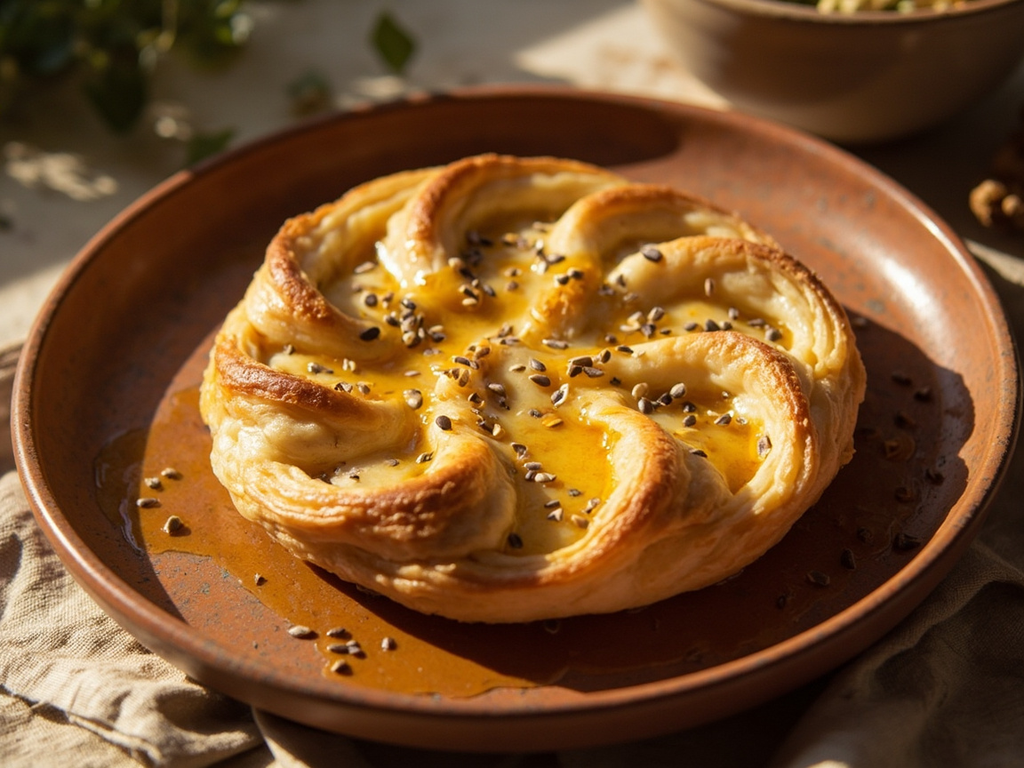
A cake of thin pastry sheets filled with beaten fresh cheese and drizzled with fragrant honey, sprinkled with sesame. Rich, sweet-salty, it is the distant ancestor of Mediterranean honey pastries.
And now, for the tragemata! When I beat Cratinus at the Dionysia, a plakous like this one was passed around between the couches! We beat fresh cheese with Hymettus honey — that thyme honey the bees of Attica know the secret of — spread it between the pastry leaves, sprinkle with sesame, and drown it all in still-warm honey. Eat it with sticky fingers, citizen, and drink on top: this is how a poet celebrates his crown!
- •Thin wheat pastry sheets — several (structure)
- •Fresh goat/sheep cheese — a good amount (filling)
- •Thyme honey from Hymettus — abundantly (sweet binder and glaze)
- •Sesame seeds — a handful (crunch and decoration)
Plakous with Honey and Cheese, Symposion Cake
A cake of thin pastry sheets filled with beaten fresh cheese and drizzled with fragrant honey, sprinkled with sesame. Rich, sweet-salty, it is the distant ancestor of Mediterranean honey pastries.
Why this dish? Aristophanes makes his spectators drool by listing banquet cakes in his comedies — plakous, a honey and cheese cake, was the star of the desserts (tragemata) served at the symposion when the wine flowed. For a poet crowned at the Dionysia, it was the very taste of victory and celebration.
And now, for the tragemata! When I beat Cratinus at the Dionysia, a plakous like this one was passed around between the couches! We beat fresh cheese with Hymettus honey — that thyme honey the bees of Attica know the secret of — spread it between the pastry leaves, sprinkle with sesame, and drown it all in still-warm honey. Eat it with sticky fingers, citizen, and drink on top: this is how a poet celebrates his crown!
Ingredients (period version)
- Thin wheat pastry sheets — several (structure)
- Fresh goat/sheep cheese — a good amount (filling)
- Thyme honey from Hymettus — abundantly (sweet binder and glaze)
- Sesame seeds — a handful (crunch and decoration)
Ingredients
- Phyllo dough — 6 sheets (structure)
- Ricotta or fresh sheep cheese — 250 g (filling)
- Thyme honey — 150 g (sweet binder and glaze)
- Sesame seeds — 3 tbsp (crunch and decoration)
- Olive oil (or melted butter) — for brushing (browning the sheets)
Method
- Preheat oven to 180 °C. Beat the fresh cheese with 2 tbsp honey.
- Brush phyllo sheets with olive oil and layer half of them in a small dish.
- Spread the cheese mixture, cover with remaining brushed sheets.
- Sprinkle with sesame and bake 25-30 minutes until golden on top.
- Remove from oven, generously drizzle with remaining warm honey. Let cool slightly before cutting.
How it was made : Plakous (from which the word 'placenta' derives, meaning flat cake) is described by ancient authors as a stack of pastry sheets, cheese, and honey. It was a festive dessert served at the symposion. Sugar did not exist: honey was the only sweetener, making these sweets precious.
The contemporary twist : Serve each warm slice with a few burst fresh figs and a pinch of fresh thyme: the sweet-salty garnish that guests already fought over.
Aristophanes · Charactorium