 flip
flipItria with sesame and honey
Itria with sesame and honey
Why this dish? Aristotle traveled widely: Stagira, Athens, the Macedonian court at Mieza, Asia Minor, Lesbos, then Chalcis where he ended his days. These dense bars of sesame and honey, energy-rich and long-lasting, were the ideal travel companions for the itinerant philosopher.
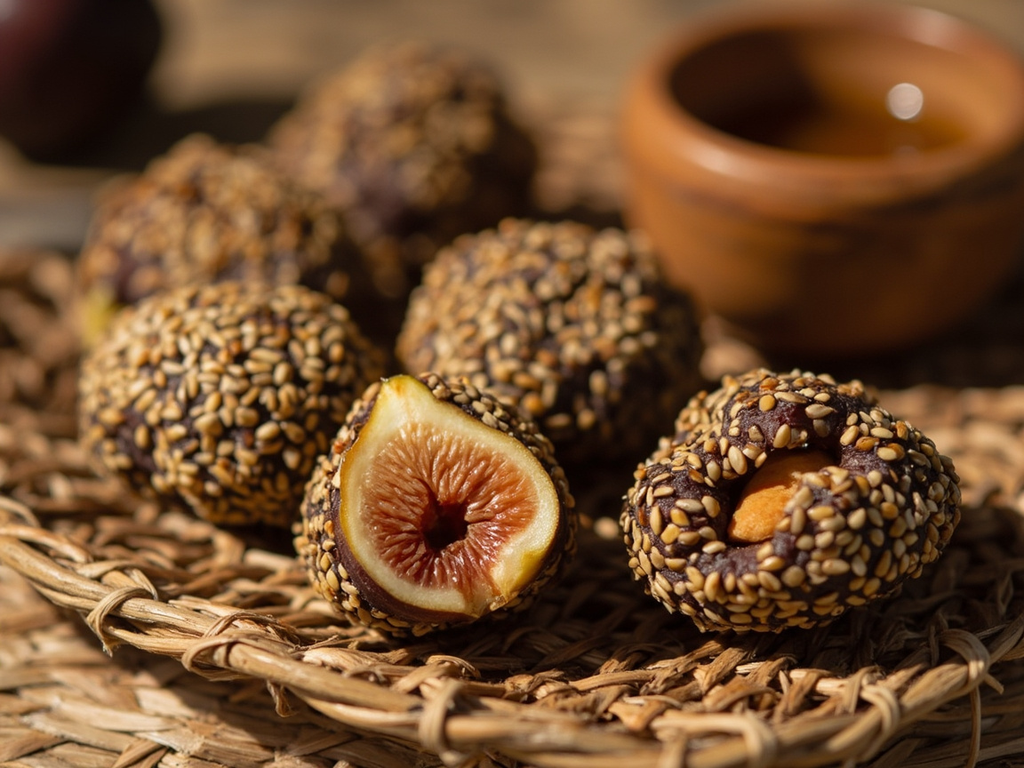
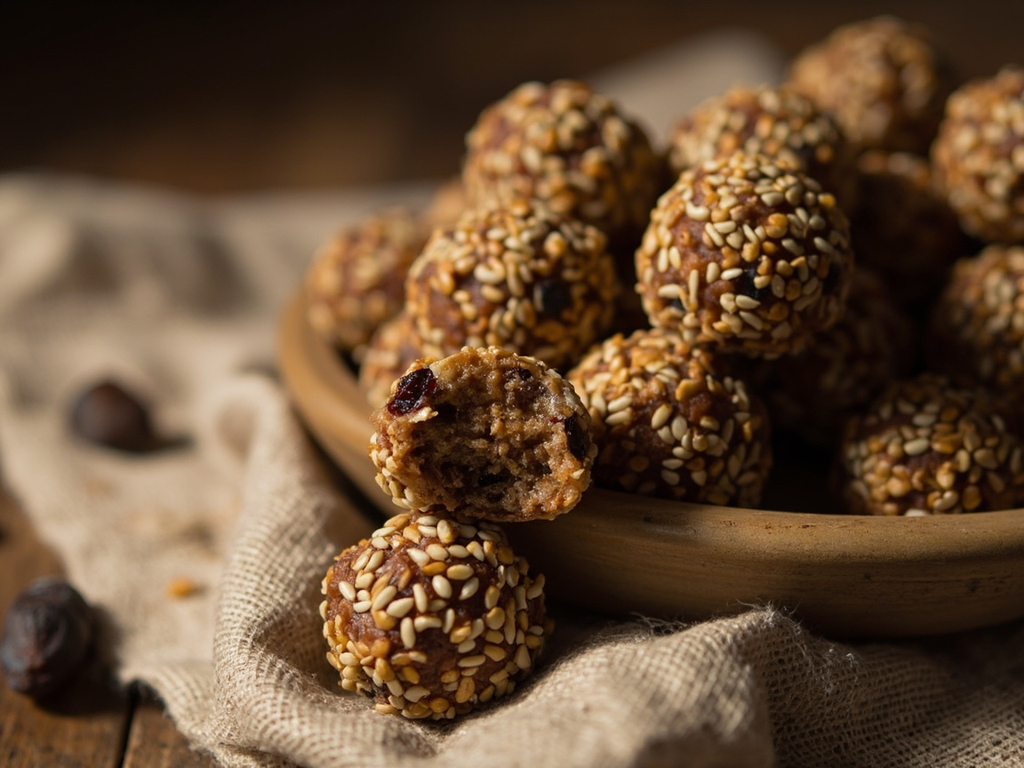
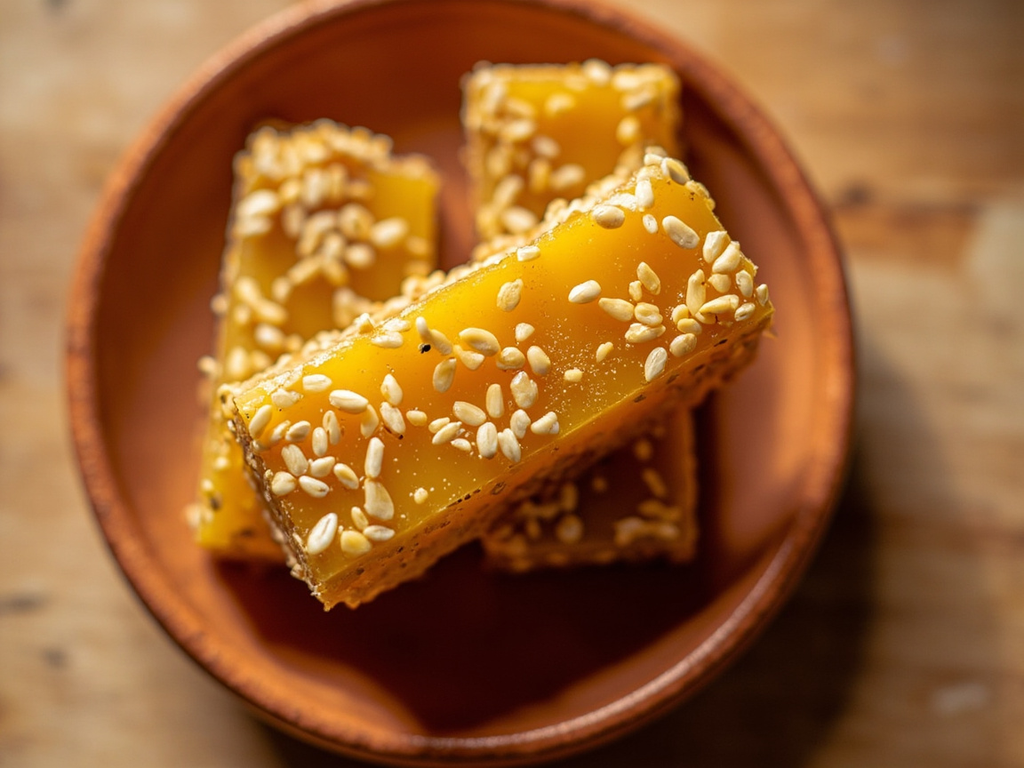
Thin cakes or bars of sesame seeds bound with hot honey, crunchy then melting. Served crushed at the symposion as tragemata, they were also easily transported on journeys.
For the road between Stagira and Athens, or to King Philip's court, nothing beats sesame bound with honey: little weight, much strength. Toast the seeds golden, pour the hot honey, press everything while still pliable, then let it harden. Cut it before it turns to stone. This is sweetness that travels — and the traveling thinker always needs a little honey to sustain his walk.
- •Sesame seeds — two full measures (crunchy core)
- •Honey — enough to coat (binder and sugar)
- •Olive oil — a touch (non-stick)
Itria with sesame and honey
Thin cakes or bars of sesame seeds bound with hot honey, crunchy then melting. Served crushed at the symposion as tragemata, they were also easily transported on journeys.
Why this dish? Aristotle traveled widely: Stagira, Athens, the Macedonian court at Mieza, Asia Minor, Lesbos, then Chalcis where he ended his days. These dense bars of sesame and honey, energy-rich and long-lasting, were the ideal travel companions for the itinerant philosopher.
For the road between Stagira and Athens, or to King Philip's court, nothing beats sesame bound with honey: little weight, much strength. Toast the seeds golden, pour the hot honey, press everything while still pliable, then let it harden. Cut it before it turns to stone. This is sweetness that travels — and the traveling thinker always needs a little honey to sustain his walk.
Ingredients (period version)
- Sesame seeds — two full measures (crunchy core)
- Honey — enough to coat (binder and sugar)
- Olive oil — a touch (non-stick)
Ingredients
- Sesame seeds — 150 g (crunchy core)
- Honey (preferably thyme honey) — 100 g (binder and sugar)
- Olive oil — 1 tsp (non-stick)
Method
- Toast the sesame seeds dry in a pan until golden and fragrant, then set aside.
- Gently heat the honey until it simmers and thickens slightly (2 to 3 minutes).
- Off the heat, stir in the sesame seeds and mix quickly to coat well.
- Pour onto an oiled surface and spread into a thin layer using an oiled spoon.
- Let cool for 2 minutes, then cut into bars or diamonds before it hardens completely.
How it was made : The sesame-honey combination is attested in ancient Greece: itria referred to fine preparations of grains or seeds with honey, and sesame cakes were offered at weddings as symbols of fertility. This is the direct ancestor of today's Greek pasteli.
The contemporary twist : Cut them into bite-sized pieces and roll the edges in black and white sesame seeds for a modern checkerboard effect.
Sources : Athenaeus, The Deipnosophists · Andrew Dalby, Food in the Ancient World from A to Z
Aristotle · Charactorium