 flip
flipApfelwein (Ebbelwoi de Francfort)
Apfelwein (Ebbelwoi de Francfort)
Why this dish? Popular and identity-defining drink of Frankfurt, where Schopenhauer lived for nearly three decades. A moderate drinker and lover of table pleasures, he moved in a city where Apfelwein flowed in every tavern—the natural tangy companion to the Hessian cuisine he frequented.
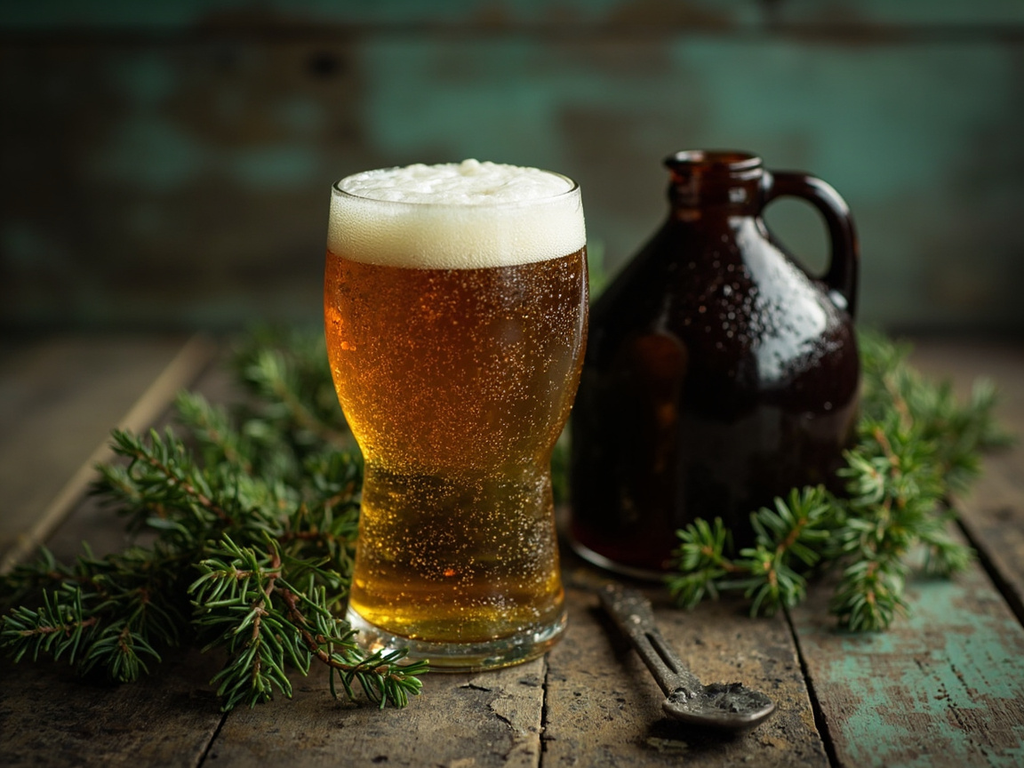
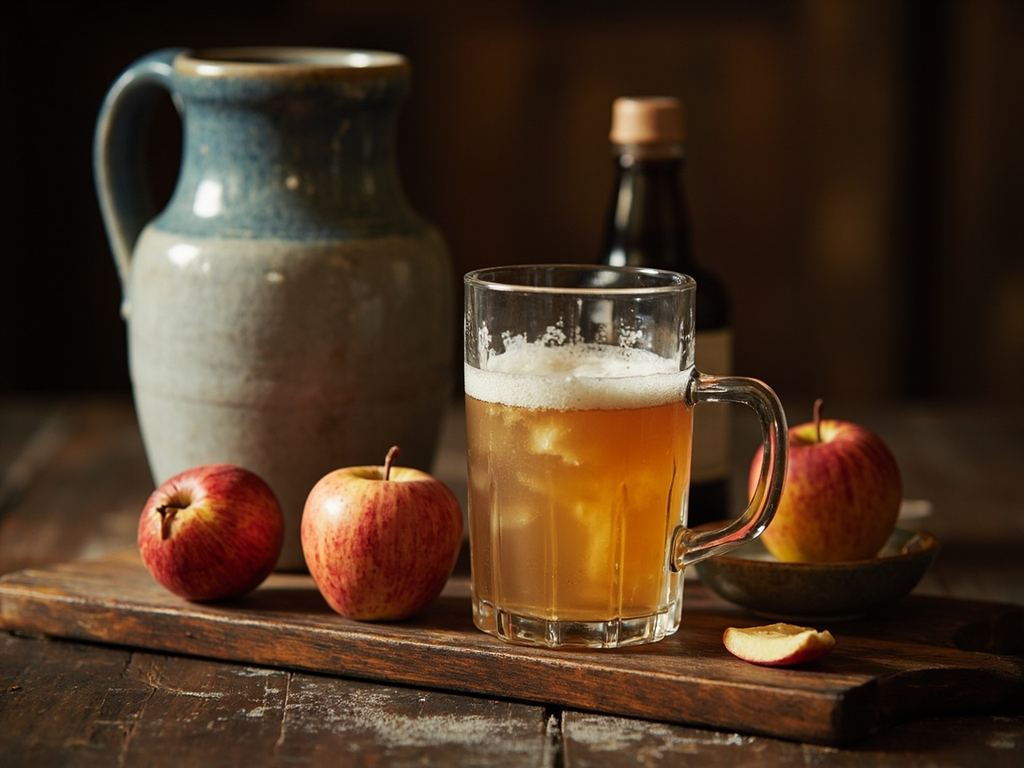
A dry, crisp cider obtained by fermenting tart apple juice, traditionally served chilled in a ribbed glass (Geripptes) poured from a blue stoneware jug (Bembel). Refreshing, straightforward, slightly bitter.
They think me a gloomy misanthrope; yet no one has a better taste for a dry Ebbelwoi, poured from the Bembel into the ribbed glass. This apple wine has nothing of the sweet heaviness that flatters fools: it is tart, straight, a little rough, and tells the truth as any honest thing should. Choose sour apples, never sweetish ones, and let nature work alone—fermentation, like thought, does not suffer being rushed. Served cold, it accompanies sauerkraut and sour cheese better than any Rhine wine.
- •Tart cider apples (cider varieties) — a large amount (raw material)
- •A few medlars or service berries (optional) — a handful (tannins and bitterness)
Apfelwein (Ebbelwoi de Francfort)
A dry, crisp cider obtained by fermenting tart apple juice, traditionally served chilled in a ribbed glass (Geripptes) poured from a blue stoneware jug (Bembel). Refreshing, straightforward, slightly bitter.
Why this dish? Popular and identity-defining drink of Frankfurt, where Schopenhauer lived for nearly three decades. A moderate drinker and lover of table pleasures, he moved in a city where Apfelwein flowed in every tavern—the natural tangy companion to the Hessian cuisine he frequented.
They think me a gloomy misanthrope; yet no one has a better taste for a dry Ebbelwoi, poured from the Bembel into the ribbed glass. This apple wine has nothing of the sweet heaviness that flatters fools: it is tart, straight, a little rough, and tells the truth as any honest thing should. Choose sour apples, never sweetish ones, and let nature work alone—fermentation, like thought, does not suffer being rushed. Served cold, it accompanies sauerkraut and sour cheese better than any Rhine wine.
Ingredients (period version)
- Tart cider apples (cider varieties) — a large amount (raw material)
- A few medlars or service berries (optional) — a handful (tannins and bitterness)
Ingredients
- 100% pure tart apple juice, unpasteurized if possible — 5 liters (must to ferment)
- Cider yeast (or wild fermentation) — 1 packet (fermentation)
- Air lock and 5 L demijohn — 1 set (fermentation equipment)
Method
- Pour the apple juice into a clean, sanitized demijohn, leaving some headspace.
- Add yeast (or let natural fermentation start), attach the air lock.
- Ferment at 18–20°C for 2 to 4 weeks, until bubbling stops.
- Rack the clear cider off the sediment, bottle it.
- Store cool for 2 to 4 weeks before serving very cold, in a ribbed glass. Note: alcoholic beverage, for adults only.
How it was made : Frankfurt had been producing Apfelwein since the 16th century, and in the 19th it was the quintessential popular drink in taverns (Apfelweinwirtschaften). Tart apples were pressed in autumn, and the must fermented in barrels; serving in a stoneware Bembel and ribbed Geripptes has remained unchanged to this day.
The contemporary twist : For a non-alcoholic family version, serve pure tart apple juice topped with sparkling water and a squeeze of lemon in the ribbed glass: the famous "Sauergespritzter" revisited, shareable from age 12.
Sources : Frankfurt Apfelwein tradition · Hessian Apfelweinwirtschaften, 19th century
Arthur Schopenhauer · Charactorium