 flip
flipMeen curry — Kerala fish curry with coconut milk and kokum
Meen curry — Kerala fish curry with coconut milk and kokum
Why this dish? Although Arundhati Roy eats little meat and prefers vegetarian food, fish returns for family meals — the Backwaters cuisine of Kerala is inseparable from river fish like karimeen (pearl spot). This is the dish of large tables in Ayemenem, by the Meenachal river.
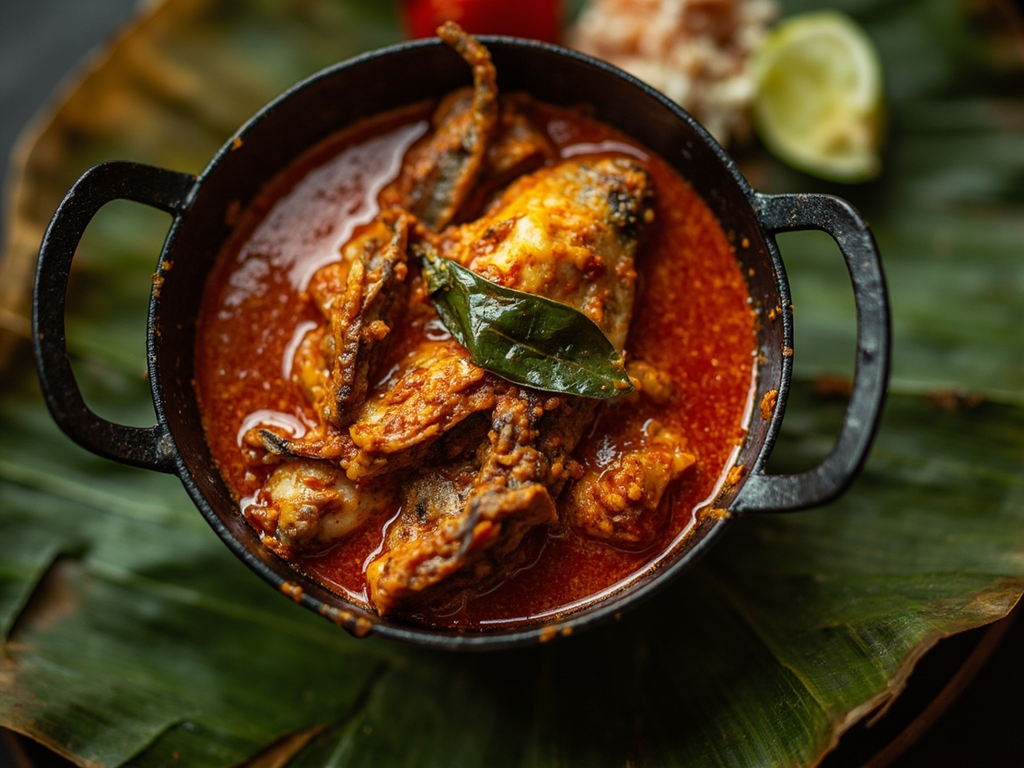
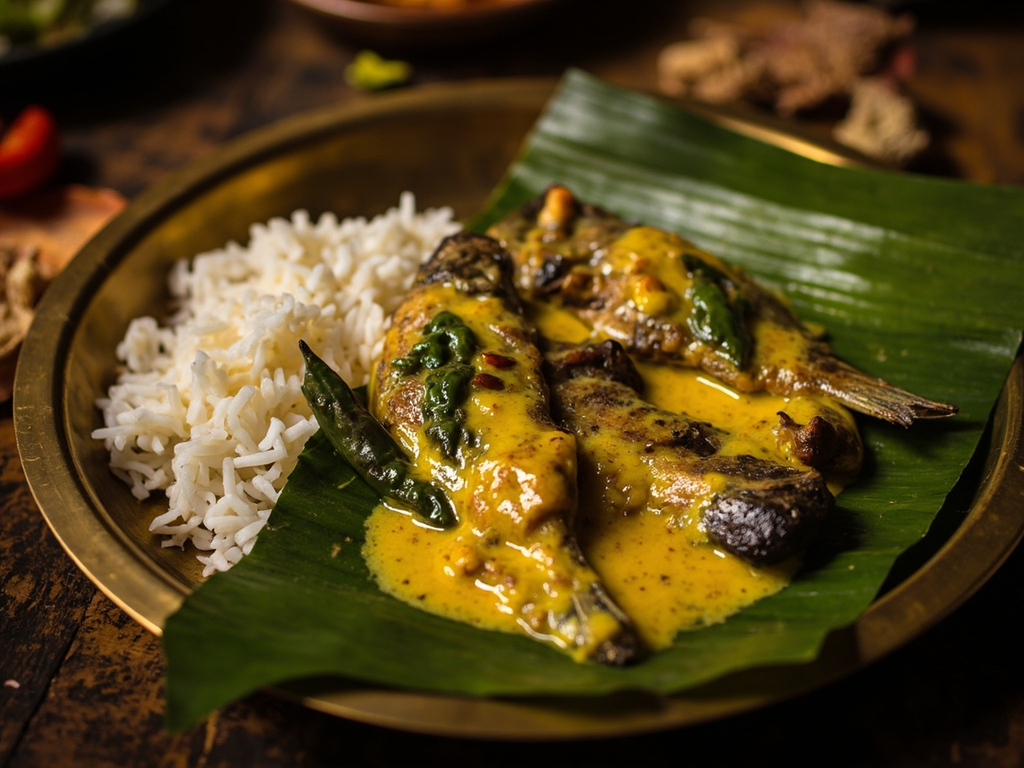
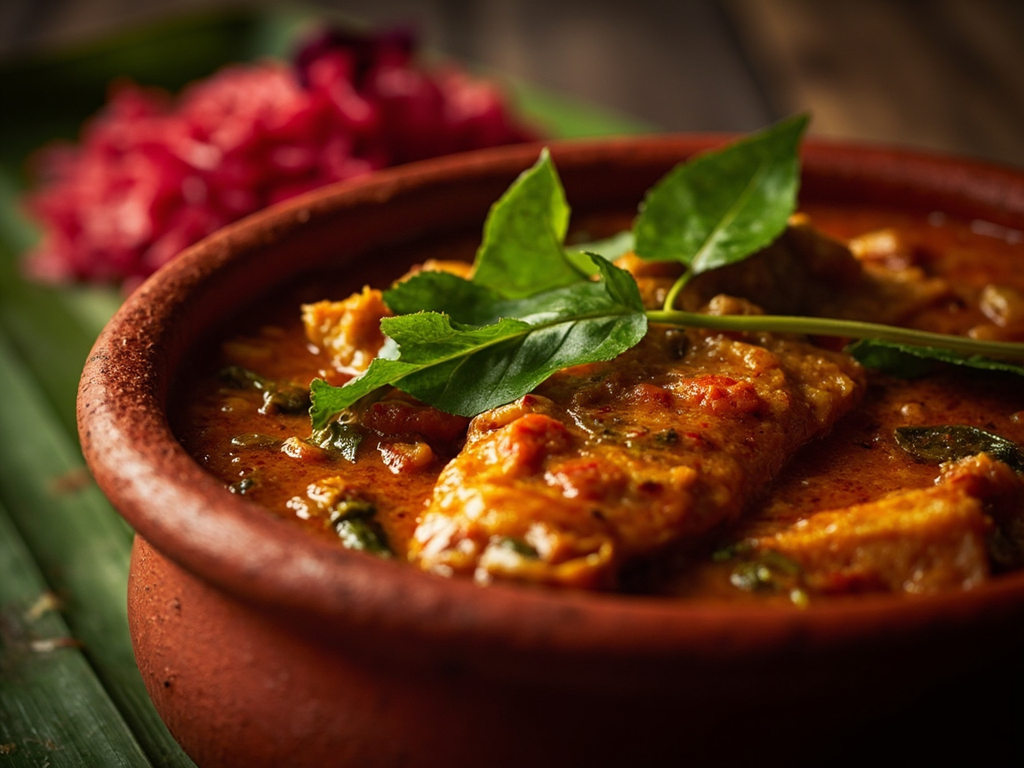
An orange-red fish curry, sour with kokum (or tamarind), creamy with coconut milk, spiced with chillies and shallots, simmered in a traditional clay pot that gives it depth. Ideally left to rest overnight: it only gets better.
Fish curry, you see, improves by sleeping — eating it the same day is almost impatience. At home we made it in the manchatti, the red clay pot, and the sourness came from kudampuli, that black, smoked fruit you soak beforehand. You choose a firm river fish, you lay it in the sauce and you wait. My characters, too, wait by the water's edge; Kerala is a land that knows patience has a taste.
- •Karimeen (pearl spot) or river sardine — a few fresh fish (protein)
- •Kudampuli (smoked Malabar kokum) — a few petals (signature sourness)
- •Freshly pressed coconut milk — one bowl (creaminess)
- •Dried red chillies — to taste (heat (post-1492, common in India since the 16th c.))
- •Shallots (small onions) — a handful (base)
- •Ginger and garlic — a piece / a few cloves (aromatics)
- •Curry leaves — two sprigs (aroma)
- •Coconut oil — a drizzle (cooking)
- •Turmeric — a pinch (colour)
Meen curry — Kerala fish curry with coconut milk and kokum
An orange-red fish curry, sour with kokum (or tamarind), creamy with coconut milk, spiced with chillies and shallots, simmered in a traditional clay pot that gives it depth. Ideally left to rest overnight: it only gets better.
Why this dish? Although Arundhati Roy eats little meat and prefers vegetarian food, fish returns for family meals — the Backwaters cuisine of Kerala is inseparable from river fish like karimeen (pearl spot). This is the dish of large tables in Ayemenem, by the Meenachal river.
Fish curry, you see, improves by sleeping — eating it the same day is almost impatience. At home we made it in the manchatti, the red clay pot, and the sourness came from kudampuli, that black, smoked fruit you soak beforehand. You choose a firm river fish, you lay it in the sauce and you wait. My characters, too, wait by the water's edge; Kerala is a land that knows patience has a taste.
Ingredients (period version)
- Karimeen (pearl spot) or river sardine — a few fresh fish (protein)
- Kudampuli (smoked Malabar kokum) — a few petals (signature sourness)
- Freshly pressed coconut milk — one bowl (creaminess)
- Dried red chillies — to taste (heat (post-1492, common in India since the 16th c.))
- Shallots (small onions) — a handful (base)
- Ginger and garlic — a piece / a few cloves (aromatics)
- Curry leaves — two sprigs (aroma)
- Coconut oil — a drizzle (cooking)
- Turmeric — a pinch (colour)
Ingredients
- Firm fish fillets (mackerel, sea bream or tilapia) — 500 g (protein)
- Dried kokum (or tamarind) — 4 petals (or 1 tbsp tamarind paste) (sourness)
- Coconut milk — 250 ml (creaminess)
- Red chilli powder — 1 to 2 tsp (heat)
- Shallots — 6, sliced (base)
- Ginger — 2 cm, grated (aromatic)
- Garlic — 3 cloves (aromatic)
- Curry leaves — 15 leaves (aroma)
- Coconut oil — 2 tbsp (cooking)
- Turmeric powder — 1/2 tsp (colour)
- Salt — to taste (seasoning)
Method
- Soak the kokum in a little warm water for 15 minutes.
- Heat the coconut oil, sauté the shallots, ginger, garlic and curry leaves until golden.
- Add the turmeric and chilli powder, cook for 30 seconds, then pour in a glass of water and the kokum with its soaking water; let it simmer for 5 minutes.
- Place the fish pieces in the sauce, cover and cook over low heat for 8–10 minutes without stirring too much.
- Pour in the coconut milk, warm through without boiling, adjust the salt.
- Ideally, let it rest for several hours (or overnight) before reheating gently and serving with red rice.
How it was made : On the Malabar coast, fish was cooked in the manchatti, a terracotta pot that concentrates flavours. The sourness traditionally came from kudampuli (Garcinia), dried and smoked, rather than lemon. Chilli, introduced by the Portuguese after 1492 and acclimatised in India by the 16th century, is fully period-appropriate for a 20th–21st century character.
The contemporary twist : Serve the curry directly in a small glazed terracotta pot, topped with a shower of fried curry leaves and a lime wedge, with a separate dome of red rice.
Sources : Ammini Ramachandran, Grains, Greens and Grated Coconuts: Recipes and Remembrances of a Vegetarian Legacy · K. M. Mathew, Flavours of the Spice Coast
Arundhati Roy · Charactorium