 flip
flipPānaka — refreshing drink with cane, cardamom, and jujube
Pānaka — refreshing drink with cane, cardamom, and jujube
Why this dish? In the heat of Pataliputra, Ashoka's capital on the Ganges, people refreshed themselves with pānaka: water sweetened with cane juice, tangy, perfumed with mild spices. Mauryan India, birthplace of sugar, knew how to transform cane into courtly drinks.
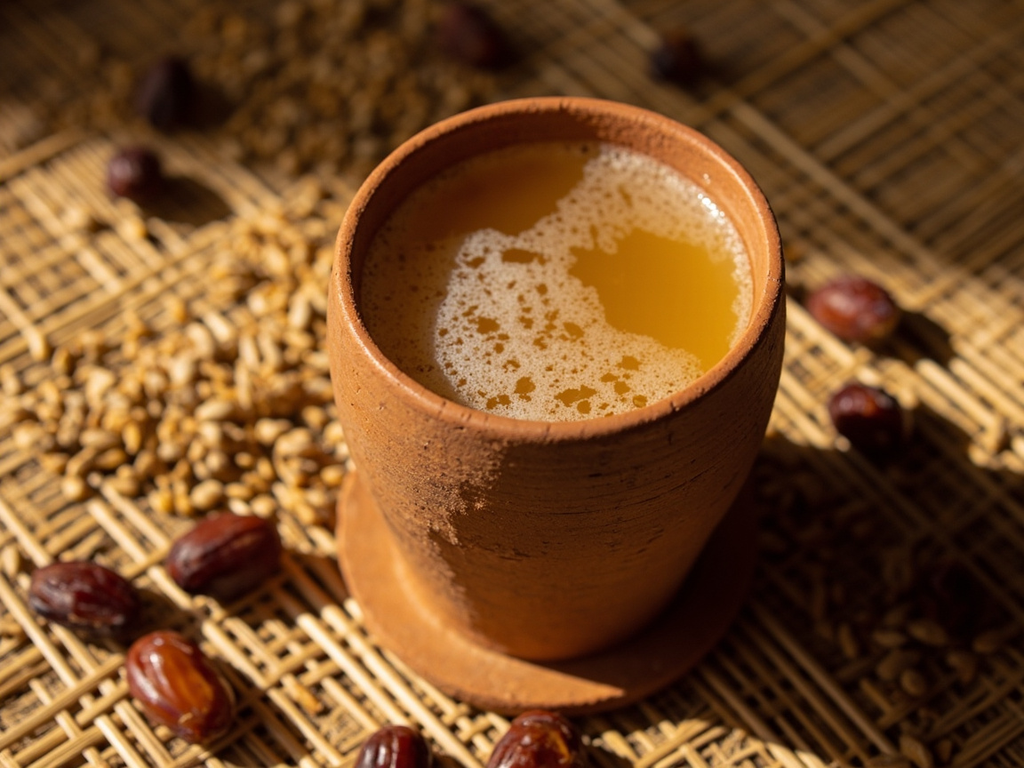
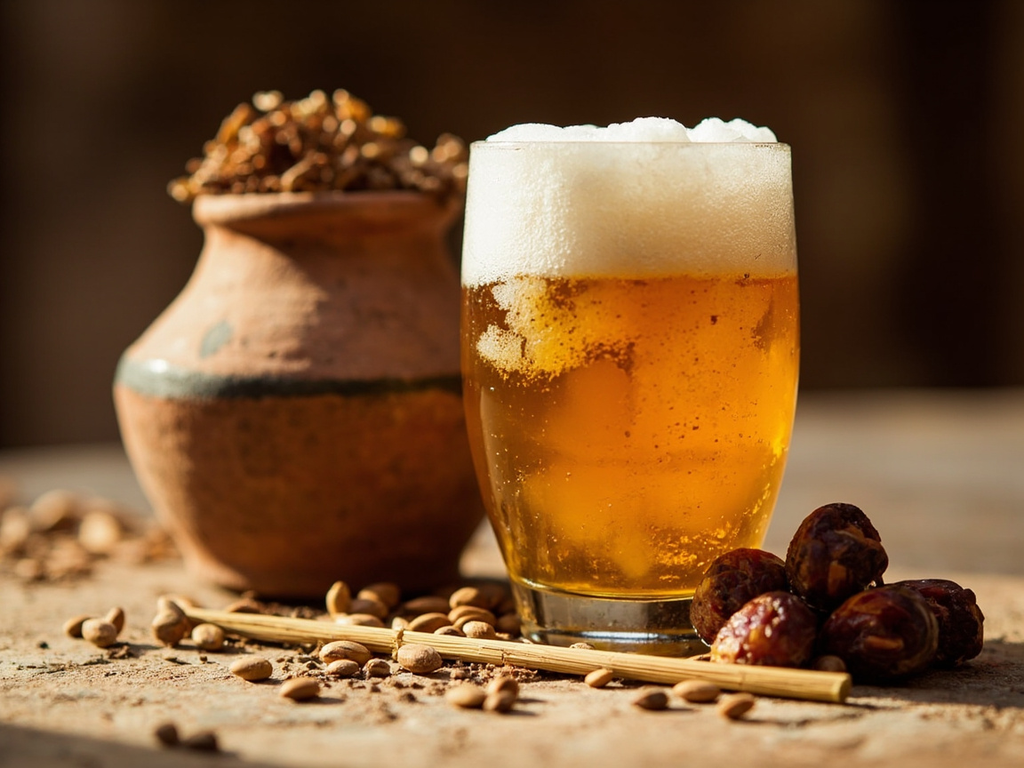
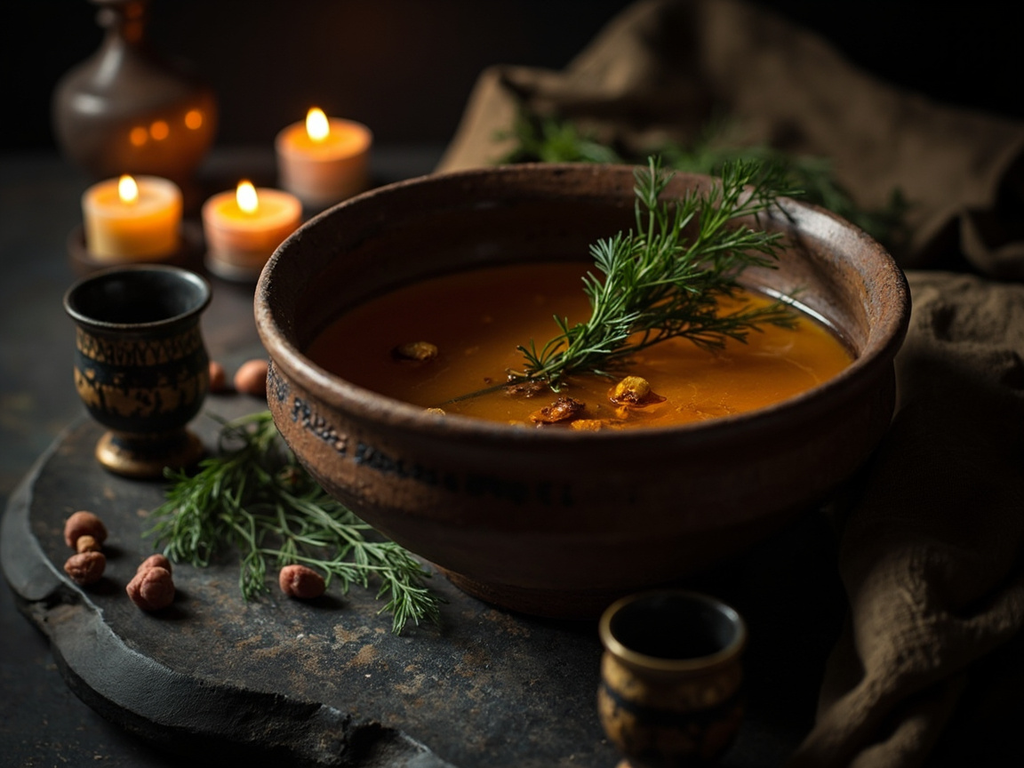
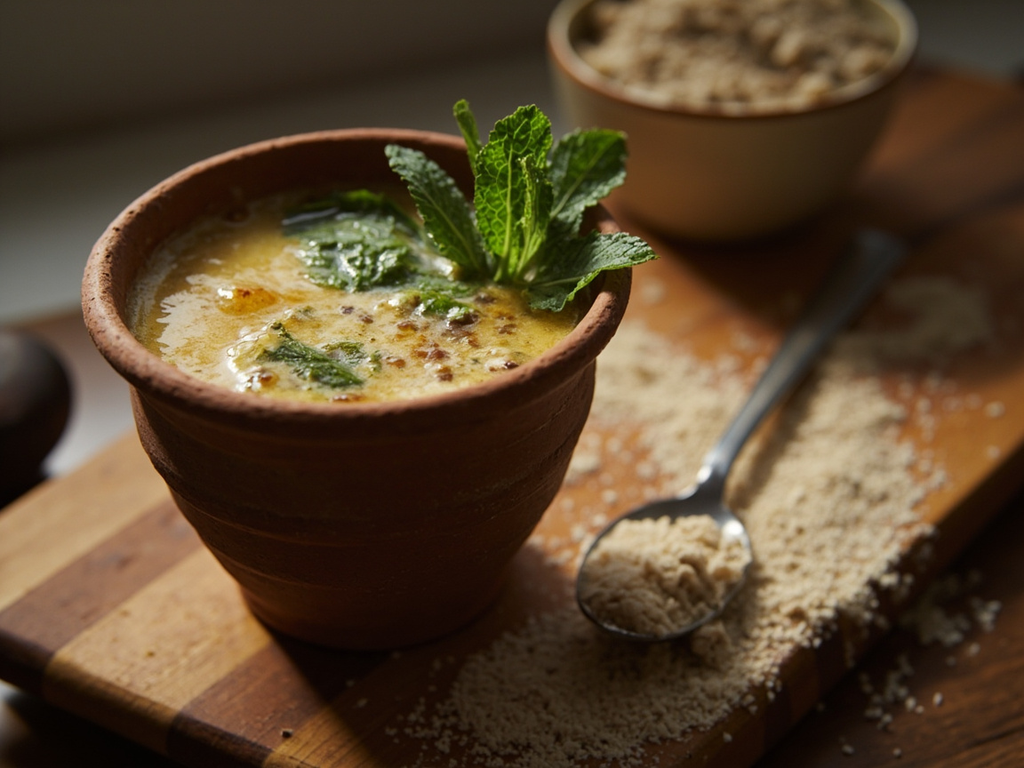
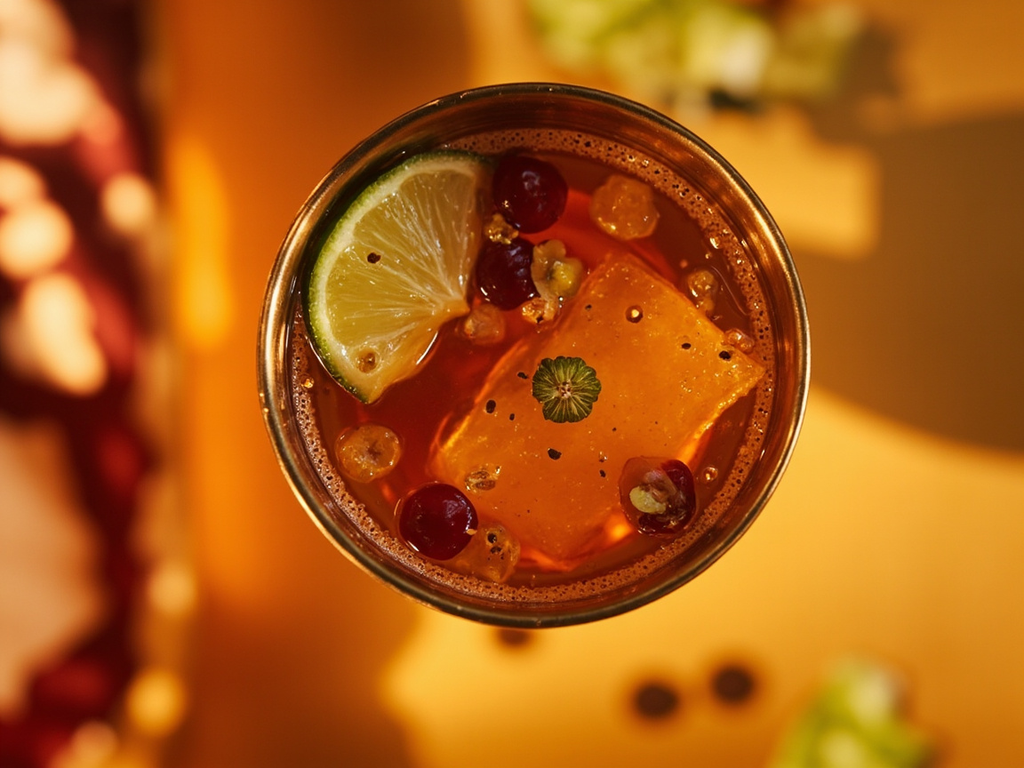
A thirst-quenching water sweetened with jaggery, made lively with lime juice, perfumed with cardamom and long pepper, with jujubes soaked in it. Sweet, tangy, and delicately spiced.
In summer, on the banks of the Ganges, the sun weighs on Pataliputra like a burning hand. Then dissolve the juice of the cane in cool water, squeeze in the lime, throw a pinch of crushed cardamom and long pepper. Let a few ripe jujubes steep in it. Drink, traveler, in the shade of the trees I have had planted along the roads: may no being in my empire, man or beast, suffer thirst as long as I reign.
- •Cane juice or jaggery (guḍa) — to taste (sweetener)
- •Fresh water — plenty (base)
- •Lime (jambīra) — one fruit (acidity)
- •Cardamom (ela) — a pinch (flavor)
- •Long pepper (pippali) — a trace (mild spice)
- •Jujubes (badara) — a few (fruit, sweetness)
Pānaka — refreshing drink with cane, cardamom, and jujube
A thirst-quenching water sweetened with jaggery, made lively with lime juice, perfumed with cardamom and long pepper, with jujubes soaked in it. Sweet, tangy, and delicately spiced.
Why this dish? In the heat of Pataliputra, Ashoka's capital on the Ganges, people refreshed themselves with pānaka: water sweetened with cane juice, tangy, perfumed with mild spices. Mauryan India, birthplace of sugar, knew how to transform cane into courtly drinks.
In summer, on the banks of the Ganges, the sun weighs on Pataliputra like a burning hand. Then dissolve the juice of the cane in cool water, squeeze in the lime, throw a pinch of crushed cardamom and long pepper. Let a few ripe jujubes steep in it. Drink, traveler, in the shade of the trees I have had planted along the roads: may no being in my empire, man or beast, suffer thirst as long as I reign.
Ingredients (period version)
- Cane juice or jaggery (guḍa) — to taste (sweetener)
- Fresh water — plenty (base)
- Lime (jambīra) — one fruit (acidity)
- Cardamom (ela) — a pinch (flavor)
- Long pepper (pippali) — a trace (mild spice)
- Jujubes (badara) — a few (fruit, sweetness)
Ingredients
- Jaggery or whole cane sugar — 4 tbsp (sweetener)
- Fresh water — 1 litre (base)
- Lime juice — 2 tbsp (acidity)
- Ground cardamom — 1/4 tsp (flavor)
- Long pepper or black pepper, ground — 1 pinch (mild spice)
- Jujubes (or dates), pitted — 6-8 (fruit, sweetness)
Method
- Dissolve the jaggery in a little hot water, strain to remove impurities, let cool.
- Mix the syrup with fresh water in a pitcher.
- Add lime juice, cardamom, and long pepper.
- Drop in the chopped jujubes (or dates), let infuse in the fridge for 1 hour.
- Serve well chilled, optionally strained.
How it was made : India domesticated sugarcane and mastered sugar crystallization from antiquity (the word 'sugar' comes from Sanskrit śarkarā). Sweet-spiced drinks like pānaka are described in later treatises; their exact Mauryan form remains reconstructed, hence the authenticity 'reconstruction'. Refreshing travelers aligns with Ashoka's edicts on wells and shade.
The contemporary twist : Serve over crushed ice in a copper cup, with a thin slice of candied ginger on the rim.
Sources : Etymology and history of Indian sugar (śarkarā) — K.T. Achaya, Indian Food: A Historical Companion · Ashoka's edicts on wells, trees, and shelters for travelers (Pillar Edict VII)
Ashoka · Charactorium