 flip
flipPippalī-madhu — long pepper electuary with honey
Pippalī-madhu — long pepper electuary with honey
Why this dish? Ashoka boasts in his edicts of having established medical care for both humans and animals, and of planting medicinal herbs wherever they were lacking (Major Rock Edict II). This electuary of long pepper and honey is a classic of ancient Indian pharmacopoeia for coughs and colds.
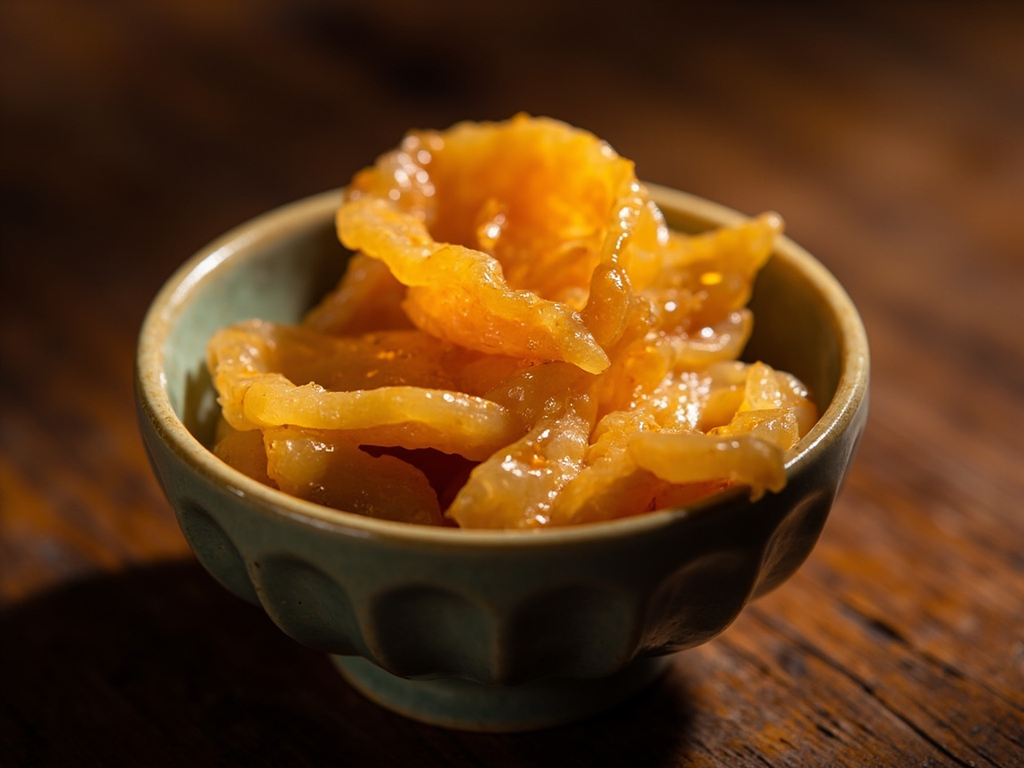
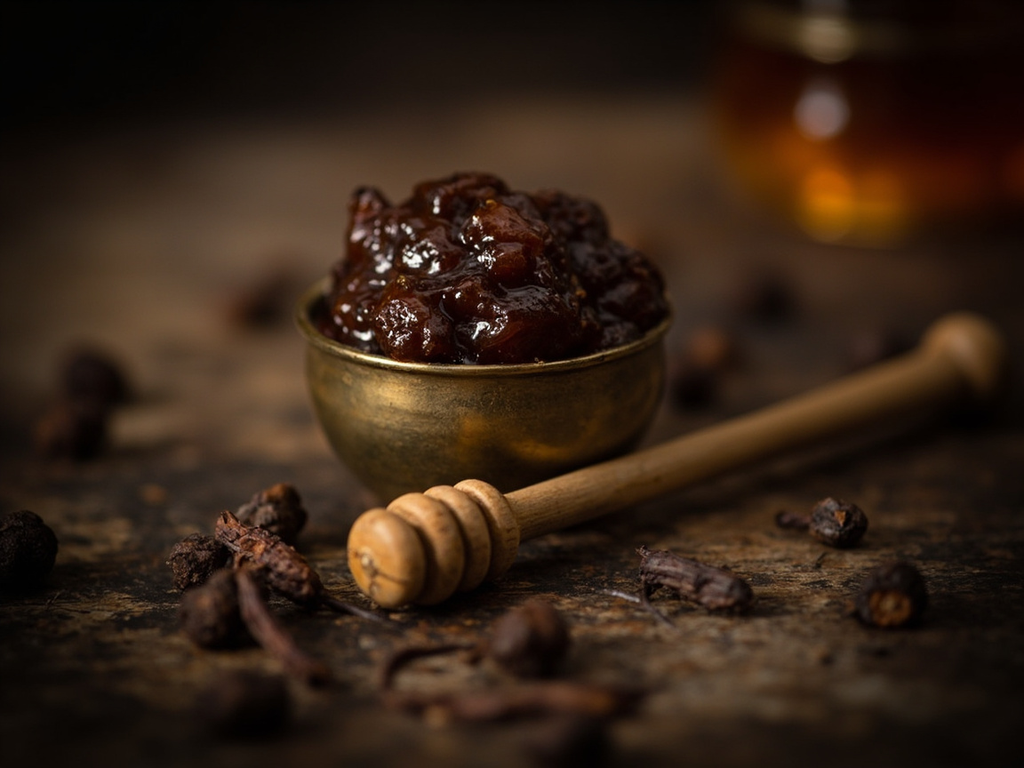
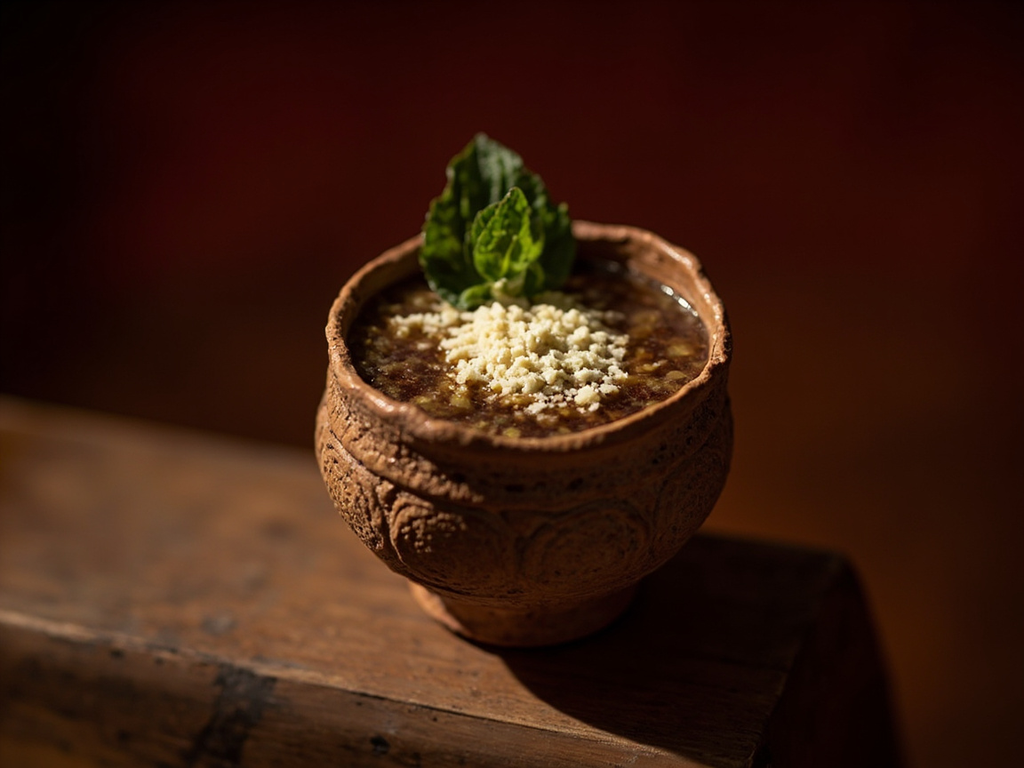
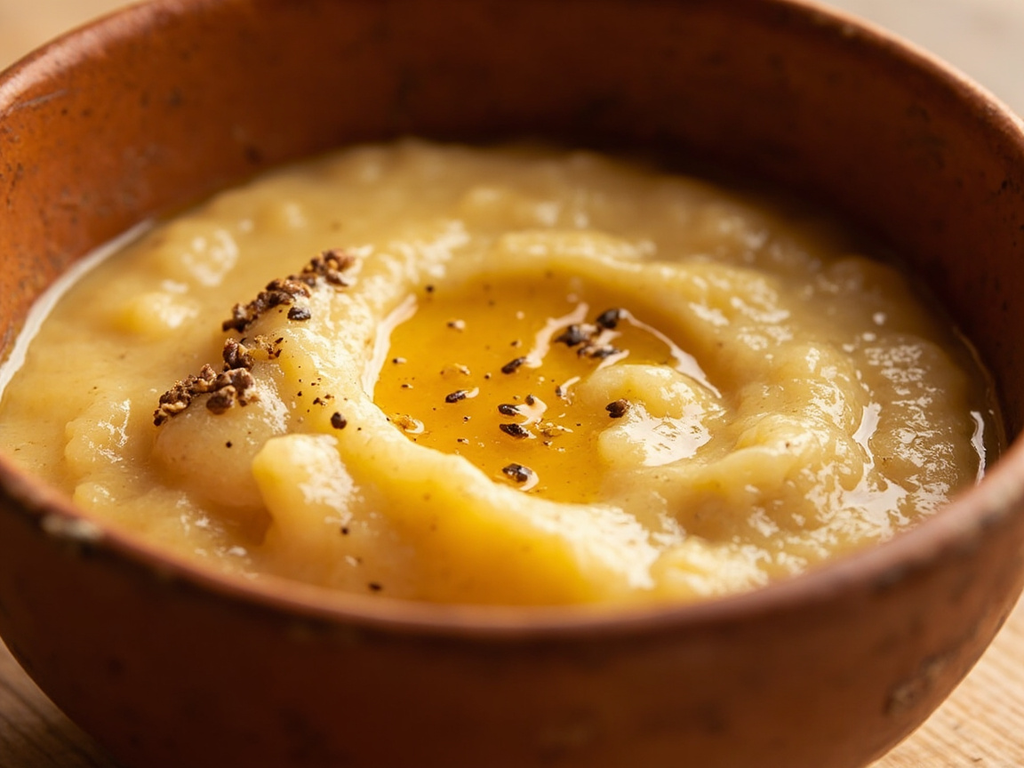
A thick, comforting paste of ground long pepper, ginger, and honey, taken by spoon or dissolved in hot milk. Pungent then sweet, it is the ancestor of the Indian grandmother's remedy for winter ailments.
I have had wells dug, trees planted, and healing herbs cultivated, for men and for beasts, in my kingdom and even among neighboring kings. For what use is an empire if the cough carries off the peasant's child? Mix the pounded long pepper with honey and ginger, keep it in a sealed pot; when your throat burns, take a spoonful, or dissolve it in hot milk. This too is dhamma: to relieve what suffers.
- •Ground long pepper (pippalī) — one part (active principle, heat)
- •Honey (madhu) — two parts (base, sweet binder)
- •Dried ginger (śuṇṭhī) — a pinch (spice, digestive)
- •Ghee — a touch (carrier (optional))
Pippalī-madhu — long pepper electuary with honey
A thick, comforting paste of ground long pepper, ginger, and honey, taken by spoon or dissolved in hot milk. Pungent then sweet, it is the ancestor of the Indian grandmother's remedy for winter ailments.
Why this dish? Ashoka boasts in his edicts of having established medical care for both humans and animals, and of planting medicinal herbs wherever they were lacking (Major Rock Edict II). This electuary of long pepper and honey is a classic of ancient Indian pharmacopoeia for coughs and colds.
I have had wells dug, trees planted, and healing herbs cultivated, for men and for beasts, in my kingdom and even among neighboring kings. For what use is an empire if the cough carries off the peasant's child? Mix the pounded long pepper with honey and ginger, keep it in a sealed pot; when your throat burns, take a spoonful, or dissolve it in hot milk. This too is dhamma: to relieve what suffers.
Ingredients (period version)
- Ground long pepper (pippalī) — one part (active principle, heat)
- Honey (madhu) — two parts (base, sweet binder)
- Dried ginger (śuṇṭhī) — a pinch (spice, digestive)
- Ghee — a touch (carrier (optional))
Ingredients
- Long pepper powder (or black pepper) — 1 tsp (warming spice)
- Honey — 3 tbsp (base, binder)
- Fresh ginger, grated, or powder — 1/2 tsp (spice)
- Hot milk — 1 cup (for drink version) (carrier)
Method
- Thoroughly mix the long pepper, ginger, and honey into a homogeneous paste.
- For an electuary: store in a small sealed jar, take 1/2 tsp as needed.
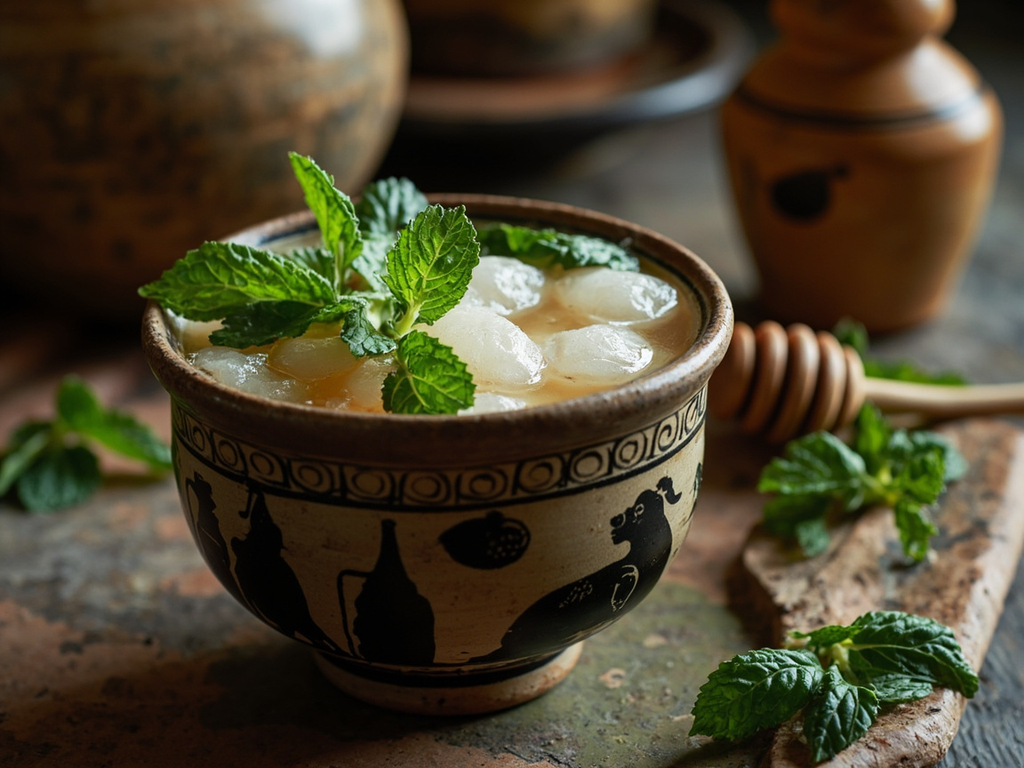
- For a drink: dissolve 1 tsp of the paste in a cup of hot milk (not boiling, to preserve honey).
- Drink slowly, ideally in the evening.
How it was made : Long pepper combined with honey is a recurring formula in ancient Indian medicine (Ayurvedic corpus, Charaka and Sushruta Samhita) for respiratory ailments. Ashoka, who prided himself on spreading medical care and medicinal plants, embodies this tradition where food and remedy are one. The precise formulation being broadly Ayurvedic, it is considered a reconstruction.
The contemporary twist : Present the electuary in a small terracotta pot sealed with wax, with a label calligraphed like a carved edict.
Sources : Ashoka's Major Rock Edict II (medical care and medicinal plants) · Charaka Samhita and Sushruta Samhita (use of pippalī and honey)
Ashoka · Charactorium