 flip
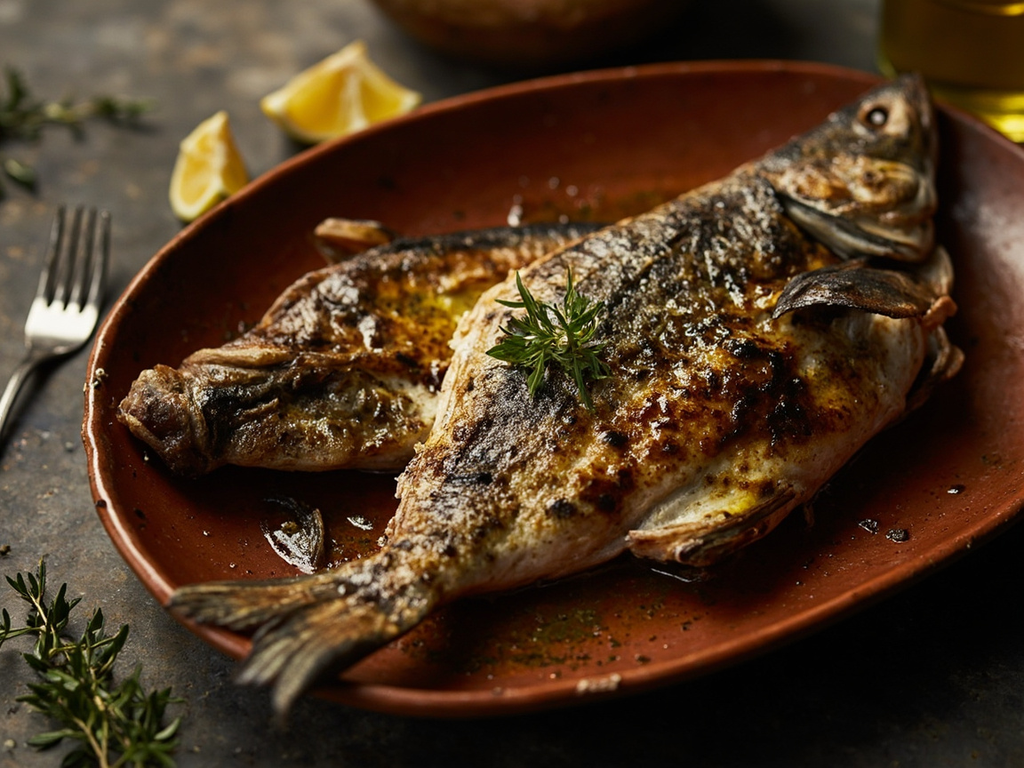
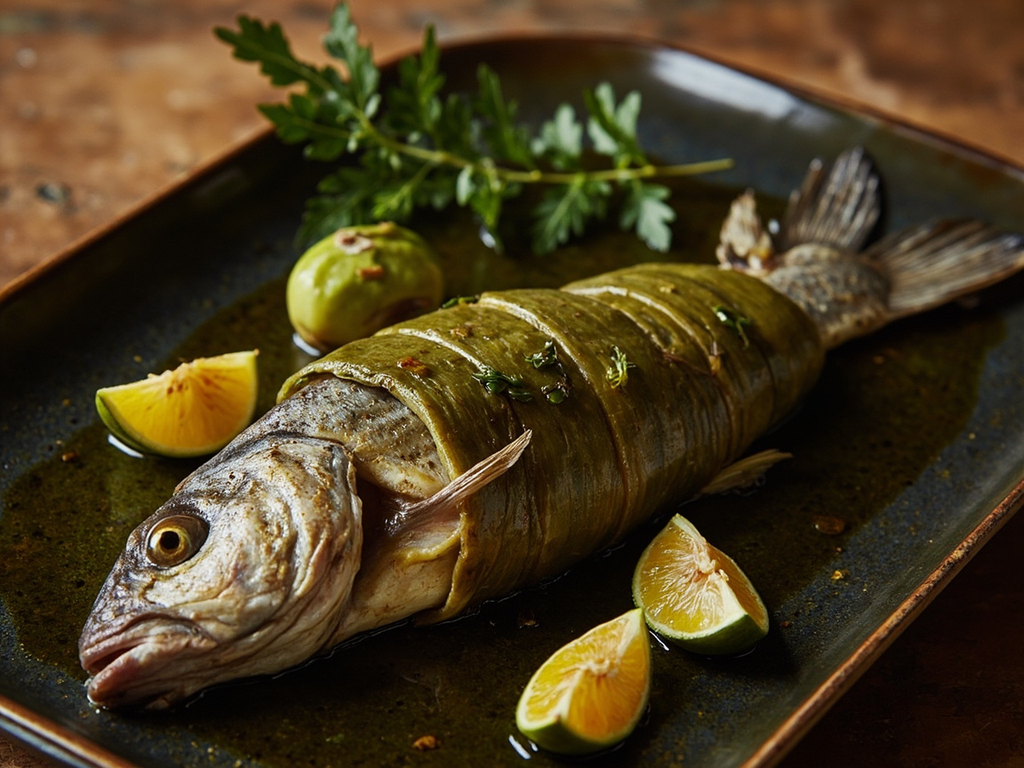
flipThrýon: Aegean sea bream braised in fig leaves
Thrýon: Aegean sea bream braised in fig leaves
Why this dish? Fresh fish from the Aegean Sea was the most prized opson in Athens, a sign of refinement and wealth. In the house of Pericles and Aspasia, where the intellectual elite of the city gathered, a beautiful braised fish honored the guests at a banquet.
A whole sea bream wrapped in fig leaves, perfumed with oil, herbs, and a splash of wine vinegar, gently cooked to remain pearly: the discreet luxury of the Athenian table.
Do you want to know what was served when Socrates lingered at our home until dusk? A sea bream pulled that very morning from the nets of Piraeus. I wrap it in the leaves of my fig tree—they keep the flesh tender and lend it a green scent—then a little oil, thyme, a drop of vinegar. A good fish does not need to be tormented, my friend: it only asks that its freshness be respected, just as an argument asks that its truth be respected.
- •Whole Aegean sea bream — one fine piece (heart of the dish)
- •Fresh fig leaves — a few (cooking wrap)
- •Olive oil — generously (cooking and flavor)
- •Fresh thyme and oregano — a few sprigs (aromatics)
- •Wine vinegar — a splash (acidity)
- •Sea salt — to taste (seasoning)
Thrýon: Aegean sea bream braised in fig leaves
A whole sea bream wrapped in fig leaves, perfumed with oil, herbs, and a splash of wine vinegar, gently cooked to remain pearly: the discreet luxury of the Athenian table.
Why this dish? Fresh fish from the Aegean Sea was the most prized opson in Athens, a sign of refinement and wealth. In the house of Pericles and Aspasia, where the intellectual elite of the city gathered, a beautiful braised fish honored the guests at a banquet.
Do you want to know what was served when Socrates lingered at our home until dusk? A sea bream pulled that very morning from the nets of Piraeus. I wrap it in the leaves of my fig tree—they keep the flesh tender and lend it a green scent—then a little oil, thyme, a drop of vinegar. A good fish does not need to be tormented, my friend: it only asks that its freshness be respected, just as an argument asks that its truth be respected.
Ingredients (period version)
- Whole Aegean sea bream — one fine piece (heart of the dish)
- Fresh fig leaves — a few (cooking wrap)
- Olive oil — generously (cooking and flavor)
- Fresh thyme and oregano — a few sprigs (aromatics)
- Wine vinegar — a splash (acidity)
- Sea salt — to taste (seasoning)
Ingredients
- Gilt-head sea bream, gutted — 1 piece, 600–800 g (heart of the dish)
- Fig leaves (or parchment paper) — 4–6 leaves (cooking wrap)
- Extra virgin olive oil — 4 tbsp (cooking and flavor)
- Fresh thyme and oregano — 1 small bunch (aromatics)
- White wine vinegar — 1 tbsp (acidity)
- Salt — to taste (seasoning)
Method
- Rinse fig leaves in hot water to soften them (or use oiled parchment paper).
- Salt the sea bream inside and out, stuff with herbs and a drizzle of oil.
- Wrap the fish in fig leaves, brush the outside with oil.
- Bake at 190°C for 20–25 minutes, or over moderate embers.
- Upon opening, splash with vinegar and a final drizzle of oil; serve immediately.
How it was made : Fresh fish (ópson par excellence) was passionately traded at the Athenian agora, and the best pieces fetched a high price. Fish was often cooked wrapped—the thrýon technique in fig leaves is described in the Greek culinary tradition to preserve moisture. Seasonings remained simple: oil, herbs, vinegar, sometimes a little honey.
The contemporary twist : Present the fish still closed in its fig leaf, letting each guest open it themselves: the green scent that escapes is worth any plating.
Sources : Andrew Dalby & Sally Grainger, The Classical Cookbook, British Museum Press, 1996 · Archestratus of Gela, Hédypatheia (fragments, 4th century BC)
Aspasia · Charactorium