 flip
flipAkalu — barley flatbread with sesame
Akalu — barley flatbread with sesame
Why this dish? Barley bread is the foundation of every Assyrian table, from soldiers to the scribes of the Library of Nineveh. Before dipping into a royal broth or biting into a date, one breaks the akalu: it is the daily gesture that unites the king with his people.
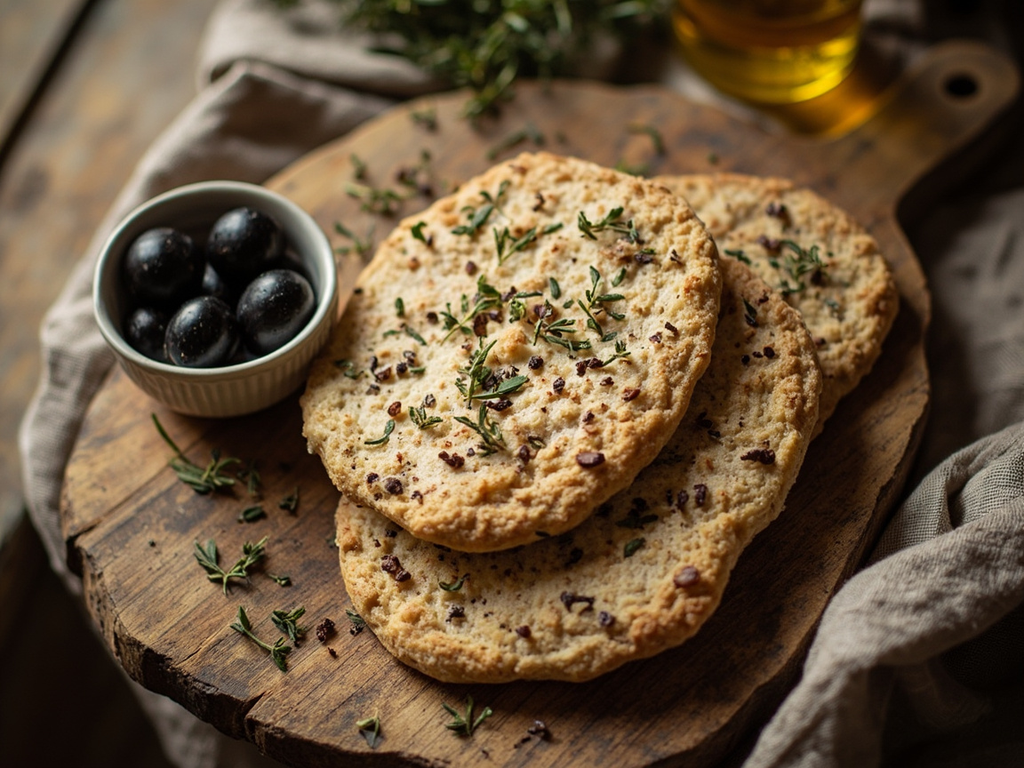
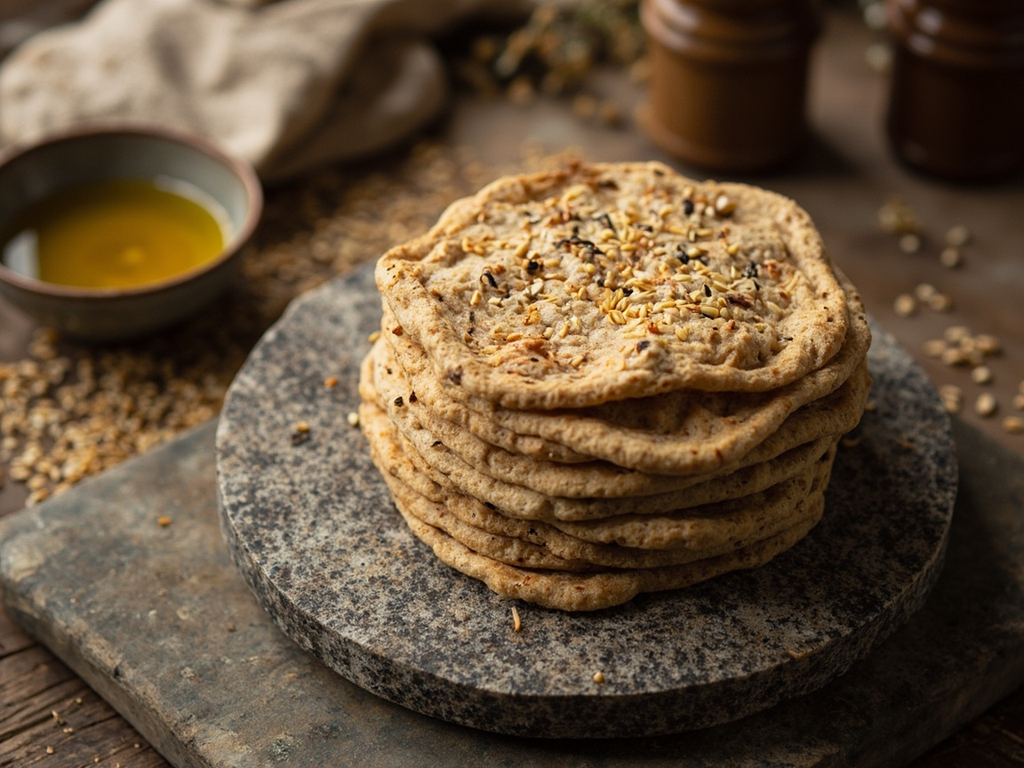
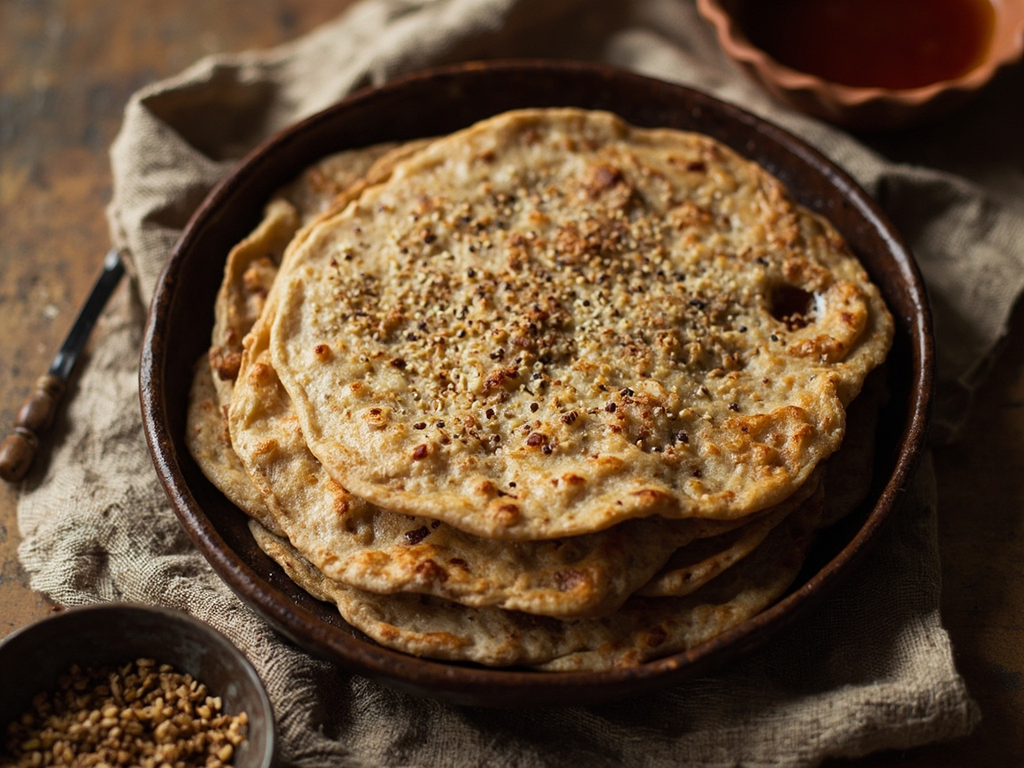
A flat barley bread, perfumed with sesame and lightly salted, baked against the hot wall of a clay oven. Dense, rustic and nourishing, it is torn by hand to accompany meats and sauces.
I, Ashurbanipal, king of the universe, king of Assyria, tell you: no banquet begins without barley bread. At my table in Nineveh, it is kneaded with water from the Tigris and marked with sesame seeds before being pressed against the side of the clay oven, where the fire bites hardest. Tear off a piece, dip it into the lamb's juice — thus eat kings and tablet-bearers alike. The grain that feeds my army also feeds my hand that knows how to read.
- •Barley flour — two measures (base of the flatbread)
- •Water — as needed (binds the dough)
- •Sesame seeds — a handful (flavor and crunch)
- •Salt — a pinch (seasoning)
Akalu — barley flatbread with sesame
A flat barley bread, perfumed with sesame and lightly salted, baked against the hot wall of a clay oven. Dense, rustic and nourishing, it is torn by hand to accompany meats and sauces.
Why this dish? Barley bread is the foundation of every Assyrian table, from soldiers to the scribes of the Library of Nineveh. Before dipping into a royal broth or biting into a date, one breaks the akalu: it is the daily gesture that unites the king with his people.
I, Ashurbanipal, king of the universe, king of Assyria, tell you: no banquet begins without barley bread. At my table in Nineveh, it is kneaded with water from the Tigris and marked with sesame seeds before being pressed against the side of the clay oven, where the fire bites hardest. Tear off a piece, dip it into the lamb's juice — thus eat kings and tablet-bearers alike. The grain that feeds my army also feeds my hand that knows how to read.
Ingredients (period version)
- Barley flour — two measures (base of the flatbread)
- Water — as needed (binds the dough)
- Sesame seeds — a handful (flavor and crunch)
- Salt — a pinch (seasoning)
Ingredients
- Barley flour — 300 g (base of the flatbread)
- Warm water — about 180 ml (binds the dough)
- Sesame seeds — 3 tbsp (flavor and crunch)
- Salt — 1 tsp (seasoning)
- Sesame oil — 1 tbsp (dough flexibility)
Method
- Mix the barley flour, salt and sesame seeds in a large bowl.
- Add the warm water little by little and the oil, then knead for 8 to 10 minutes until you obtain a soft but firm dough.
- Let rest for 30 minutes under a cloth.
- Divide into balls and flatten them into thin flatbreads by hand.
- Cook for 3 to 4 minutes on each side on a very hot baking sheet or cast iron pan, until brown spots appear.
- Serve warm, to be torn by hand.
How it was made : Barley, not wheat, was the dominant cereal in Mesopotamia because it tolerated irrigated salty soils better. The flatbreads were baked in the tinūru, a cylindrical clay oven (ancestor of the tandoor), by slapping the dough against its hot inner wall. Bread served as food, spoon and ration currency.
The contemporary twist : Serve these flatbreads stacked on a dark wooden board with a small bowl of date syrup and another of sesame oil: a sweet-salty duo for dipping, a nod to the two poles of Assyrian taste.
Sources : Jean Bottéro, La plus vieille cuisine du monde, Louis Audibert, 2002
Ashurbanipal · Charactorium