 flip
flipBarley porridge with milk and smoked bacon
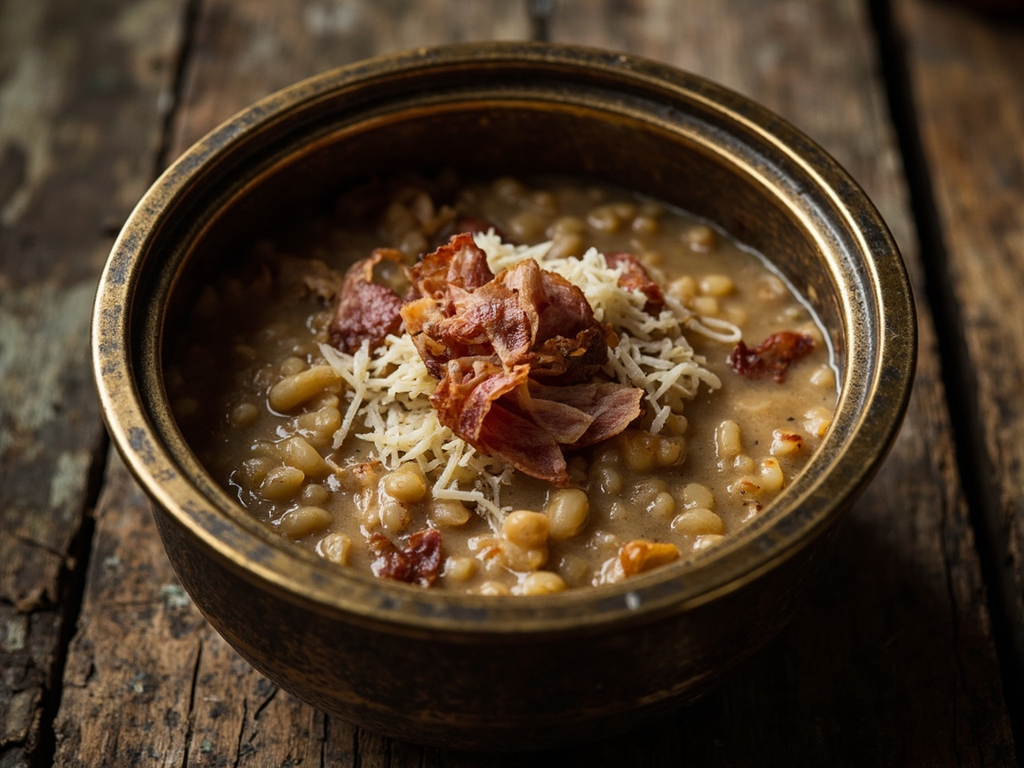
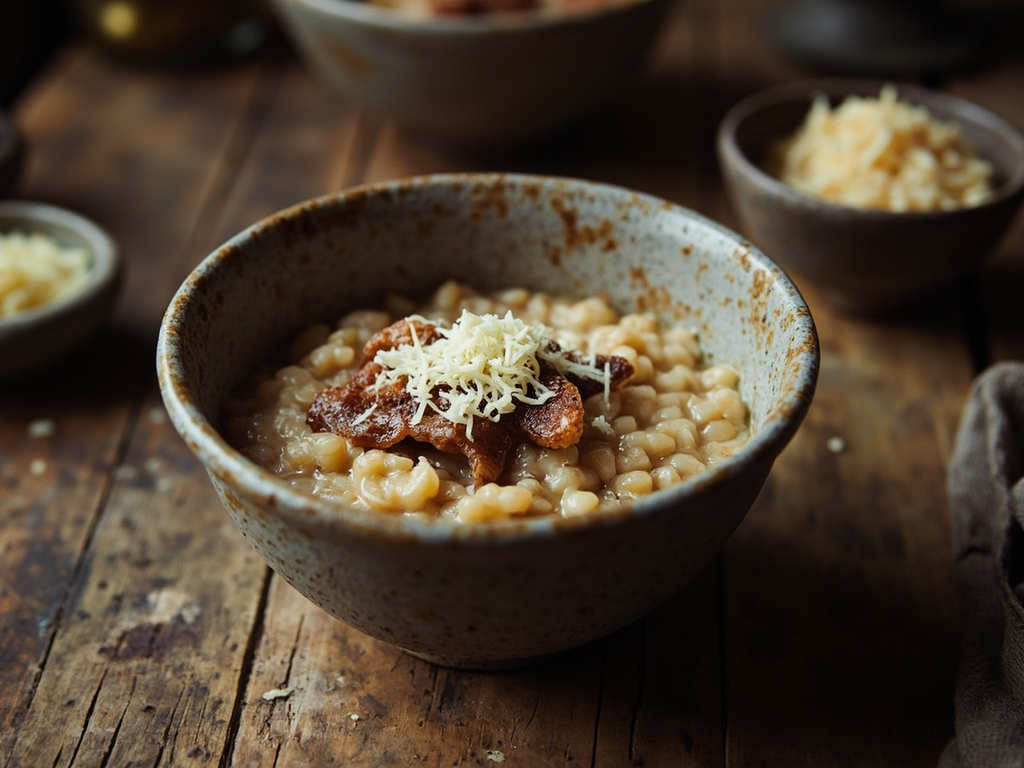
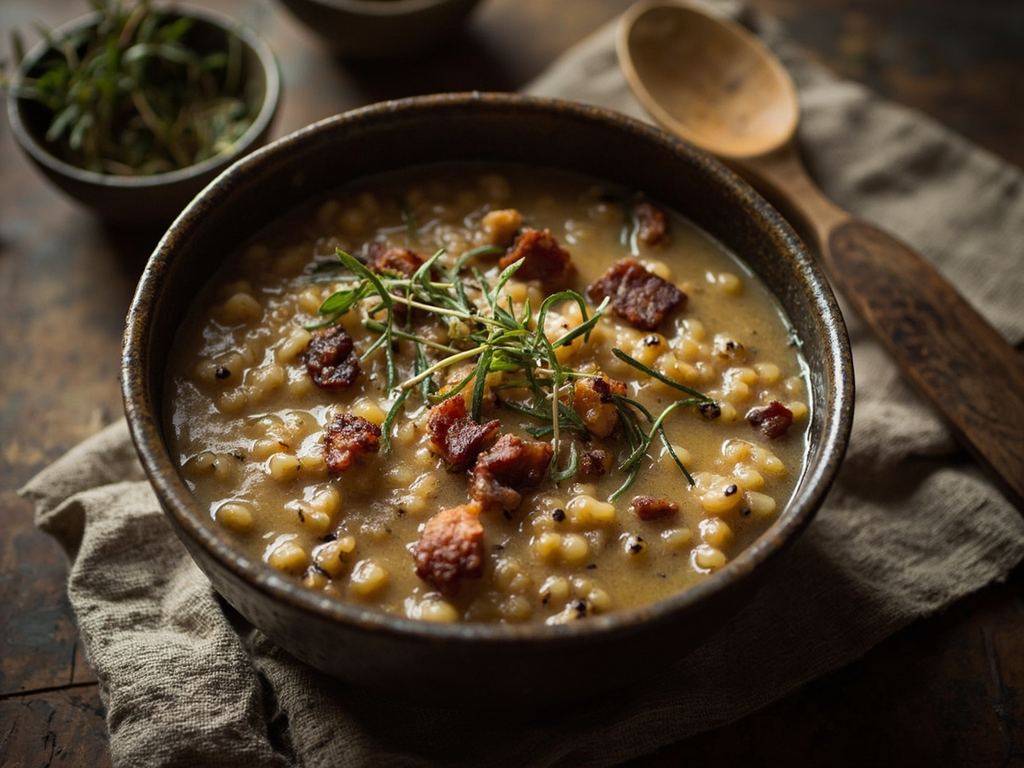
Barley porridge with milk and smoked bacon
Why this dish? This was the everyday food of the Cheruscan warriors Arminius commanded. Before luring Varus into the Teutoburg Forest, his men marched and fought fueled by this hot porridge — a dish of peasant-soldiers, in contrast to the bread and wine of the Roman legions.
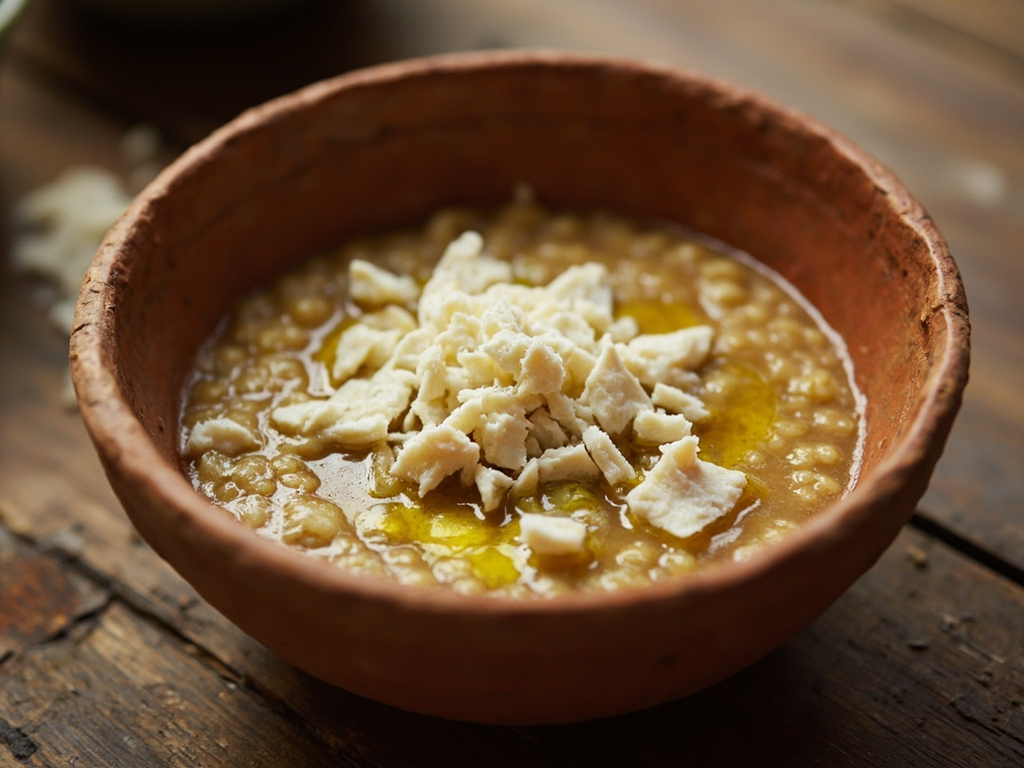
A thick barley porridge cooked long in milk and water, flavored with pieces of smoked bacon and meadow herbs. Comforting, nourishing, it sticks to the ribs in cold weather.
Come close to the fire, stranger, and hold out your bowl. This is what free men eat, not the soft mush of Rome's slaves! I tasted their white bread and sweet wine when I served under their eagles — but it's this barley, thickened with our cows' milk and smoked with our bacon, that gave my Cherusci strong arms under the trees of Teutoburg. Eat hot, and let the hearth smoke enter you: it makes a man hard.
- •Hulled barley grains — two handfuls per eater (grain base)
- •Cow's milk — enough to cover the grains (cooking liquid, fat)
- •Fire-smoked bacon — a few strips (fat, salt, smoky umami)
- •Wild herbs (lovage, ramsons) — a handful (flavor)
- •Salt — a pinch (rare commodity) (seasoning)
Barley porridge with milk and smoked bacon
A thick barley porridge cooked long in milk and water, flavored with pieces of smoked bacon and meadow herbs. Comforting, nourishing, it sticks to the ribs in cold weather.
Why this dish? This was the everyday food of the Cheruscan warriors Arminius commanded. Before luring Varus into the Teutoburg Forest, his men marched and fought fueled by this hot porridge — a dish of peasant-soldiers, in contrast to the bread and wine of the Roman legions.
Come close to the fire, stranger, and hold out your bowl. This is what free men eat, not the soft mush of Rome's slaves! I tasted their white bread and sweet wine when I served under their eagles — but it's this barley, thickened with our cows' milk and smoked with our bacon, that gave my Cherusci strong arms under the trees of Teutoburg. Eat hot, and let the hearth smoke enter you: it makes a man hard.
Ingredients (period version)
- Hulled barley grains — two handfuls per eater (grain base)
- Cow's milk — enough to cover the grains (cooking liquid, fat)
- Fire-smoked bacon — a few strips (fat, salt, smoky umami)
- Wild herbs (lovage, ramsons) — a handful (flavor)
- Salt — a pinch (rare commodity) (seasoning)
Ingredients
- Pearl barley — 200 g (grain base)
- Whole milk — 500 ml (liquid, creaminess)
- Water — 500 ml (cooking liquid)
- Smoked bacon (belly) — 120 g, cut into lardons (fat, salt, smoky)
- Ramsons or lovage (or parsley + 1 garlic clove) — 1 small handful (green flavor)
- Salt — to taste (seasoning)
Method
- Sauté the bacon lardons in a dry pot until they render their fat and brown slightly.
- Add the pearl barley and coat in the smoky fat for one minute.
- Pour in the water and milk, bring to a simmer, then reduce the heat.
- Let it simmer for 40-50 minutes, stirring often, until thick and creamy (add a little hot water if needed).
- Chop the herbs, stir in at the end, season with salt, and serve piping hot in bowls.
How it was made : Tacitus, in his *Germania*, describes a simple Germanic diet: wild fruits, fresh game, and soured milk. Barley was the dominant cereal in Iron Age Germania; it was cooked as a porridge (the *Brei*) far more often than bread, in clay pots set on the hearth. Bacon hung in the roof smoke was the main winter reserve of fat and protein.
The contemporary twist : Served in a small bowl like a smoked barley risotto, sprinkled with fresh ramsons in spring: an Iron Age "savory porridge" surprisingly in tune with modern tastes.
Sources : Tacitus, Germania, ch. 23 · Excavations at Kalkriese (site of the Battle of Teutoburg), Museum and Archaeological Park
Arminius · Charactorium