 flip
flipĚr — Small Millet Cakes with Honey and Malt
Ěr — Small Millet Cakes with Honey and Malt
Why this dish? Confucian rites, which Ban Zhao revered, placed ancestral offerings at the heart of filial piety. Cereal cakes (ěr) were among the foods placed on the altar. This sweet cake, made from millet, honey, and malt, evokes that domestic devotion—the sweet expression of a duty performed with heart.
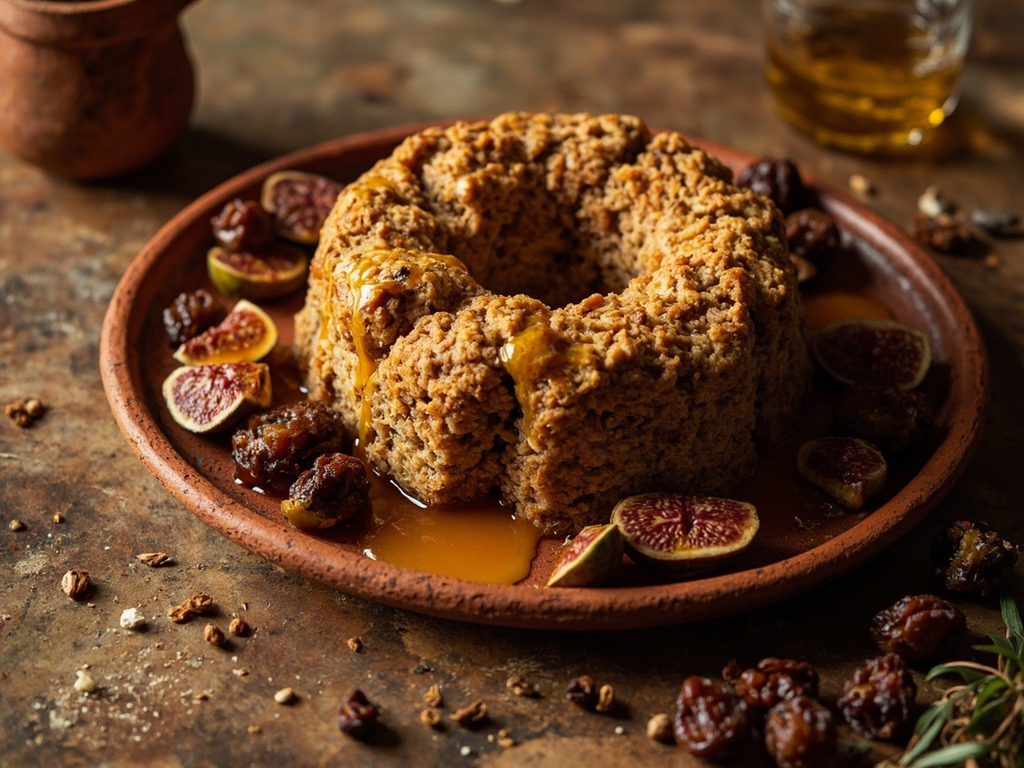
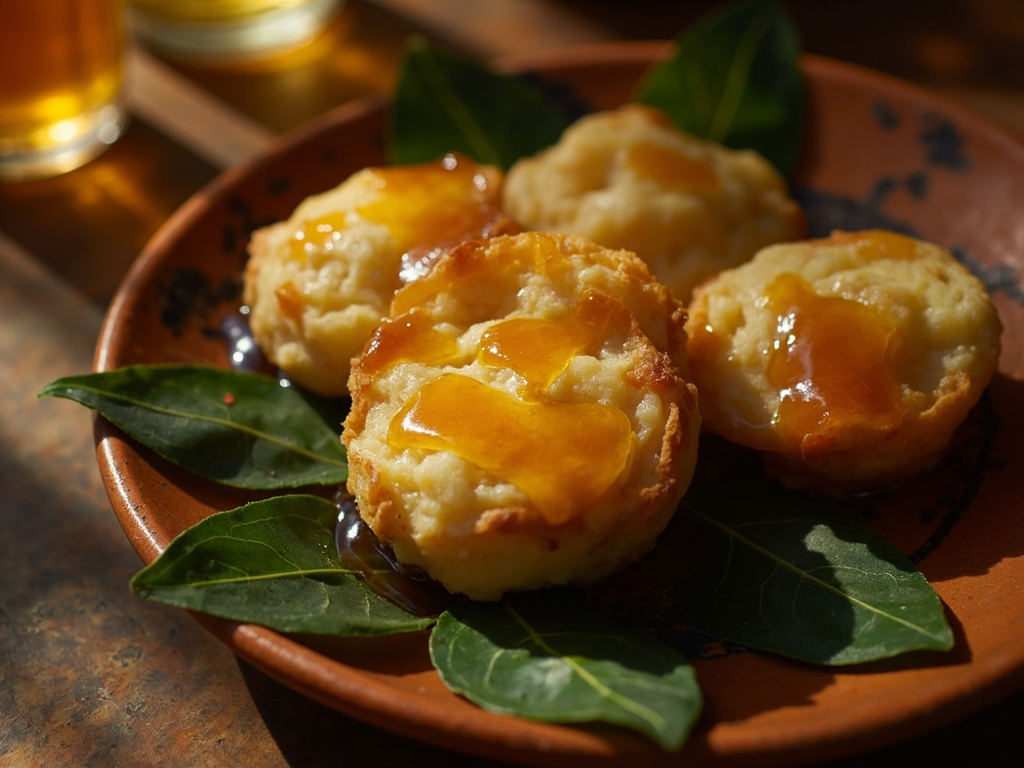
Small soft millet cakes sweetened with honey and malt syrup (yí), perhaps perfumed with a trace of ginger. A rare and symbolic sweetness, to honor ancestors or mark a festive day.
Before appearing before the ancestral tablets, I prepare these little cakes with unhurried care. Cooked millet, bees' honey, and syrup drawn from sprouted grain: that is all their richness, and it is enough, for what matters is the respect of the heart, not abundance. I shape them into small discs, I place them with reverence. If I am offered one after the rite, I receive it as a blessing—shared sweetness seals the union of the living and the ancestors.
- •Cooked millet (or millet flour) — one bowl (cake base)
- •Honey — as desired (sweetness)
- •Malt syrup (yí, from sprouted grain) — a little (sweet binder, shine)
- •Ginger — a trace (flavor (optional))
Ěr — Small Millet Cakes with Honey and Malt
Small soft millet cakes sweetened with honey and malt syrup (yí), perhaps perfumed with a trace of ginger. A rare and symbolic sweetness, to honor ancestors or mark a festive day.
Why this dish? Confucian rites, which Ban Zhao revered, placed ancestral offerings at the heart of filial piety. Cereal cakes (ěr) were among the foods placed on the altar. This sweet cake, made from millet, honey, and malt, evokes that domestic devotion—the sweet expression of a duty performed with heart.
Before appearing before the ancestral tablets, I prepare these little cakes with unhurried care. Cooked millet, bees' honey, and syrup drawn from sprouted grain: that is all their richness, and it is enough, for what matters is the respect of the heart, not abundance. I shape them into small discs, I place them with reverence. If I am offered one after the rite, I receive it as a blessing—shared sweetness seals the union of the living and the ancestors.
Ingredients (period version)
- Cooked millet (or millet flour) — one bowl (cake base)
- Honey — as desired (sweetness)
- Malt syrup (yí, from sprouted grain) — a little (sweet binder, shine)
- Ginger — a trace (flavor (optional))
Ingredients
- Millet flour (or cooked millet, mashed) — 200 g (cake base)
- Honey — 3 tablespoons (sweetness)
- Barley malt syrup (or rice malt syrup) — 2 tablespoons (binder, softness)
- Warm water — as needed for a soft dough (hydration)
- Grated ginger — a pinch (flavor (optional))
Method
- Mix millet flour with honey, malt syrup, and ginger.
- Add warm water little by little until a soft, non-sticky dough forms. Let rest 15 minutes.
- Shape into small thick discs about 5 cm across.
- Steam for 15 minutes (Han method), or cook in a dry pan over low heat until lightly golden on each side.
- Let cool slightly: they firm up as they cool. Serve plain, shiny with honey.
How it was made : Cereal cakes sweetened with honey and malt syrup (yí, ancestor of Chinese maltose, made from sprouted grains) existed under the Han, as cane sugar was not yet refined as today. Steaming, already mastered thanks to tiered steamers (zèng), was common. The exact detail of such ritual cakes remains reconstructed—hence the 'evocation' level.
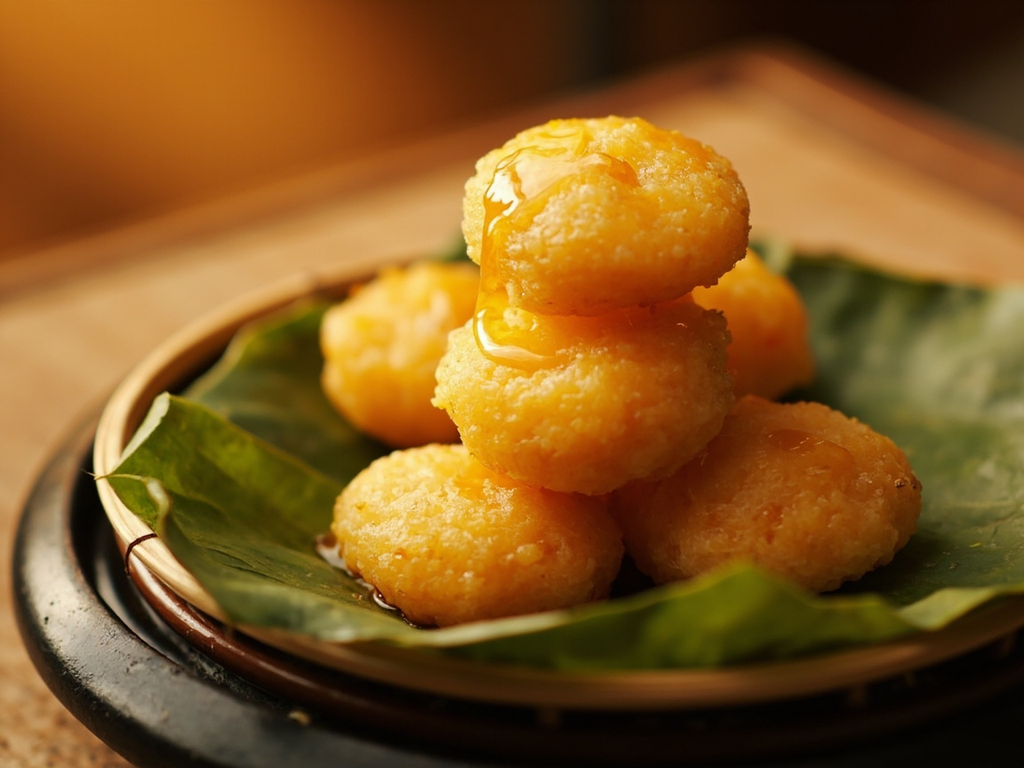
The contemporary twist : Stacked in a pyramid on a bamboo leaf, a drizzle of warm honey poured at serving time, as a 'gourmet offering' revisited.
Ban Zhao · Charactorium