 flip
flipBizcocho de Mar — the Atlantic Traveler's Galette
Bizcocho de Mar — the Atlantic Traveler's Galette
Why this dish? Las Casas crossed the Atlantic many times between Spain and the Indies to plead the cause of the Amerindians. On board, fresh bread does not exist: they eat *bizcocho*, a sea biscuit baked twice so that it keeps for months during the crossing.
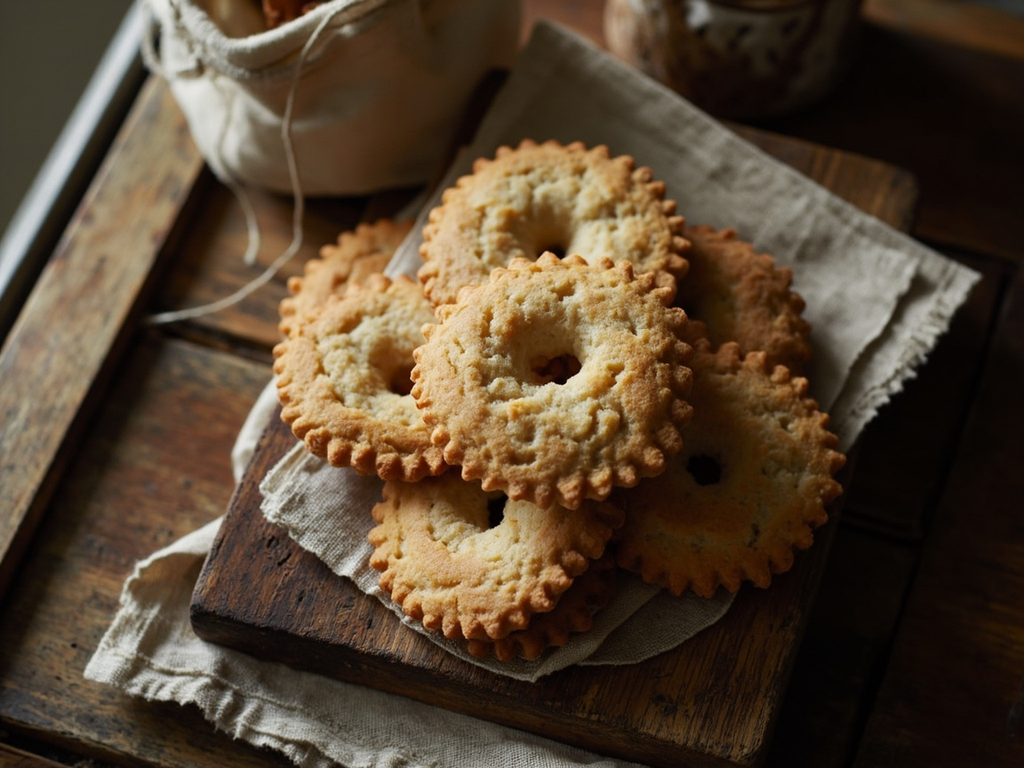
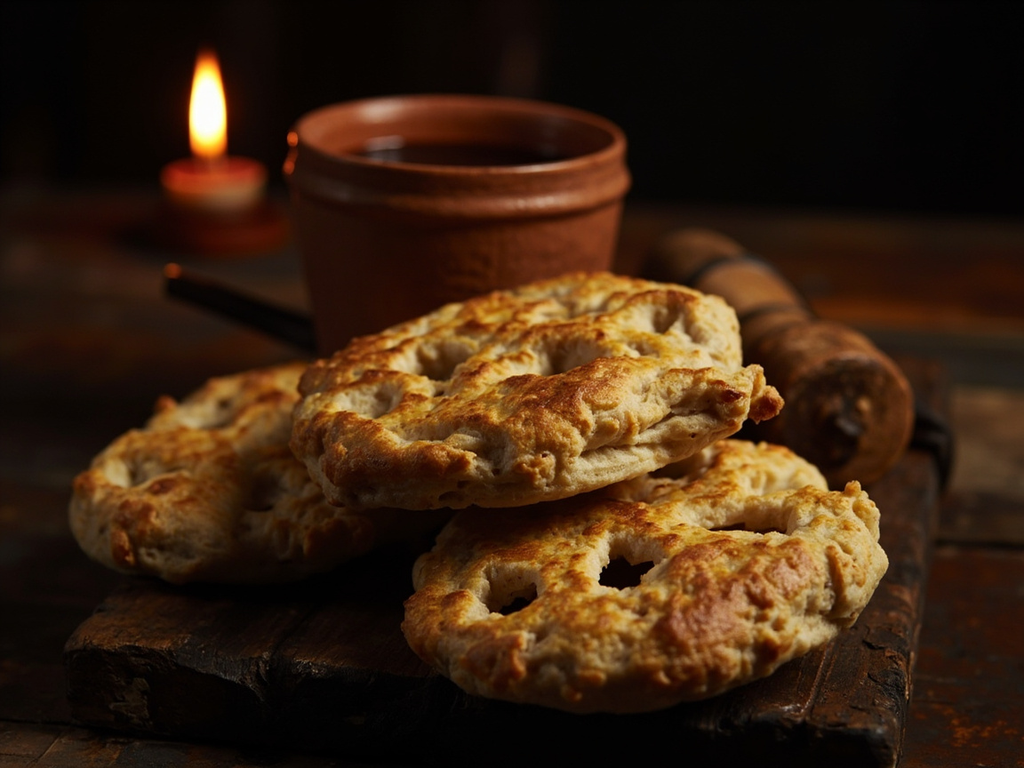
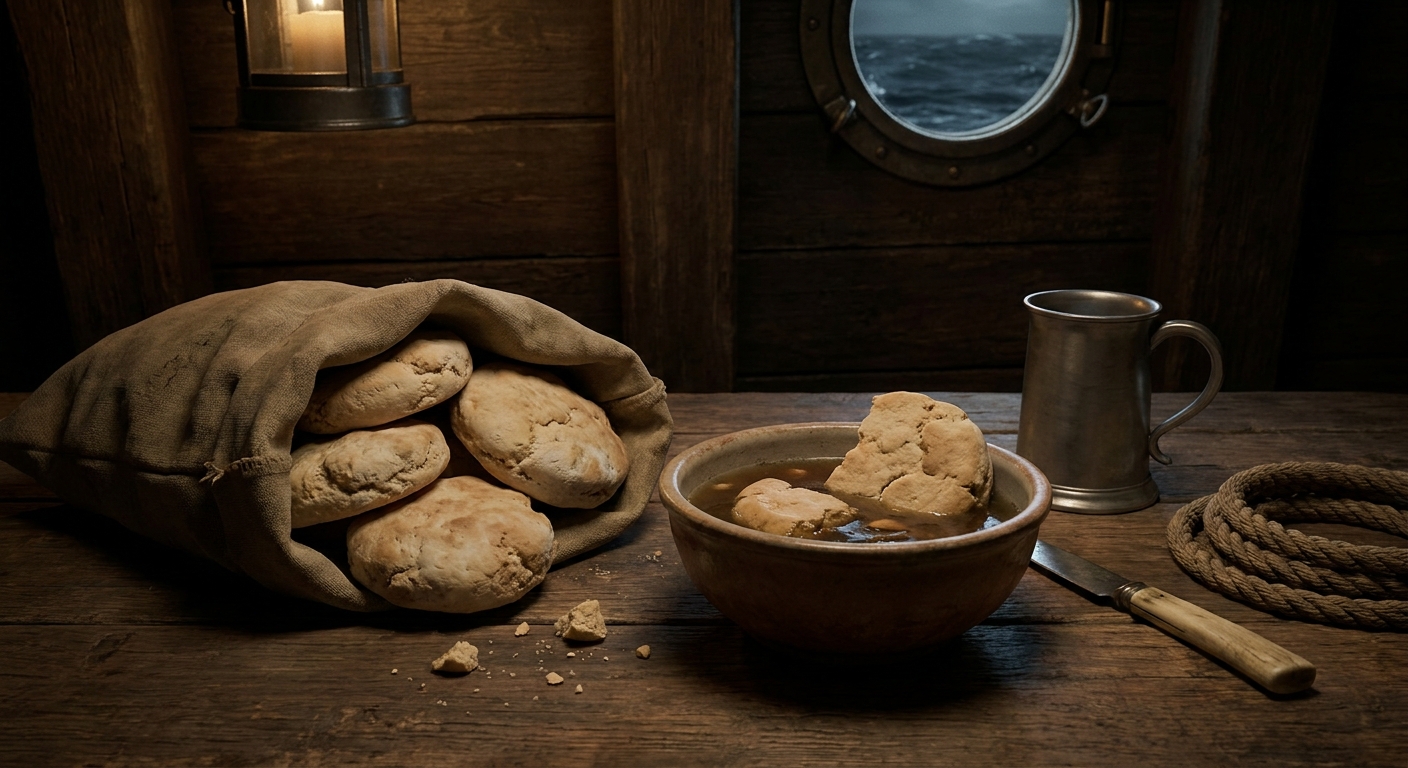
A hard galette of flour, water, and salt, baked then re-dried in the oven until nearly imperishable. It is soaked in water, broth, or wine to soften. This is the bread of the long seas.
When you set sail for the Indies, forget the soft morning bread: there is none at sea. We carry *bizcocho*, baked twice so it does not mold, hard as stone. You must soak it in broth or a finger of wine so it consents to be bitten. For two months of rough seas, it is what kept me alive while I meditated on the fate of the Indians toward whom I sailed. Poor bread, but faithful bread.
- •Wheat flour — a good measure (base)
- •Water — enough for a firm dough (binder)
- •Salt — generous (preservation) (seasoning and preservation)
Bizcocho de Mar — the Atlantic Traveler's Galette
A hard galette of flour, water, and salt, baked then re-dried in the oven until nearly imperishable. It is soaked in water, broth, or wine to soften. This is the bread of the long seas.
Why this dish? Las Casas crossed the Atlantic many times between Spain and the Indies to plead the cause of the Amerindians. On board, fresh bread does not exist: they eat *bizcocho*, a sea biscuit baked twice so that it keeps for months during the crossing.
When you set sail for the Indies, forget the soft morning bread: there is none at sea. We carry *bizcocho*, baked twice so it does not mold, hard as stone. You must soak it in broth or a finger of wine so it consents to be bitten. For two months of rough seas, it is what kept me alive while I meditated on the fate of the Indians toward whom I sailed. Poor bread, but faithful bread.
Ingredients (period version)
- Wheat flour — a good measure (base)
- Water — enough for a firm dough (binder)
- Salt — generous (preservation) (seasoning and preservation)
Ingredients
- Wheat flour (T65) — 500 g (base)
- Water — approx. 200 ml (binder)
- Salt — 10 g (flavor and preservation)
Method
- Mix flour, salt, and just enough water to obtain a firm dry dough (no leavening).
- Knead briefly, roll out to about 1 cm thick and cut round galettes; prick with a fork.
- Bake at medium heat (180 °C) for 25-30 min until lightly colored.
- Lower oven to 110 °C and re-dry the galettes for 1-2 hours until completely hard.
- Let cool and store in a dry place. At table, soak in soup, broth, or water to soften.
How it was made : *Bizcocho* (from Latin *bis coctus*, "twice cooked") was the basic ration of Spanish and Portuguese sailors. Prepared in port ovens such as those of Seville, departure point for the Indies fleets, it could keep for months — at the cost of formidable hardness and, sometimes, weevils.
The contemporary twist : Rubbed with tomato (post-1492, so on the Indies side!) and olive oil, the old sea biscuit is reborn as a makeshift *pan tumaca*.
Bartolomé de las Casas · Charactorium