 flip
flipCockentrice, the Illusion Entremets of the Banquet
Cockentrice, the Illusion Entremets of the Banquet
Why this dish? When the cooks of great houses wanted a monster to present at table, they invoked me: the 'cockentrice' is a capon sewn to a suckling pig, roasted and gilded, to depict an impossible creature — half bird, half beast, like the basilisk born from a cock's egg. The medieval spectacle-dish that gives me form.
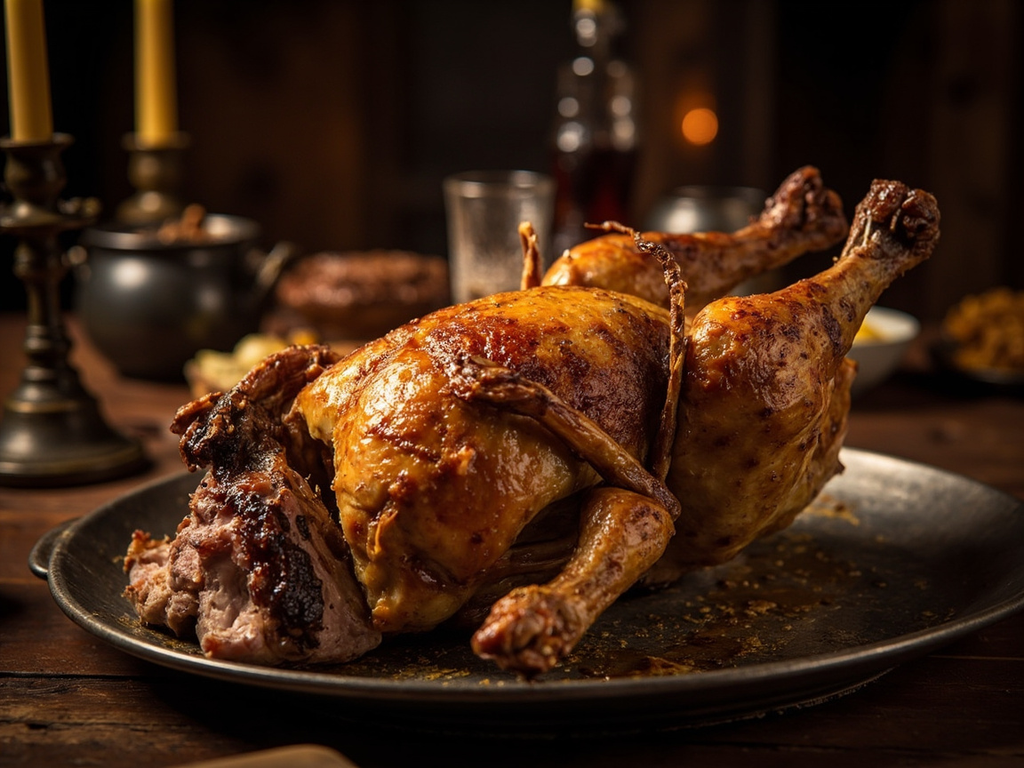
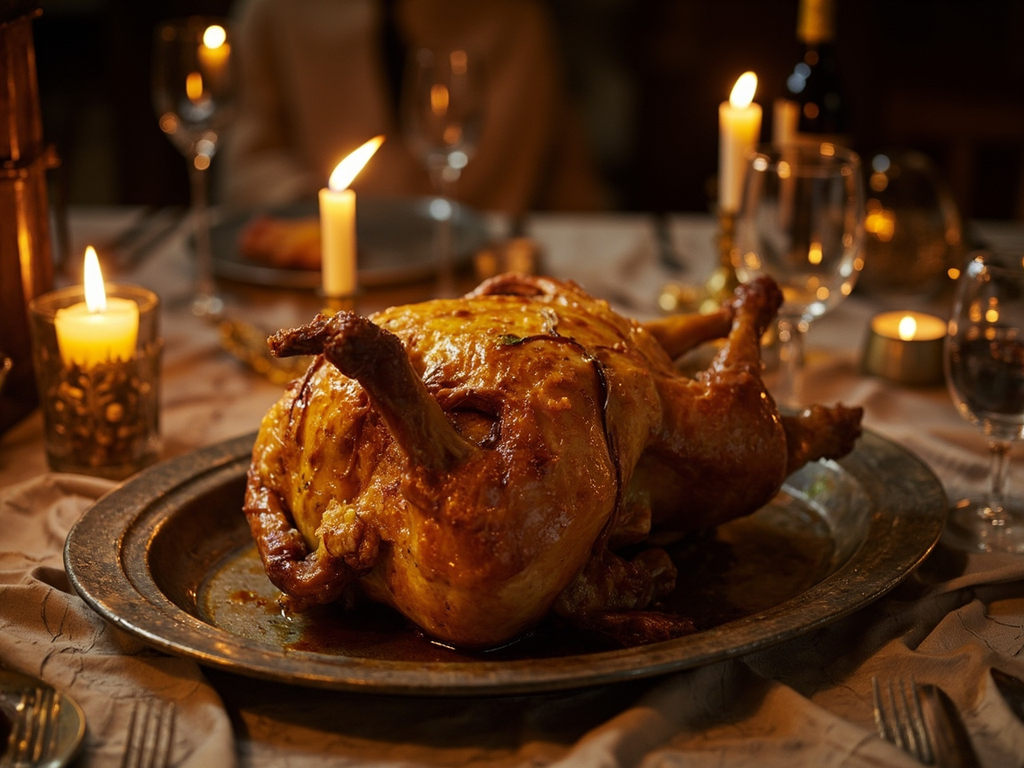
A theatrical banquet piece: the front of a capon joined to the rear of a suckling pig (or vice versa), stuffed, roasted, brushed with an egg-and-saffron glaze that makes it shine like gold. It is carried in great pomp between two courses.
Here comes the hour when I reign over the tablecloths. The master cook takes a capon and a piglet, sews them into a beast that exists only in men's fear, then gilds it with saffron and egg yolk until it blazes like my gaze. I am carried to the table to the sound of trumpets, and the guests shudder before they laugh. Carve boldly, lord: one eats a monster only on days of great rejoicing.
- •Capon — one, gutted (poultry half)
- •Suckling pig (half) — the hindquarters (beast half)
- •Stuffing of meat, breadcrumbs, eggs, ginger and saffron — a bowlful (binding and flavor)
- •Glaze: egg yolks, saffron, ginger — a bowl (shining glaze)
- •Salt, long pepper, grains of paradise, cloves — to taste (banquet spices)
Cockentrice, the Illusion Entremets of the Banquet
A theatrical banquet piece: the front of a capon joined to the rear of a suckling pig (or vice versa), stuffed, roasted, brushed with an egg-and-saffron glaze that makes it shine like gold. It is carried in great pomp between two courses.
Why this dish? When the cooks of great houses wanted a monster to present at table, they invoked me: the 'cockentrice' is a capon sewn to a suckling pig, roasted and gilded, to depict an impossible creature — half bird, half beast, like the basilisk born from a cock's egg. The medieval spectacle-dish that gives me form.
Here comes the hour when I reign over the tablecloths. The master cook takes a capon and a piglet, sews them into a beast that exists only in men's fear, then gilds it with saffron and egg yolk until it blazes like my gaze. I am carried to the table to the sound of trumpets, and the guests shudder before they laugh. Carve boldly, lord: one eats a monster only on days of great rejoicing.
Ingredients (period version)
- Capon — one, gutted (poultry half)
- Suckling pig (half) — the hindquarters (beast half)
- Stuffing of meat, breadcrumbs, eggs, ginger and saffron — a bowlful (binding and flavor)
- Glaze: egg yolks, saffron, ginger — a bowl (shining glaze)
- Salt, long pepper, grains of paradise, cloves — to taste (banquet spices)
Ingredients
- Free-range chicken thighs (or half-capon) — 1 kg (poultry)
- Pork shoulder / suckling pig belly — 800 g (meat)
- Stuffing: sausage meat, 1 egg, 50 g soaked breadcrumbs — for assembly (binding)
- Glaze: 2 egg yolks + saffron (1 pinch) + 1/2 tsp ginger — 1 bowl (glaze)
- Salt, pepper, ginger, grains of paradise (or cardamom), 2 cloves — to taste (spices)
Method
- Partially debone poultry and pork, fill the inside with spiced stuffing.
- Assemble the two halves and sew them firmly with kitchen twine to form a single 'beast'.
- Roast in the oven at 180°C, about 1 h 30, basting regularly with the juices.
- 20 minutes before the end, generously brush with the egg-saffron glaze to achieve a golden sheen.
- Let rest, remove twine, present whole then carve in front of the guests.
How it was made : The 'cockentrice' (or cocatrix) is attested in 15th-century recipe collections, including Le Vivendier and the Two Fifteenth-Century Cookery Books: a capon and a suckling pig were cut in half, the front of one sewn to the rear of the other, roasted, then gilded with a paste of egg yolk and saffron. These were the famous 'entremets' meant to amaze — the same creativity that invented the basilisk in bestiaries.
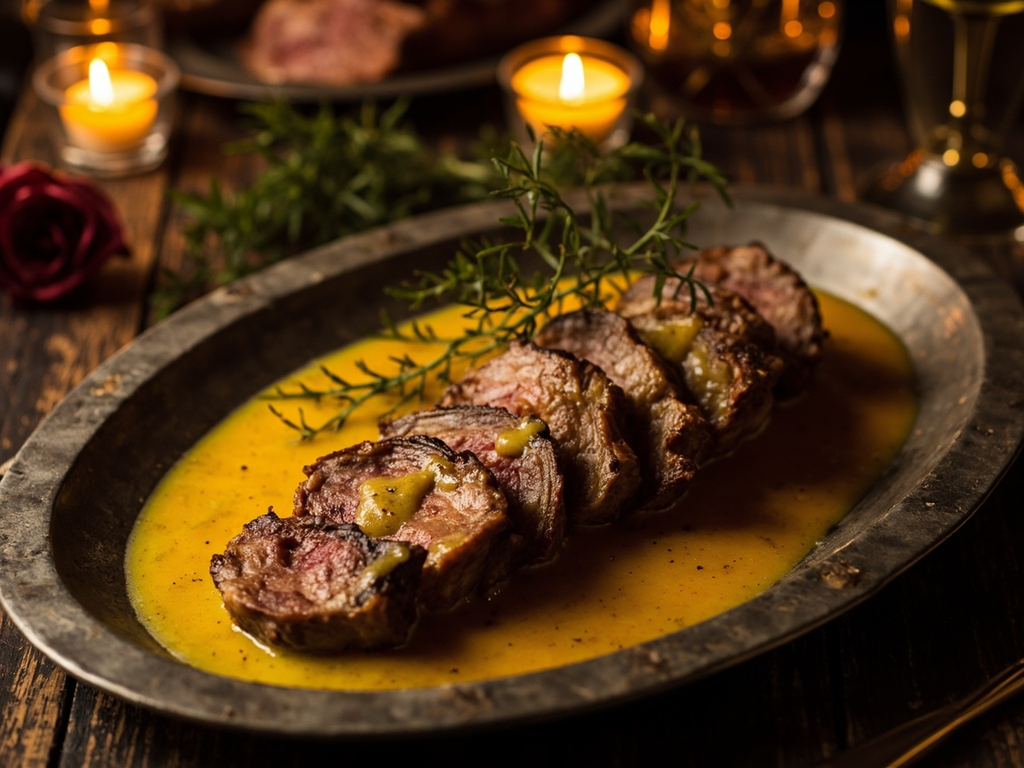
The contemporary twist : Manageable version: a rolled pork-poultry ballotine sliced into saffron-gilded medallions, arranged in a crown — 'the deconstructed monster'.
Sources : Le Vivendier (c. 1450) · Two Fifteenth-Century Cookery Books (ed. Thomas Austin, 1888) · Taillevent, Le Viandier (14th century)
Basilisk · Charactorium